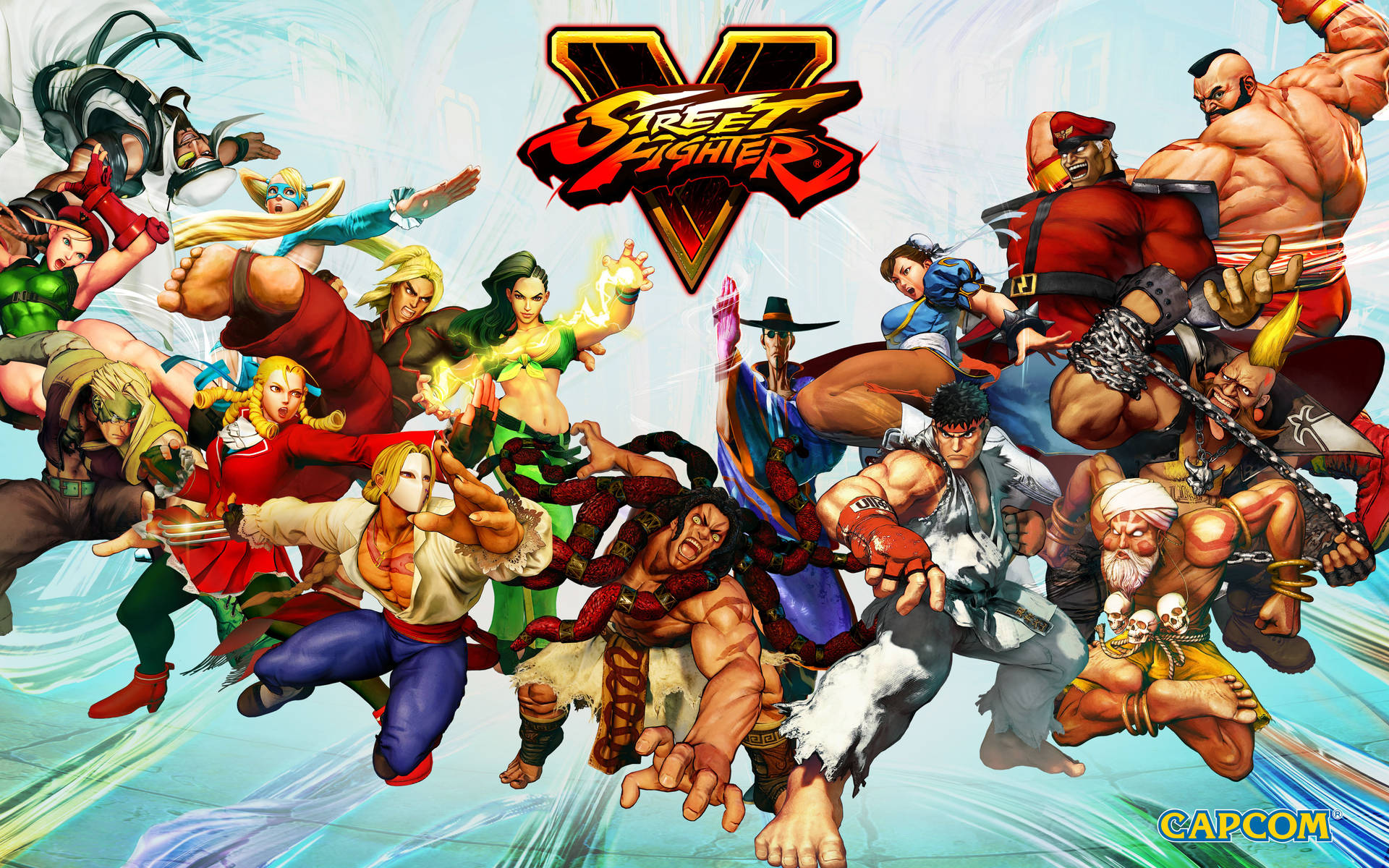
The Street Fighter franchise features a massive roster of over 100 unique characters, ranging from the original 1987 "World Warriors" to the modern icons of Street Fighter 6. This diverse lineup includes legendary martial artists like Ryu and Chun-Li, alongside recent additions such as Jamie, Kimberly, and guest fighters like Terry Bogard.
The Street Fighter series, developed by Capcom, has defined the fighting game genre for nearly four decades. As of 2026, the roster has grown into a complex tapestry of martial arts styles, supernatural powers, and political intrigue. Understanding the full scope of "all Street Fighter characters" requires looking at the series through its distinct eras: the foundational years, the Alpha prequel period, the experimental "New Generation" era, and the modern revival.
The Foundations: Street Fighter (1987) and the Street Fighter II Revolution
The journey began in 1987 with the original Street Fighter. While it was a modest success compared to its sequel, it established the cornerstone of the franchise: Ryu and Ken Masters. At the time, these were the only playable characters, with Ryu as Player 1 and Ken as Player 2. The game introduced several opponents who would later become staples of the series, including Adon, Birdie, Gen, Eagle, and the formidable final boss, Sagat.
However, it was Street Fighter II: The World Warrior (1991) that catalyzed the fighting game boom. This title introduced the "Original Eight," a group of characters so perfectly balanced and distinct that they remain the gold standard for character design. These included:
- Ryu and Ken: The Ansatsuken practitioners and eternal rivals.
- Chun-Li: The first female fighter in the series, a Chinese Interpol officer.
- Guile: A US Air Force pilot seeking revenge against Shadaloo.
- Zangief: The "Red Cyclone," a massive wrestler from the USSR.
- Blanka: A feral man from the Brazilian rainforest with electrical powers.
- Dhalsim: A yoga master from India capable of stretching his limbs.
- E. Honda: A sumo wrestler aiming to prove sumo's dominance globally.
As the SFII iterations continued (Champion Edition, Hyper Fighting, and Super Street Fighter II), the roster expanded to include the four Shadaloo Kings—Balrog (boxer), Vega (claw), Sagat, and the series' primary antagonist, M. Bison. The "New Challengers" update added Cammy White, Fei Long, Dee Jay, and T. Hawk, further diversifying the international flavor of the game.
The Alpha Prequels: Expanding the Narrative Universe
In the mid-1990s, Capcom launched the Street Fighter Alpha (Zero) series. This trilogy served as a prequel to SFII, allowing developers to bring back characters from the first game and introduce new faces that fit into the established lore. The Alpha series was notable for integrating characters from Capcom’s other major beat-'em-up franchise, Final Fight.
Significant additions during this era included Sakura Kasugano, the high-school girl who idolizes Ryu; Rose, an Italian fortune teller wielding Soul Power; and Dan Hibiki, a comedic parody character who became a fan favorite. From the Final Fight universe, Guy, Cody Travers, and Rolento crossed over, bridging the two worlds.
The Alpha series also introduced Akuma (Gouki) as a hidden boss in Super Turbo, but he became a central figure in Alpha, representing the darker side of the Satsui no Hado—the "Surge of Murderous Intent." Other notable debuts in this era include Rainbow Mika, Karin Kanzuki, and Charlie Nash, Guile’s long-lost friend whose story provided much of the emotional weight for the series' narrative.
Street Fighter III: The New Generation and the Risky Shift
In 1997, Capcom made a bold move with Street Fighter III. They decided to move the timeline forward and replace almost the entire cast, leaving only Ryu and Ken as the recognizable links to the past. This era focused on "The New Generation," introducing a more technical gameplay style and a roster that initially felt alien to long-time fans.
The protagonist role shifted to Alex, a grappler from New York. Other newcomers included the ninjutsu student Ibuki, the sophisticated boxer Dudley, the elegant martial artist Elena, and the twin brothers Yun and Yang. The game’s antagonist shifted from the military-industrial Shadaloo to the shadowy "Illuminati," led by the god-like Gill and his brother Urien.
While Street Fighter III struggled initially, its final update, Third Strike, is now considered one of the greatest fighting games of all time. Characters like Makoto, Remy, Twelve, Q, and Oro added a layer of eccentricity and depth that helped the series transition into the 21st century.
The Modern Revival: Street Fighter IV and Street Fighter V
After a decade-long hiatus, Street Fighter IV (2008) brought the series back into the limelight. It utilized 3D models on a 2D plane (2.5D) and returned to the SFII era's popularity. This game introduced Juri Han, a sadistic Taekwondo practitioner who became one of the most popular characters in franchise history. Other additions included the French agent Abel, the high-tech Crimson Viper, and the rotund but agile Rufus.
Street Fighter V (2016) continued this expansion, focusing on a "live service" model with seasonal character drops. Over six seasons, it introduced a wide array of new fighters such as Rashid, who controls the wind; Laura Matsuda, a Jiu-Jitsu practitioner; and the mysterious G, the "President of the World." SFV also saw the debut of Luke Sullivan, a character designed specifically to bridge the gap between the fifth and sixth installments.
Street Fighter 6: The State of the Roster in 2026
As of 2026, Street Fighter 6 has fully matured, establishing a new status quo for the franchise. The game is set several years after the events of Third Strike, making it the furthest point in the chronological timeline. The roster is divided between "Legendary World Warriors" and a new class of students.
The base roster of SF6 introduced high-energy characters like Jamie, a drunken-fist style breakdancer; Kimberly, a "bushinryu" ninja obsessed with 80s pop culture; and Marisa, a massive Italian jewelry designer and pankration master. The game's narrative focuses on the concept of "strength" and personal growth, exemplified by the customizable avatar in World Tour mode.
In the years following the 2023 launch, Capcom has integrated significant DLC additions. By 2026, the roster includes not only returning favorites like Akuma, M. Bison, and Elena, but also groundbreaking guest characters from the SNK universe: Terry Bogard and Mai Shiranui. This collaboration marked a historic milestone for the franchise, officially bringing the "Capcom vs. SNK" rivalry into the main Street Fighter canon.
Comprehensive Character Reference Table
The following table categorizes a selection of the most influential characters across the entire series, noting their origin and primary fighting style.
| Character Name | First Appearance | Fighting Style | Country of Origin |
|---|---|---|---|
| Ryu | Street Fighter (1987) | Ansatsuken (Shotokan-based) | Japan |
| Chun-Li | Street Fighter II (1991) | Chinese Martial Arts (Wushu) | China |
| Guile | Street Fighter II (1991) | Military Martial Arts | USA |
| Akuma | Super SFII Turbo (1994) | Satsui no Hado / Ansatsuken | Japan (Unknown) |
| Sakura | Street Fighter Alpha 2 | Self-taught Ansatsuken | Japan |
| Alex | Street Fighter III (1997) | Wrestling / Kickboxing | USA |
| Juri Han | Super Street Fighter IV | Taekwondo (Feng Shui Engine) | South Korea |
| Rashid | Street Fighter V (2016) | Parkour / Wind-based | Saudi Arabia |
| Luke | Street Fighter V (DLC) | MMA / Military Combat | USA |
| Jamie | Street Fighter 6 (2023) | Zui Quan (Drunken Fist) | Hong Kong |
| Terry Bogard | SF6 Year 2 DLC (2024) | Martial Arts / Hakkyokuseiken | USA |
Character Archetypes and Gameplay Roles
To navigate "all Street Fighter characters," it is helpful to understand the archetypes Capcom uses to ensure a balanced gameplay experience. These categories help players choose characters that suit their preferred playstyle.
The "Shoto" (Shotokan-style)
Characters like Ryu, Ken, Akuma, and Sakura fall into this category. They are versatile, all-rounder characters equipped with a projectile (Hadoken), an anti-air (Shoryuken), and a forward-moving physical attack (Tatsumaki Senpukyaku). They are the easiest for beginners to learn but have high skill ceilings.
The Grapplers
These are heavy-hitters who rely on getting close to the opponent to execute high-damage command throws. Zangief is the quintessential grappler, but the roster also includes T. Hawk, Hugo, R. Mika, and Manon. These characters often struggle with mobility but can end a round in just a few successful interactions.
The Zoners
Zoners focus on keeping the opponent at a distance using projectiles or long-range limbs. Dhalsim is the most famous example, using his stretchy arms and fireballs to control the screen. Other zoners include Guile, Menat, and JP. Playing against a skilled zoner requires patience and careful movement.
The Rushdown
Rushdown characters are designed to apply relentless pressure. They have fast movement and quick attacks that force the opponent to make mistakes. Cammy, Rashid, Yun, and Kimberly are prime examples. Their goal is to "stick" to the opponent and never let them breathe.
Frequently Asked Questions
Who is the strongest character in Street Fighter lore?
In terms of pure narrative power, Akuma (specifically in his Oni form) and Oro are often cited as the strongest. Akuma has mastered the Satsui no Hado, while Oro is a hermit who fights with one arm bound just to give his opponents a fair chance. In recent years, Gill and G have also displayed god-like abilities that place them at the top of the power hierarchy.
How many characters are in Street Fighter 6 as of 2026?
By 2026, Street Fighter 6 has expanded its roster significantly through three seasons of DLC. Starting with 18 characters at launch, the roster has grown to over 30 fighters, including Year 1 additions like Rashid and Akuma, Year 2 additions like Terry Bogard and Elena, and subsequent Year 3 releases.
Are guest characters like Terry Bogard considered canon?
While guest characters often exist in a "gray area" of canon, their inclusion in the Street Fighter 6 World Tour mode usually includes interactions with the main cast that ground them in the game's world. However, their primary purpose is celebratory cross-over content rather than fundamentally altering the core Street Fighter storyline.
Which character has appeared in the most games?
Ryu and Ken hold the record, having appeared in every single main-line Street Fighter game and almost every spin-off. Chun-Li follows closely behind, appearing in nearly every title since her debut in Street Fighter II.
What is the "Satsui no Hado"?
The Satsui no Hado (Surge of Murderous Intent) is a dark energy that consumes martial artists who prioritize winning at any cost. It is the force that turned Akuma into a demon and occasionally possesses Ryu, leading to his "Evil Ryu" or "Kage" personas. Much of the series' plot revolves around Ryu's struggle to resist this power.
Final Recommendations for New Players
If you are looking to explore the vast roster of Street Fighter in 2026, the best place to start is Street Fighter 6. Its "Modern Controls" scheme makes the complex moves of over 100 characters accessible to newcomers without requiring decades of "muscle memory."
For those interested in the history and evolution of these characters, the Street Fighter 30th Anniversary Collection provides a way to play the arcade versions of the original titles. Whether you prefer the classic discipline of Ryu or the chaotic energy of newcomers like Kimberly, the Street Fighter roster offers a character for every personality and competitive style. To stay updated on future character releases and balance patches, official resources such as the Capcom Street Fighter portal provide the most accurate and current information.