"All of Statistics: A Concise Course in Statistical Inference" by Larry Wasserman is a widely respected academic textbook designed to bridge the gap between introductory statistics and advanced mathematical treatments of the subject. It serves as a rigorous, one-semester overview for students in computer science, engineering, and mathematics who require a rapid but thorough grounding in probability and statistical theory.
The Academic Scope and Purpose of All of Statistics
The primary value of Larry Wasserman’s All of Statistics lies in its efficiency. While many academic curricula require separate, multi-semester courses for probability and inferential statistics, this text condenses the essential foundations into a single, cohesive volume. Published by Springer, the text is specifically aimed at students who already possess a baseline understanding of calculus and linear algebra, providing them with the tools necessary to analyze complex datasets in fields like data science, machine learning, and computational biology.
The book is intentionally brief, which is both its strength and its primary challenge. Unlike voluminous encyclopedias of statistical methods, this text prioritizes the "why" behind statistical procedures. It covers topics ranging from probability distributions and the Central Limit Theorem to more sophisticated techniques such as nonparametric regression, bootstrapping, and Bayesian inference. For students or professionals seeking a comprehensive theoretical framework, it serves as a critical reference.
Key Concepts and Theoretical Foundations
To extract maximum value from this textbook, one must understand how it structures the discipline of statistics. Wasserman categorizes the field into four foundational pillars: Probability, Inference, Modeling, and Computation.
Probability and Stochastic Processes
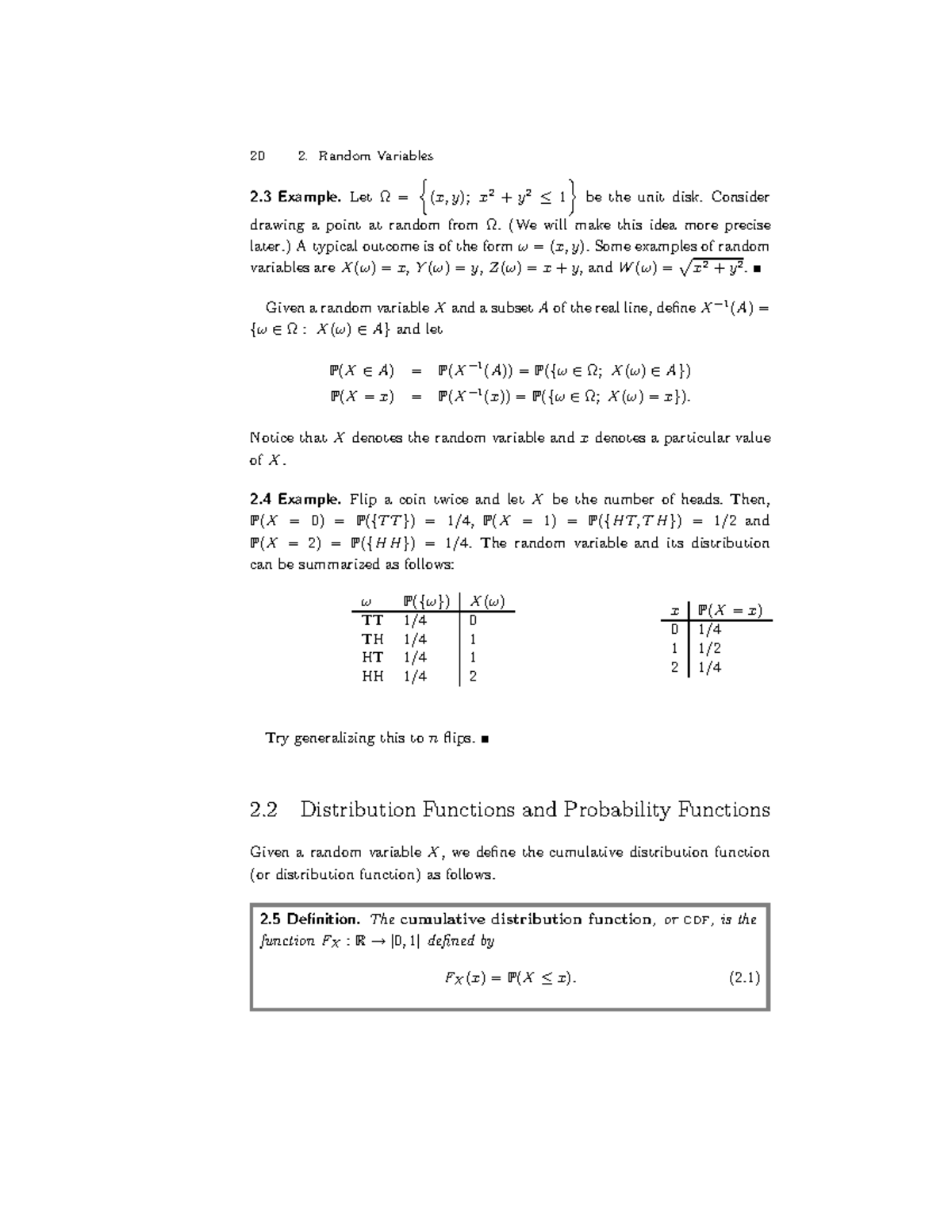
The initial chapters provide the bedrock for everything that follows. The text does not shy away from formal definitions of random variables, expectation, and variance. Understanding these is mandatory because the author immediately transitions into the law of large numbers and the Central Limit Theorem—the theoretical engines that allow us to move from observing a small sample to making claims about an entire population.
Statistical Inference
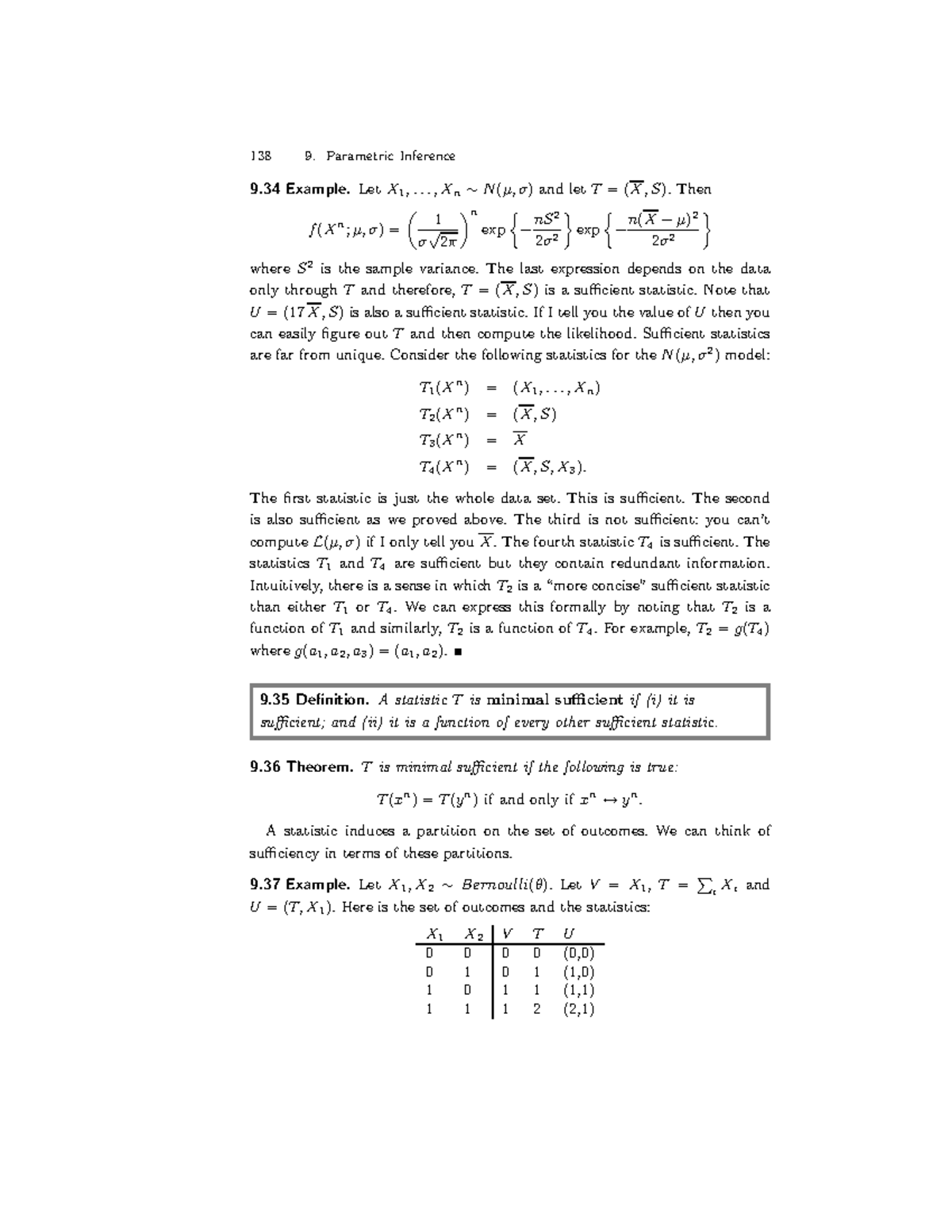
The core of the book revolves around point estimation, hypothesis testing, and confidence intervals. Wasserman emphasizes the distinction between frequentist and Bayesian perspectives. By presenting both schools of thought, the text enables the reader to choose the appropriate statistical lens for a specific problem. For example, when evaluating the parameters of a model, the reader learns the mechanics of Maximum Likelihood Estimation (MLE) while contrasting it with the predictive nuances offered by Bayesian methods.
Modeling and Multivariate Analysis
As the text progresses, it moves into high-dimensional data analysis. The sections on regression—both linear and nonparametric—are particularly useful for modern practitioners. These chapters explain how to handle "the curse of dimensionality" and how to employ cross-validation to prevent model overfitting.
Comparing Approaches in Modern Statistical Textbooks
When considering this text against other pedagogical resources, it is helpful to understand where it sits in the hierarchy of academic literature.
| Feature | All of Statistics | Traditional Intro Stats | Advanced Measure Theory |
|---|---|---|---|
| Mathematical Level | Moderate-High | Low-Moderate | Very High |
| Primary Audience | Data Scientists/CS | Undergrads (Non-math) | Mathematicians |
| Focus | Efficiency/Breadth | Application/Tooling | Formal Proofs |
| Computation | Integrated | Rare | N/A |
As indicated in the comparison table, All of Statistics is distinct because it incorporates computation as a first-class citizen. It is not merely a book of formulas; it is a book about the mathematical underpinnings of algorithms that are now standard in data processing.
Navigating Technical Prerequisites
Attempting to read this book without the necessary mathematical maturity often leads to frustration. The text assumes the reader is comfortable with:
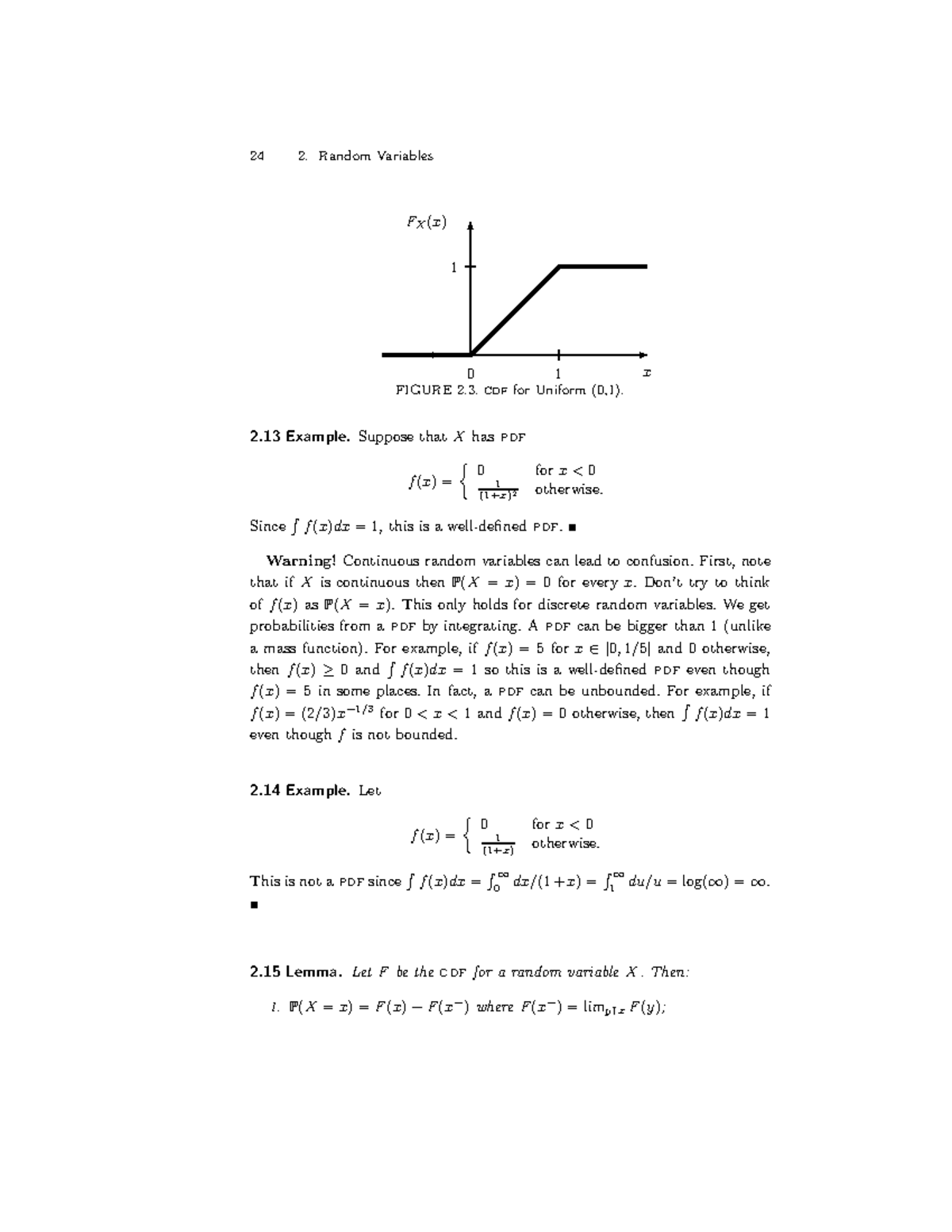
- Calculus: Specifically multi-variable calculus, including integration and partial derivatives. These are required to solve for likelihood functions and understand probability density functions.
- Linear Algebra: Understanding matrices and vector spaces is essential for the chapters on regression and multivariate analysis.
- Basic Programming: While the book is mathematically focused, the concepts of simulation—such as Monte Carlo methods—require the reader to conceptualize how code generates random variables.
If these prerequisites are lacking, readers are often advised to refresh their knowledge using introductory calculus or linear algebra tutorials before starting the first chapter. Attempting to master the theory of statistical inference without these tools is generally ineffective.
Common Challenges and Troubleshooting
Users often encounter specific hurdles when engaging with this material. Addressing these issues early can improve learning outcomes.
The "Too Brief" Problem
Because the text is intentionally concise, it skips many intermediate algebraic steps. If a derivation feels opaque, the best approach is to stop and work through the algebra on scratch paper. Do not expect to read this text like a novel; it is a technical manual that requires an active pen-and-paper approach.
Implementation Gaps
Sometimes a student understands the math but struggles to implement it in modern languages like R or Python. It is recommended to use the theoretical derivations in the book as a blueprint for writing your own code rather than relying solely on pre-packaged software libraries. Implementing an estimator from scratch based on the formulas provided in the book is the most effective way to verify your understanding.
Theoretical vs. Applied Conflict
Many readers want to jump straight to machine learning techniques. However, the chapters on point estimation and hypothesis testing are the foundation for everything that comes later. If you skip the "boring" probability theory, you will likely struggle to interpret the outputs of the regression or classification models discussed in the latter half of the book.
Frequently Asked Questions
Is this book suitable for absolute beginners?
Generally, no. It is designed for students who already have a firm grasp of calculus. If you have never taken a statistics course, you might find the pace and the level of mathematical rigor overwhelming. A more gentle introductory text may be required first.
Does this book include coding exercises?
The text is primarily theoretical. It discusses computational statistics (like bootstrap and MCMC) as mathematical concepts. It does not provide code snippets in languages like Python or R, so readers are expected to translate the mathematical formulas into code themselves.
Why is this book popular in data science circles?
Data science relies on the intersection of statistics and computer science. This book is one of the few that speaks both languages, providing the necessary theory to understand how models function beneath the surface, which is crucial for troubleshooting complex machine learning architectures.
Can this book be used for self-study?
Yes, provided the reader is disciplined. Many of the problems at the end of the chapters are designed to test your understanding of the theory. It is recommended that you check your answers or participate in online forums where specific exercises from the book are discussed to ensure your derivations are correct.
How do I address gaps in my mathematical knowledge while reading?
Use external resources like Khan Academy for calculus and Gilbert Strang’s linear algebra lectures to fill in the gaps as you encounter them. Treat the book as a syllabus; if you hit a mathematical wall, pause your reading, master that specific concept, and then return to the text.
Recommendations for Deep Learning
If you are currently studying All of Statistics, your next action should be to create a "formula notebook." As you read, write down every definition and proof, but leave space to write the corresponding implementation code. By the time you reach the final chapter, you will have built a personal reference library that connects abstract statistical theory to functional, usable code. If you find yourself consistently stuck on the same derivation, prioritize mastering the underlying calculus before proceeding, as the book builds cumulatively on its own definitions.