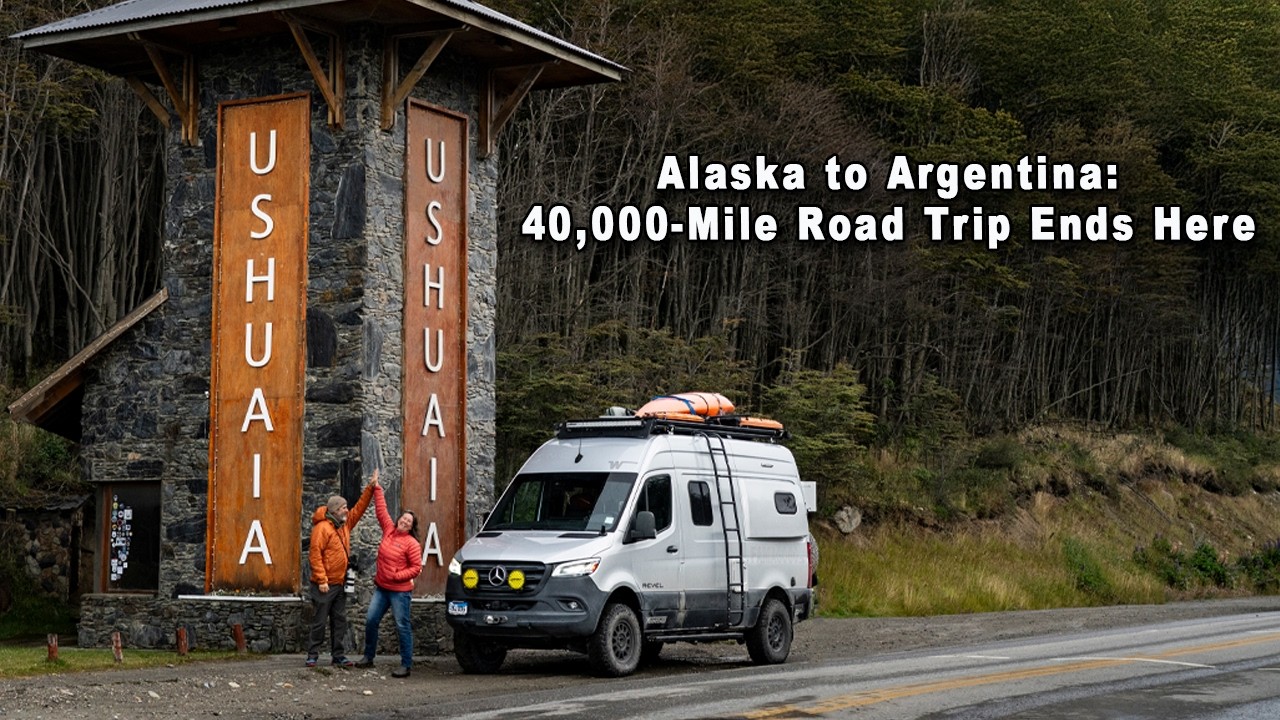
An Alaska to Argentina road trip, primarily following the Pan-American Highway, is a journey of approximately 19,000 miles (30,000 km) that traverses 14 to 15 countries. To complete the trip safely and enjoyably in 2026, travelers should allocate between 9 and 18 months, account for vehicle shipping across the roadless Darien Gap, and budget for diverse border requirements and seasonal weather shifts.
The Pan-American Highway is less a single road and more a network of interconnected routes stretching from the northern reaches of Alaska to the southern tip of Argentina. Often cited as the ultimate overlanding challenge, this expedition requires meticulous mechanical preparation, complex logistical planning, and a flexible mindset. Whether you are driving a converted van, a rugged 4x4, or a motorcycle, the transition from the Arctic tundra to the Andean peaks represents the pinnacle of long-distance travel.
Defining the Route: From Prudhoe Bay to Ushuaia
The traditional "full" Pan-American journey begins at Prudhoe Bay, Alaska, the northernmost point accessible by road in North America. From here, travelers descend the Dalton Highway—a grueling 414-mile gravel road—before connecting to the Alaska Highway (Alcan) through Canada.
As of 2026, the route typically follows one of two primary paths through the United States: the Pacific Coast route via Highway 101 or the Mountain route through the Rockies. Upon entering Mexico, the journey shifts into a different gear. Most overlanders choose between the rugged beauty of the Baja Peninsula (requiring a ferry to the mainland) or the direct route through the highlands of Central Mexico.
The Central American segment is a rapid-fire sequence of border crossings: Guatemala, El Salvador, Honduras, Nicaragua, Costa Rica, and Panama. This section is characterized by tropical climates and relatively short driving distances between major cultural hubs. However, the road literally stops at Yaviza, Panama.
The southern leg begins in Colombia after shipping your vehicle across the Darien Gap. From there, the Pan-American Highway (Route 5 in many sections) hugs the Pacific coast through Ecuador and Peru before climbing into the Altiplano of Bolivia or continuing through the Atacama Desert in Chile. The journey concludes in Ushuaia, Argentina, the "End of the World," situated on the Beagle Channel.
Vehicle Selection and Technical Preparation
Choosing the right vehicle is the most consequential decision of the planning phase. In 2026, the market for overlanding vehicles has shifted toward a balance of fuel efficiency and mechanical simplicity.
4x4 SUVs and Trucks
Vehicles like the Toyota Land Cruiser, Toyota Hilux, and Ford F-Series remain the gold standard. Their primary advantage is the global availability of parts. If a suspension component fails in rural Peru, finding a replacement for a Toyota is significantly easier than finding one for a specialized European or luxury American brand.
Van Life vs. Truck Campers
High-roof vans (like the Mercedes Sprinter or Ford Transit) offer superior living comfort, which is vital for trips exceeding six months. However, their lower ground clearance can limit access to remote campsites in the Andes or the more rugged tracks of the Baja Peninsula. Truck campers (a slide-in or flatbed camper on a pickup truck) offer a compromise, providing a "living box" with 4WD capability.
Mechanical Hardening
Before departure, several modifications are non-negotiable for a trip of this magnitude:
- Heavy-Duty Suspension: The extra weight of gear, water, and fuel, combined with thousands of miles of washboard roads and potholes, will destroy stock shocks.
- All-Terrain Tires: A minimum of two full-sized spares is recommended. Tires should be LT (Light Truck) rated with reinforced sidewalls.
- Filtration Systems: Fuel quality varies wildly. Installing a secondary fuel-water separator can prevent catastrophic engine damage from contaminated diesel or gasoline in remote regions.
- Auxiliary Power: In 2026, lithium (LiFePO4) battery systems paired with solar panels have become the standard for powering refrigerators and star-link terminals without draining the vehicle's starter battery.
The Darien Gap: Bridging the Missing Link
The Darien Gap is a 60-to-100-mile stretch of swamp and dense jungle between Panama and Colombia where no roads exist. There is no overland passage for vehicles; you must ship your car or motorcycle via sea.
Shipping Methods
There are two primary ways to move your vehicle from Panama (usually Colon or Panama City) to Colombia (Cartagena):
- Roll-on/Roll-off (RORO): Your vehicle is driven onto a specialized vessel. This is generally the most cost-effective method but carries a higher risk of theft, as you must leave your keys with the ship’s crew and cannot secure the living quarters of the vehicle.
- Container Shipping: Your vehicle is secured inside a 20ft or 40ft shipping container. This is the most secure method. Many travelers share a 40ft High Cube container with another overlander to split the costs.
Logistics and Costs
In 2026, shipping costs fluctuate between $2,500 and $4,500 USD, including port fees, agent commissions, and maritime insurance. The process typically takes 7 to 14 days. During this time, travelers must fly or take a boat (such as a San Blas island sailing trip) to meet their vehicle in Cartagena.
It is critical to use a reputable shipping agent to handle the temporary export and import paperwork. Failure to properly "cancel" your Panama Temporary Import Permit (TIP) or correctly initiate the Colombian one can result in heavy fines or vehicle seizure.
Documentation, Visas, and Border Crossings
Navigating the bureaucracy of 15 different nations is often more exhausting than the driving itself.
Personal Documentation
Most Western passports (US, Canada, UK, EU) allow for visa-free entry or "visa on arrival" for the majority of countries on this route. However, as of 2026, it is vital to check for reciprocity fees or pre-travel authorizations (similar to ETIAS) that may have been implemented. Bolivia, for instance, has historically required specific visa applications for US citizens.
Vehicle Documentation
- Title and Registration: You must carry the original, permanent title and registration. Laminated copies are rarely accepted.
- Temporary Import Permits (TIP): Most Latin American countries do not require a Carnet de Passages en Douane (CPD). Instead, you will be issued a TIP at the border. This document legally allows your vehicle to be in the country for a set period (usually 30 to 90 days). You must ensure the TIP is cancelled when you exit the country, or you will be flagged as having "smuggled" a vehicle.
- Third-Party Insurance: Your domestic insurance (US/Canada) will not cover you south of the US border. Mexico requires specific Mexican insurance. In Central and South America, you generally purchase "SOAT" (compulsory third-party insurance) at the border or in the first major town after crossing.
Estimated Costs and Budgeting for 2026
The cost of an Alaska to Argentina trip depends heavily on your "travel style." A solo traveler in a small SUV camping for free will spend significantly less than a couple in a large rig staying in serviced campsites and eating at restaurants.
| Expense Category | Monthly Estimate (USD) | Notes |
|---|---|---|
| Fuel | $800 – $1,200 | Varies by country; cheaper in Ecuador/Colombia, expensive in Chile. |
| Food & Groceries | $400 – $700 | Cooking in the rig significantly reduces this cost. |
| Campsites/Lodging | $200 – $600 | Mix of "wild" camping and paid sites with showers. |
| Border Fees/Visas | $50 – $150 | Includes TIP fees, insurance, and occasional fumigation. |
| Vehicle Maintenance | $150 – $300 | Oil changes, air filters, and a "breakdown" fund. |
| Shipping (Darien) | $3,500 (One-time) | Includes container, port fees, and passenger flights. |
| TOTAL | $1,600 – $3,000+ | Per month (excluding the one-time shipping cost). |
Pro Tip: Always carry a "slush fund" of at least $5,000 in a separate account for major mechanical failures or emergency shipping.
Safety and Regional Challenges
Safety is the most common concern for prospective Pan-American travelers. While the vast majority of overlanders complete the trip without major incident, it is not without risks.
Security Best Practices
- Drive During Daylight: This is the golden rule of overlanding. Most accidents and security incidents occur after dark. Road hazards like "topes" (speed bumps), livestock, and unlit vehicles are invisible at night.
- Use iOverlander: This community-driven app provides real-time data on safe campsites, reliable mechanics, and current border conditions. Reviews often mention if a site feels "sketchy" or if there have been recent thefts.
- Bureaucratic Bribes: While less common in 2026 due to increased digitization, you may still encounter police asking for "mordidas" (bribes). Carrying an expired driver's license to hand over instead of your valid one, and remaining polite but firm while asking for a written ticket to be paid at a station, usually discourages corrupt officers.
Health and Altitude
Traveling the Pan-Am involves extreme elevation changes. In the Peruvian and Bolivian Andes, you will frequently drive and sleep at altitudes above 12,000 feet (3,600 meters). Altitude sickness (soroche) is a serious risk. Plan your route to ascend gradually, drink plenty of water, and consider carrying Acetazolamide (Diamox) after consulting a physician.
Seasonal Planning: Timing the Windows
Because this trip spans both hemispheres, you are essentially chasing the "eternal spring." If you leave Alaska in June (the start of the northern summer), you will ideally reach Patagonia in December or January (the start of the southern summer).
- Alaska/Canada Window: Mid-May to September. Outside of this, the Dalton Highway is a frozen ice road, and many campsites are closed.
- Mexico/Central America Window: November to April is the dry season. Traveling during the rainy season (May to October) is possible but involves humid heat and potential road washouts.
- Patagonia Window: December to March. Outside of these months, high winds and heavy snow can make the Carretera Austral and Ruta 40 impassable or extremely dangerous.
Frequently Asked Questions
Do I need a special driver's license for the Pan-American Highway?
For most countries, your standard domestic driver's license is sufficient. However, it is highly recommended to obtain an International Driving Permit (IDP). While it is just a translation of your license, many traffic police in South America are more comfortable seeing a document in Spanish or a standardized international format.
How do I handle money and currency?
In 2026, most major towns and gas stations accept credit cards (Visa and Mastercard are preferred). However, cash is king at borders and in rural markets. Use ATMs in larger cities to withdraw local currency. It is also wise to carry approximately $500–$1,000 in crisp, small-denomination US Dollars as an emergency backup, as they are easily exchanged everywhere.
Can I do this trip in a 2WD vehicle?
Yes, it is possible. Many people have completed the Pan-Am in Volkswagens or even scooters. However, 2WD will limit you to the paved main highways. You will miss out on the most spectacular campsites in the mountains of Peru or the beaches of Baja, which often require high clearance and 4WD to reach.
Is the Pan-American Highway paved the entire way?
The vast majority of the main route is paved. However, "paved" is a relative term. You will encounter everything from modern multi-lane toll roads in Mexico and Chile to disintegrating asphalt with car-sized potholes in parts of Central America and Peru. The Dalton Highway (Alaska) and parts of the route through Bolivia and Patagonia remain gravel.
How do I stay connected/internet access?
By 2026, satellite internet services like Starlink Mini have revolutionized overlanding. Many travelers mount these to their vehicle roofs, allowing for remote work and navigation updates even in the depths of the Amazon or high Andes. Local SIM cards remain the most cost-effective option for urban areas.
Final Recommendations for Your Journey
To successfully drive from Alaska to Argentina, you must prioritize flexibility over speed. The most common mistake travelers make is trying to adhere to a rigid schedule. Border delays, mechanical issues, and unexpected discoveries are part of the experience.
Before you leave, spend at least a week "shakedown" camping in your vehicle near home. This will reveal what gear is essential and what is merely taking up space. Once on the road, listen to the locals and the overlanding community; conditions on the Pan-American Highway change weekly. Whether it’s a landslide in Colombia or a strike in Bolivia, being informed and patient will ensure that your journey to the "End of the World" is a success.