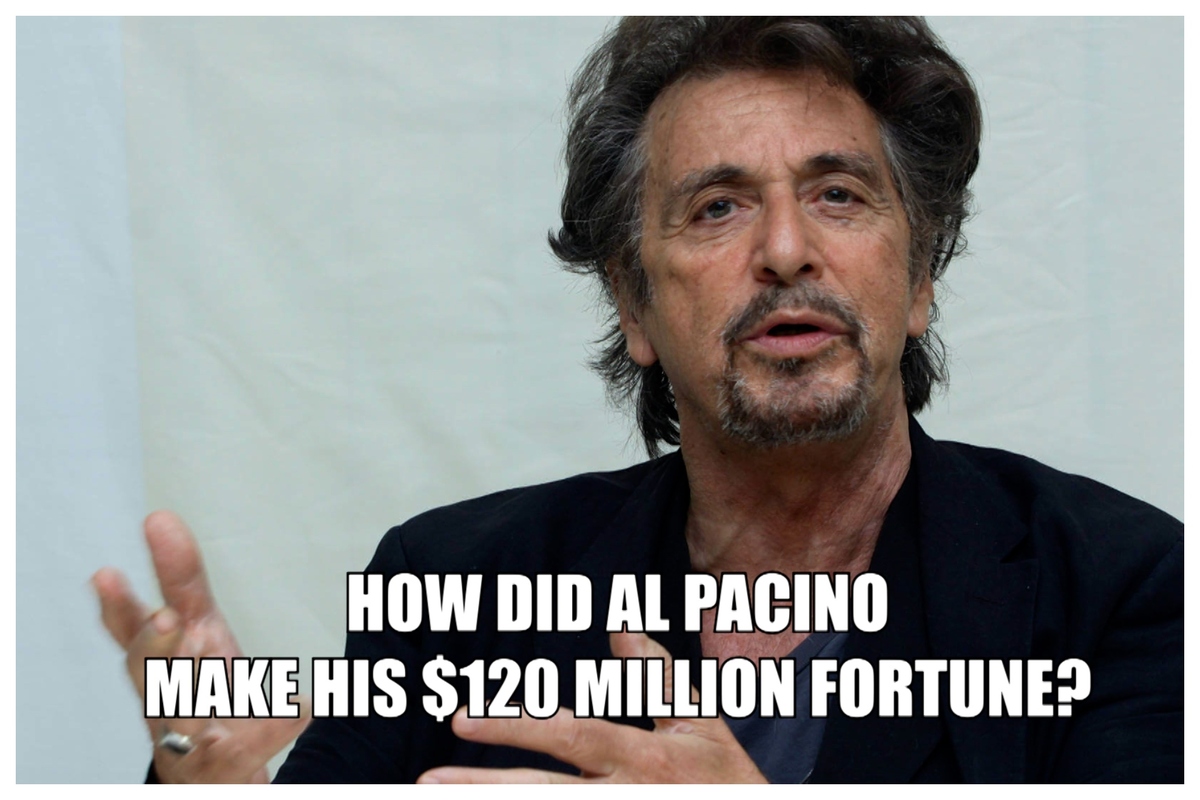
As of 2026, Al Pacino’s net worth is estimated to be approximately $120 million. His financial trajectory reflects a classic Hollywood arc: starting with a modest salary for The Godfather, reaching a peak earning period in the 1990s and early 2000s with $10 million-plus quotes, and navigating a significant financial recovery following a high-profile Ponzi scheme loss in 2011.
The Evolution of a Hollywood Paycheck: The Early Years
To understand Al Pacino’s financial peak, one must look back at the humble beginnings of his career. In 1972, despite being the creative heartbeat of Francis Ford Coppola's The Godfather, Pacino was not yet a bankable star in the eyes of Paramount Pictures. He famously earned just $35,000 for his role as Michael Corleone. When adjusted for inflation to 2026 standards, this figure remains remarkably low for a performance that redefined American cinema.
However, the massive success of the film granted Pacino immense leverage. By the time The Godfather Part II entered production in 1974, his salary skyrocketed to $500,000, plus a 10% share of the film’s net profits. This "backend" deal was the first true cornerstone of his wealth, as the film’s enduring legacy and television licensing deals provided a consistent stream of passive income for decades.
By 1990, for The Godfather Part III, Pacino’s status was such that he reportedly requested $7 million. While he eventually settled for $5 million, the negotiation highlighted a shift in his financial strategy: transitioning from a working actor to a high-value global brand. This period marked the beginning of his transition into the "A-List" salary bracket, where eight-figure paydays became the standard for his presence on a marquee.
Defining the Financial Peak: The 1990s and 2000s
The 1990s represented the true apex of Al Pacino’s earning power relative to the Hollywood economy of the time. During this decade, the "star system" was at its height, and studios were willing to pay premium prices for guaranteed box-office draws. Following his Academy Award win for Scent of a Woman (1992), Pacino’s quote per film stabilized between $10 million and $15 million.
Significant paydays during this era included:
- Heat (1995): A massive cultural event that paired Pacino with Robert De Niro, commanding a salary in the $10 million to $12 million range.
- The Devil’s Advocate (1997): Pacino reportedly took a slight pay cut—allegedly several million dollars—to ensure the production could afford to cast Keanu Reeves, a move that nonetheless kept his earnings in the high seven figures.
- Any Given Sunday (1999): As the centerpiece of Oliver Stone’s football epic, Pacino secured a double-digit million-dollar salary.
During the early 2000s, Pacino continued to command high fees for films like Insomnia and S1m0ne. However, the "peak" of his net worth is often debated because, while his income was at an all-time high, his capital management was about to face a catastrophic challenge.
The Kenneth Starr Scandal and Financial Resilience
In 2011, Al Pacino’s financial health took a severe hit when his financial advisor, Kenneth Starr (not to be confused with the prosecutor of the same name), was arrested for running a $30 million Ponzi scheme. Pacino was among the highest-profile victims, alongside celebrities like Uma Thurman and Sylvester Stallone. The fraud allegedly drained a significant portion of Pacino’s liquid assets, forcing a shift in his professional choices.
Before the scandal, Pacino had become increasingly selective, often appearing in independent theater productions or smaller films. Following the loss, there was a noticeable uptick in his output. He began accepting more frequent roles in commercial projects and television movies, such as HBO’s You Don't Know Jack and Paterno.
This period of "financial rebuilding" actually contributed to a secondary peak in his career earnings. By diversifying into high-budget television and prestige streaming projects, he was able to replenish his wealth. His resilience during this time is a case study in celebrity asset recovery, proving that a high "quote" is the best insurance policy against financial mismanagement.
The Streaming Era: A Second Financial Wind
The landscape of Hollywood changed significantly by the late 2010s, and Al Pacino transitioned seamlessly into the era of big-budget streaming. This shift provided some of the largest single-project paychecks of his entire career.
For Martin Scorsese’s The Irishman (2019), produced by Netflix, Pacino was reportedly paid $20 million. Unlike traditional studio deals, streaming contracts often "buy out" the actor’s backend rights, resulting in a much higher upfront payment to compensate for the lack of long-term residuals. This $20 million figure represents one of the highest single salaries Pacino has ever received for a film.
Furthermore, his foray into series television with Amazon Prime’s Hunters saw him earning an estimated $1 million per episode. Over two seasons, this project alone contributed significantly to his 2026 net worth. These modern contracts are structured differently than his 1970s deals; they provide immediate liquidity, which has been essential for maintaining his lifestyle and investment portfolio in his later years.
Real Estate and Tangible Assets
A significant portion of Al Pacino’s $120 million net worth is tied to his real estate holdings and lifestyle assets. Unlike many of his peers who flip mega-mansions in Los Angeles, Pacino has maintained a relatively stable—though expensive—residential footprint.
- New York Presence: Pacino has long maintained a primary residence in the Snedens Landing area of Palisades, New York. This exclusive enclave, popular with celebrities seeking privacy, features properties valued between $3 million and $10 million.
- Beverly Hills Rentals: For years, Pacino famously preferred renting over owning in Los Angeles. He occupied a massive estate in Beverly Hills for decades, paying monthly rents that reportedly exceeded $30,000. While this might seem like a liability, it allowed him to keep his capital liquid during volatile market periods.
- Art and Collectibles: As a deep lover of the arts and theater, Pacino has curated a collection of scripts, memorabilia, and art over his 50-year career. Given his legendary status, the archival value of his personal collection is estimated to be worth millions should it ever reach the auction block.
Comparative Earnings: Al Pacino Salary Breakdown
The following table outlines the estimated earnings for several of Pacino's most iconic roles, illustrating the progression of his "quote" over time.
| Project | Year | Estimated Salary | Financial Context |
|---|---|---|---|
| The Godfather | 1972 | $35,000 | Breakthrough role; low leverage. |
| The Godfather Part II | 1974 | $500,000 + 10% | First major "star" contract. |
| The Godfather Part III | 1990 | $5,000,000 | Negotiated down from $7M request. |
| Scent of a Woman | 1992 | $6,000,000 | Established his Oscar-winner quote. |
| Heat | 1995 | $10,000,000 | Peak of the 90s star system. |
| The Irishman | 2019 | $20,000,000 | Netflix "buyout" of residuals. |
| Hunters (TV) | 2020-2023 | $1M per Episode | Transition to prestige streaming TV. |
Investment Philosophy and Brand Value
Pacino’s financial philosophy has rarely been about aggressive business ventures or tech investments. Unlike actors like Ryan Reynolds or George Clooney, who built massive wealth through spirits brands or telecommunications, Pacino’s wealth is purely "craft-based." He earns through acting, directing, and occasionally producing.
His brand value in 2026 remains high due to his "legacy status." He is one of the few actors who holds the Triple Crown of Acting (an Oscar, an Emmy, and a Tony). This prestige allows him to command high fees for speaking engagements, masterclasses, and limited-edition literary collaborations. His 2024 memoir, Sonny Boy, was a commercial success, adding a significant seven-figure sum to his wealth through advances and global royalties.
The durability of his net worth is also tied to the continued relevance of his filmography. Every time a streaming service licenses Scarface or Heat, the residual payments—while smaller now than in the DVD era—contribute to the maintenance of his estate.
Frequently Asked Questions
What was Al Pacino’s highest-paid movie role?
Based on reported upfront figures, The Irishman (2019) is Al Pacino’s highest-paid role, with a salary of approximately $20 million. This high figure was largely due to Netflix’s model of paying actors a premium upfront in exchange for forfeiting traditional backend residuals from box office and television syndication.
Did Al Pacino lose all his money in the Kenneth Starr scandal?
He did not lose "all" of his money, but the loss was described as "catastrophic" and "significant." While exact figures were never publicly disclosed, it was enough to fundamentally change his career trajectory, prompting him to take on more consistent work in the 2010s to replenish his savings and cover high fixed living expenses.
How does Al Pacino’s net worth compare to Robert De Niro’s?
As of 2026, Robert De Niro’s net worth is generally estimated to be higher than Pacino’s, often cited in the $500 million range. The primary difference is that De Niro is a prolific businessman and co-founder of the Nobu hospitality empire and Tribeca Enterprises, whereas Pacino’s wealth is almost exclusively derived from his acting career.
Does Al Pacino still earn money from The Godfather?
Yes. Through the Screen Actors Guild (SAG-AFTRA) residual structures, Pacino continues to receive payments for The Godfather trilogy. While the payments for the original 1972 film may be smaller, his 10% net profit participation in Part II has been a significant long-term wealth generator over the last 50 years.
What is Al Pacino's current source of income in 2026?
His current income is a mix of residuals from his vast film library, royalties from his memoir Sonny Boy, and fees for prestige acting roles. At 86, he remains active in the industry, focusing on high-quality independent cinema and voice work, which continue to command premium rates.
Practical Financial Takeaway: Diversification of Talent
For those analyzing Al Pacino's financial history, the primary lesson is the importance of intellectual property and residual value. Pacino’s decision to negotiate for percentage points in The Godfather Part II protected his wealth long after the initial salary was spent. Furthermore, his ability to pivot from film to streaming and television illustrates the importance of adapting one's "brand" to new market realities.
While he faced a major setback through financial fraud, his "human capital"—his talent and legendary status—remained an unassailable asset that allowed him to rebuild his fortune. For any professional, investing in a high-demand skill set is the most effective way to ensure long-term financial resilience.