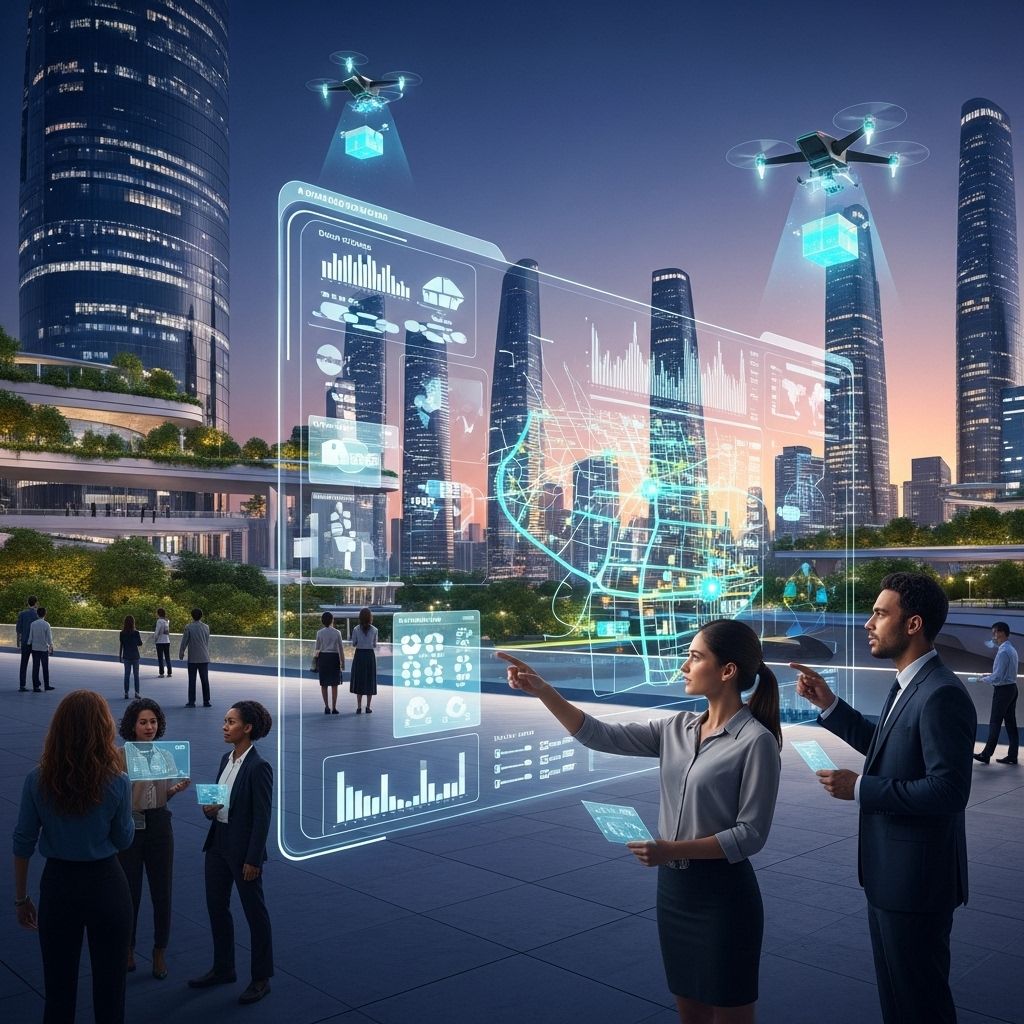
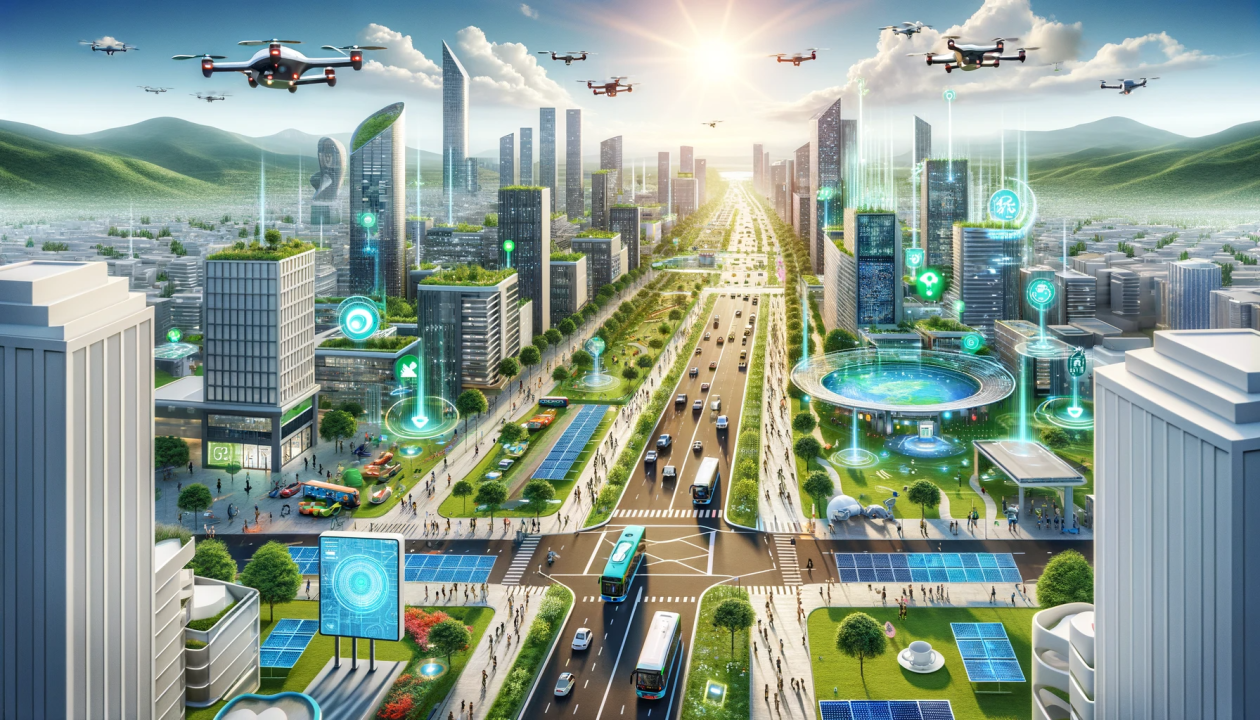
Artificial Intelligence (AI) in urban planning refers to the application of machine learning, predictive analytics, and spatial modeling to optimize city infrastructure, transportation, resource distribution, and land use. By analyzing vast datasets—ranging from traffic flow and energy consumption to environmental sensor output—AI empowers planners to simulate urban growth scenarios, forecast infrastructure demands, and make evidence-based decisions that improve long-term sustainability and resident quality of life.
The Role of AI in Modern Urban Development
The complexity of modern cities has outpaced traditional planning methods. Urban areas today are dynamic systems generating petabytes of data from Internet of Things (IoT) sensors, transit ticketing systems, utility meters, and mobile network activity. AI serves as a bridge, transforming this raw data into actionable insights that human planners can use to balance competing urban demands.
Unlike static master plans that were often outdated shortly after implementation, AI-driven urban planning is iterative and adaptive. It allows for "digital twin" technology—virtual replicas of a city that reflect real-time conditions. Within these digital twins, planners can run high-fidelity simulations to test the impact of a new zoning law or a transit change before a single brick is laid. This reduces the risk of expensive project failure and ensures that infrastructure investments are placed where they will have the maximum positive impact on the population.
Core Application Domains
To understand how AI is effectively deployed in urban environments, it is necessary to categorize the functions by the specific infrastructure or social challenge they address.
Transportation and Mobility
Transportation is arguably the most advanced application of AI in urban planning. Planners use predictive algorithms to model traffic congestion patterns. By integrating real-time data from traffic lights, public transit GPS, and road sensors, AI can suggest adjustments to signal timing to reduce idling or predict which transit routes will face overcrowding during peak hours. This proactive management reduces carbon emissions and improves transit reliability.
Energy and Utility Management
AI helps utility companies and city planners optimize the "smart grid." By predicting energy demand based on historical usage and weather patterns, cities can balance the load, reducing the strain on power stations. In water management, machine learning models analyze sensor data from pipeline networks to detect micro-leaks or pipe vulnerabilities before they lead to catastrophic infrastructure failures, saving millions in maintenance and water wastage.
Land Use and Zoning
Machine learning models are increasingly used to evaluate land suitability for different types of development. By analyzing topographical data, proximity to existing services, flood risks, and demographic shifts, AI models can suggest optimal zoning allocations. This ensures that residential, commercial, and industrial areas are distributed in a way that minimizes travel distances and promotes mixed-use development, effectively reducing urban sprawl.
Implementing AI Projects: A Strategic Workflow
Adopting AI in municipal planning is not merely a technical procurement task; it requires a structural integration into the existing urban governance process. Municipalities follow a rigorous workflow to ensure these tools provide tangible value.
- Data Infrastructure Readiness: Before AI can be applied, a city must aggregate disparate datasets. This often involves cleaning "dirty" data—removing anomalies and standardizing formats across municipal departments.
- Define the Use Case: Cities typically begin with high-impact, low-risk areas, such as optimizing municipal waste collection routes or street lighting schedules, rather than attempting to redesign an entire district immediately.
- Model Training and Verification: Planners select specific algorithms (e.g., neural networks for pattern recognition or random forest models for predictive classification) and train them on local historical data.
- Human-in-the-Loop Validation: No AI decision in urban planning should be autonomous. The system acts as a decision-support tool. Experts review the AI’s output to confirm it aligns with local laws, environmental regulations, and community needs.
- Continuous Monitoring and Feedback: Once implemented, the system tracks performance metrics (e.g., travel time reduction or energy efficiency gains) to refine the underlying model for future cycles.
Comparison of Urban AI Methodologies
Different AI approaches are suitable for different urban challenges. Choosing the right methodology is critical for successful deployment.
| Methodology | Primary Use Case | Technical Focus | Strength |
|---|---|---|---|
| Predictive Analytics | Demand Forecasting | Regression & Time-Series | Accuracy in planning resources |
| Computer Vision | Infrastructure Health | Object Detection | Rapid asset inspection |
| Digital Twins | Urban Simulation | 3D Spatial Modeling | Holistic scenario testing |
| Optimization Algorithms | Logistics & Routing | Linear Programming | Efficiency and cost reduction |
Operational Limitations and Ethical Considerations
While the promise of AI in urban planning is substantial, it is not a panacea. Several critical hurdles prevent universal adoption and necessitate caution.
Data Bias and Inequality
AI models are trained on existing data. If that data reflects historical inequalities—such as the under-investment in certain neighborhoods—the AI may recommend continued disinvestment in those areas. Planners must actively audit their models for bias to ensure that AI does not automate or exacerbate socioeconomic disparities.
Privacy and Cybersecurity
Cities handle sensitive data about their residents. The use of surveillance, mobile tracking, or household utility data raises significant privacy concerns. Municipalities must implement robust anonymization techniques, such as differential privacy, to ensure that insights are gained without compromising individual identity. Furthermore, digitized urban systems are attractive targets for cyberattacks; therefore, any AI system must be housed within a secure, hardened network infrastructure.
Technical Skill Gaps
Many municipal planning departments lack the in-house data science expertise required to manage AI systems. This often leads to over-reliance on third-party vendors. To maintain long-term control over urban planning, cities must invest in "digital literacy" for their urban planners and build internal teams capable of managing, auditing, and evolving these technological assets.
Troubleshooting Common Implementation Failures
When AI systems fail to deliver results in an urban setting, the issue is rarely the underlying code. More commonly, the failure stems from structural or operational misalignments.
- Siloed Data: If the transportation department does not share data with the environmental department, the AI model will miss critical correlations between traffic density and air quality. Breaking down these departmental silos is the single most important administrative step before scaling AI.
- Poor Sensor Maintenance: AI is only as good as the input data. If IoT sensors are not properly maintained and calibrated, the data they feed the model will be inaccurate, leading to flawed planning decisions.
- Neglecting Community Engagement: Technology-led planning can feel cold or technocratic. It is essential to supplement AI-driven decisions with public town halls and community feedback. AI can show where a park should be, but only the community can explain how they use that space.
Frequently Asked Questions
Does AI replace the role of a human urban planner? No. AI is a tool that assists planners by processing data at a scale impossible for humans. It provides the evidence, but human planners remain responsible for the final policy decisions, ethical considerations, and stakeholder communication.
What is a "Digital Twin" in the context of urban planning? A digital twin is a virtual, dynamic model of a city. It integrates real-time data to mirror the physical city's operations. Planners use it to simulate the impact of climate change, infrastructure projects, or policy changes safely within the digital environment.
How does AI contribute to sustainable urban development? AI enables precision efficiency. By optimizing building energy management, traffic flow, and waste collection, cities can significantly reduce their resource footprint, lower emissions, and minimize environmental degradation.
Is AI in urban planning expensive to implement? Initial implementation costs can be high due to data integration needs and software procurement. However, the long-term ROI is typically positive due to saved infrastructure costs, optimized energy consumption, and increased operational efficiency.
How can a small city start using AI without a massive budget? Small cities should start with pilot programs focused on existing data. Many municipalities already have historical transit or energy data. Partnering with local universities or utilizing open-source GIS (Geographic Information System) tools can provide a low-cost entry point into data analysis.
Next Steps for Municipal Planning Agencies
The transition toward AI-integrated planning is a marathon, not a sprint. Municipal authorities should first conduct a comprehensive audit of their data assets. Determine which departments hold valuable data and whether that data is currently in a machine-readable format.
Following the audit, the focus should shift to capacity building. Whether through professional training or strategic partnerships with technology firms, ensure your planning staff understands the fundamentals of data analysis. Finally, launch a small-scale "proof of concept" project—such as an AI-optimized waste collection route—to demonstrate value, secure buy-in from stakeholders, and refine your data pipelines before moving to more complex initiatives like long-term zoning or transit expansion. By focusing on incremental, evidence-based improvements, cities can harness the full potential of AI to create more resilient and efficient urban environments.