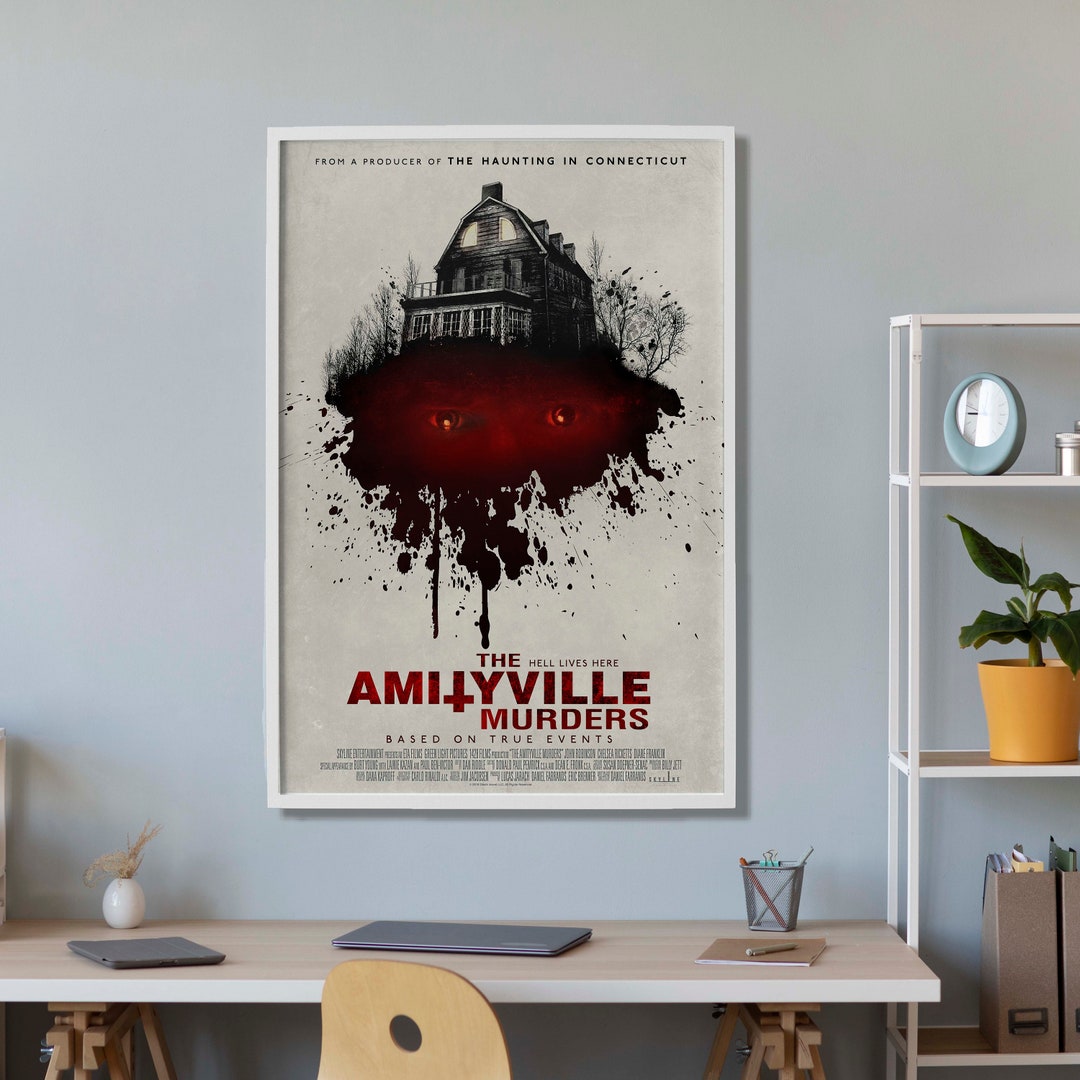
The 2018 film The Amityville Murders, directed by Daniel Farrands, is a psychological horror-thriller that dramatizes the real-life 1974 mass murder of the DeFeo family. Unlike many entries in the franchise that focus on the subsequent haunting of the Lutz family, this movie serves as a prequel, exploring the internal family dynamics and alleged supernatural influences that led Ronald "Butch" DeFeo Jr. to kill his parents and four siblings in their home at 112 Ocean Avenue.
Understanding The Amityville Murders (2018)
While the Amityville franchise consists of dozens of films ranging from big-budget theatrical releases to low-budget independent features, The Amityville Murders holds a specific place in the mythos. Released in late 2018 (and widely distributed in 2019), the film attempts to bridge the gap between "true crime" and the "supernatural horror" that the brand is known for.
Director Daniel Farrands, who also directed The Haunting of Sharon Tate, took a specific interest in the psychological breakdown of Ronald DeFeo Jr. The film is set in the weeks leading up to the fateful night of November 13, 1974. It portrays Butch DeFeo (played by John Robinson) as a young man plagued by a volatile, abusive relationship with his father, Ronald DeFeo Sr. (Paul Ben-Victor), and a growing sense of paranoia fueled by drug use and, as the film suggests, malevolent forces residing within the house.
The movie is notable for casting Diane Franklin as Louise DeFeo. In a meta-nod to the franchise, Franklin previously played the daughter, Chelsea Montelli, in the 1982 sequel Amityville II: The Possession, which was also a fictionalized version of the DeFeo murders. Her return to the franchise as the matriarch of the family added a layer of nostalgia for long-time fans of the series.
The Plot: A Synthesis of History and Horror
The narrative of the movie centers on the mounting tension within the DeFeo household. It deviates from a strictly factual retelling by incorporating many of the "haunting" elements that would later become famous in Jay Anson’s book The Amityville Horror. These include strange noises, cold spots, and the "voices" that Butch claimed commanded him to kill.
The Domestic Conflict
A significant portion of the film’s first half is dedicated to the domestic toxicity of the DeFeo home. Ronald DeFeo Sr. is depicted as a domineering and physically abusive patriarch. This environment provides a grounded, psychological explanation for Butch’s eventual snap. The film suggests that the combination of paternal abuse, Butch’s escalating heroin and LSD use, and the "evil" within the house created a perfect storm of violence.
The Supernatural Influence
As the film progresses, the "voices" Butch hears become more distinct. The movie plays with the idea that the house itself was an active participant in the murders. It incorporates the "Red Room" found in the basement—a detail from the Lutz haunting—suggesting that the demonic presence was already active and manipulating Butch long before the Lutzes arrived. This choice leans into the "cursed land" theory, which posits that the house was built on an ancient burial ground or a site of occult ritual, though these theories have been largely debunked by local historians in real life.
Real-Life Context: The 1974 DeFeo Murders
To understand the movie, one must understand the tragedy that occurred at 112 Ocean Avenue. On November 13, 1974, at approximately 3:15 AM, Ronald DeFeo Jr. used a .35 caliber Marlin 336C rifle to murder six members of his family:
- Ronald DeFeo Sr. (43)
- Louise DeFeo (43)
- Dawn DeFeo (18)
- Allison DeFeo (13)
- Marc DeFeo (12)
- John DeFeo (9)
The victims were all found face-down in their beds, which led to significant forensic confusion. There was no evidence of a struggle, and none of the neighbors reported hearing gunshots, despite the rifle not being equipped with a silencer. These anomalies provided the "fuel" for the subsequent supernatural legends.
Discrepancies Between Film and Reality
While the movie captures the grim atmosphere of the 1970s and the general timeline of the events, it takes significant creative liberties. In the film, Butch is depicted as a victim of supernatural possession or psychological manipulation by entities. In reality, the legal defense attempted to use an insanity plea, claiming Butch heard voices, but the prosecution successfully argued that he was a calculated killer who systematically moved from room to room to eliminate his family, likely to collect on insurance policies or out of pure resentment.
| Feature | Historical Fact (1974) | Movie Depiction (2018) |
|---|---|---|
| Weapon Used | .35 caliber Marlin rifle | Accurately depicted as a rifle |
| Motive | Contested (Insurance, Anger, Drugs) | Supernatural possession/Psychological breakdown |
| Victim Discovery | All found face-down in beds | Follows the historical discovery pattern |
| The "Voices" | Claimed by Butch during trial | Central plot point; depicted as real entities |
| The Red Room | Not mentioned in 1974 police reports | Featured as a source of occult power |
| Family Dynamic | Documented history of domestic abuse | Central theme used to explain Butch's state |
The Cinematic Legacy of the Amityville Murders
The 2018 movie is far from the only attempt to tell this story. The fascination with the Amityville murders stems from the "true story" branding that has persisted since 1977.
Amityville II: The Possession (1982)
This was the first major film to tackle the DeFeo story (renamed the Montelli family for legal reasons). It is significantly more "over-the-top" than the 2018 version, featuring incest subplots and full-scale demonic transformations. Fans of the franchise often compare the two, with the 2018 version being seen as a more somber, albeit lower-budget, attempt to ground the story in the 1970s aesthetic.
The 1979 and 2005 Versions
The original Amityville Horror (1979) and its 2005 remake (starring Ryan Reynolds) begin with the DeFeo murders as a prologue. These films focus on the Lutz family, who moved in 13 months after the murders. The 2018 film is unique because it removes the Lutzes entirely, focusing exclusively on the "prequel" aspect of why the house became "haunted" in the first place.
Production and Technical Execution
As of 2026, The Amityville Murders is viewed by critics as one of the more competent entries in the later years of the franchise. During the 2010s and early 2020s, the "Amityville" name entered the public domain in various ways, leading to a flood of low-quality horror movies that had nothing to do with the original house.
Farrands' film stands out due to:
- Period Authenticity: The production design effectively captures the mid-70s Long Island vibe, using color palettes and costume choices that evoke the era.
- Cast Performance: John Robinson’s portrayal of Butch DeFeo is intense and twitchy, successfully conveying a man losing his grip on reality. Paul Ben-Victor provides a genuinely menacing performance as the father, which helps the audience understand the "human" horror before the "supernatural" horror takes over.
- Special Effects: The film uses a mix of practical effects and CGI to illustrate the haunting elements. While it doesn't have the budget of a Blumhouse production, it manages to create a claustrophobic atmosphere within the house.
Critical Reception and Audience Impact
Upon its release, the film received mixed reviews. Critics often pointed out that the movie struggles to decide if it wants to be a serious biopic of a mass murderer or a traditional jump-scare horror film. By trying to do both, it sometimes loses the gravity of the actual crime.
However, within the horror community, it is praised for its "back-to-basics" approach. In an era (the 2020s) where horror often relies on meta-commentary or extreme gore, The Amityville Murders feels like a throwback to the gritty, exploitation-adjacent horror of the late 70s. It doesn't shy away from the brutality of the killings, which makes for a difficult but impactful viewing experience.
Why the Story Persists in 2026
The enduring appeal of the Amityville story—and this movie specifically—lies in the unsolved mysteries of the case. Forensic scientists and "web sleuths" still debate how one man could kill six people without anyone waking up or fleeing. The movie taps into this fascination by offering the "supernatural" as the missing piece of the puzzle. Whether one believes in ghosts or not, the film provides a narrative solution to a real-life forensic anomaly.
How to Watch and Streaming Availability
As of 2026, The Amityville Murders is widely available on major streaming platforms. It frequently appears on horror-centric services like Shudder and Screambox, and is typically available for rent or purchase on Amazon Prime Video, Apple TV, and Vudu.
For viewers interested in a "marathon" experience, it is best watched as a double feature with the original 1979 The Amityville Horror. Watching the 2018 prequel first provides a chronological look at the "history" of the house, followed by the Lutz family's experiences in the original film.
Common Questions and FAQ
Is the movie "The Amityville Murders" a true story?
The movie is based on the true story of the DeFeo family murders that took place in 1974. However, it incorporates many fictionalized supernatural elements that were never proven or part of the official police record. It is a "dramatized" version of events, blending historical facts with horror movie tropes.
Who plays Butch DeFeo in the 2018 film?
John Robinson plays Ronald "Butch" DeFeo Jr. Robinson is perhaps best known for his role in Gus Van Sant’s Elephant, another film dealing with a tragic shooting, which gave him a unique background for portraying the troubled DeFeo.
Does the movie explain why the family didn't wake up?
The film suggests that a supernatural force or a "spell" cast by the house kept the family members in a deep sleep while the murders occurred. In reality, toxicology reports were negative for sedatives, and the lack of response from the victims remains one of the most debated aspects of the actual crime.
How does this movie connect to the "The Conjuring" universe?
While the real-life Ed and Lorraine Warren investigated the Amityville house (as seen in the prologue of The Conjuring 2), The Amityville Murders is not part of the official "Conjuring Universe" produced by Warner Bros. It is an independent production focusing on the historical events rather than the Warrens' investigation.
Where was "The Amityville Murders" filmed?
While the story takes place in Amityville, New York, the movie was primarily filmed in California. The original house at 112 Ocean Avenue has been significantly remodeled over the decades and the owners do not allow filming on the property to discourage "dark tourism."
Final Recommendations for Viewers
If you are a true-crime enthusiast, The Amityville Murders offers a dark look into the DeFeo family's final days, though you should be prepared for the supernatural detours the script takes. For horror fans, it is a solid, atmospheric entry into the Amityville canon that avoids some of the "cheapness" found in other modern spin-offs.
For the most comprehensive understanding of the subject, viewers are encouraged to supplement the movie with a documentary on the DeFeo case, such as Shattered Hopes: The True Story of the Amityville Murders, which provides a more evidence-based look at the legal and forensic side of the tragedy.