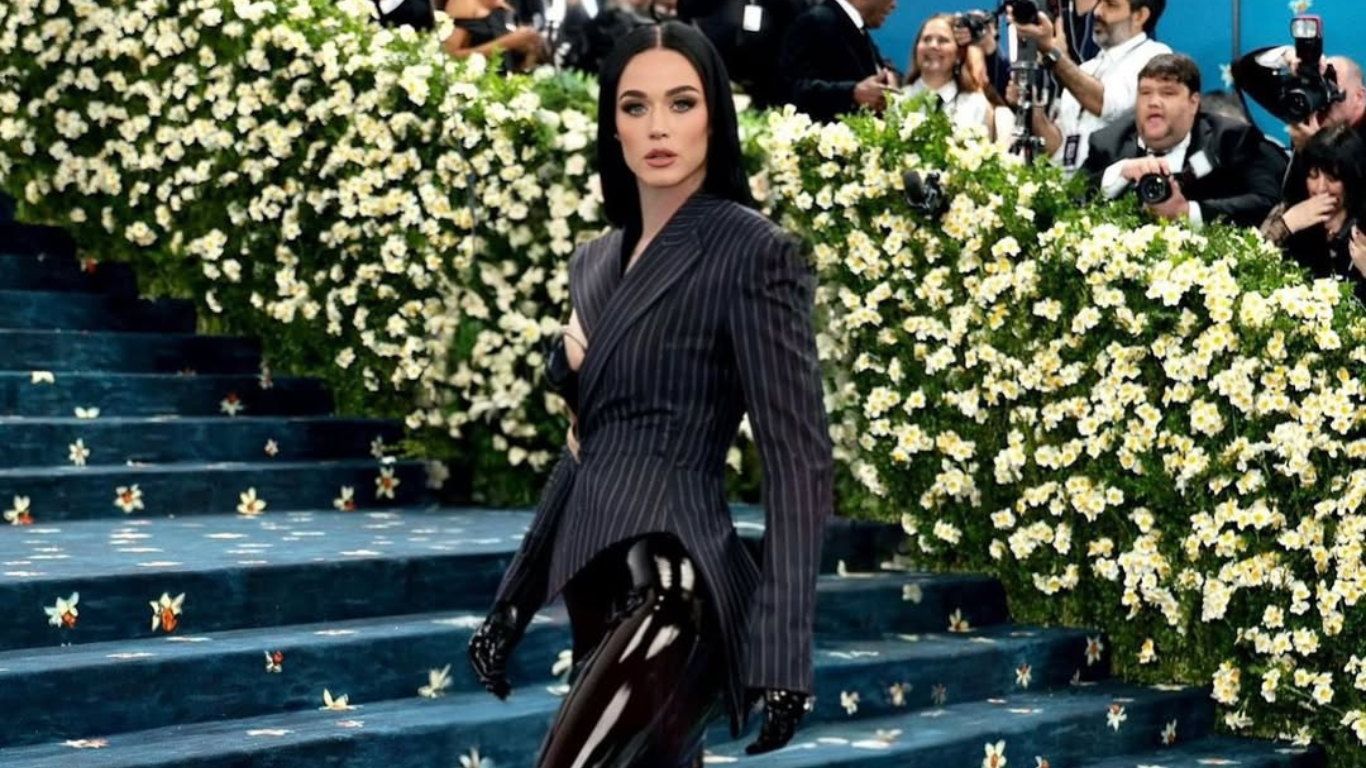
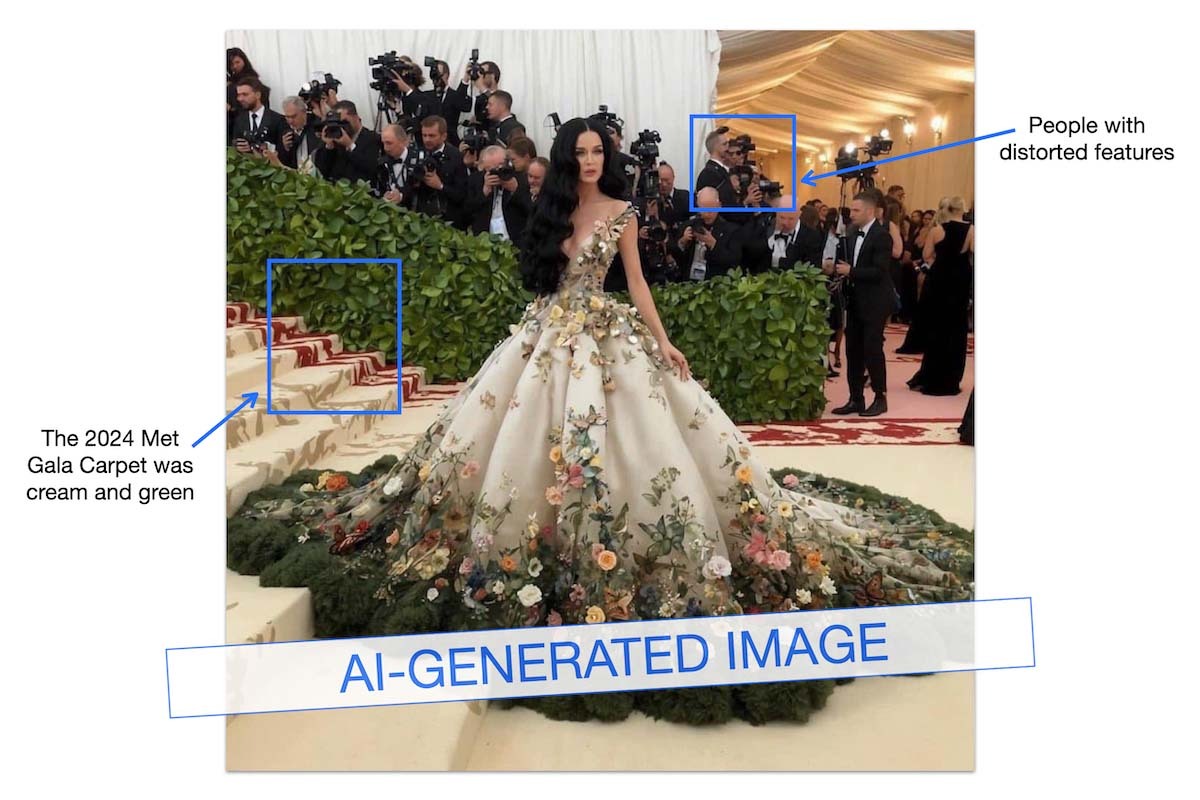
The viral images of Katy Perry at the 2024 Met Gala, which circulated widely on social media despite the singer not being in attendance, were sophisticated AI-generated deepfakes. Created using generative artificial intelligence tools, these hyper-realistic depictions misled millions, highlighting the growing capability of synthetic media to convincingly fabricate high-profile public events.
The Phenomenon of the Fabricated Met Gala Appearance
In May 2024, images surfaced online claiming to show pop star Katy Perry walking the red carpet at the Metropolitan Museum of Art’s Costume Institute Gala. The images featured the singer in two distinct, highly intricate gowns—one adorned with floral motifs and another featuring a Victorian-inspired aesthetic—that perfectly aligned with the evening's "Garden of Time" dress code.
The realism of these images was sufficient to deceive even seasoned fans and some media outlets. The manipulation was so precise that Perry’s own mother reportedly texted the singer to compliment her on the look, a fact later shared by Perry on her official social media accounts to confirm she was not actually present at the event. This incident serves as a primary case study in the current era of synthetic media, where the boundary between documented reality and AI-generated fabrication has become increasingly porous.
How These AI Recreations Are Produced
The creation of an "AI recreation" of a celebrity typically involves a multi-stage process utilizing Generative Adversarial Networks (GANs) or diffusion models. In the case of the Katy Perry images, several technical factors contributed to their believability:
- High-Quality Source Data: AI models are trained on massive datasets of public figures. Because Katy Perry is one of the most photographed people in the world, the model had access to thousands of high-resolution reference images, allowing it to accurately replicate her facial structure, expressions, and signature styling.
- Contextual Prompting: The creators utilized text-to-image prompts that integrated specific keywords related to the Met Gala—such as "red carpet," "Vogue photographer lighting," and "couture gown"—which helped the AI simulate the specific aesthetic quality of professional gala photography.
- In-Painting and Upscaling: Once an initial image is generated, creators often use additional tools to refine textures, fix anatomical inconsistencies (such as fingers or jewelry), and upscale the resolution to match professional camera output.
The sophistication of these tools, such as Midjourney, DALL-E 3, and Stable Diffusion, has lowered the barrier to entry for creating high-fidelity fakes, shifting the responsibility of verification from the creator to the viewer.
Verification and Detection Challenges
Distinguishing between a real photograph and an AI-generated recreation has become a significant challenge for social media platforms and the general public. While some AI detections look for "tells"—such as distorted backgrounds, unnatural skin textures, or illogical shadows—modern generative models are rapidly evolving to eliminate these flaws.
Indicators of Synthetic Media
| Feature | AI-Generated Traits | Professional Photography Traits |
|---|---|---|
| Focus/Depth | Often uniform across the entire image | Shallow depth of field; distinct bokeh |
| Jewelry/Fabric | Textures may appear fused or "plasticky" | Visible thread counts and individual metal links |
| Backgrounds | Crowd members may have blurred/distorted faces | Consistent motion blur or sharp background details |
| Metadata | Often missing or scrubbed EXIF data | Contains camera model, lens info, and timestamp |
Even when metadata is present, it can be spoofed or stripped away during file uploads to social media, which often compress images and remove hidden markers. Consequently, the most reliable verification method remains cross-referencing with official event footage or verified statements from the subject’s representatives.
The Impact on Public Perception and Celebrity Branding
The unauthorized recreation of a celebrity’s likeness at a major cultural event presents significant ethical and legal concerns. For Katy Perry, the "Met Gala" images were relatively benign, acting as a testament to her fashion influence. However, the potential for misuse—such as placing a celebrity in a compromising scenario or using their likeness to endorse products without consent—is immense.
From a branding perspective, these incidents highlight a loss of control over one's digital identity. When thousands of users share synthetic images as fact, the celebrity’s actual movements and professional activities can be obscured by a cloud of misinformation. This forces publicists and talent management teams to implement more rigorous digital monitoring strategies, ensuring that official channels are the primary source of truth for their clients' whereabouts.
Legal and Platform Policy Considerations
As of 2026, the legal framework governing AI-generated likenesses remains a complex, evolving landscape. In many jurisdictions, the "Right of Publicity" protects individuals from the unauthorized commercial use of their name or likeness. However, these laws were largely written before the widespread availability of generative AI, and applying them to social media posts—which often occupy a gray area between creative expression and misinformation—remains difficult.
Social media platforms have updated their terms of service to include labels for AI-generated content. These policies are designed to mitigate the spread of disinformation by automatically flagging images that are detected as synthetic. Despite these technical measures, the speed at which images go viral often outpaces the platform's ability to verify or tag them, leading to prolonged periods where a fake image is accepted as reality.
Frequently Asked Questions
1. Was Katy Perry banned from the Met Gala? No. There is no evidence that Katy Perry was banned from the Met Gala. Her absence in 2024 was due to professional scheduling conflicts, which she clarified after the AI images went viral.
2. Why did people believe the AI photos were real? The photos were visually consistent with the aesthetic of the event and featured high-resolution details that mimicked professional photography styles, making them difficult to distinguish from genuine red-carpet images on a mobile screen.
3. Are there laws against creating AI images of celebrities? Laws vary by jurisdiction. While some regions have implemented strict policies regarding "digital replicas" and non-consensual deepfakes, many jurisdictions still struggle to balance creative freedom with the right to one's own image.
4. How can I avoid being misled by AI photos in the future? Always check official accounts of the celebrity or the event organizers. If a major news event occurs, wait for coverage from reputable, established news organizations that verify their sources rather than relying on viral social media posts.
5. Do AI generators put watermarks on their images? Some platforms include C2PA metadata or subtle watermarks, but these are easily removed by users or lost during the image compression processes standard on most social media platforms.
Recommendations for Navigating Digital Media
To ensure you are not misled by AI recreations, adopt a "Verify-Before-Sharing" mindset. When you see a surprising image of a celebrity at a major event, perform a quick search for their name alongside the event name. If no reputable news outlet has reported on it, or if the celebrity has not posted about it on their own verified social media channels, it is highly probable that the image is synthetic.
As generative AI continues to improve in quality, reliance on visual evidence alone will become increasingly dangerous. Developing a healthy skepticism of high-engagement, unverified viral images is the most effective way to maintain an accurate understanding of current events in the digital landscape.