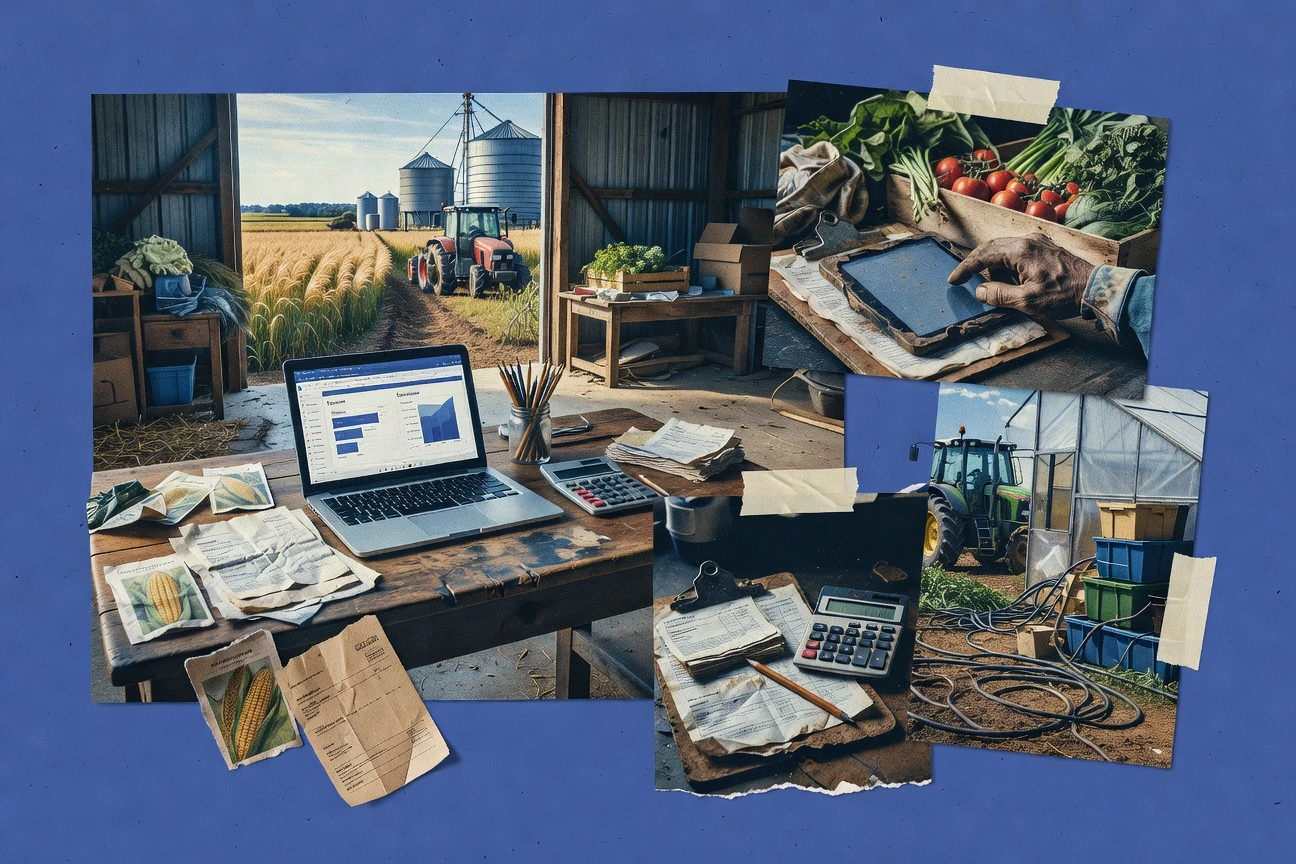
Agricultural accounting software is a specialized financial management tool designed to track the unique variables of farming and ranching, such as biological asset valuation, production cost per unit, and multi-year harvest cycles. Unlike general accounting programs, these systems integrate inventory management for chemicals and grain with specialized tax reporting to provide a clear picture of a farm’s financial health and operational efficiency.
The transition from general-purpose ledger software to specialized agricultural systems has become a necessity for modern agribusinesses. In 2026, the complexity of global supply chains, fluctuating commodity prices, and the integration of carbon credit markets require a level of financial granularity that standard "off-the-shelf" software cannot provide. This guide examines the essential components, market-leading solutions, and strategic implementation of agricultural accounting software.
Why Traditional Accounting Software Fails Agribusiness
Most commercial accounting packages are built for the "buy-and-sell" retail model or the "service-hour" model. Agriculture, however, is a biological manufacturing process. The fundamental differences in how value is created and tracked necessitate a different logic in the underlying software.
Management of Biological Assets
In a standard business, inventory remains static until sold or depreciated. In agriculture, assets grow. A calf becomes a heifer; a seedling becomes a harvestable crop. Under international standards like IAS 41 (Agriculture), these assets must often be measured at fair value less costs to sell. Agricultural accounting software automates these adjustments, whereas general software requires manual, error-prone journal entries to reflect the changing value of living inventory.
Production Cycle Mismatches
Standard accounting software typically operates on a monthly or quarterly basis. Agriculture operates on a production cycle that often spans multiple fiscal years. For example, the expenses incurred for a winter wheat crop in late 2025 are not recouped until the harvest in mid-2026. Specialized software allows for "Crop Year Reporting," which matches expenses to the specific harvest regardless of when the invoice was paid, providing a true "Cost of Production."
Activity-Based Costing (ABC)
To understand profitability, a farmer must know the cost of production for a specific field, a specific variety of seed, or a specific herd. Agricultural systems use a "Cost Center" or "Enterprise" approach. Every gallon of diesel and every hour of labor is allocated to a specific enterprise. This level of detail is vital for determining whether to rotate crops or liquidate a specific segment of the operation.
Essential Features of Modern Agricultural Accounting Systems
When evaluating software in 2026, several non-negotiable features distinguish professional-grade agricultural platforms from basic bookkeeping tools.
1. Robust Inventory and Input Tracking
Farmers must track "inputs"—seed, fertilizer, fuel, and chemicals—from the moment of purchase to the moment of application. Leading software provides real-time inventory updates. When a digital "field record" shows that 500 gallons of nitrogen were applied, the accounting software should automatically decrease inventory levels and increase the work-in-progress (WIP) value of that specific crop.
2. Multi-Entity and Multi-Owner Support
Many modern farms are structured as multiple legal entities for liability and tax purposes. One entity may own the land, another the equipment, and a third may operate the farm. Software like CenterPoint or Traction Ag allows for consolidated reporting, enabling owners to see the financial health of the entire operation while maintaining separate books for each legal entity.
3. Integrated Payroll for Seasonal Labor
Agricultural payroll is notoriously complex due to H-2A visa requirements, piece-rate pay, and various state-specific agricultural labor laws. Specialized software handles these nuances, including housing allowances and specialized tax withholdings that standard payroll providers often overlook.
4. Specialized Financial Reporting
Beyond the standard Profit & Loss and Balance Sheet, agricultural software generates specific reports required by lenders and regulators:
- Schedule F (Form 1040) Preparation: Specifically for U.S. markets, automating the categorization of farm income and expenses.
- Unit Cost Analysis: Breaking down costs to the "per bushel," "per pound," or "per hundredweight" (cwt) level.
- Breakeven Analysis: Real-time calculations of the market price needed to cover total production costs.
Leading Agricultural Accounting Software in 2026
The market is divided between cloud-native solutions and robust desktop-based systems that offer deeper customization. The following table compares the primary contenders as of the 2026 fiscal year.
| Software | Deployment | Primary Strength | Best For |
|---|---|---|---|
| Traction Ag | Cloud | Integration with FMS (Farm Management Systems) | Mid-to-large crop farms seeking automation |
| Figured | Cloud | Advanced production tracking (works with Xero/QuickBooks) | Livestock and crop farms using Xero/QBO |
| CenterPoint (Red Wing) | Desktop/Cloud | Deeply customizable cost-center reporting | Large, complex agribusinesses and CFOs |
| EasyFarm | Desktop | Simplicity and historical reliability | Small to mid-sized family farms |
| FarmBooks | Desktop/Cloud | Ease of use for traditional bookkeeping | Producers transitioning from spreadsheets |
Traction Ag: The Integration Leader
In 2026, Traction Ag stands out for its ability to link financial data directly with field operations. By integrating with John Deere Operations Center and other telematics, it can automatically pull fuel usage and machine hours into the accounting ledger, reducing the need for manual data entry.
Figured: The Collaborative Powerhouse
Figured is not a standalone accounting package but a "layer" that sits on top of Xero or QuickBooks Online. It provides the agricultural logic (valuations, production tracking) while the underlying software handles the bank feeds and general ledger. This is particularly popular for farms that work closely with external accountants who are already familiar with Xero or QuickBooks.
CenterPoint by Red Wing Software
For operations that require massive amounts of data and highly specific reporting structures, CenterPoint remains the industry standard. It handles the most complex multi-entity structures and provides the most granular control over depreciation schedules and specialized agricultural tax codes.
Implementation Strategy: From Spreadsheets to the Cloud
Transitioning to a specialized system is a significant undertaking that requires a structured approach. Mistakes during the setup phase can lead to inaccurate data that persists for years.
Step 1: Data Cleanup and Mapping
Before importing data, clear out "stale" accounts. Ensure your Chart of Accounts (COA) is aligned with industry standards (such as those recommended by the Farm Financial Standards Council). You must decide your "level of detail"—will you track costs by crop type, by field, or by specific seed variety?
Step 2: Selecting the "Source of Truth"
Decide which system will be the primary record. Does your field management software (which tracks planting and spraying) feed into your accounting software, or is it the other way around? In 2026, the trend is toward "API-first" ecosystems where data flows seamlessly between telemetry, agronomy, and finance.
Step 3: Parallel Running
Never shut down your old system on day one. Run your new agricultural accounting software alongside your previous method (spreadsheets or general software) for at least one full quarter. This allows you to verify that your "Cost of Production" calculations in the new system match your historical reality.
Step 4: Training and Adoption
The software is only as good as the data entered by the farm manager, the bookkeeper, and the field hands. Ensure that everyone involved understands the importance of "Enterprise Accounting." If a fuel receipt isn't coded to a specific tractor or field, the software's advanced analytics become useless.
The Role of ESG and Carbon Accounting in 2026
A major shift in 2026 is the requirement for "Triple Bottom Line" reporting. Agribusinesses are increasingly required to report on their environmental impact to secure favorable lending rates or to participate in carbon credit markets.
Modern agricultural accounting software now includes modules for Carbon Sequestration Tracking. By linking soil health data with financial records, farmers can put a monetary value on the carbon they are sequestering. This "Green Ledger" is becoming as important as the financial ledger for securing ESG-linked (Environmental, Social, and Governance) financing from major agricultural lenders like Rabobank or Farm Credit Services.
Technical Requirements and Security
In 2026, security is a paramount concern as farm data has become a target for industrial espionage and ransomware.
- Multi-Factor Authentication (MFA): Essential for all cloud-based financial portals.
- Offline Access: Given that many farms operate in areas with spotty 5G coverage, the best software offers a "Local-First" sync, where data is cached locally and uploaded once a connection is re-established.
- API Interoperability: Ensure the software uses open API standards so it can talk to your grain elevator's portal, your bank, and your equipment's onboard computers.
Frequently Asked Questions
Can I just use QuickBooks for my farm?
While you can use QuickBooks, it requires extensive "workarounds" to handle agricultural needs. You would have to manually track biological growth, manage complex inventory for chemicals, and build custom spreadsheets to calculate cost-per-bushel. Specialized software automates these tasks, saving hundreds of hours and reducing the risk of audit errors.
How much does agricultural accounting software cost in 2026?
Pricing typically follows a SaaS (Software as a Service) model. Small operations can expect to pay between $600 and $1,200 per year. Larger, multi-entity agribusinesses requiring advanced features like API integrations and custom reporting can pay upwards of $3,000 to $5,000 annually.
Does this software help with agricultural tax audits?
Yes. Specialized software is built around the tax codes that govern agriculture (such as cash-basis accounting vs. accrual-basis). It maintains a clean "audit trail" for every transaction, linking receipts to specific field operations, which is invaluable during a regulatory or tax inspection.
Is it difficult to switch from a desktop system to the cloud?
The technical transition is straightforward, as most modern cloud platforms offer data migration tools. The challenge is often operational; cloud systems require a consistent (though not constant) internet connection and a shift in mindset toward real-time data entry rather than end-of-month batch processing.
Can the software track "In-Kind" payments or labor?
Yes. Many agricultural operations involve bartering—for example, trading labor for equipment use or grain for rent. Agricultural accounting software is designed to handle these non-cash transactions correctly for both management and tax purposes, ensuring the fair market value is recorded.
Final Recommendation
For most mid-sized operations in 2026, Traction Ag or a Figured/Xero combination offers the best balance of modern cloud features and agricultural specificity. However, if you are a large-scale agribusiness with complex multi-entity requirements, the investment in CenterPoint remains the most robust choice for long-term financial clarity. Regardless of the platform, the goal is to move beyond simple bookkeeping toward "Financial Agronomy"—using your numbers to grow your profit as effectively as you grow your crops.