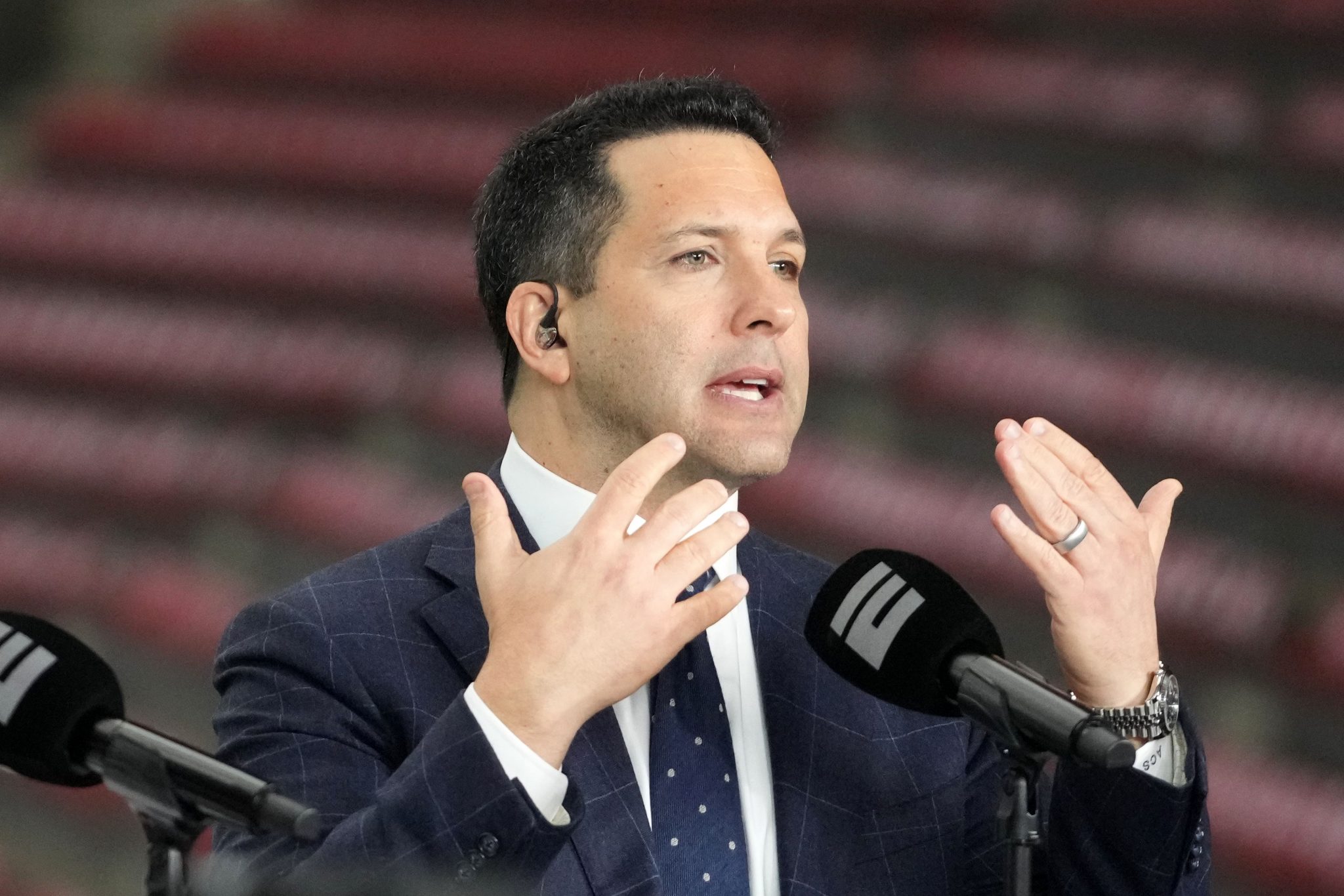
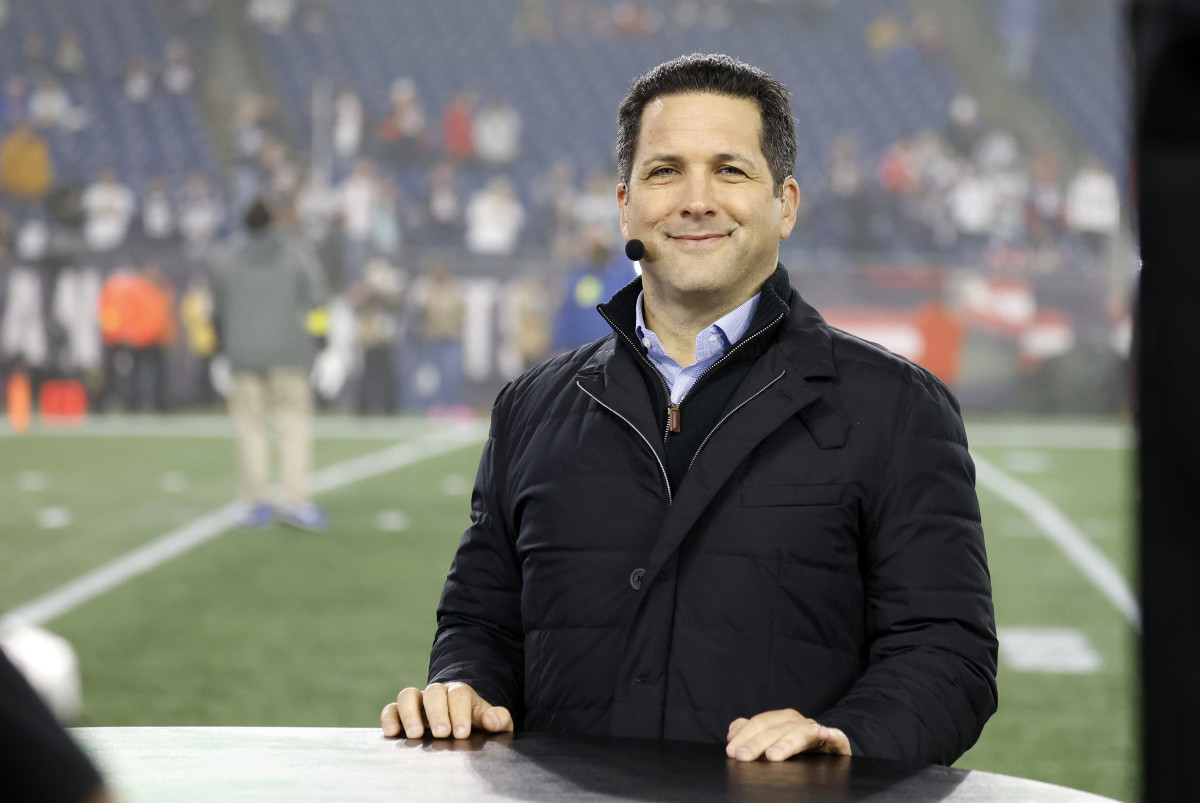
Adam Schefter is currently 59 years old, having been born on October 21, 1966. As a prominent figure in American sports journalism, his career has spanned decades, moving from local print reporting to becoming the primary face of NFL news for ESPN. His age reflects a career trajectory that has transitioned through multiple eras of sports media, from the dominance of daily newspapers to the rapid-fire ecosystem of social media and digital broadcasting.
The Early Life and Formative Years of Adam Schefter
Adam Schefter’s professional life did not begin in front of a camera. Born in Valley Stream, New York, he spent his youth developing the work ethic and analytical mindset that would later define his reporting style. After graduating from the University of Michigan in 1989, he pursued a Master’s degree in journalism from Northwestern University’s Medill School of Journalism. This academic background provided him with the structural foundations of objective, source-driven journalism, a skill set that has remained the bedrock of his career in a fast-paced, often speculative industry.
His entry into the professional landscape started in the era of regional newspapers. Working for the Rocky Mountain News in Denver, Colorado, Schefter spent years building a reputation within the industry before he became a household name. This period is crucial for understanding his professional longevity; unlike media personalities who achieve instant fame through digital platforms, Schefter spent two decades honing his craft in print media, which involved building deep, trust-based relationships with coaches, general managers, and league executives.
The Transition to National Prominence
By the time the early 2000s arrived, Schefter had established himself as a premier NFL insider. His transition from print media to television was gradual, facilitated by his growing reputation as the go-to source for breaking news. When he joined the NFL Network in 2004, he brought a level of detail and sourcing integrity that was somewhat rare for television sports reporting at the time.
His eventual move to ESPN in 2009 marked the consolidation of his influence. In the context of his life today, at age 59, it is important to recognize that a significant portion of his career success has been predicated on the "insider" model. This model involves balancing the need for speed with the absolute necessity of accuracy. In an era where news is leaked via social media seconds after a transaction occurs, Schefter’s ability to verify information with multiple stakeholders serves as a case study for modern journalistic standards in the digital age.
Career Milestones and Industry Impact
Schefter’s impact on the sports journalism industry is characterized by the integration of traditional sourcing methods with modern social media speed. Throughout his 30-plus years in the industry, he has navigated the shift from the 24-hour news cycle to the "constant" news cycle.
Key Professional Milestones
- The Print Era (1990–2004): Developing long-term, high-level contacts while reporting for the Denver Post and Rocky Mountain News.
- The Broadcast Evolution (2004–2009): Transitioning his print-based sourcing into high-frequency television appearances at the NFL Network.
- The ESPN Era (2009–Present): Establishing himself as the definitive voice for breaking NFL news, influencing draft coverage, trade deadline activity, and free agency.
His role has expanded significantly beyond the written word. Today, he is a multimedia presence, utilizing podcasts, long-form interviews, and real-time social media updates. This adaptability is perhaps the most significant reason he has maintained his relevance in the industry as he approaches his sixth decade.
The "Insider" Model and Journalistic Standards
For those who follow professional sports, Schefter’s work represents a unique intersection of business and entertainment. The NFL has grown into a multi-billion-dollar enterprise, and the information regarding player contracts, draft picks, and coaching changes directly impacts the public perception of the league’s economic landscape.
Essential Principles of Schefter’s Reporting
- Verification: A commitment to confirming information through multiple independent sources before publishing, a practice that reduces the risk of misinformation in high-stakes negotiations.
- Neutrality: Maintaining a professional distance from teams and players to ensure that reporting remains objective, even when the news is unfavorable to the subjects involved.
- Speed vs. Accuracy: The calculated risk of waiting for confirmation while competitors may attempt to be the "first" to report.
While critics sometimes argue about the ethics of "breaking" news that impacts a person's livelihood, Schefter’s career has remained stable, largely because of his adherence to the established protocols of sports journalism. He treats contract leaks and injury updates as institutional data, providing transparency in an industry that is historically opaque.
Comparing Media Eras: Then vs. Now
To understand the professional environment in which Schefter has operated for the last three decades, it is helpful to compare the landscape of sports journalism at different intervals of his career.
| Feature | The 1990s (Early Career) | The 2020s (Current Era) |
|---|---|---|
| Primary Medium | Daily Print Newspaper | Social Media & Digital Broadcast |
| Information Flow | Once daily (next morning) | Instantaneous / Real-time |
| Sourcing | In-person/Landline phone | Encrypted Messaging/Direct DMs |
| Accountability | Editors and Fact-checkers | Public scrutiny and real-time correction |
| Scope of Influence | Regional | Global / Multi-platform |
As shown in the table above, the shift in technology has forced reporters to adapt fundamentally. Schefter’s ability to remain at the top of his field while moving from the era of the morning edition to the era of the "push notification" is a testament to the stability of his professional methods.
Frequently Asked Questions
What is the secret to Adam Schefter’s longevity?
The secret to his longevity lies in the depth of his professional relationships. By spending years in the print media landscape, he fostered trust with sources who knew he would not burn them. This long-term relationship-building remains more valuable than any specific technological tool he might use today.
How does Schefter verify his sources?
Schefter generally adheres to the standard journalistic protocol of verifying information with at least two or more independent, high-level sources. In the context of NFL contracts or personnel changes, these sources often include agents, front-office personnel, or team-level executives.
Has Adam Schefter ever worked outside of sports journalism?
No. Since completing his education at the University of Michigan and Northwestern, his career has been focused entirely on sports journalism. He has remained consistent in his professional trajectory, which is a rarity in a media landscape that often sees personality shifts into entertainment or non-sports roles.
How has social media changed his job?
Social media has shifted the focus from writing long-form pieces to the immediate delivery of information. This has forced him to become a real-time producer of content, where the "headline" is often the most important part of the reporting process, requiring him to be available 24 hours a day during peak NFL seasons.
What is his educational background?
Schefter holds a Bachelor’s degree from the University of Michigan and a Master’s degree from Northwestern University’s Medill School of Journalism. These institutions are among the most respected in the United States for journalistic training, which likely influenced his structured approach to news gathering.
Navigating the Future of Sports Journalism
As Schefter looks ahead in his career, the industry continues to evolve. The rise of AI-driven sports analytics and the democratization of information through independent newsletters and sub-stack publications suggest that the role of the "insider" will change again. However, the core requirement of journalism—the human element of trust—remains unchanged.
For those interested in following in his footsteps, the primary lesson is that media platforms are temporary, but reputation is permanent. The transition from the 1990s to the mid-2020s shows that while the tools (fax machines vs. smartphones) may change, the necessity of being an accurate, reliable source remains the ultimate currency in sports media.
For individuals seeking to break into this field, the path requires a dedication to the same "old school" principles Schefter utilized early in his career: showing up in person, developing a network of contacts, and prioritizing accuracy above all else. Whether one is reporting on professional football or any other fast-paced industry, the ability to act as a verified conduit of information is a professional skill that remains highly valued in an age of constant misinformation.