AARP Medicare Supplement Plan G, administered through UnitedHealthcare, is a standardized Medicare Supplement insurance (Medigap) policy designed to help beneficiaries pay for out-of-pocket costs not covered by Original Medicare. It is one of the most comprehensive options available to enrollees who became eligible for Medicare on or after January 1, 2020, offering extensive coverage for deductibles, copayments, and coinsurance associated with Part A and Part B services.
The Role of Medigap in Your Healthcare Strategy
Medicare Supplement Insurance, commonly referred to as Medigap, is private insurance that works alongside your Original Medicare (Part A and Part B) coverage. It is vital to understand that Medigap is not the same as a Medicare Advantage plan. While Medicare Advantage replaces your Original Medicare with a private network-based plan, Medigap simply "fills the gaps" in your existing federal coverage.
When you enroll in AARP Medicare Supplement Plan G, you retain the flexibility to see any doctor or specialist in the United States who accepts Medicare. There are no restrictive provider networks, and you generally do not need a referral to see a specialist. Because Medicare Supplement plans are standardized by the federal government, the benefits provided by a Plan G offered by one insurance company are identical to the benefits provided by a Plan G offered by another. The primary differences lie in the premium costs, the financial stability of the insurance carrier, and the customer service experience.
Benefits and Coverage Details of Plan G
Plan G is categorized as one of the most robust Medigap options because it covers almost all of the cost-sharing requirements mandated by Original Medicare. If you are a Medicare beneficiary, the specific coverage provided by Plan G includes:
- Medicare Part A Coinsurance and Hospital Costs: Plan G covers your share of hospital costs for an additional 365 days after Medicare benefits are exhausted.
- Medicare Part B Coinsurance or Copayment: This covers the 20% of Medicare-approved costs that you would typically be responsible for after meeting your Part B deductible.
- Blood Coverage: It pays for the first three pints of blood needed for a medical procedure, which is not covered by Original Medicare.
- Part A Hospice Care Coinsurance: This includes coverage for respite care and other hospice-related cost-sharing.
- Skilled Nursing Facility Care Coinsurance: It covers your coinsurance for stays in a skilled nursing facility.
- Medicare Part A Deductible: Plan G pays for the entirety of your Medicare Part A inpatient hospital deductible.
- Foreign Travel Emergency: In cases where you need emergency care while traveling abroad, Plan G covers 80% of foreign travel emergency costs (after you meet a small annual deductible), up to plan limits.
What Plan G Does Not Cover
The defining feature of Plan G is that it does not cover the Medicare Part B deductible. As of 2026, you are responsible for paying this specific annual amount out of pocket before your supplemental coverage for Part B coinsurance begins to pay. Additionally, like all standardized Medigap plans, Plan G does not provide coverage for prescription drugs, vision care, or dental services. To obtain these benefits, many beneficiaries choose to enroll in a standalone Medicare Part D prescription drug plan.
Enrollment Eligibility and the Open Enrollment Period
The most important window for securing a Medigap policy is your Medigap Open Enrollment Period. This is a six-month window that begins automatically on the first day of the month in which you are age 65 or older and enrolled in Medicare Part B.
During this specific time, you have a federal "guaranteed issue" right. This means that insurance companies, including those offering AARP Medicare Supplement plans, must sell you any Medigap policy they offer, regardless of your health history or pre-existing conditions. They cannot charge you more or deny you coverage based on medical underwriting.
If you miss this window, you may be subject to medical underwriting. In most states, this allows the insurance provider to look at your health history to determine whether to accept your application and what your premium will be. There are limited exceptions to this rule, such as "guaranteed issue rights" triggered by specific life events, such as losing your current employer-sponsored coverage or moving out of a Medicare Advantage plan's service area.
Comparing Plan G to Other Medigap Options
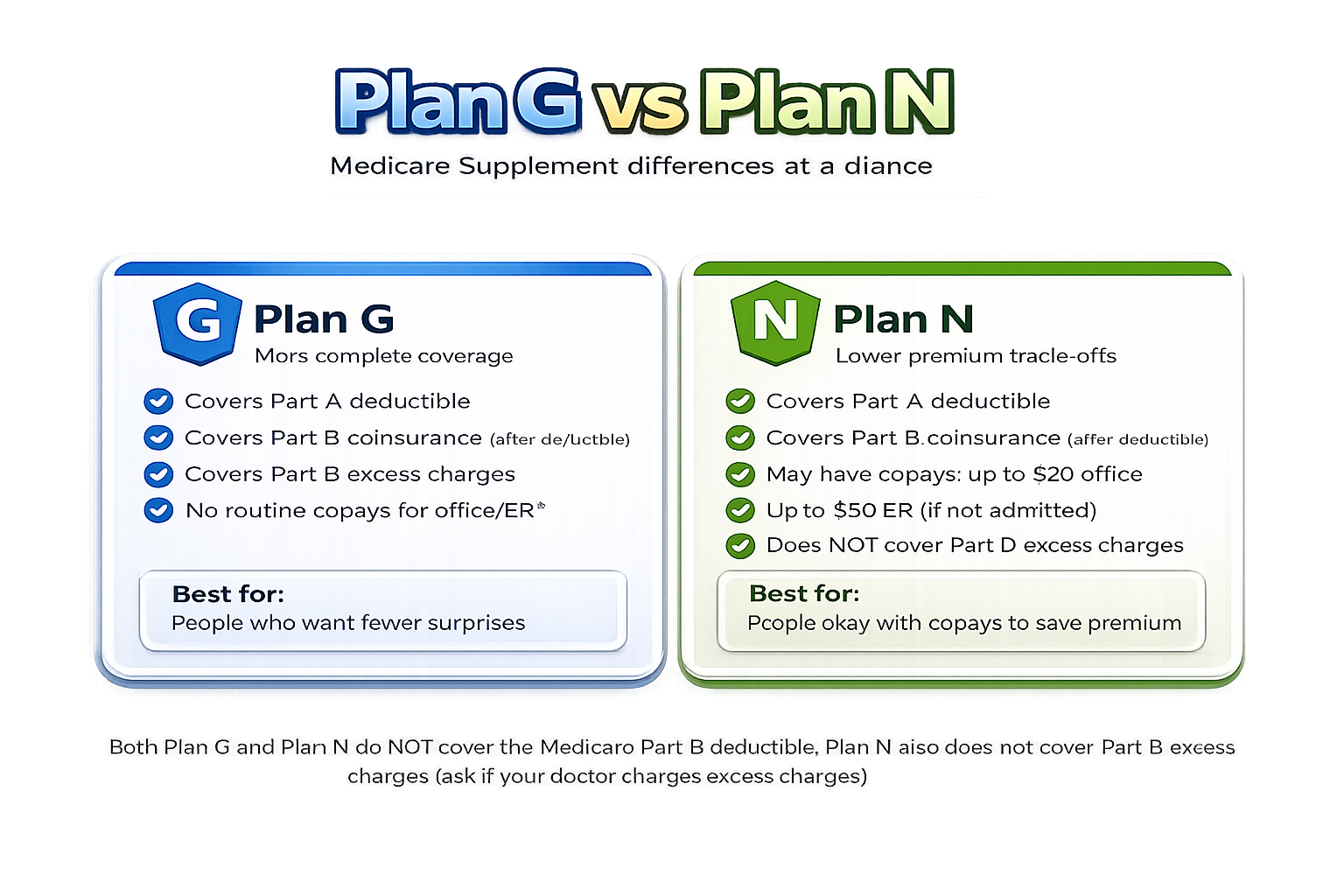
Choosing the right plan often involves comparing Plan G with other common options, such as Plan F or Plan N.
| Feature | Plan F | Plan G | Plan N |
|---|---|---|---|
| Part A Deductible | Yes | Yes | Yes |
| Part B Deductible | Yes | No | No |
| Part B Coinsurance | 100% | 100% | Partial* |
| Foreign Travel | Yes | Yes | Yes |
*Plan N requires copayments for some office visits and emergency room visits, which differentiates it from the low-out-of-pocket nature of Plan G.
Historically, Plan F was the most popular choice because it covered everything, including the Part B deductible. However, federal law prohibits the sale of Plan F to anyone who became eligible for Medicare on or after January 1, 2020. Consequently, Plan G has effectively replaced Plan F as the gold standard for beneficiaries seeking comprehensive, predictable coverage.
Factors Influencing Your Premium
While the benefits of Plan G are standardized, the premiums are not. Insurance companies determine their rates based on several factors:
- Issue Age Rating: Premiums are based on your age when you first purchase the policy. Rates may increase as you get older due to inflation or administrative costs, but not necessarily because of your age.
- Attained Age Rating: Premiums are based on your current age and will automatically increase as you get older.
- Community Rating: Premiums are the same for everyone in the same area, regardless of age.
- Zip Code: Where you live significantly impacts your costs due to regional healthcare pricing and state-specific insurance regulations.
Because AARP Medicare Supplement plans are administered by UnitedHealthcare, premiums are set by the carrier. It is recommended to request a quote based on your specific location and age to understand your expected annual costs.
Troubleshooting Common Enrollment and Coverage Issues
Navigating the transition to a Medicare Supplement plan can sometimes present challenges. If you find your application is being held up or you are unsure about your status, consider these steps:
- Verify Part B Enrollment: Ensure your Medicare Part B is active. You cannot purchase a Medigap plan without active Part B coverage.
- Understand the "Waiting Period": If you are moving from a Medicare Advantage plan to Medigap, check if you have a "trial right." This allows you to return to your previous coverage under specific circumstances within the first 12 months.
- Avoid Overlapping Coverage: Do not cancel your existing coverage until you have received confirmation that your new Medigap policy has been issued and your effective date is confirmed.
- Documentation: Always keep a record of your application date and the correspondence received from the insurer. If you are exercising a "guaranteed issue" right, ensure you have documentation proving your eligibility (e.g., notice of termination of employer coverage).
If you believe you have been treated unfairly or denied coverage during a guaranteed issue period, you may contact your State Department of Insurance or the State Health Insurance Assistance Program (SHIP) for free, local guidance.
Frequently Asked Questions
Is AARP Medicare Supplement Plan G the same as a Medicare Advantage plan?
No. Plan G is a Medigap policy that supplements Original Medicare. It allows you to use any doctor who accepts Medicare. A Medicare Advantage plan, by contrast, is a private alternative to Original Medicare that often uses provider networks and may require referrals.
Will my premiums for Plan G increase every year?
While Plan G is designed to provide stability, premiums can change. Insurance companies may adjust rates based on inflation, medical cost trends, or regulatory shifts in your state. However, they cannot increase your premiums specifically because you filed a claim or developed a new health condition.
Can I change my Medigap plan later if I don't like Plan G?
Yes, but you may face medical underwriting if you move outside of a guaranteed issue window. If you are in good health, you may be able to switch plans at any time, but if you have significant health conditions, you may be denied for a new policy unless you qualify for a special enrollment period.
Do I need a separate prescription drug plan with Plan G?
Yes. Plan G does not cover outpatient prescription drugs. You will need to enroll in a standalone Medicare Part D plan to cover your pharmacy costs. Keeping Part D separate from your Medigap plan allows you to tailor your drug coverage to the specific medications you take.
What is the difference between Plan G and Plan G High Deductible?
The "High Deductible" version of Plan G functions similarly to the standard Plan G, but you must pay a higher annual deductible out-of-pocket before the plan begins to pay its share. This version typically comes with significantly lower monthly premiums, which can be a cost-effective strategy for those who want catastrophic coverage but prefer to pay lower monthly costs.
Final Recommendations for Potential Enrollees
If you are currently evaluating your healthcare coverage for 2026, the most effective path forward is to audit your anticipated medical needs against the predictability of Plan G. For most seniors, the lack of deductibles for Part A and the lack of provider networks make Plan G a powerful tool for financial planning.
- Assess Your Current Coverage: Review your existing Medicare Advantage or Supplement policy.
- Determine Your Eligibility: Check your current Medicare Part B start date to identify if you are in an Open Enrollment or Guaranteed Issue window.
- Request a Detailed Quote: Obtain a quote directly through the provider to understand the monthly premium relative to your budget.
- Confirm Part D Needs: Simultaneously research Part D plans to ensure your current medication list is covered under the formulary you select.
Disclaimer: This information is for educational purposes and does not constitute financial or medical advice. Medicare regulations and insurance availability vary by state and individual circumstances. Always consult official government resources at Medicare.gov or contact your local State Health Insurance Assistance Program (SHIP) before making binding changes to your healthcare coverage.