In 2026, AARP members can access group-style health insurance options primarily through a long-standing partnership with UnitedHealthcare. While AARP is not an insurance provider itself, it utilizes its massive membership base to negotiate specialized Medicare Supplement (Medigap), Medicare Advantage, and Part D prescription drug plans that offer retirees standardized benefits, competitive rates, and specific member-only perks.
Understanding the AARP and UnitedHealthcare Partnership
To navigate AARP health insurance options effectively, retirees must first understand the structure of these offerings. AARP does not underwrite insurance policies. Instead, it lends its brand and massive collective bargaining power to UnitedHealthcare (UHC). This relationship allows AARP to offer "group-rated" insurance products to individual members.
In the context of retiree health, "group" coverage through AARP typically refers to two distinct scenarios. The first is the standard AARP-branded Medicare plans available to any individual member, which benefit from group-negotiated features and pricing. The second involves the AARP Employer Coordination Service, which assists employers in transitioning their retired workforce from traditional group health plans into AARP-branded individual Medicare plans.
By 2026, this partnership remains the largest of its kind in the United States, providing coverage to millions of retirees. The advantage for the retiree is a streamlined enrollment process and access to a massive network of healthcare providers, as UnitedHealthcare maintains one of the broadest provider footprints in the country.
AARP Medicare Supplement Insurance (Medigap)
Medicare Supplement plans, often called Medigap, are designed to "fill the gaps" left by Original Medicare (Part A and Part B). These gaps include coinsurance, copayments, and deductibles. AARP-branded Medigap plans are among the most popular in the country because they offer level-premium or community-rated structures in many states, which can prevent the drastic price hikes seen in age-attained policies.
Popular AARP Medigap Plan Options
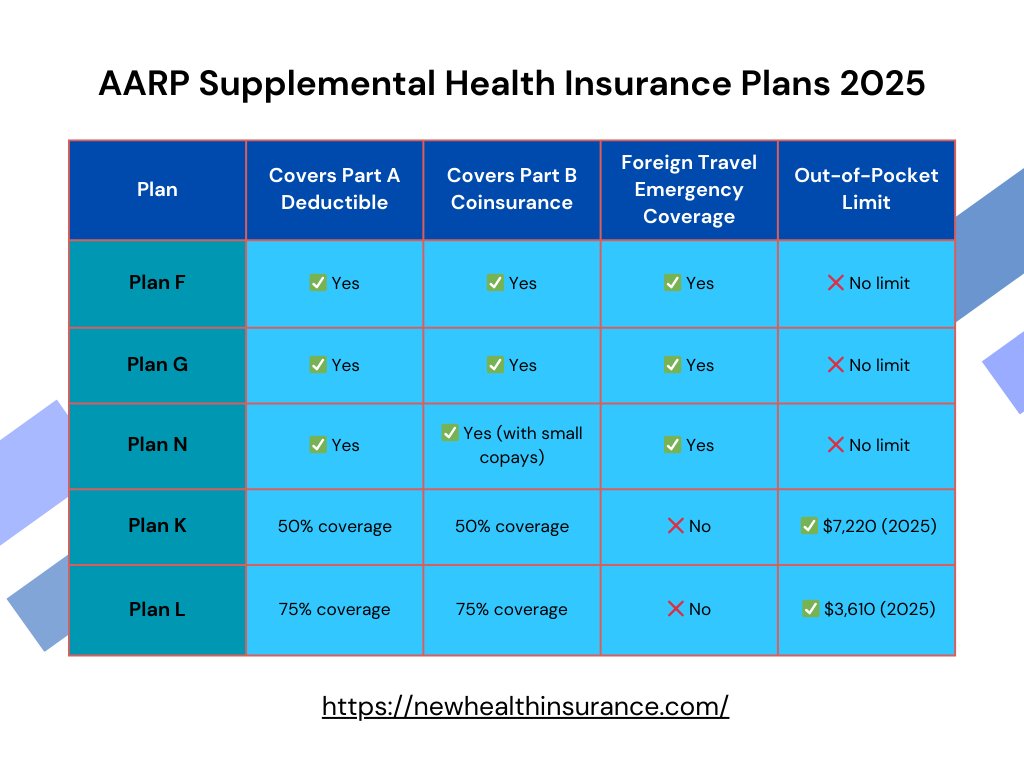
While Medigap plans are standardized by the federal government (designated by letters A through N), AARP focuses on several core options that provide varying levels of financial protection:
- Plan G: In 2026, Plan G remains the "gold standard" for new retirees. It covers 100% of the gaps in Medicare, with the exception of the Part B deductible. Once the deductible is met, the member has no out-of-pocket costs for Medicare-covered services.
- Plan N: This is a cost-effective alternative to Plan G. It offers lower premiums but requires the retiree to pay small copayments for some office visits and emergency room visits. It also does not cover Part B excess charges, though these are relatively rare.
- Plan B and Plan A: These provide more limited coverage and are often chosen by those who want lower premiums and are willing to take on more cost-sharing for hospital stays or skilled nursing facility care.
The Value of Group-Based Rating
One of the primary benefits of AARP Medigap plans is the pricing methodology. Many AARP-branded plans use community-rated pricing, meaning everyone in a specific area pays the same premium regardless of their age. As of 2026, this helps shield older retirees from the aggressive premium increases that typically occur with individual plans that use "attained-age" pricing, where premiums rise automatically every year as you get older.
AARP Medicare Advantage (Part C) Plans
Medicare Advantage plans through AARP and UnitedHealthcare serve as an alternative to Original Medicare. These plans bundle Part A (hospital), Part B (medical), and usually Part D (drugs) into a single managed care plan. In 2026, these plans have evolved to include significant "lifestyle" benefits that go beyond traditional medical care.
HMO vs. PPO Structures
AARP offers both Health Maintenance Organization (HMO) and Preferred Provider Organization (PPO) options.
- HMO Plans: These typically require retirees to use a specific network of doctors and hospitals and require a referral from a primary care physician to see a specialist. These often feature $0 monthly premiums in many service areas.
- PPO Plans: These offer more flexibility, allowing retirees to see out-of-network providers (usually at a higher cost) without a referral. This is often the preferred choice for "snowbirds" or retirees who travel frequently across state lines.
2026 Supplemental Benefits
A major draw of AARP Medicare Advantage plans is the inclusion of supplemental benefits not covered by Original Medicare. In the 2026 plan year, these often include:
- Dental, Vision, and Hearing: Comprehensive coverage for exams, glasses, and even dental implants or hearing aids in premium plans.
- Renew Active: A fitness program that provides access to thousands of gym locations and online brain health tools.
- UCard: A single integrated card that functions as the member ID and a payment method for over-the-counter (OTC) benefits and rewards.
Prescription Drug Coverage (Part D) in 2026
The landscape of AARP-branded Part D plans has changed significantly due to the Inflation Reduction Act. For the 2026 plan year, retirees face a drastically different cost structure than in years prior.
The $2,000 Out-of-Pocket Cap
The most critical development for 2026 is the full implementation of the $2,000 annual out-of-pocket limit for prescription drugs. Regardless of the AARP Part D plan chosen, once a retiree spends $2,000 on covered medications, they pay $0 for the remainder of the calendar year. This effectively eliminates the "donut hole" or coverage gap that plagued retirees for decades.
AARP/UnitedHealthcare Part D Plan Tiers
AARP typically offers three tiers of drug coverage:
- AARP MedicareRx Saver: Designed for those with few prescriptions who want a low premium and protection against catastrophic costs.
- AARP MedicareRx Walgreens: A co-branded plan that offers lower copays when using Walgreens or certain preferred pharmacies.
- AARP MedicareRx Preferred: A more comprehensive plan with a broader formulary (list of covered drugs) and lower costs for brand-name medications.
Eligibility and Enrollment Requirements
To access AARP group health insurance options, individuals must meet specific eligibility criteria. These requirements ensure that the plans remain compliant with federal Medicare regulations.
- AARP Membership: You must be an active member of AARP. As of 2026, membership generally costs $16 per year, though multi-year discounts are available. Anyone aged 50 or older can join, but the health insurance products are specifically for those eligible for Medicare.
- Medicare Enrollment: You must be enrolled in Medicare Part A and Part B. Even if you choose a Medicare Advantage plan, you must continue to pay your Part B premium to the federal government.
- Geographic Availability: While AARP/UHC plans are available in all 50 states, specific plan availability (especially for Medicare Advantage) varies by zip code.
- Enrollment Windows: Retirees can typically join during their Initial Enrollment Period (IEP) when they first turn 65, or during the Annual Enrollment Period (AEP) which runs from October 15 to December 7 each year.
Comparing AARP Retiree Health Options
Choosing between a Medigap plan and a Medicare Advantage plan is the most significant decision a retiree will make regarding their AARP coverage.
| Feature | AARP Medicare Supplement (Medigap) | AARP Medicare Advantage (Part C) |
|---|---|---|
| Monthly Premium | Generally higher premiums. | Often $0 or very low premiums. |
| Provider Choice | See any doctor that accepts Medicare (90%+ nationwide). | Network-based (HMO or PPO). |
| Predictability | Very high; virtually no out-of-pocket costs with Plan G. | Variable; involves copays and coinsurance for services. |
| Drug Coverage | Must buy a separate Part D plan. | Usually included in the plan. |
| Extra Benefits | None (no dental, vision, or gym). | Includes dental, vision, hearing, and fitness. |
| Referrals | No referrals required for specialists. | Required for HMOs; not required for PPOs. |
Transitioning from Employer Group Plans to AARP
Many retirees move from a corporate "Group Health" plan to AARP options upon retirement. This transition is a critical phase where mistakes can lead to permanent late-enrollment penalties or a loss of "guaranteed issue" rights.
If your employer is ending your retiree health benefits, you typically qualify for a Special Enrollment Period (SEP). This allows you to enroll in an AARP Medigap or Medicare Advantage plan without being subjected to medical underwriting. In 2026, AARP’s Employer Coordination Service works with many Fortune 500 companies to facilitate this. Retirees should ensure they receive a "Creditable Coverage" letter from their previous employer to prove they had prior insurance, which prevents Part D penalties.
Common Mistakes to Avoid
When selecting AARP group-style coverage, retirees often fall into several traps that can affect their long-term healthcare costs.
Ignoring the Part B Deductible
New retirees often expect Plan G to cover everything. However, the Part B deductible (which fluctuates annually and is set by CMS) must be paid out-of-pocket before Plan G coverage kicks in. For 2026, ensure you have budgeted for this annual one-time payment.
Assuming All Doctors Accept Advantage Plans
A common error is assuming that because a doctor "takes Medicare," they also take an AARP Medicare Advantage plan. Medicare Advantage plans are private contracts. Always verify that your specific specialists are "In-Network" for the exact AARP/UHC plan you are considering.
Missing the Medigap Open Enrollment Window
The best time to buy an AARP Medigap policy is during the six-month window that starts the month you turn 65 and are enrolled in Part B. During this time, the insurance company cannot refuse to sell you a policy or charge you more due to pre-existing conditions. If you wait until you are sick to switch from an Advantage plan to a Medigap plan, you may be denied coverage in most states.
Frequently Asked Questions
Is AARP health insurance the same as UnitedHealthcare?
AARP does not provide the insurance; UnitedHealthcare (UHC) is the insurer that underwrites and administers the plans. AARP provides the brand, the member base, and the quality standards. When you have an AARP plan, your claims are processed by UnitedHealthcare, and your provider network is the UHC network.
Do I have to be 65 to get AARP group health insurance?
While you can join AARP at age 50, most of the health insurance products are Medicare-related and require you to be at least 65 or have a qualifying disability. Some states allow younger individuals on Social Security Disability Insurance (SSDI) to enroll in AARP Medigap plans, though the options and pricing vary significantly by state law.
Does AARP offer dental and vision insurance for retirees?
Yes. If you choose an AARP Medicare Advantage plan, dental and vision are usually bundled into the plan. If you choose Original Medicare with a Medigap plan, you can purchase separate, standalone AARP-branded dental and vision insurance plans administered by providers like Delta Dental or EyeMed.
How does the $2,000 drug cap in 2026 affect AARP Part D plans?
The $2,000 cap is a federal requirement for all Part D plans as of 2026. For AARP members, this means that even if you take expensive specialty medications for conditions like cancer or rheumatoid arthritis, your total pharmacy spend for the year will not exceed $2,000. This has resulted in some Part D plans adjusting their monthly premiums or deductibles to account for the increased coverage.
Can I keep my AARP insurance if I move to another state?
Medigap plans are portable; if you move, you keep your coverage, though your premium may adjust based on your new zip code. Medicare Advantage and Part D plans are service-area-based. If you move out of your plan's service area, you will need to enroll in a new plan available in your new location, which triggers a Special Enrollment Period.
Recommendation for Retirees
For retirees in 2026, the most effective strategy is to prioritize financial predictability over low monthly premiums. If your budget allows, enrolling in AARP Medicare Supplement Plan G alongside a Part D Prescription Drug Plan remains the most robust way to protect your retirement savings from high medical bills. This combination offers the widest choice of doctors and the fewest surprise costs. However, if you are looking for a "one-stop-shop" with extra perks like dental and gym memberships, an AARP Medicare Advantage PPO offers a balanced middle ground between cost and flexibility. Always review your plan's Evidence of Coverage (EOC) annually, as provider networks and drug formularies change every January 1st.