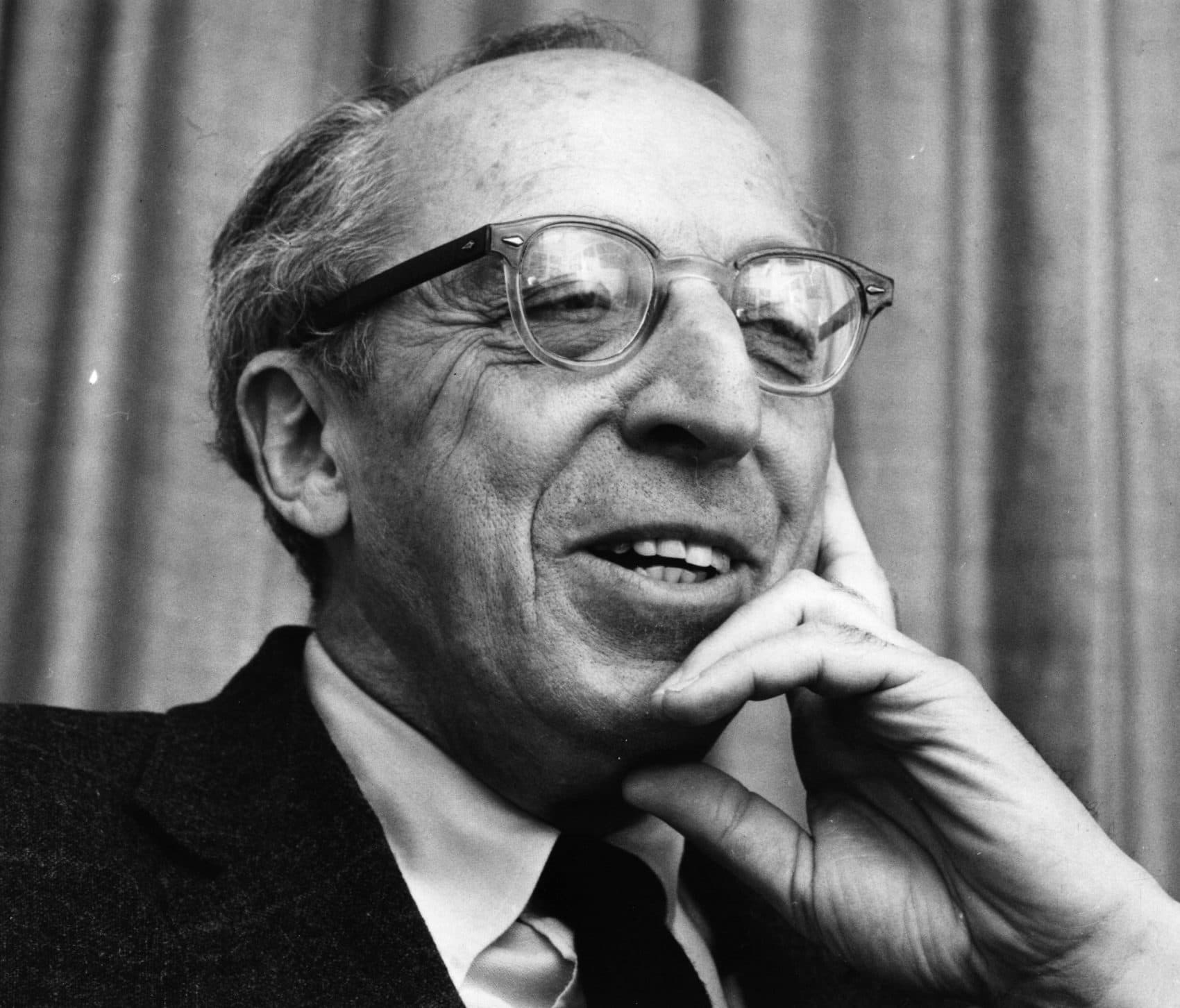
Aaron Copland shaped the identity of United States classical music in the twentieth century by blending folk idioms, jazz rhythms, and expansive orchestral textures to capture the vastness of the American landscape. Earning the moniker "the Dean of American Music," he bridged the gap between accessible public art and rigorous modernist composition, leaving behind an indelible legacy that defines the sonic portrait of a nation.
The cultural identity of classical music in the United States underwent a profound transformation during the twentieth century, shifting away from strict European academic traditions toward a distinct domestic idiom. At the center of this evolution stood Aaron Copland. Through iconic ballets, accessible film scores, and complex orchestral works, Copland established a musical vocabulary that resonated with ordinary citizens while earning the deep respect of academic institutions worldwide. Understanding Copland requires examining his early modernist experiments, his pivotal populist turn during the Great Depression, his extensive contributions to film and education, and his enduring legacy as a cultural ambassador.
Early Life, European Training, and Modernist Beginnings
Born in Brooklyn, New York, on November 14, 1900, Aaron Copland showed an early interest in the piano and composition. Growing up in a household removed from classical arts, he sought out formal instruction independently. By his late teens, he studied harmony and counterpoint with Rubin Goldmark, a traditionalist who nonetheless instilled in the young composer a rigorous work ethic and technical foundation. Recognizing that the United States lacked the conservatory infrastructure found in Europe, Copland made a life-altering decision in 1921 to travel to France.
In Paris, Copland enrolled at the newly established American Conservatory at Fontainebleau, where he met the legendary pedagogy figure Nadia Boulanger. Boulanger possessed an uncanny ability to nurture individual talent, and Copland became her first full-time American student. Studying with Boulanger exposed Copland to the cutting-edge European modernism of Igor Stravinsky, Darius Milhaud, and the French group Les Six, as well as Arnold Schoenberg's evolving serialism.
Copland’s early works from the mid-1920s reflect this intense European exposure, combined with a desire to incorporate elements of American jazz. His orchestral piece Music for the Theatre (1925) and the Piano Concerto (1926) deployed syncopated rhythms, blue notes, and driving percussion that shocked traditionalist American audiences. Critics found the jazz-infused modernism jarring, but these pieces established Copland as a fearless innovator willing to challenge the status quo of American concert halls.
| Work | Composition Year | Primary Style / Influence | Notable Characteristics |
|---|---|---|---|
| Music for the Theatre | 1925 | Jazz-infused Modernism | Syncopated rhythms, prominent brass, blues intervals |
| Piano Concerto | 1926 | Jazz-influenced Modernism | Brash, percussive, stark contrasts between lyrical and driving sections |
| El Salón México | 1936 | Populist / Folk-inspired | Vibrant Mexican folk tunes, energetic orchestration, accessible rhythms |
| Appalachian Spring | 1944 | American Populist | Diatonic harmony, Shaker melody integration, pastoral expansiveness |
The Populist Turn and the Great Depression
The economic collapse of the Great Depression in 1929 fundamentally shifted the cultural landscape and altered Copland's artistic philosophy. He grew increasingly uncomfortable writing esoteric, highly complex modernist scores that appealed only to a tiny elite of high-society concertgoers. Copland believed that music should serve a broader societal purpose, reflecting the struggles and aspirations of working people during a time of national crisis. This realization sparked his populist phase, where he deliberately simplified his musical language to connect with a mass audience.
Copland began incorporating folk songs, cowboy tunes, hymnody, and vernacular poetry into his compositions. He reasoned that familiar musical building blocks would make contemporary classical music approachable for school children, amateur musicians, and working-class concertgoers. His trip to Mexico in 1932, where he visited the dance hall known as El Salón México, inspired a breakthrough orchestral piece of the same name. Completed in 1936, El Salón México transformed authentic Mexican folk tunes into a vibrant, high-energy orchestral showpiece that cemented Copland's mastery of accessible composition.
This populist approach aligned with the political and social movements of the New Deal era, which emphasized public art, federal support for creators, and the celebration of regional American culture. Copland’s deliberate pivot did not represent a dilution of his craft, but rather a mastery of distillation. He retained his sophisticated sense of orchestration and architectural form while stripping away abrasive dissonances in favor of open, ringing intervals like fifths and octaves that evoked wide-open spaces.
The Defining Ballets and Symphonic Masterpieces
Copland’s populist maturity found its highest expression in a trilogy of ballets commissioned by choreographers exploring American folklore and history. These scores transformed ballet and concert halls alike, securing his status as the premier architect of the American sound.
Billy the Kid (1938)
Commissioned by Lincoln Kirstein's Ballet Caravan, Billy the Kid used traditional cowboy songs such as "Git Along, Little Dogies" and "The Old Chisholm Trail" alongside Copland's original themes. The score depicted the American frontier with rhythmic vitality, portraying both the harsh realities of the Wild West and the vast, lonesome prairies.
Rodeo (1942)
Choreographed by Agnes de Mille, Rodeo captured the humor, romance, and energy of ranch life. Its final section, "Hoe-Down," became one of the most recognizable orchestral pieces in history, later popularized by television commercials and concert halls around the globe. The brisk fiddle tunes and driving percussion epitomized the optimistic energy of wartime America.
Appalachian Spring (1944)
Perhaps Copland’s most enduring masterpiece, Appalachian Spring was written for modern dancer Martha Graham. Set in a newly built farmhouse in Pennsylvania in the nineteenth century, the score radiates pastoral serenity and youthful optimism. The work famously incorporates the Shaker hymn "Simple Gifts," which Copland spun through a series of subtle variations. The resulting orchestral suite won the Pulitzer Prize for Music in 1945 and remains a cornerstone of the global symphonic repertoire.
Film Scores and Contribution to Media
In addition to concert halls and ballet stages, Copland made significant contributions to American cinema. During the 1940s, Hollywood directors sought authentic American orchestral voices to score major dramatic films. Copland embraced the medium, bringing the same structural integrity to cinema that he brought to his concert works.
His film scores include:
- The City (1939) - A documentary about urban planning that allowed Copland to experiment with rhythmic synchronization to visual cuts.
- Of Mice and Men (1939) - Directed by Lewis Milestone, earning Copland Academy Award nominations.
- Our Town (1940) - Based on Thornton Wilder's play, featuring delicate, nostalgic harmonies that evoked small-town American life.
- The Red Pony (1949) - Based on John Steinbeck's story, showcasing vibrant orchestral colors.
- The Heiress (1949) - Directed by William Wyler, winning Copland an Academy Award for Best Original Score in 1950.
Copland’s approach to film music avoided excessive sentimentality. Instead, he used sparse instrumentation, transparent textures, and distinct leitmotifs to underline psychological subtext rather than merely mimicking the action on screen.
Later Career, Serialism, and Cultural Diplomacy
By the 1950s, musical tastes in the United States and Europe shifted toward strict academic modernism, total serialism, and avant-garde experimentation. Critics who had once praised Copland’s populist accessibility occasionally dismissed his later style as conventional or retrogressive. Rather than ignoring these developments, Copland engaged with them directly.
In works such as his Piano Fantasy (1957) and Connotations for Orchestra (1962)—the latter commissioned for the opening of Philharmonic Hall at Lincoln Center—Copland adopted twelve-tone serial techniques. However, he filtered serialism through his own distinct voice, retaining his characteristic rhythmic angularity, expansive interval spacing, and dramatic climaxes. While Connotations received a mixed reception from traditionalist audiences accustomed to the pastoral warmth of Appalachian Spring, it demonstrated Copland's restless intellectual curiosity and refusal to rest on his historical laurels.
During the Cold War, Copland served as a cultural ambassador for the United States Department of State. He traveled extensively through Europe, Latin America, and the Soviet Union, conducting orchestras and lecturing on American music. These diplomatic efforts fostered international goodwill and showcased the vitality of American culture abroad, further reinforcing his title as the dean of the nation's musical community.
Mentorship, Writing, and Pedagogical Legacy
Beyond his compositions, Copland dedicated a substantial portion of his life to educating the public and mentoring younger generations of musicians. He recognized that American classical music required institutions, publishers, and knowledgeable audiences to survive and thrive.
As a writer, Copland authored several accessible books on music appreciation, including What to Listen for in Music (1939), Our New Music (1941), and Music and Imagination (1952). These texts demystified the creative process for lay readers, explaining complex formal structures, counterpoint, and orchestration in clear, engaging prose. What to Listen for in Music remains a staple text for students and music lovers worldwide.
Copland also served as a mentor to numerous younger composers, including Leonard Bernstein, Alberto Ginastera, and David Diamond. Bernstein, who maintained a lifelong devotion to Copland, frequently championed his mentor's works with the New York Philharmonic, ensuring that Copland's symphonic repertoire remained central to American orchestral programming. Copland co-founded the Copland-Sessions concerts and the American Composers Alliance, creating vital platforms for contemporary American composers to have their works performed and heard.
Frequently Asked Questions
Why is Aaron Copland called the "Dean of American Music"?
Critics, performers, and academics bestowed the title upon Copland because he was the first native-born American composer to forge a widely recognized, distinctive national style that captured the spirit of the United States. His leadership in organizations, mentorship of younger artists, and extensive public advocacy solidified his preeminent status in American musical culture.
What is Aaron Copland’s most famous piece?
While opinions vary, Appalachian Spring (1944) and its orchestral suite containing the variations on "Simple Gifts" is widely considered his most famous and enduring masterwork. Other strong contenders include the ballet Rodeo and the patriotic fanfare Fanfare for the Common Man.
Did Aaron Copland write film scores?
Yes, Copland composed several notable Hollywood film scores during the 1940s. He earned multiple Academy Award nominations and won the Oscar for Best Original Score in 1950 for his work on William Wyler's film adaptation of The Heiress.
How did Copland's style change over time?
Copland's career moved through distinct phases: early modernist jazz-infused works in the 1920s, accessible populist Americana ballets and orchestral pieces in the 1930s and 1940s, and later experiments with twelve-tone serialism during the 1950s and 1960s. Despite these stylistic shifts, his underlying rhythmic drive and textural clarity remained consistent.
Where can I start listening to Aaron Copland's music?
Beginners often start with the orchestral suites from his three major ballets—Appalachian Spring, Billy the Kid, and Rodeo—alongside Fanfare for the Common Man and El Salón México. These works offer immediate melodic appeal and showcase his signature orchestral sound.
Conclusion and Next Actions
Aaron Copland’s profound impact on twentieth-century music rests on his unique ability to translate the vast landscapes, democratic ideals, and cultural diversity of the United States into enduring orchestral literature. To deepen your appreciation of his contributions, explore recordings of his major ballets performed by major orchestras such as the New York Philharmonic or the Los Angeles Philharmonic, or read his foundational text What to Listen for in Music to understand the technical craftsmanship behind his iconic sound.