The 1996 Acura NSX represents the pinnacle of the original 3.0-liter displacement era, blending a weight-saving all-aluminum chassis with the reliability of a Honda-engineered V6. As a 30-year-old classic in 2026, it remains a benchmark for analog driver engagement, mid-engine balance, and the "everyday supercar" philosophy that redefined the category in the 1990s.
The Historical Context of the 1996 Model Year
By 1996, the Acura NSX had already cemented its reputation as the car that forced Ferrari and Porsche to improve their build quality and ergonomics. However, the mid-90s were a transitional period for the Japanese "bubble era" performance cars. While competitors like the Toyota Supra and Mazda RX-7 were beginning to see declining sales in North America due to rising prices, the NSX maintained its status as a specialized, low-volume halo car.
The 1996 model year is particularly significant because it was the final year of the 3.0-liter C30A engine paired with the 5-speed manual transmission in the North American market. In 1997, Acura introduced the 3.2-liter engine and a 6-speed gearbox. For many collectors in 2026, the '96 model represents the ultimate refined version of the "original" powertrain configuration. It featured all the incremental improvements in suspension tuning and interior materials made since 1991, without the added complexity of the later drive-by-wire updates or the larger displacement shifts.
In 1996, the NSX-T (Targa top) had become the dominant body style in the United States. While a few coupes were still produced, the removable roof panel answered the market's demand for open-air motoring, despite a slight increase in weight and a decrease in torsional rigidity compared to the fixed-roof coupe.
Engineering Excellence: The Aluminum Monocoque and C30A Heart
The defining technical achievement of the 1996 Acura NSX is its all-aluminum semi-monocoque chassis. This was a world first for a production car, reducing weight by approximately 440 pounds compared to an equivalent steel structure. In 2026, we view this as a precursor to the modern use of lightweight alloys in supercars, but in 1996, it was a revolutionary commitment to power-to-weight efficiency.
The C30A VTEC Engine
The heart of the '96 NSX is the 3.0-liter 24-valve V6 engine. This power unit utilized Honda’s VTEC (Variable Valve Timing and Lift Electronic Control) system, which allowed the car to have a smooth, docile idle and aggressive high-RPM performance.
Key technical features of the 1996 powertrain include:
- Titanium Connecting Rods: To facilitate an 8,000 RPM redline, Acura used titanium rods to reduce reciprocating mass—a technology typically reserved for Formula 1 engines at the time.
- Mid-Engine Layout: The transverse-mounted V6 was placed behind the driver but ahead of the rear axle, providing a 42/58 weight distribution that optimized traction and braking.
- Direct Ignition System: By 1996, the ignition system had been refined to provide consistent spark across the entire rev range, improving both throttle response and emissions.
Suspension and Handling
The 1996 NSX featured an all-aluminum double-wishbone suspension at all four corners. This setup was meticulously tuned, with historical input from Formula 1 legend Ayrton Senna during the car's early development. By 1996, the suspension bushings and dampers had been slightly softened from the original 1991 spec to provide a more compliant "Grand Touring" feel, though the car lost none of its legendary steering precision.
Performance Comparison: 1996 NSX vs. Contemporaries
To understand the 1996 Acura NSX’s place in the classic car market of 2026, it is helpful to compare it to its primary rivals from the same era.
| Feature | 1996 Acura NSX (Manual) | 1996 Porsche 911 (993) | 1996 Ferrari F355 |
|---|---|---|---|
| Engine Layout | Mid-Engine V6 | Rear-Engine Flat-6 | Mid-Engine V8 |
| Horsepower | 270 hp | 282 hp | 375 hp |
| Torque | 210 lb-ft | 250 lb-ft | 268 lb-ft |
| 0-60 MPH | ~5.2 Seconds | ~5.3 Seconds | ~4.7 Seconds |
| Chassis Material | Aluminum | Steel | Steel/Composite |
| 2026 Reliability | High (Honda DNA) | Moderate (Air-cooled) | Low (Engine-out service) |
| Transmission | 5-Speed Manual | 6-Speed Manual | 6-Speed Manual |
While the Ferrari F355 offered more raw power, the NSX provided a level of reliability and visibility that the Italian thoroughbred could not match. The Porsche 993 remains the NSX's closest rival for "daily driver" usability, but the NSX’s exotic mid-engine proportions give it a unique "supercar" aesthetic that the 911 lacked.
The 1996 Nuances: NSX-T and the F-Matic
The 1996 model year carried forward two significant options that defined the NSX's mid-life identity: the T-top and the F-Matic transmission.
The NSX-T (Targa)
Most 1996 models found on the market today are the NSX-T. The removable roof panel can be stored under the rear glass hatch, above the engine bay. To compensate for the loss of a fixed roof, Acura engineers reinforced the sills and the A-pillars. While purists often seek out the rare 1996 coupes for their slightly higher rigidity and lower weight (approx. 100 lbs lighter), the NSX-T offers the quintessential 1990s lifestyle experience.
The F-Matic Transmission
1996 was the second year for the "F-Matic" electronic shift control on automatic models. This system allowed drivers to shift gears using a fingertip-actuated lever on the steering column—an early iteration of what would eventually become ubiquitous paddle shifters. However, it is important for buyers in 2026 to note that the automatic NSX used a slightly detuned engine (252 hp) and a lower redline (7,500 RPM) compared to the manual version.
Ownership and Maintenance in 2026
Owning a 30-year-old Japanese supercar requires a specific maintenance strategy. While the NSX is famous for its reliability, age-related wear on plastics, rubber, and electronics is inevitable.
The 100,000-Mile Service
If you are purchasing a 1996 NSX in 2026, the most critical maintenance item is the timing belt and water pump. This service is recommended every 7 to 10 years or 90,000 miles. Given the age of these vehicles, many are on their third or fourth belt change. Failure to perform this service can result in catastrophic engine damage.
Electronic Components
The "Achilles' heel" of the 1990s NSX is often the electronics.
- Climate Control Unit (CCU): The capacitors in the CCU are known to leak over time, causing the fans or temperature control to fail. In 2026, many owners opt for refurbished boards with modern capacitors.
- Bose Sound System: The individual amplifiers located in the door speakers and the footwell subwoofer often require rebuilding due to capacitor failure.
- ABS Modulator: The early ABS systems in the NSX can become "stuck" if the fluid isn't exercised or changed regularly. Some owners in 2026 retroactively install the newer, more compact ABS pump from the 2002-2005 models.
Parts Availability
In 2026, Acura’s heritage parts program has helped keep these cars on the road, but certain body panels and interior trim pieces are becoming increasingly difficult to source. The aluminum body requires specialized "clean room" facilities for major repairs, as traditional steel welding techniques cannot be used.
The 1996 Acura Integra: A Notable Mention
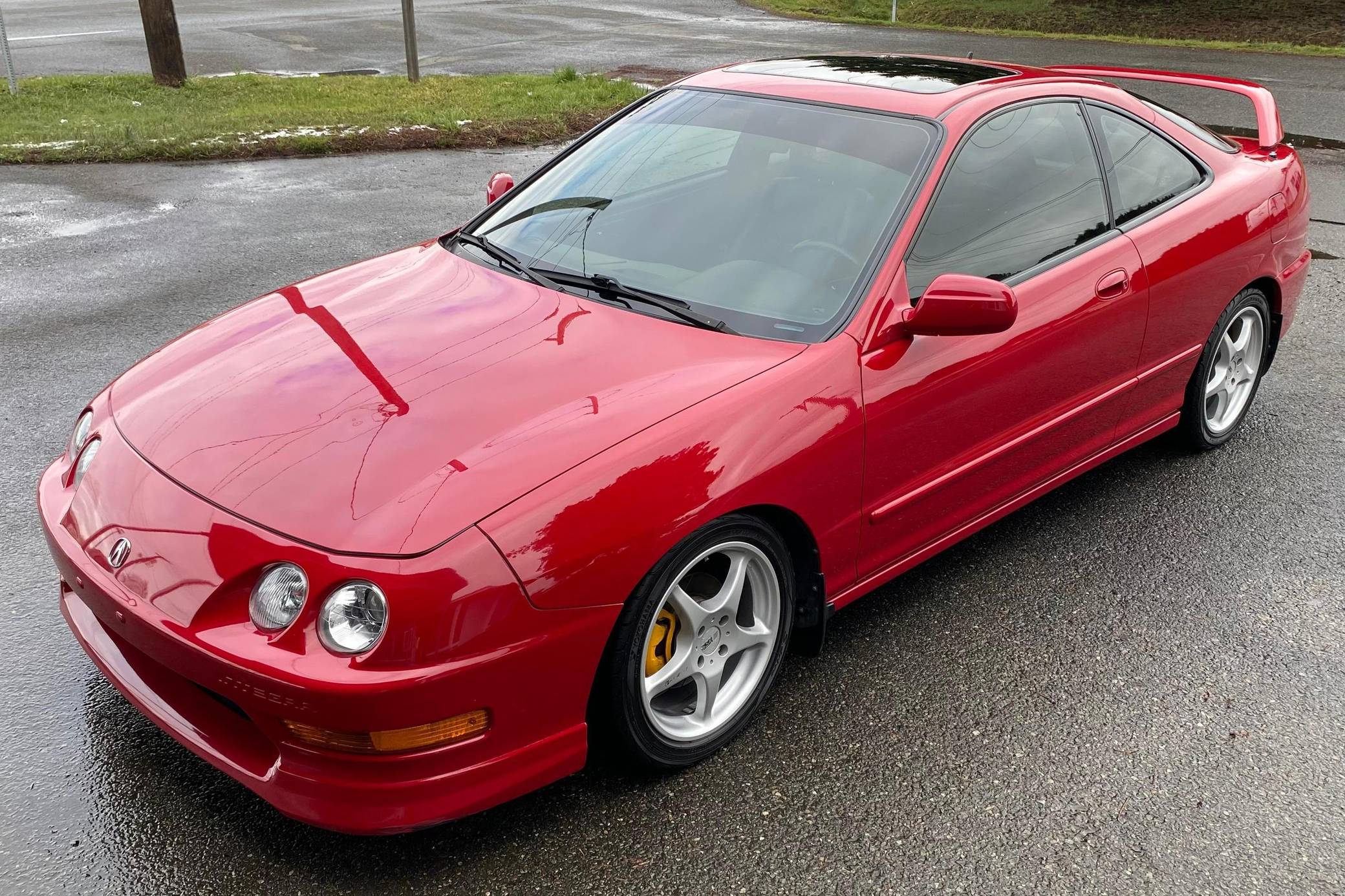
While the NSX is the "classic sports car" of choice, it is worth noting that 1996 was also a strong year for the Acura Integra GSR. While not a supercar, the 1996 Integra GSR featured the B18C1 VTEC engine, producing 170 hp. For enthusiasts who find the NSX's six-figure price tag in 2026 out of reach, the '96 Integra remains a highly sought-after front-wheel-drive classic that shares much of the NSX’s high-revving DNA.
Market Value and Investment Potential
As of 2026, the 1996 Acura NSX has transitioned from a "used sports car" to a "blue-chip collectible." Prices have steadily risen over the last decade, driven by Gen X and Millennial nostalgia.
- Driver-Quality Models: Vehicles with 70,000–100,000 miles typically command between $85,000 and $110,000, depending on maintenance history.
- Collector-Grade Models: Low-mileage (under 30,000 miles), pristine '96 NSX-Ts can exceed $150,000 at auction.
- Rare Coupes: Because the coupe was so rare in 1996, a manual-transmission coupe is considered a "unicorn" and can command a 20-30% premium over the Targa model.
The 1996 model is particularly attractive because it is the newest NSX that qualifies for "Classic" or "Antique" vehicle registration in most jurisdictions as of 2026, often resulting in lower insurance premiums through specialty providers like Hagerty or Grundy.
Frequently Asked Questions
Is the 1996 Acura NSX a good investment in 2026?
Yes, the NSX has shown consistent appreciation. Unlike many modern supercars, it is relatively simple to maintain, and its status as a landmark in automotive history ensures long-term demand. However, investment value is highly dependent on a documented service history and the absence of non-reversible modifications.
How does the 1996 model differ from the 1991–1994 models?
The 1996 model includes several upgrades introduced in 1995, most notably the Targa top option and the improved F-Matic automatic transmission. It also features a more refined interior, upgraded OBD-II diagnostics (which makes engine troubleshooting easier in 2026), and reinforced suspension mounting points.
What should I look for when inspecting a '96 NSX?
Check for "snap ring" failure evidence (though this mostly affected 1991–1992 models, it’s good to verify the transmission number). Look for trunk leaks, which can damage the CD changer or tool kit. Ensure the VIN stickers are present on all body panels (fenders, doors, hood, etc.) to confirm the car hasn't been in a major accident.
Can the 1996 NSX be used as a daily driver?
While it was designed as an "everyday supercar," using a 30-year-old classic as a daily driver in 2026 is risky due to the scarcity of certain parts and the high value of the vehicle. However, mechanically, the car is more than capable of handling modern traffic and long-distance trips.
Does the 1996 model have pop-up headlights?
Yes. The 1996 NSX features the iconic pop-up headlights. Acura did not switch to fixed HID headlights until the 2002 facelift. For many enthusiasts, the '96 model offers the perfect "classic" look with the updated mid-90s interior refinements.
Practical Recommendation for Potential Buyers
If you are looking to acquire a 1996 Acura NSX in today's 2026 market, prioritize mechanical transparency over low mileage. A car with 80,000 miles and a thick folder of service records from an NSX specialist is often a better purchase than a 20,000-mile car that has sat idle for a decade. Seals, gaskets, and tires degrade when not used, and a "restarting" service for a dormant NSX can easily cost $10,000 or more.
Before finalizing any purchase, perform a Pre-Purchase Inspection (PPI) with a technician who understands aluminum chassis repair and the C30A engine. Verify that the R-134a air conditioning system is blowing cold, as evaporator core replacements are labor-intensive and require removing the entire dashboard.
The 1996 Acura NSX remains one of the most rewarding classic sports cars to own. It offers a visceral, mechanical connection to the road that modern, turbocharged, screen-heavy cars cannot replicate. It is a snapshot of an era when Honda was at the top of its engineering game, proving that a supercar could be both thrilling and sensible.