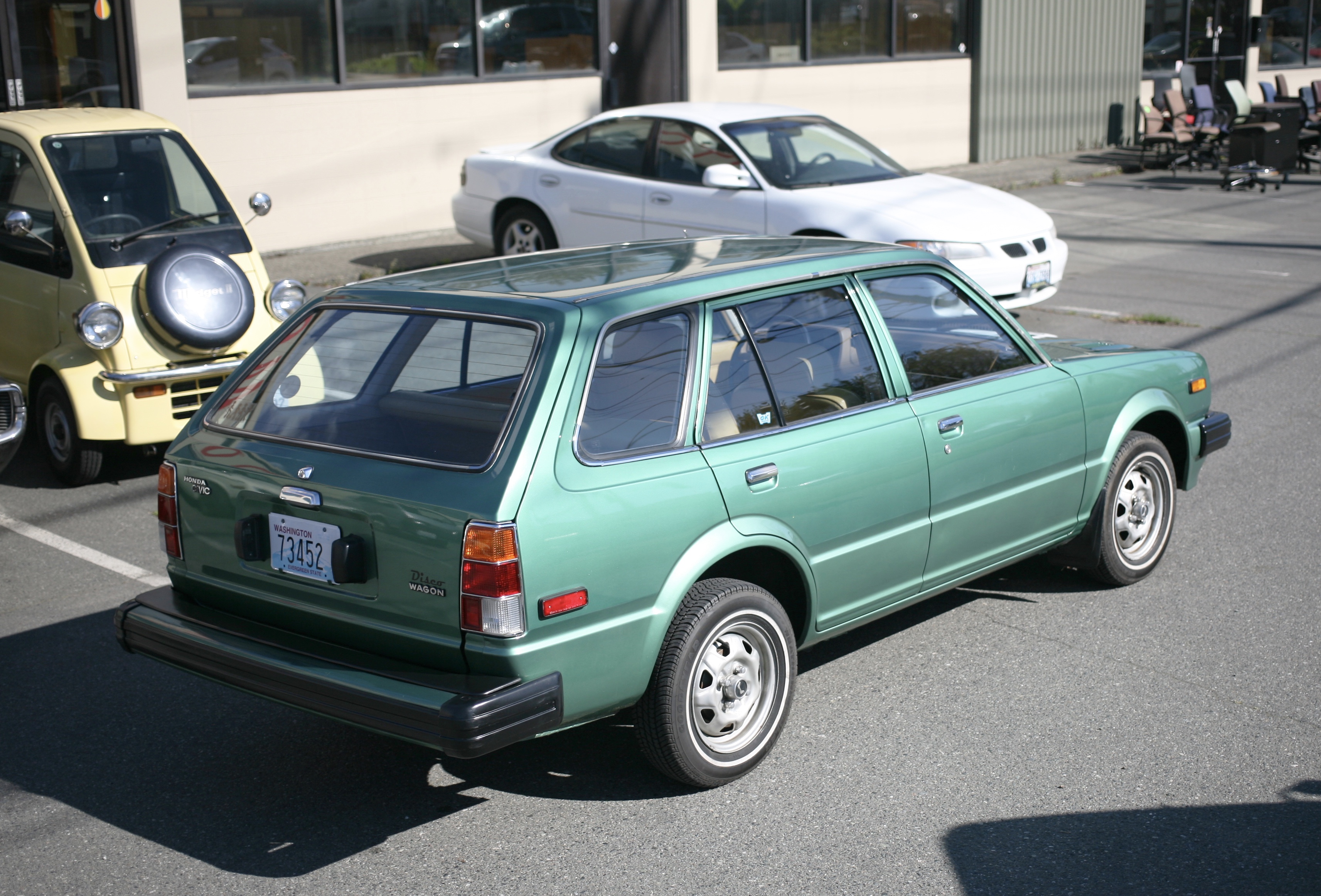
The 1982 Honda Civic Wagon is a second-generation subcompact utility vehicle renowned for its efficiency, clever packaging, and the advanced CVCC-II engine. As a pivotal model in Honda's transition from a motorcycle manufacturer to a global automotive powerhouse, the 1982 Wagon offers a 1.5-liter four-cylinder engine and a high-roof design that anticipated the modern crossover. In 2026, it remains a celebrated classic for its mechanical simplicity and historical significance in fuel-efficient design.
The Second-Generation Legacy: Placing the 1982 Model in Context
To understand the 1982 Honda Civic Wagon, one must look at the landscape of the early 1980s. Following the fuel crises of the 1970s, the American and European markets were desperate for vehicles that balanced utility with high MPG ratings. The second-generation Civic, introduced in 1980 and concluding in 1983, was Honda’s answer to this demand. The 1982 model year represents the "sweet spot" of this generation, benefitting from mid-cycle refinements that addressed the teething issues of the 1980 launch.
Unlike the first-generation Civic, which was somewhat diminutive, the 1982 Wagon utilized a slightly lengthened wheelbase of 88.6 inches. This allowed for a significantly more comfortable ride and better stability at highway speeds. The wagon variant, in particular, was designed to maximize internal volume without increasing the car's external footprint significantly. It occupied a unique space in the market, competing against the Toyota Corolla Tercel and the Datsun 310, yet often winning on interior ergonomics and engine sophistication.
By 1982, Honda had solidified its reputation for build quality. While domestic competitors were still struggling with the transition to front-wheel drive (FWD) layouts, Honda had already mastered the configuration. The 1982 Civic Wagon featured a transverse-mounted engine, which freed up cabin space by eliminating the transmission tunnel required for rear-wheel-drive cars. This engineering choice is why the car remains surprisingly spacious even by 2026 standards.
Engineering the CVCC-II Powerplant
The heart of the 1982 Honda Civic Wagon is the 1,488cc (1.5L) four-cylinder engine equipped with CVCC-II (Compound Vortex Controlled Combustion) technology. This system was a hallmark of Honda's engineering prowess, allowing the vehicle to meet strict emissions standards without the immediate need for a power-robbing catalytic converter in many markets.
The CVCC-II system functions through a three-valve-per-cylinder head design. A small auxiliary combustion chamber sits above the main chamber. During the intake stroke, a rich fuel-air mixture is drawn into the auxiliary chamber while a very lean mixture enters the main chamber. The spark plug ignites the rich mixture first, which then acts as a "torch" to ignite the leaner mixture in the main cylinder. This ensures a more complete and cooler burn, reducing Nitrogen Oxide (NOx) emissions naturally.
In 1982, this engine produced approximately 67 horsepower and 79 lb-ft of torque. While these numbers seem modest in 2026, the car's curb weight—barely exceeding 1,900 pounds—meant it was surprisingly peppy in urban environments. The CVCC-II update for 1982 also improved cold-start drivability and overall fuel economy compared to the original 1975 CVCC designs.
Drivetrain Options and the Evolution of the Hondamatic
The 1982 Wagon was primarily available with three transmission choices, each catering to different driving priorities.
- 5-Speed Manual Transmission: This was the most popular choice for enthusiasts and those seeking maximum fuel efficiency. The fifth gear acted as a true overdrive, allowing the engine to sit at lower RPMs during cruising, which significantly reduced cabin noise—a common complaint in subcompacts of that era.
- 4-Speed Manual Transmission: Found mostly in the base trims, this offered a more rugged, though less highway-friendly, experience.
- 3-Speed Hondamatic: By 1982, Honda had transitioned from the older 2-speed semi-automatic to a true 3-speed automatic. Unlike a conventional automatic that uses a planetary gear set, the Hondamatic used a design more similar to a manual transmission with individual constant-mesh gears but shifted via hydraulic pressure. It was incredibly durable but lacked the efficiency of the manual counterparts.
The front-wheel-drive layout utilized unequal-length driveshafts, a common trait in early FWD cars that could lead to slight torque steer under heavy acceleration. However, given the 67-horsepower output, this was rarely an issue for the average driver.
Exterior Styling and the 1982 Facelift
The 1982 model year brought several aesthetic updates that distinguished it from the earlier 1980–1981 versions. The most notable change was the move toward rectangular headlights, replacing the round units found on earlier models. This change reflected the broader automotive design trend of the 1980s, which favored sharper lines and "rectilinear" aesthetics.
The Wagon’s silhouette was defined by its "high roof" and nearly vertical rear hatch. This wasn't just for style; it was a functional choice to allow for the transport of bulky items. The 1982 Wagon also featured revised plastic bumpers that were better integrated into the bodywork compared to the chrome-heavy designs of the late 70s. These bumpers were designed to meet the 5-mph impact standards of the time, making the car slightly longer but safer in minor urban scuffs.
Paint options in 1982 included classic period colors such as "Satin Silver Metallic," "Victoria Red," and various shades of blue and beige. The paint quality was generally high, though the lack of modern zinc galvanization meant that cars in the "Rust Belt" often suffered from corrosion in the wheel arches and rocker panels—a factor for collectors to verify today.
Interior Versatility: The "Wagon" Advantage
The interior of the 1982 Honda Civic Wagon is a masterclass in ergonomics. Honda utilized a "Man Maximum, Machine Minimum" philosophy. The dashboard was low and flat, providing exceptional forward visibility. In 1982, the instrument cluster was updated to be more legible, featuring a clear speedometer and a series of warning lights for the CVCC system.
The true value of the Wagon lay behind the front seats. The rear bench could be folded completely flat, creating a cargo area that rivaled much larger vehicles. Because the fuel tank was tucked under the rear floor and the suspension utilized compact MacPherson struts at the front and a trailing arm setup at the rear, the load floor was remarkably low and wide.
Materials inside were typical for 1982: a mix of durable vinyl and patterned cloth. While luxury wasn't the goal, the fit and finish were often superior to contemporary subcompacts. The Wagon often came in the "DX" (Deluxe) trim level, which included features like a rear window defogger, a clock, and upgraded upholstery.
Technical Specifications and Comparison
The following table outlines the core specifications for the 1982 Honda Civic Wagon (USDM spec) to provide a clear technical profile.
| Specification | Details |
|---|---|
| Engine Type | Inline 4-cylinder, SOHC, 12-valve CVCC-II |
| Displacement | 1,488 cc (1.5L) |
| Horsepower | 67 hp @ 5,000 RPM |
| Torque | 79 lb-ft @ 3,000 RPM |
| Compression Ratio | 8.8:1 |
| Fuel System | 3-barrel Carburetor (Keihin) |
| Wheelbase | 88.6 inches |
| Overall Length | 153.5 inches |
| Curb Weight | Approx. 1,915 lbs |
| Fuel Economy (Est.) | 30–35 MPG Combined |
| Brakes | Front Disc / Rear Drum |
Ownership in 2026: Maintenance and Parts Availability
Owning a 1982 Honda Civic Wagon in 2026 is a rewarding experience for those who appreciate mechanical purity, but it requires a specific maintenance mindset. The most critical aspect of maintenance for this vehicle is the Keihin three-barrel carburetor. Unlike modern fuel injection, this carburetor relies on a complex "spider web" of vacuum lines to manage the CVCC system. Over decades, these rubber lines can crack, leading to rough idling or failed emissions tests.
Common Maintenance Tasks:
- Valve Adjustments: The SOHC engine requires manual valve adjustments every 15,000 to 30,000 miles to maintain optimal performance and prevent premature wear.
- Timing Belt Replacement: This is an interference engine; if the timing belt snaps, the valves will hit the pistons, causing catastrophic failure. Replacing the belt every 60,000 miles is mandatory.
- Rust Prevention: As mentioned, the 1982 Civic has little in the way of modern corrosion resistance. Owners in 2026 should prioritize undercoating and regular cleaning of the rear wheel wells.
In terms of parts, "wear items" like brake pads, filters, and spark plugs remain widely available due to the shared platform with other second-generation Civics. However, wagon-specific body panels—such as the rear hatch or side glass—are increasingly difficult to source and often require scouring specialized vintage Honda forums or Japanese auctions.
Market Value and Collectibility
As of 2026, the 1982 Honda Civic Wagon has transitioned from a "cheap commuter" to a "Radwood-era" collectible. Values vary significantly based on condition and location.
- Survivor Condition: A well-maintained, rust-free example with original paint and under 100,000 miles can fetch anywhere from $8,000 to $12,000.
- Project Cars: Vehicles with significant rust or missing interior trim are often valued between $1,500 and $3,000, mostly as donor cars for more complete projects.
- Modified Examples: There is a growing trend of "Restomodding" these wagons with modern B-series or K-series Honda engines. While this ruins the historical CVCC novelty, it increases the car's usability in modern traffic, with high-quality swaps occasionally selling for upwards of $15,000.
Collectors specifically seek out the 1982 model for its unique "transition" styling—the blend of the 70s compact dimensions with the 80s square-light aesthetics.
Frequently Asked Questions
Is the 1982 Civic Wagon fuel-efficient by modern standards?
Yes, the 1982 Wagon remains very competitive. While it lacks the hybrid technology of 2026 vehicles, its extremely low curb weight allows it to achieve 30–40 MPG on the highway when properly tuned. This is comparable to many modern non-hybrid subcompacts, though the 1982 model lacks the safety features and power of contemporary cars.
How difficult is it to find parts for a second-gen Civic?
Mechanical parts (engine, transmission, suspension) are relatively easy to find because many parts were shared across the Honda line and remained in production for years. However, interior plastics, specific trim pieces, and wagon-specific rear body panels are very rare. Owners often rely on 3D printing for small plastic interior components in 2026.
Does the 1982 Wagon require leaded gasoline?
No. By 1982, Honda engines were designed to run on unleaded fuel. The CVCC-II system was specifically engineered to operate on low-octane unleaded gasoline while still meeting emissions standards without necessarily requiring the heavy use of catalytic converters (depending on the specific market and local regulations).
What are the common rust points on these vehicles?
The most vulnerable areas are the rear wheel arches, the bottom of the doors, the front fenders near the mounting bolts, and the floor pans. If you are inspecting one for purchase, bring a magnet to check for "Bondo" or body filler in these areas, as rust often hides beneath a fresh layer of paint.
How does the '82 Wagon compare to the later '84 "Tall Boy" Wagon?
The 1982 Wagon is lower and more "car-like" than the 1984 redesign. The 1984 model (third generation) introduced the "Tall Boy" styling, which moved the Civic Wagon closer to a minivan or MPV aesthetic. The 1982 model is preferred by those who want a classic 80s wagon look, while the 1984 is sought after for its optional 4WD system, which wasn't available on the 1982 model.
Recommendations for Prospective Buyers
If you are considering purchasing a 1982 Honda Civic Wagon in 2026, your first priority should be structural integrity. Mechanical issues are almost always fixable given Honda's straightforward engineering, but extensive chassis rot is often a terminal condition for these lightweight cars.
Before purchasing, verify the vacuum routing under the hood. A "vacuum leak" on a CVCC engine can be a nightmare to diagnose without the original factory service manual. If the car still has its original Keihin carburetor, ensure it idles smoothly; if not, you may need to factor in the cost of a professional rebuild, which is a specialized skill in 2026.
Ultimately, the 1982 Honda Civic Wagon is more than just a vintage car; it is a piece of automotive history that demonstrates how clever engineering can solve the conflict between utility and efficiency. For the enthusiast who values visibility, simplicity, and "analog" driving feedback, it remains one of the best entry points into the world of classic Japanese vehicles.