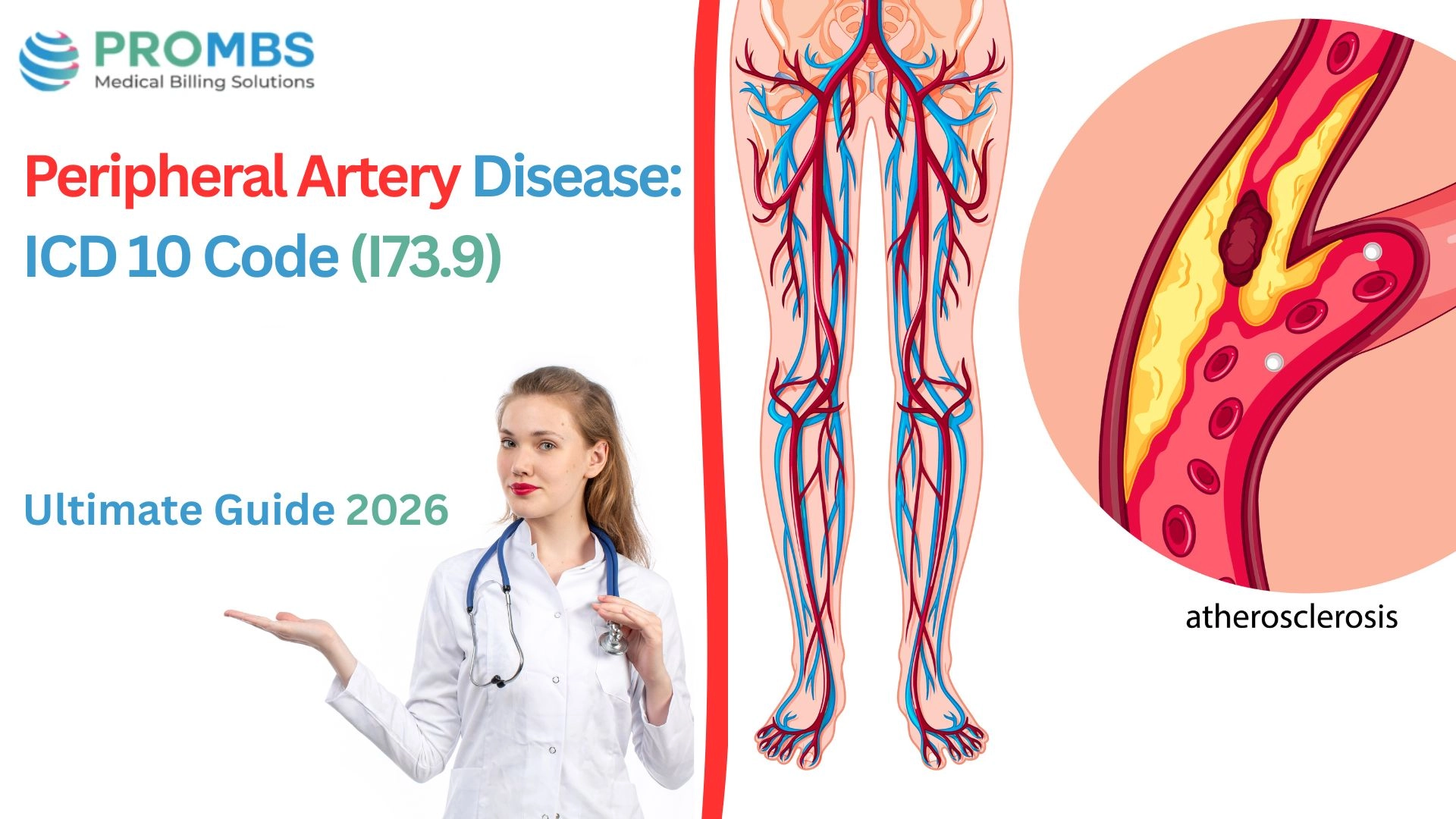
Accurately documenting and coding for arterial diseases requires a deep understanding of the ICD-10-CM (Clinical Modification) hierarchy, which distinguishes between the location of the vessel, the severity of the disease, and the presence of associated complications. In 2026, the specificity required for medical billing and clinical documentation remains paramount to ensure appropriate reimbursement and precise patient tracking.
The ICD-10-CM code set classifies artery diseases primarily under Chapter 9: Diseases of the Circulatory System (I00-I99). Most arterial conditions fall within the I25 (Chronic Ischemic Heart Disease), I65 (Occlusion of Precerebral Arteries), and I70–I77 (Diseases of Arteries, Arterioles, and Capillaries) ranges. This guide provides a detailed list of 70 essential codes used to identify various forms of artery disease, from coronary and carotid to peripheral and renal.
Understanding the Hierarchy of Arterial Coding
Before selecting a code, providers and coders must identify four primary clinical components: the specific artery involved, the underlying pathology (such as atherosclerosis or embolism), the laterality (left, right, or bilateral), and the symptomatic manifestations (such as intermittent claudication, rest pain, or ulceration).
Artery disease coding is notoriously complex because many codes are "combination codes." These single codes describe both the etiology (the cause) and the manifestation (the symptom). For instance, coding for atherosclerosis of the legs requires knowing if the patient has simple claudication or a more severe condition like an ischemic ulcer, as these are captured in distinct subcategories of the I70 range.
1. Coronary Artery Disease (CAD) Codes
Coronary artery disease remains one of the most frequently coded conditions in cardiology. The I25 series is used to report chronic ischemic heart disease. In 2026, it is critical to distinguish between native arteries and bypass grafts, as using the wrong code can result in claim denials.
- I25.10: Atherosclerotic heart disease of native coronary artery without angina pectoris. This is the most common code for general CAD.
- I25.110: Atherosclerotic heart disease of native coronary artery with unstable angina pectoris.
- I25.111: Atherosclerotic heart disease of native coronary artery with angina pectoris with documented spasm.
- I25.118: Atherosclerotic heart disease of native coronary artery with other forms of angina pectoris.
- I25.119: Atherosclerotic heart disease of native coronary artery with unspecified angina pectoris.
- I25.700: Atherosclerosis of coronary artery bypass graft(s), unspecified, with unstable angina pectoris.
- I25.701: Atherosclerosis of coronary artery bypass graft(s), unspecified, with angina pectoris with documented spasm.
- I25.708: Atherosclerosis of coronary artery bypass graft(s), unspecified, with other forms of angina pectoris.
- I25.709: Atherosclerosis of coronary artery bypass graft(s), unspecified, with unspecified angina pectoris.
- I25.810: Atherosclerosis of coronary artery bypass graft(s) without angina pectoris.
2. Peripheral Artery Disease (PAD) of the Lower Extremities
Peripheral Artery Disease (PAD) is primarily classified under the I70.2 series. These codes are highly specific to laterality and clinical symptoms. When a patient presents with multiple symptoms (e.g., both claudication and an ulcer), coding guidelines dictate that the most severe manifestation takes precedence.
- I70.201: Atherosclerosis of native arteries of extremities, unspecified, right leg.
- I70.202: Atherosclerosis of native arteries of extremities, unspecified, left leg.
- I70.203: Atherosclerosis of native arteries of extremities, unspecified, bilateral legs.
- I70.211: Atherosclerosis of native arteries of extremities with intermittent claudication, right leg.
- I70.212: Atherosclerosis of native arteries of extremities with intermittent claudication, left leg.
- I70.213: Atherosclerosis of native arteries of extremities with intermittent claudication, bilateral legs.
- I70.221: Atherosclerosis of native arteries of extremities with rest pain, right leg.
- I70.222: Atherosclerosis of native arteries of extremities with rest pain, left leg.
- I70.223: Atherosclerosis of native arteries of extremities with rest pain, bilateral legs.
- I70.231: Atherosclerosis of native arteries of right leg with ulceration of thigh.
- I70.232: Atherosclerosis of native arteries of right leg with ulceration of calf.
- I70.233: Atherosclerosis of native arteries of right leg with ulceration of ankle.
- I70.234: Atherosclerosis of native arteries of right leg with ulceration of heel and midfoot.
- I70.235: Atherosclerosis of native arteries of right leg with ulceration of other part of foot.
- I70.241: Atherosclerosis of native arteries of left leg with ulceration of thigh.
- I70.242: Atherosclerosis of native arteries of left leg with ulceration of calf.
- I70.243: Atherosclerosis of native arteries of left leg with ulceration of ankle.
- I70.244: Atherosclerosis of native arteries of left leg with ulceration of heel and midfoot.
- I70.245: Atherosclerosis of native arteries of left leg with ulceration of other part of foot.
- I70.261: Atherosclerosis of native arteries of extremities with gangrene, right leg.
- I70.262: Atherosclerosis of native arteries of extremities with gangrene, left leg.
- I70.263: Atherosclerosis of native arteries of extremities with gangrene, bilateral legs.
3. Carotid and Precerebral Artery Disease
Cerebrovascular health depends on the patency of the carotid and vertebral arteries. Blockages in these areas are major risk factors for stroke. The I65 series covers the occlusion and stenosis of these vessels even in the absence of a cerebral infarction.
- I65.01: Occlusion and stenosis of right vertebral artery.
- I65.02: Occlusion and stenosis of left vertebral artery.
- I65.03: Occlusion and stenosis of bilateral vertebral arteries.
- I65.1: Occlusion and stenosis of basilar artery.
- I65.21: Occlusion and stenosis of right carotid artery.
- I65.22: Occlusion and stenosis of left carotid artery.
- I65.23: Occlusion and stenosis of bilateral carotid arteries.
- I65.8: Occlusion and stenosis of other precerebral arteries.
- I65.9: Occlusion and stenosis of unspecified precerebral artery.
4. Aortic Aneurysms and Dissections
Aneurysms represent a structural failure of the arterial wall. Coding for these conditions depends heavily on the anatomical location (thoracic vs. abdominal) and whether the aneurysm has ruptured.
- I71.00: Dissection of unspecified site of aorta.
- I71.01: Dissection of thoracic aorta.
- I71.02: Dissection of abdominal aorta.
- I71.03: Dissection of thoracoabdominal aorta.
- I71.1: Thoracic aortic aneurysm, ruptured.
- I71.2: Thoracic aortic aneurysm, without rupture.
- I71.3: Abdominal aortic aneurysm, ruptured.
- I71.4: Abdominal aortic aneurysm, without rupture.
- I71.5: Thoracoabdominal aortic aneurysm, ruptured.
- I71.6: Thoracoabdominal aortic aneurysm, without rupture.
5. Other Specific Artery Diseases (Renal, Mesenteric, and Others)
Artery disease can affect visceral organs and upper extremities. These codes are essential for patients presenting with secondary hypertension (renal artery stenosis) or chronic mesenteric ischemia.
- I70.1: Atherosclerosis of renal artery.
- I70.8: Atherosclerosis of other arteries (e.g., mesenteric, splenic).
- I72.0: Aneurysm of carotid artery.
- I72.1: Aneurysm of artery of upper limb.
- I72.2: Aneurysm of renal artery.
- I72.3: Aneurysm of iliac artery.
- I72.4: Aneurysm of artery of lower limb.
- I73.00: Raynaud's syndrome without gangrene.
- I73.01: Raynaud's syndrome with gangrene.
- I73.1: Thromboangiitis obliterans (Buerger's disease).
- I73.81: Erythromelalgia.
- I73.9: Peripheral vascular disease, unspecified.
- I77.1: Stricture of artery.
- I77.4: Celiac artery compression syndrome.
- I77.6: Arteritis, unspecified.
- I77.810: Thoracic aortic ectasia.
- I77.811: Abdominal aortic ectasia.
- I77.812: Thoracoabdominal aortic ectasia.
- I77.2: Rupture of artery (non-aneurysmal).
Comparative Overview of Arterial Coding Categories
The following table summarizes the key categories and the clinical indicators required for high-specificity coding in 2026.
| Artery Type | Primary ICD-10 Range | Key Documentation Requirements |
|---|---|---|
| Coronary | I25.10 – I25.810 | Type of vessel (Native vs. Graft), Angina type |
| Peripheral (Legs) | I70.201 – I70.269 | Laterality, Claudication vs. Rest Pain, Ulcer site/severity |
| Precerebral | I65.01 – I65.9 | Specific artery (Carotid/Vertebral), Stenosis vs. Occlusion |
| Aorta | I71.00 – I71.6 | Dissection vs. Aneurysm, Location, Rupture status |
| Visceral/Renal | I70.1, I72.2, I77.4 | Organ system involvement, Primary vs. Secondary symptoms |
| Vasospastic | I73.00 – I73.9 | Underlying cause (e.g., Raynaud's), Presence of gangrene |
Critical Clinical Indicators for Coding Accuracy
As of 2026, the transition toward value-based care has made documentation even more sensitive. For a coder to use these "70 ICD 10 codes for artery disease" effectively, the physician’s note must be exhaustive. If a physician merely writes "Artery Disease," the coder is forced to use an "unspecified" code, such as I77.9, which is frequently flagged by payers for lack of medical necessity.
The Role of Laterality
Laterality is the single most common reason for claim denials in peripheral artery coding. Since arteries exist on both sides of the body, ICD-10-CM requires the coder to specify the right, left, or bilateral side. If a code for the "unspecified" side is used when the clinical note clearly mentions the "right femoral artery," the claim may be rejected for failing to meet the highest level of specificity.
Distinguishing Atherosclerosis from Arteriosclerosis
While often used interchangeably in casual speech, ICD-10-CM views atherosclerosis as a subset of arteriosclerosis. Atherosclerosis (I70 series) specifically refers to the buildup of fats and cholesterol (plaque). If the patient has calcific medial sclerosis (Monckeberg’s), a different coding logic may apply. Always ensure the pathology matches the code descriptor.
Comorbidities and Combination Codes
When coding for artery disease in diabetic patients, the relationship between the two must be established. For example, E11.51 is used for Type 2 diabetes mellitus with diabetic peripheral angiopathy with gangrene. In such cases, the diabetic code often serves as the primary diagnosis, with the specific arterial code providing additional detail.
Frequently Asked Questions
Which code should I use for general "clogged arteries"?
If the clogging is in the heart, use I25.10 (ASHD of native coronary artery). If it is in the legs, use I70.203 (Atherosclerosis of bilateral native arteries) or the specific code for the single leg affected. Avoid using "unspecified" codes whenever possible.
How do I code for a patient with both a carotid blockage and a coronary blockage?
These are two distinct conditions and should both be coded. You would typically list the most acute or symptomatic condition first. For example, if the patient is being seen for a carotid endarterectomy, list I65.2- first. If they are being seen for stable CAD, list I25.10 first.
What is the difference between I70.21 and I70.22?
I70.21 represents atherosclerosis with intermittent claudication (pain that occurs only during exercise). I70.22 represents atherosclerosis with rest pain (pain that occurs even when the patient is sedentary). Rest pain is clinically more severe and often indicates critical limb ischemia.
Are there specific codes for artery disease in the arms?
Yes, the I70.2 series covers "extremities," but most codes in that subcategory default to legs in the descriptions. For upper limbs, look at the I70.8 range or use I70.29- (Atherosclerosis of native arteries of other extremities) and specify the arm in the clinical notes.
Can I code for an aneurysm and atherosclerosis together?
Yes. If a patient has an abdominal aortic aneurysm (AAA) caused by atherosclerosis, you should code the aneurysm as the primary condition (I71.4) and may use a secondary code for the generalized atherosclerosis if relevant to the treatment plan.
Next Steps for Professionals
To ensure compliance in 2026, healthcare facilities should implement regular audits of arterial documentation. Clinicians should be prompted to specify laterality and the presence of ulcers or gangrene at the point of care. For medical coders, staying updated on the Official Guidelines for Coding and Reporting (OGCR) is essential, as subtle changes in "Excludes1" and "Excludes2" notes can alter how these 70 codes are applied in a clinical setting.