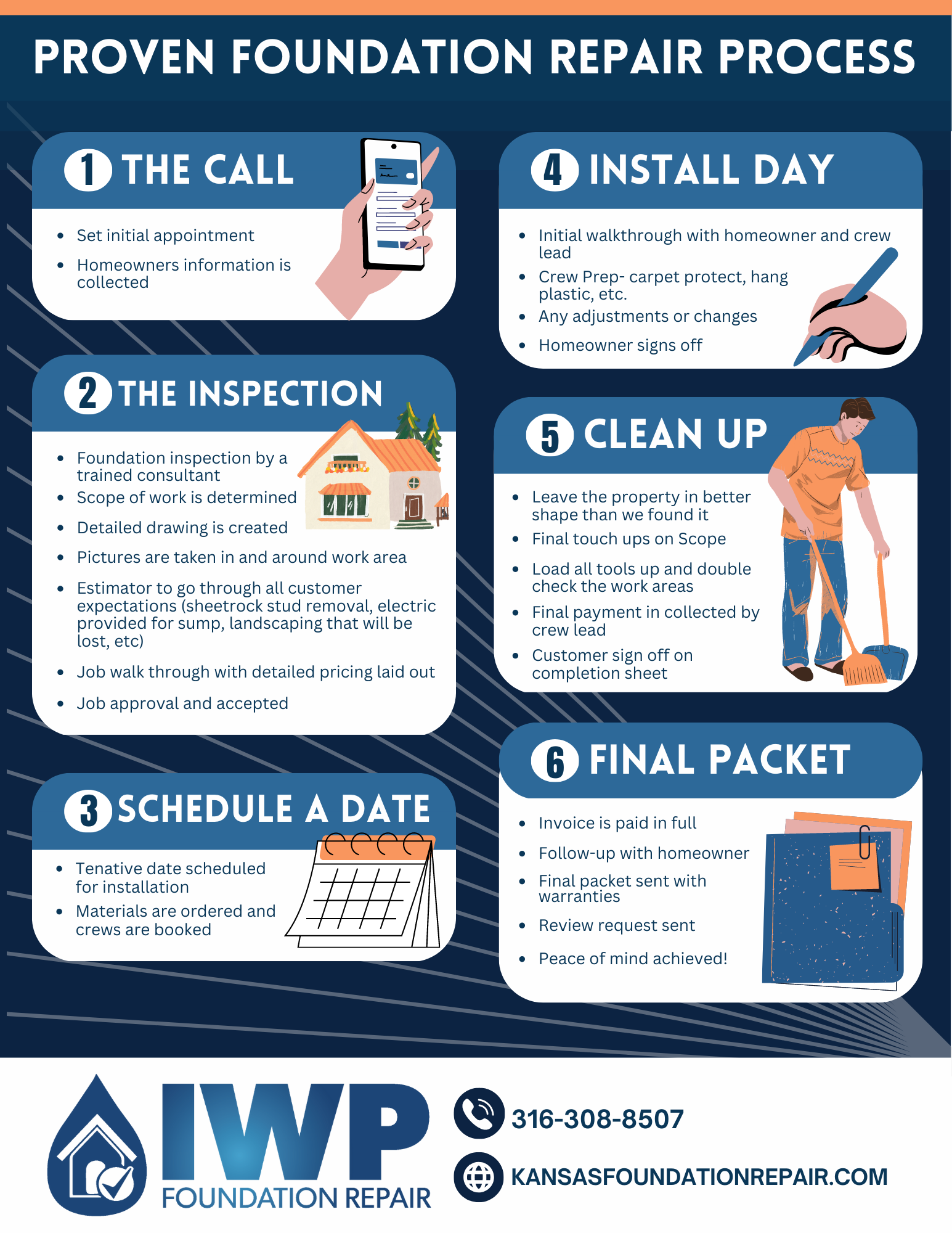
Foundation repair in the 9kc (Greater Kansas City) region primarily addresses structural instability caused by expansive clay soils, requiring specialized methods like steel piering or high-density polyurethane injection to stabilize residential and commercial structures against seasonal shifting. Homeowners must navigate unique geological challenges and specific local building codes to ensure long-term structural integrity.
The Kansas City metropolitan area, often abbreviated in regional planning and logistics as 9kc, sits upon some of the most volatile soil in the United States. For property owners, understanding the nuances of foundation health is not merely a matter of maintenance but a critical component of asset preservation. In 2026, the technology for remediation has advanced significantly, yet the core challenges remains the same: managing the interaction between heavy structures and the shifting earth beneath them.
1. The Geological Driver: Expansive Clay Soils and the Active Zone
The primary reason foundation repair is a dominant industry in the 9kc area is the high concentration of expansive clay soils, specifically those containing minerals like montmorillonite or smectite. These clays have a unique molecular structure that allows them to absorb massive amounts of water during the wet spring months, causing the soil to swell significantly. Conversely, during the hot, dry summers characteristic of the Midwest, the soil loses moisture and shrinks.
This cycle of expansion and contraction occurs within what geologists call the "active zone"—the upper layer of soil most affected by surface environmental conditions. In the 9kc region, this zone can extend 8 to 12 feet below the surface. When the soil shrinks, it leaves voids beneath the concrete footings of a home. Without support, the heavy foundation settles into these gaps, leading to cracks, sticking doors, and uneven floors. Understanding that the soil, not the concrete itself, is usually the root cause is the first step in effective remediation.
2. Piering Systems: Resistance vs. Helical Technology
When a foundation has settled beyond the point of simple cosmetic repair, structural piering is the gold standard in 2026 for stabilization. There are two primary types of piers utilized in the 9kc market, each serving a distinct purpose based on the structure's weight and the soil's profile.
- Steel Resistance Piers (Push Piers): These utilize the weight of the building itself to "push" the pier sections into the ground until they reach competent load-bearing strata or bedrock. They are ideal for heavy residential structures and commercial buildings. The benefit of resistance piers is that they are load-tested during installation; if the building isn't heavy enough to drive the pier, the pier won't support the building.
- Helical Piers: These look like giant screws and are mechanically "screwed" into the ground independently of the building's weight. Helical piers are preferred for lighter structures, such as porches, decks, or newly constructed additions, where the weight of the structure is insufficient to drive a resistance pier.
In the 9kc area, reaching bedrock is often necessary for a permanent fix, as the "stable" soil layers can be deep. Professional installers in 2026 use hydraulic equipment to ensure these piers are driven past the active zone to prevent future movement.
3. The Impact of Hydrostatic Pressure on Basement Walls
While settlement (downward movement) is a major concern, hydrostatic pressure is the leading cause of basement wall failure in the 9kc region. When the clay soil surrounding a foundation becomes saturated with water, it exerts immense lateral (sideways) pressure against the walls.
Because many older homes in the Kansas City area were built with unreinforced concrete block or thin poured walls, this pressure often causes the walls to "bow" or "tip" inward.
- Signs of Lateral Pressure: Horizontal cracks, usually appearing mid-way up the wall, are the most common indicator.
- 2026 Solutions: Carbon fiber reinforcement strips are now the preferred low-profile solution for walls bowing less than two inches. For more severe cases, steel I-beams (PowerBraces) or plate anchors are required to counteract the external force and, in some cases, pull the wall back toward its original position.
4. Modern Soil Stabilization: Polyjacking vs. Mudjacking
For shifting exterior concrete—such as driveways, sidewalks, and garage floors—the 9kc region has largely transitioned from traditional mudjacking to polyjacking.
Mudjacking involves pumping a heavy slurry of sand, cement, and soil under the concrete. While effective in the short term, the sheer weight of the "mud" can actually cause further settlement of the underlying clay. Furthermore, the organic materials in the slurry can erode over time.
Polyjacking, or high-density polyurethane foam injection, uses a lightweight, waterproof resin. When the two-component foam is injected through small (5/8 inch) holes, it undergoes a chemical reaction that causes it to expand with enough force to lift thousands of pounds of concrete. In 2026, this is the preferred method in 9kc because the foam is impervious to moisture, does not add significant weight to the soil, and cures within 15 to 30 minutes, allowing for immediate use of the surface.
5. The Regulatory Environment and Permitting in 9kc
Foundation repair is a structural modification, and in the 9kc metropolitan area, it is strictly governed by local building codes. Most municipalities, including Kansas City (MO), Overland Park (KS), and Independence (MO), require a building permit for any structural piering or wall bracing.
A critical fact for homeowners is the requirement for a Structural Engineer's Load Calculation. In 2026, many cities have tightened their oversight, requiring that a licensed Professional Engineer (PE) review the repair plan to ensure it meets the International Residential Code (IRC) or International Building Code (IBC) standards.
- Verification: Homeowners should always verify that their contractor has pulled the necessary permits. Failure to do so can lead to significant "clouded title" issues during a home sale, where the buyer's inspector or lender requires proof that the structural repairs were performed to code and inspected by the city.
6. Preventive Maintenance: The "Watering" and Drainage Paradox
In the 9kc region, foundation health is inextricably linked to water management. However, the advice is often paradoxical: you must keep water away from the foundation, but you must also keep the soil from getting too dry.
- Drainage: Gutters must be clear, and downspout extensions should carry water at least 10 feet away from the foundation. The grade of the soil should slope away from the house (a 6-inch drop over the first 10 feet is the standard recommendation).
- The "Soaker Hose" Strategy: During 9kc's extreme summer droughts, the clay can shrink so much that it pulls away from the foundation, leaving a gap. This allows the next heavy rain to run straight down to the footings, causing rapid expansion and "heaving." To prevent this, experts recommend using soaker hoses placed 12 to 18 inches from the foundation during dry spells to maintain a consistent moisture level in the clay, preventing the "shrink-swell" cycle.
7. Economic Impact: Costs, Warranties, and Resale Value
Foundation repair is a significant financial investment. In 2026, costs in the 9kc area vary based on the depth to bedrock and the severity of the damage. Generally, repairs are priced per "pier" or per "brace."
| Repair Method | Estimated Cost (2026) | Best Use Case | Expected Lifespan |
|---|---|---|---|
| Steel Push Piers | $1,200 – $2,500 per pier | Stabilizing heavy settling foundations | Lifetime (Transferable) |
| Helical Piers | $1,100 – $2,200 per pier | Lighter structures/Additions | Lifetime |
| Wall Bracing (I-Beams) | $700 – $1,100 per beam | Correcting bowed or tipping walls | 25 - 50 years |
| Carbon Fiber Strips | $500 – $900 per strip | Early-stage wall bowing/Cracking | Lifetime |
| Polyjacking | $10 – $25 per sq. ft. | Leveling sidewalks and driveways | 10 - 20 years |
Beyond the immediate cost, the Transferable Warranty is the most important document in a 9kc foundation project. Because foundation issues are so common in this region, most buyers will not purchase a home with a history of movement unless a reputable company provides a warranty that transfers to the new owner. A foundation repair that lacks a transferable warranty can decrease a home's value by 10-20%, even if the repair was technically successful.
Understanding Structural Signs vs. Cosmetic Issues
Not every crack in a 9kc home requires a $20,000 piering job. Distinguishing between "hairline" shrinkage cracks and "structural" displacement cracks is essential for avoiding unnecessary expenses.
Shrinkage cracks usually occur in the first few years after a house is built as the concrete cures. They are typically vertical and less than 1/16th of an inch wide. Structural cracks, however, are often wider at the top than the bottom, run diagonally from the corners of doors or windows, or appear as horizontal lines in the basement. If you can fit a nickel into a crack, or if the crack shows "stair-stepping" patterns in brickwork, it is time to consult a structural specialist.
The Role of Professional Engineering Reports
In 2026, it is increasingly common for homeowners in the 9kc area to hire an independent structural engineer before calling a repair contractor. While many foundation companies offer free inspections, they are also sales-driven organizations. An independent engineer (who does not sell repair services) provides an unbiased assessment and a specific "scope of work." This allows the homeowner to get "apples-to-apples" bids from multiple contractors, ensuring they only pay for the repairs that are scientifically necessary.
For more information on national standards for foundation performance, homeowners can refer to the American Society of Civil Engineers (ASCE), which provides guidelines on acceptable foundation movement and residential structural maintenance.
Frequently Asked Questions
Does homeowners insurance cover foundation repair in 9kc?
Generally, no. Standard homeowners insurance policies exclude damage caused by "earth movement," which includes the shrinking and swelling of clay soils. Coverage is typically only available if the foundation damage was a direct result of a covered peril, such as a major plumbing leak (sudden pipe burst) or a catastrophic event. Homeowners should review their "earth movement" endorsements, though these are rare in standard residential policies.
How long does a typical foundation repair project take?
For an average-sized home in the 9kc area requiring 8 to 12 piers, the process usually takes 3 to 5 days. This includes excavation, pier installation, lifting (if possible), and backfilling. Polyjacking projects are much faster, often completed in just a few hours.
Can I DIY foundation crack repairs?
Cosmetic cracks can be sealed using epoxy or polyurethane injection kits available at home improvement stores. However, if the crack is a symptom of structural movement, a DIY surface seal will simply crack again as the house continues to shift. DIY "fixes" for structural issues—like adding DIY jacks in a crawlspace—can be dangerous and often fail to address the soil-level problem.
Why is the 9kc area more prone to issues than other regions?
The combination of "Fat Clays" (clays with high plasticity) and the Midwestern climate creates a "perfect storm." Unlike regions with sandy soils (which drain well) or rocky terrain (which is stable), the 9kc region's soil acts like a sponge, creating constant movement that the original foundation designs from the mid-20th century were often not equipped to handle.
Is it better to repair a foundation before selling a house or give a credit?
In the 2026 9kc real estate market, it is almost always better to repair the foundation before listing. Most mortgage lenders will not approve a loan for a property with "active" structural instability. By repairing the issue and providing a transferable warranty, you remove the "fear factor" for buyers and ensure the home can be financed.
Final Recommendation for 9kc Homeowners
If you suspect foundation issues in the 9kc area, the first step should be a thorough inspection of your home's exterior drainage. Ensure that water is not pooling near the base of the structure. If structural signs persist—such as windows that won't lock or large diagonal cracks—consult with a licensed structural engineer. Obtaining a professional, unbiased report will save thousands of dollars in the long run by preventing over-repair and ensuring that the specific geological challenges of the Kansas City region are addressed with the correct technology.