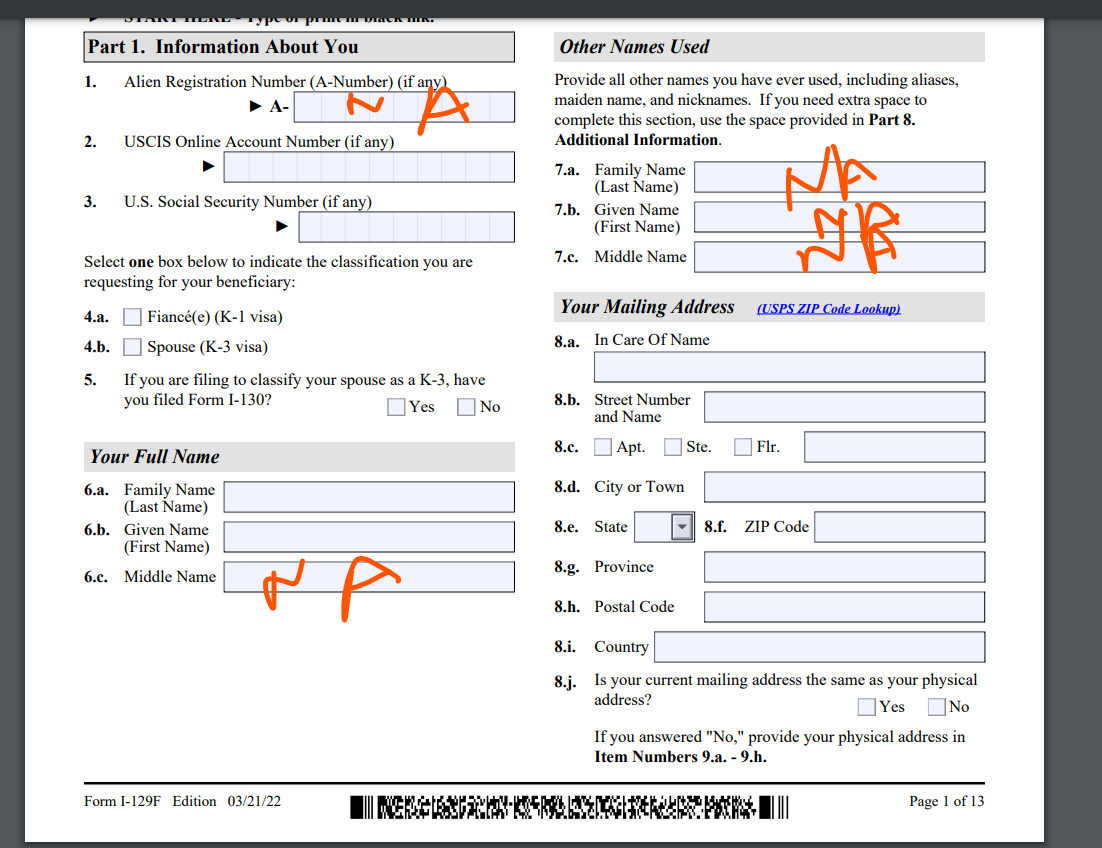
Successfully navigating the Form I-129F, Petition for Alien Fiancé, requires meticulous attention to detail, as this document serves as the foundation for the K-1 nonimmigrant visa process. Petitioners must provide specific evidence of a bona fide relationship, proof of legal eligibility to marry, and documentation of their intent to wed within 90 days of the beneficiary’s entry into the United States.
Understanding the Role of the I-129F
The Form I-129F is not an application for a visa itself, but rather a petition filed by a U.S. citizen to bring their foreign-national fiancé to the United States to marry. Because the K-1 visa creates a pathway toward permanent residency, United States Citizenship and Immigration Services (USCIS) enforces strict scrutiny to ensure the relationship is genuine and not entered into solely for immigration benefits.
Filing errors, missing evidence, or inconsistent data can lead to a Request for Evidence (RFE), which significantly delays the processing timeline. By following a structured checklist, petitioners can reduce the risk of administrative hurdles and ensure their case proceeds through the National Visa Center (NVC) and subsequent consular processing as efficiently as possible.
Step 1: Confirm Eligibility and Filing Jurisdictions
Before preparing the documentation, ensure you meet the fundamental legal requirements. You must be a U.S. citizen; lawful permanent residents (green card holders) are not eligible to file a Form I-129F. Both parties must be legally free to marry, meaning any previous marriages must be formally terminated through divorce, annulment, or death.
Additionally, you must have met in person within the two years immediately preceding the filing of the petition. While exceptions exist for religious or cultural prohibitions against meeting or cases of extreme hardship, these are rare and require substantial documentation. If you cannot prove this meeting, your petition is likely to be denied.
Step 2: Assemble Required Forms and Fees
The primary document is the Form I-129F, available through the official USCIS website. Ensure you are using the current version of the form, as outdated versions may lead to immediate rejection. The petition must be signed by the U.S. citizen petitioner; electronic signatures are not accepted on the paper-based filing.
Payment is mandatory at the time of submission. As of 2026, petitioners must ensure the check or money order is made payable to the "U.S. Department of Homeland Security." Failure to include the correct filing fee is the most common reason for a rejected package. Keep a copy of your payment confirmation for your records.
Step 3: Documenting the Bona Fide Relationship
USCIS requires concrete evidence that your relationship is more than just a formal engagement. This documentation should illustrate the history and trajectory of your commitment. Effective evidence includes:
- Photographs: A chronological selection of photos taken together over the course of your relationship, showing you in various settings and with friends or family.
- Correspondence: Logs of emails, text message threads, or social media interactions that demonstrate ongoing communication.
- Travel Records: Passport stamps, airline tickets, and hotel receipts proving your in-person meetings.
- Financial Records: Joint bank accounts, shared lease agreements, or shared property titles, if applicable.
Focus on quality over quantity. Ten high-quality, dated photographs that show you together in different contexts are more effective than fifty pictures of just one person.
Step 4: Verification of Intent to Marry
The I-129F requires both the petitioner and the beneficiary to sign a statement declaring their intent to marry within 90 days of the beneficiary's arrival in the U.S. This is a legal requirement that cannot be overlooked.
If you have already made wedding preparations, include copies of venue contracts, invitations, or correspondence with officiants. While not strictly mandatory for the initial petition, providing evidence of wedding planning adds significant weight to your claim that the intent to marry is sincere and imminent.
Step 5: Preparing Personal Identification and Biographical Data
You must provide proof of U.S. citizenship for the petitioner, such as a birth certificate, a valid U.S. passport, or a certificate of naturalization. For both the petitioner and the beneficiary, you must provide G-325A (Biographic Information) details, though these are now integrated into the Form I-129F itself.
If either party has been married previously, you must include copies of final divorce decrees or death certificates of former spouses. These documents must be official, certified copies. If they are in a language other than English, a full, certified translation must be attached.
Step 6: Organizing and Formatting the Filing Package
How you present your documents is just as important as the contents themselves. USCIS suggests using a logical, tabbed organization.
- Cover Letter: Start with a professional cover letter that summarizes the contents of the package.
- Form I-129F: Place the completed, signed form at the front.
- Proof of Citizenship: Clearly labeled behind the form.
- Evidence of Relationship: Organized chronologically with clear descriptions of what each photo or document proves.
- Translations: Always keep the English translation immediately following the original language document.
Avoid using heavy binders or plastic sheet protectors, as these are removed by clerks during the intake process and can delay scanning. Use simple binder clips or two-hole punch fasteners at the top of the pages.
Step 7: Review, Duplicate, and Dispatch
The final step is the "Review Phase." Before sealing the package, cross-reference every item in your envelope with your checklist. Double-check for signatures in all required fields—a missing signature is a fatal flaw.
Keep a complete photocopy of the entire application package for your personal files. This is essential for your future interview at the U.S. Embassy or Consulate, as you will need to reference the information you provided in your petition. Send your package via a reliable courier service that provides tracking information, allowing you to confirm receipt by the USCIS lockbox facility.
Comparison of Key Documentation Requirements
| Document Type | Purpose | Essential Format |
|---|---|---|
| Proof of Citizenship | Validates petitioner status | Certified copy/Passport copy |
| Divorce Decrees | Proves legal freedom to marry | Official, stamped copy |
| Passport Photos | Used for identification | 2x2 inches, color, recent |
| Wedding Intent | Confirms 90-day deadline | Signed statement by both parties |
| Proof of Meeting | Substantiates relationship | Dated photos, flight stubs |
Frequently Asked Questions
Does the I-129F guarantee a visa approval? No. The I-129F is only the first step. Approval of the petition simply means you have met the initial requirements to move forward. The beneficiary must still pass a medical exam, a background check, and an interview at a U.S. embassy to be issued a K-1 visa.
What happens if I receive a Request for Evidence (RFE)? An RFE means the officer requires more information before making a decision. You will receive a letter detailing exactly what is missing. Respond promptly by the deadline provided, including the RFE notice on top of your response to ensure it is routed correctly.
Can I file the I-129F if we haven't met in the last two years? Only if you meet very narrow criteria, such as a long-standing cultural custom where meeting before marriage is forbidden, or if meeting would cause extreme hardship to the petitioner. These cases are complex and usually require professional legal guidance.
How long is the I-129F approval valid? Once approved, the petition is generally valid for four months. The consulate can extend this if necessary, provided the relationship remains active and valid.
Do I need a lawyer to file the I-129F? You are not required to have an attorney. However, if your case involves complex legal issues, criminal records, or prior immigration history, consulting with a qualified immigration attorney can help prevent avoidable denials.
Next Actions
Once your petition is filed, monitor your case status using your unique receipt number on the USCIS Case Status Online tool. While waiting for the Notice of Action (Form I-797), begin gathering the civil documents—such as birth certificates and police clearances—that will be required later in the consular phase. Patience is a necessary virtue, as processing times vary based on the specific USCIS service center handling your file.