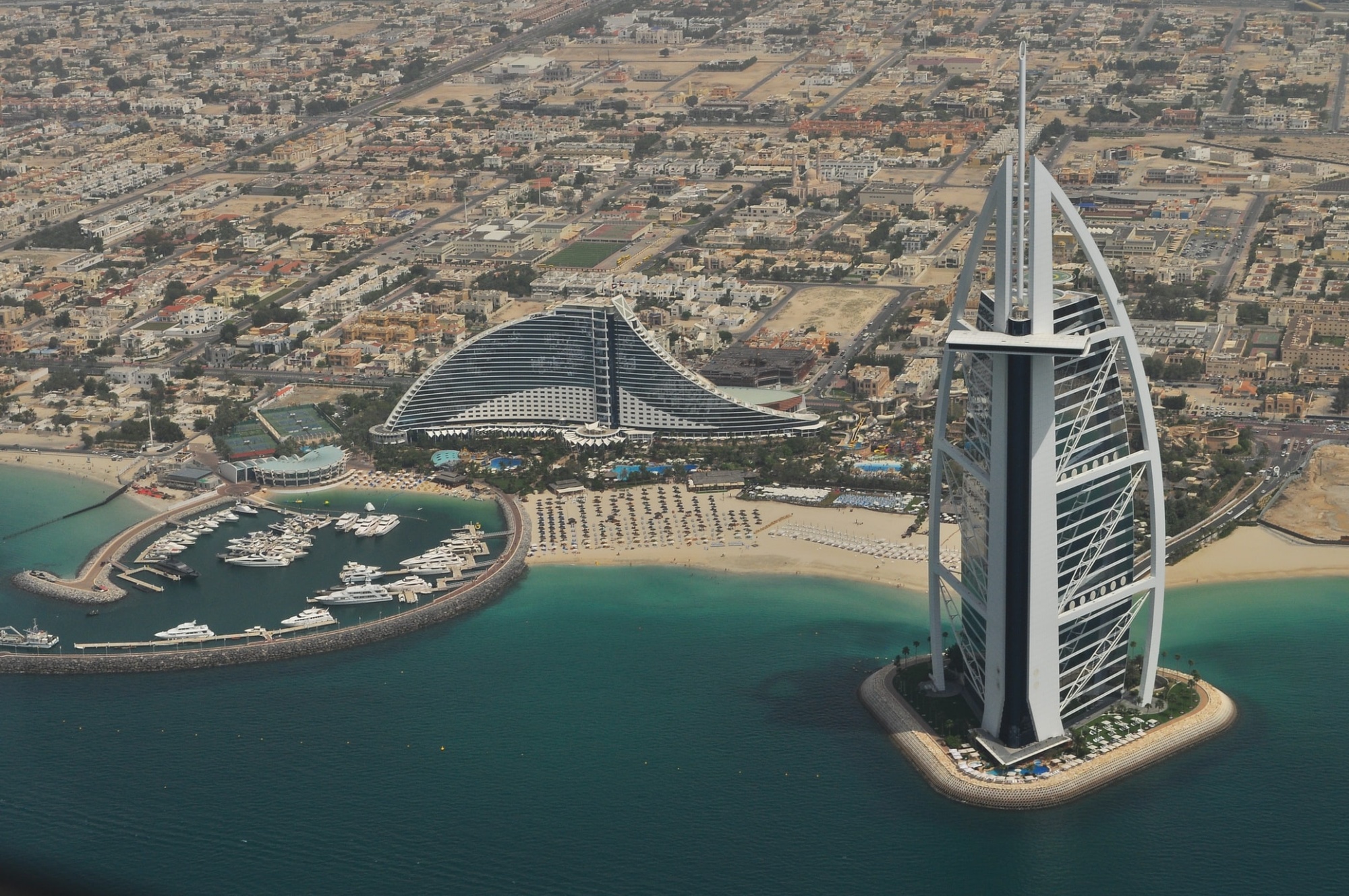
While the Burj Al Arab is globally famous as a self-proclaimed "seven-star" hotel, official international hospitality standards only award up to five stars. The legendary rating originated from a journalist who felt a standard five-star luxury designation failed to capture the unprecedented level of opulence, private butler service, and architectural grandeur experienced inside Dubai's iconic sail-shaped landmark.
The Origin of the Seven-Star Myth
The enduring association between the Burj Al Arab and the seven-star rating is one of the most successful public relations occurrences in modern tourism history. When the all-suite luxury hotel opened its doors in December 1999 on an artificial island off the coast of Dubai, the management and developers sought to immediately signal that the property transcended conventional luxury.
As the story goes, a British journalist attending the grand opening preview tour was so overwhelmed by the sheer scale of gold leaf interiors, cascading fountains, private reception desks on every floor, and the unmatched guest-to-staff ratio that she wrote it was "so over-the-top that it must be a seven-star hotel." The phrase resonated immediately with the public, international media, and affluent travelers. Jumeirah, the hospitality group managing the property, wisely allowed the unofficial moniker to stick, embedding it into global pop culture.
However, industry insiders and hotel classification boards immediately noted a stark reality: the official hotel rating system stops firmly at five stars.
Official Hotel Rating Systems Explained
To understand why the Burj Al Arab is technically a five-star hotel, it is essential to examine how international hotel ratings actually work. There is no single global governing body that hands out star ratings. Instead, ratings are managed by:
- National or local government tourism authorities (such as Dubai's Department of Economy and Tourism).
- Independent motoring and travel associations (such as Forbes Travel Guide or AAA in North America).
- Private auditing and inspection agencies.
Traditional criteria for a five-star rating focus on exceptional standards of luxury, impeccable guest service, extensive dining options, elite fitness and spa facilities, and fine architectural design. Because the Burj Al Arab easily checks every single one of these boxes, local and international authorities categorize it strictly as a five-star luxury property.
Over the years, representatives and general managers of the hotel have publicly addressed the moniker on multiple occasions. They have clarified that they do not officially use the term "seven-star" in their marketing materials or corporate communications; rather, they describe the property simply as an iconic, ultra-luxury five-star hotel. Despite these clarifications from management, the public and media continue to use the unofficial rating to distinguish its unique level of service.
| Rating System | Maximum Standard Rating | Burj Al Arab Official Status | Burj Al Arab Unofficial Status |
|---|---|---|---|
| Global Tourism Boards | 5 Stars | 5-Star Luxury | Seven-Star Icon |
| Forbes Travel Guide | 5 Stars | Five-Star Property | Ultra-Luxury Benchmark |
| Media & Public | Variable | N/A | Widely Referred to as 7 Stars |
| Internal Management | N/A | Ultra-Luxury Hotel | Embraces the Iconic Reputation |
What Makes the Burj Al Arab Feel Beyond Five Stars?
Even though the rating is technically five stars, guests frequently report an atmosphere and level of personal attention that feels entirely distinct from standard luxury hotels. Several unique operational and architectural choices contribute to this elevated perception.
Unprecedented Guest-to-Staff Ratio
The hallmark of ultra-luxury is personal attention. At the Burj Al Arab, the ratio of staff to suites is heavily weighted in favor of the guest, averaging roughly eight staff members for every single suite. Every guest is assigned a dedicated private butler upon arrival, available around the clock to unpack luggage, draw customized aromatherapy baths, coordinate dining reservations, and manage private transport.
Architectural Ambition and Design
Designed by architect Tom Wright of Atkins, the building mimics the billowing sail of a J-class yacht. Standing at 321 meters, it was engineered to dominate the Dubai coastline. The interior features over 2,000 square meters of 25-karat gold leaf, a grand atrium that can fit the Statue of Liberty inside, and custom-designed carpets, mosaics, and stonework sourced from around the globe.
Exclusive Guest Privacy and Security
Privacy is treated as an absolute priority. The hotel is situated on a private island connected to the mainland by a private curved bridge. Non-guests are historically restricted from entering the property unless they hold a confirmed dining reservation or have booked an official guided tour, such as the "Inside Burj Al Arab" experience introduced in recent years. This prevents casual foot traffic and ensures absolute tranquility for staying guests.
High-End Fleet and Transport
Guests do not merely arrive by standard taxi. The hotel maintains a fleet of chauffeur-driven Rolls-Royce Phantoms available for airport transfers and city travel. For VIP arrivals or guests looking to bypass city traffic, a dedicated helipad sits 210 meters above the sea, capable of accommodating private helicopters.
Comparison: Standard 5-Star Hotel vs. Burj Al Arab Experience
To grasp why the seven-star descriptor persists, it helps to compare a typical luxury five-star hotel experience with what is offered at this Dubai landmark.
| Feature | Standard 5-Star Hotel | Burj Al Arab (Dubai) |
|---|---|---|
| Accommodation Type | Standard rooms, suites, and penthouses. | Exclusively two-story duplex suites starting at 170 square meters. |
| Check-In Process | Front desk or executive lounge check-in. | Private check-in conducted inside your own suite by your butler. |
| Bathroom Amenities | Premium branded toiletries in travel sizes. | Full-size designer Hermes fragrance and amenity sets for men and women. |
| Arrival Experience | Standard luxury sedan or valet parking. | Rolls-Royce Phantom fleet or rooftop helipad landing. |
| Property Access | Open to registered guests and general restaurant patrons. | Gated private island requiring verified reservations or tour tickets. |
Why Hotels Cannot Officially Earn 7 Stars
The hospitality industry fiercely guards the integrity of the five-star ceiling. Introducing a seven-star tier would disrupt global benchmarking, as there are no standardized international criteria established for six or seven stars.
If inspection agencies began handing out seven stars, it would devalue the hard-earned five-star status of historic grand hotels in Paris, London, and New York that meet every rigorous international metric. Consequently, hospitality boards maintain that once a property reaches the pinnacle of luxury, service, and amenities, it has achieved the maximum possible designation. The Burj Al Arab sits comfortably at the absolute ceiling of that five-star scale.
Frequently Asked Questions
Is the Burj Al Arab officially rated seven stars?
No. Officially, the Burj Al Arab is a five-star luxury hotel. The seven-star title is an informal marketing term coined by a journalist and embraced by the public to highlight its extreme luxury and unique architectural opulence.
Can anyone visit the inside of the Burj Al Arab?
Historically, visitors were only allowed inside if they had a restaurant reservation or a hotel booking. However, management introduced the "Inside Burj Al Arab" guided tour, allowing tourists to explore the grand atrium and royal suite with a butler guide without booking an overnight stay.
How much does it cost to stay at the Burj Al Arab?
Rates fluctuate heavily based on the season, ranging from approximately $1,500 to over $15,000 per night depending on the suite tier, time of year, and included amenities. Every room is a spacious multi-story duplex suite.
Who owns the Burj Al Arab?
The hotel is owned and operated by the Jumeirah Group, a luxury hotel management company based in Dubai, which is a subsidiary of Dubai Holding.
What is the dress code for visitors?
The hotel enforces a strict elegant dress code. For men, this typically means collared shirts, full-length trousers or smart jeans, and closed shoes. Sportswear, beachwear, shorts, and flip-flops are strictly prohibited in lounges and restaurants.
Next Actions and Recommendations
If you plan to experience the Burj Al Arab firsthand, ensure you book well in advance, particularly during the peak winter travel season in Dubai. Whether you choose to book a multi-night stay in a duplex suite, reserve a table at one of the award-winning fine dining restaurants like Al Mahara, or purchase a ticket for the official Inside Burj Al Arab guided tour, verify all dress code guidelines and reservation confirmations prior to arrival to ensure seamless entry across the private bridge.