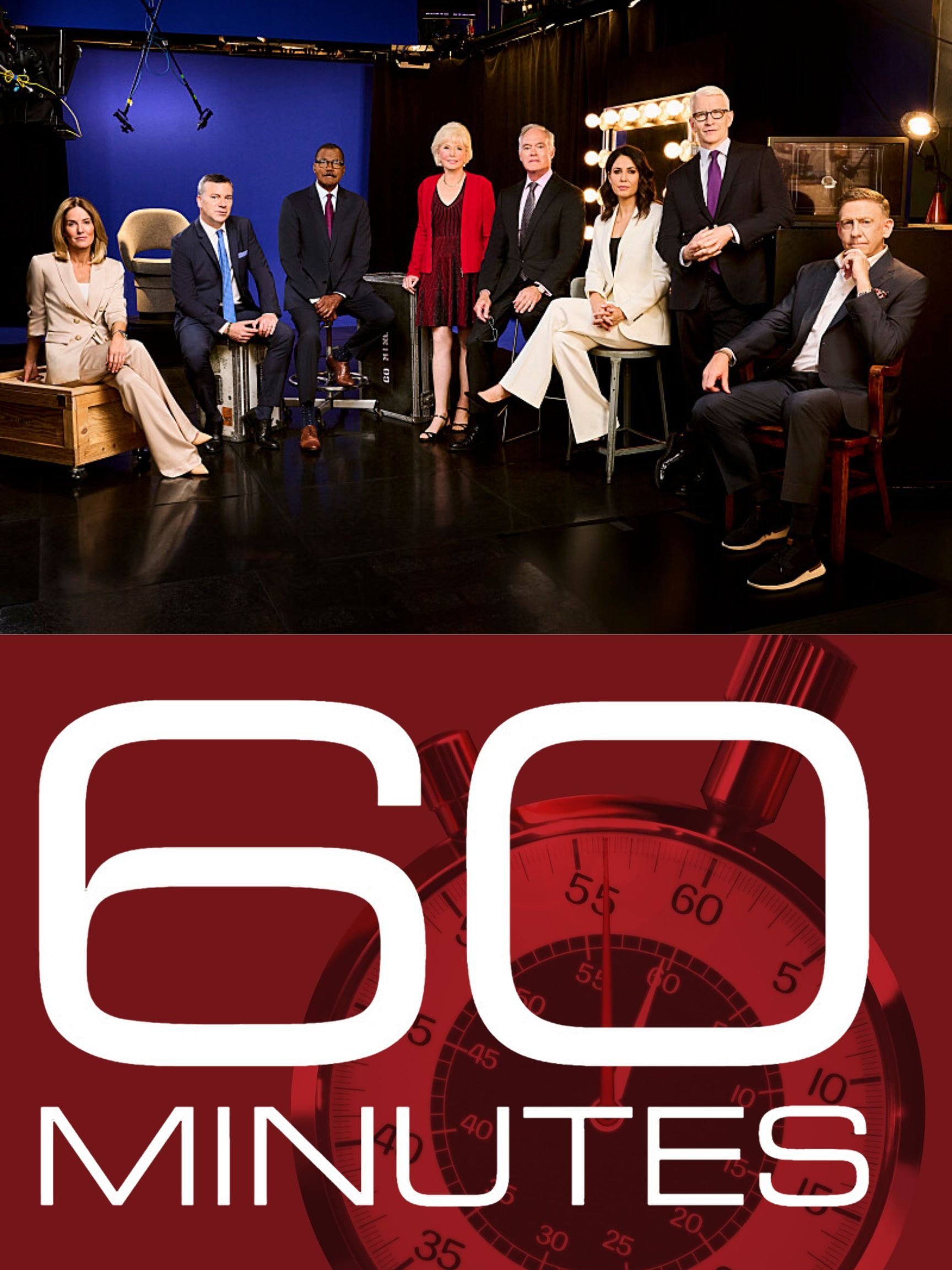
Over its five-decade history, 60 Minutes has remained a cornerstone of American journalism, consistently ranking among the most-watched programs on television. While peak viewership exceeded 30 million in the late 1970s, the program currently maintains a robust audience of 7 to 10 million viewers per episode in 2026, frequently securing its position as the most-watched non-sports program on Sunday nights.
The Evolution of 60 Minutes Ratings
Since its debut on September 24, 1968, 60 Minutes has navigated a television landscape that transitioned from a three-network monopoly to a fragmented digital ecosystem. Created by Don Hewitt, the program pioneered the "newsmagazine" format, focusing on character-driven storytelling rather than just dry reporting. This approach turned journalists like Mike Wallace, Morley Safer, and Ed Bradley into household names, fueling a ratings surge that remains unprecedented for a news program.
In the early years, the show struggled to find an audience, often being moved around the CBS schedule. However, its relocation to the 7:00 PM ET Sunday slot in 1975 changed the trajectory of the series. By the 1979-1980 season, 60 Minutes became the first news program to ever rank as the #1 show on television for the entire year.
The Golden Age of Linear Television (1970s–1990s)
During the late 20th century, 60 Minutes was a cultural juggernaut. Its dominance was driven by a lack of competition and a high-trust environment for legacy media. During this "Golden Age," the program routinely drew 20% to 30% of all American households with a television.
The 1980s saw the program maintain a near-permanent spot in the Nielsen Top 10. This era was defined by "confrontational" journalism, where viewers tuned in specifically to see Mike Wallace corner corporate executives or political figures. The ratings during this period were so high that 60 Minutes became a primary profit center for CBS, proving that news could be as lucrative as primetime sitcoms or dramas.
The Digital Shift and Audience Fragmentation (2000s–2020s)
As cable news, the internet, and eventually streaming services emerged, all linear television ratings began a slow decline. 60 Minutes was not immune to this trend, but it proved more resilient than its peers. While viewership slipped from the 20 million range to the 10-12 million range in the early 2000s, its relative ranking stayed high because other programs were losing viewers even faster.
In the current landscape of 2026, "viewership" is no longer measured solely by those sitting in front of a television at 7:00 PM. Nielsen ratings now incorporate "Live + Same Day," "Live + 7 Days," and "Out-of-Home" (OOH) viewing, which accounts for people watching in bars, airports, or hotels. Furthermore, the integration of Paramount+ has shifted millions of viewers to digital-first consumption, though linear TV still provides the "prestige" numbers CBS reports to advertisers.
60 Minutes Historical Viewership Data
The following table outlines the approximate average viewership and Nielsen rankings for 60 Minutes across several key seasons to illustrate its long-term trajectory.
| Television Season | Average Viewers (Millions) | Nielsen Annual Rank | Context/Major Events |
|---|---|---|---|
| 1977–1978 | 24.1 | 4 | First entry into the Top 5 |
| 1979–1980 | 28.4 | 1 | First time a news show was #1 |
| 1982–1983 | 25.5 | 1 | Peak of the Mike Wallace era |
| 1991–1992 | 21.9 | 1 | Post-Gulf War news boom |
| 1999–2000 | 17.5 | 9 | Rise of reality TV competition |
| 2009–2010 | 12.8 | 15 | Shift toward digital news intake |
| 2018–2019 | 10.5 | 11 | Stormy Daniels interview peak |
| 2023–2024 | 8.2 | 10* | Most-watched non-sports program |
| 2025–2026 | 7.4 | 12* | Stability in the streaming era |
*Note: Modern rankings often exclude sports programming like Sunday Night Football to provide a clear view of scripted/news performance.
Factors Influencing Viewership Numbers
Several technical and cultural factors contribute to why 60 Minutes viewership fluctuates from year to year. Understanding these variables provides a clearer picture of why the show remains a powerhouse despite the general decline of broadcast television.
The NFL Lead-In Effect
Perhaps the most significant technical factor in 60 Minutes' Sunday night success is the "NFL Lead-in." During the autumn and winter months, CBS broadcasts high-profile NFL games that often run into the 7:00 PM ET hour. When a popular game ends, millions of viewers remain on the channel, providing a "halo effect" that boosts the first half-hour of 60 Minutes.
Ratings data consistently show that during the NFL season, 60 Minutes viewership can spike by 30% to 50% compared to its summer "encore" (rerun) presentations. This synergy with live sports is a cornerstone of CBS’s scheduling strategy and helps explain why the program remains more viable than rival newsmagazines like ABC’s 20/20 or NBC’s Dateline, which often air on different nights or in different timeslots.
The Impact of "Big Get" Interviews
Viewership for 60 Minutes is highly "event-driven." While the show has a loyal base of "appointment viewers," certain episodes see massive spikes due to exclusive interviews with controversial or timely figures.
- 1992: Bill and Hillary Clinton’s interview following the Super Bowl reached one of the largest audiences in the show’s history (approx. 34 million viewers).
- 2018: The Anderson Cooper interview with Stormy Daniels drew over 22 million viewers, nearly doubling the season's average at the time.
- 2020s: Interviews with key figures in the AI revolution and high-stakes political candidates continue to drive "Live + 3" day gains as segments go viral on social media platforms.
Demographic Shifts
The "quality" of 60 Minutes viewership is often more important to CBS than the raw quantity. Traditionally, the program has skewed toward an older demographic (50+). However, advertisers value this audience because it tends to have higher disposable income and higher engagement with pharmaceutical and financial services ads.
In recent years, CBS has made concerted efforts to bring in younger viewers through its "60 Minutes+" digital iterations and by featuring younger correspondents like Sharyn Alfonsi and Cecilia Vega. This has stabilized the "median age" of the viewer, preventing it from climbing as rapidly as other broadcast news programs.
Measuring Success in the Streaming Era
In 2026, evaluating 60 Minutes based solely on its "over-the-air" Nielsen rating is an incomplete analysis. The program is now a multi-platform brand.
Paramount+ and Digital Reach
A significant portion of the audience now consumes 60 Minutes segments individually via YouTube, the CBS News app, or the full-episode stream on Paramount+. These digital views often reach younger, global audiences that never touch a television antenna. CBS executives have noted that while the linear "box" number may show a 3% to 5% year-over-year decline, the total "brand impressions"—including social media clips and streaming—are actually at an all-time high.
International Syndication
60 Minutes is not just an American phenomenon. The "Format" is licensed globally, and the original American segments are syndicated to over 100 countries. While these international numbers aren't typically included in the "viewership by year" domestic reports, they contribute significantly to the show's financial longevity and cultural footprint.
Challenges to Future Viewership
Despite its current stability, 60 Minutes faces several headwinds as it moves toward its 60th anniversary in 2028.
- Cord-Cutting: As more households move away from traditional cable and satellite packages, the "passive" audience—those who leave the TV on CBS after a game—is shrinking.
- Trust in Media: Like all mainstream news outlets, 60 Minutes must navigate a polarized political environment. Fluctuations in viewership can often be traced back to perceptions of "bias" by certain segments of the audience, particularly during election cycles.
- Competition for Time: The primary competitor for 60 Minutes in 2026 isn't Dateline; it's the infinite scroll of social media and on-demand streaming content. The challenge remains convincing viewers that they should dedicate a full hour to a curated news experience.
FAQ
Why is 60 Minutes still so popular after 50 years?
The show's success is attributed to its "storytelling" philosophy. Unlike daily news that focuses on "what" happened, 60 Minutes focuses on "who" it happened to and "why." This narrative structure makes the information more engaging and memorable than standard news reporting. Additionally, its consistent Sunday night timeslot has made it a weekly habit for generations of American families.
How many people watch 60 Minutes on average today?
As of the 2025–2026 season, a typical new episode of 60 Minutes averages between 7.2 and 8.5 million linear viewers. However, when accounting for streaming on Paramount+ and delayed viewing (DVR) within seven days, the total audience per episode often exceeds 10 million.
What was the highest-rated 60 Minutes episode ever?
While there are different ways to measure this, the January 26, 1992, episode featuring Bill and Hillary Clinton is widely cited as the peak. Airing immediately after the Super Bowl, it leveraged a massive lead-in audience and a high-stakes political scandal, resulting in an estimated 34 million viewers.
Does the NFL really affect the ratings?
Yes, significantly. On Sundays when CBS carries a "Doubleheader" (an afternoon game that ends at 7:00 PM or 7:30 PM), 60 Minutes often sees a viewership bump of 2 to 4 million people. During the "off-season" or during summer reruns, the numbers typically drop to their baseline of 5 to 6 million viewers.
Is 60 Minutes losing viewers to streaming?
While some linear viewers have transitioned to streaming, 60 Minutes has successfully captured much of that audience on Paramount+. Rather than "losing" viewers, the show is seeing its audience "fragment" across different devices. The total reach of the 60 Minutes brand remains one of the largest in the news industry.
Who are the current correspondents for 60 Minutes in 2026?
The 2026 roster includes veteran journalists such as Lesley Stahl, Scott Pelley, and Bill Whitaker, alongside younger correspondents like Sharyn Alfonsi, Jon Wertheim, and Cecilia Vega. This mix is intended to maintain the show's institutional authority while appealing to a broader demographic.
Next Steps for Viewers and Researchers
For those interested in tracking the ongoing performance of 60 Minutes, the most accurate data is released weekly by Nielsen Media Research. Academic researchers can often access deeper "cross-platform" analytics through databases like Comscore or the Pew Research Center's State of the News Media reports. To experience the program's modern evolution firsthand, viewers should compare the traditional broadcast experience with the expanded, interactive segments available on the CBS News 24/7 streaming channel, which offers behind-the-scenes content that isn't always included in the original 60-minute window.