Young men under the age of 25 often face the highest auto insurance premiums in the industry due to statistical risk profiles. While age and gender are significant factors, many common beliefs about car color, the "magic" 25th birthday, and credit requirements are outdated or entirely false, leading to missed savings.
The Actuarial Landscape for Young Drivers in 2026
To understand why myths about auto insurance persist, one must first understand the underlying data that insurance companies use to set rates. Insurance is, at its core, the business of predicting the future based on the past. Actuaries—the mathematicians of the insurance world—analyze millions of data points to determine which demographic groups are most likely to file a claim and how expensive those claims will be.
Historically, and continuing into 2026, data from organizations like the National Highway Traffic Safety Administration (NHTSA) indicates that young male drivers are involved in more frequent and more severe accidents than any other demographic. This is often attributed to a combination of less driving experience, a higher propensity for speeding, and statistical trends regarding late-night driving.
However, the industry has shifted. By 2026, the rise of telematics and AI-driven risk assessment has begun to challenge traditional "risk pools." Drivers are no longer just a number based on their age; they are increasingly judged by their specific "behind-the-wheel" data. Despite this progress, several myths continue to circulate, often causing young men to make poor financial decisions when selecting coverage.
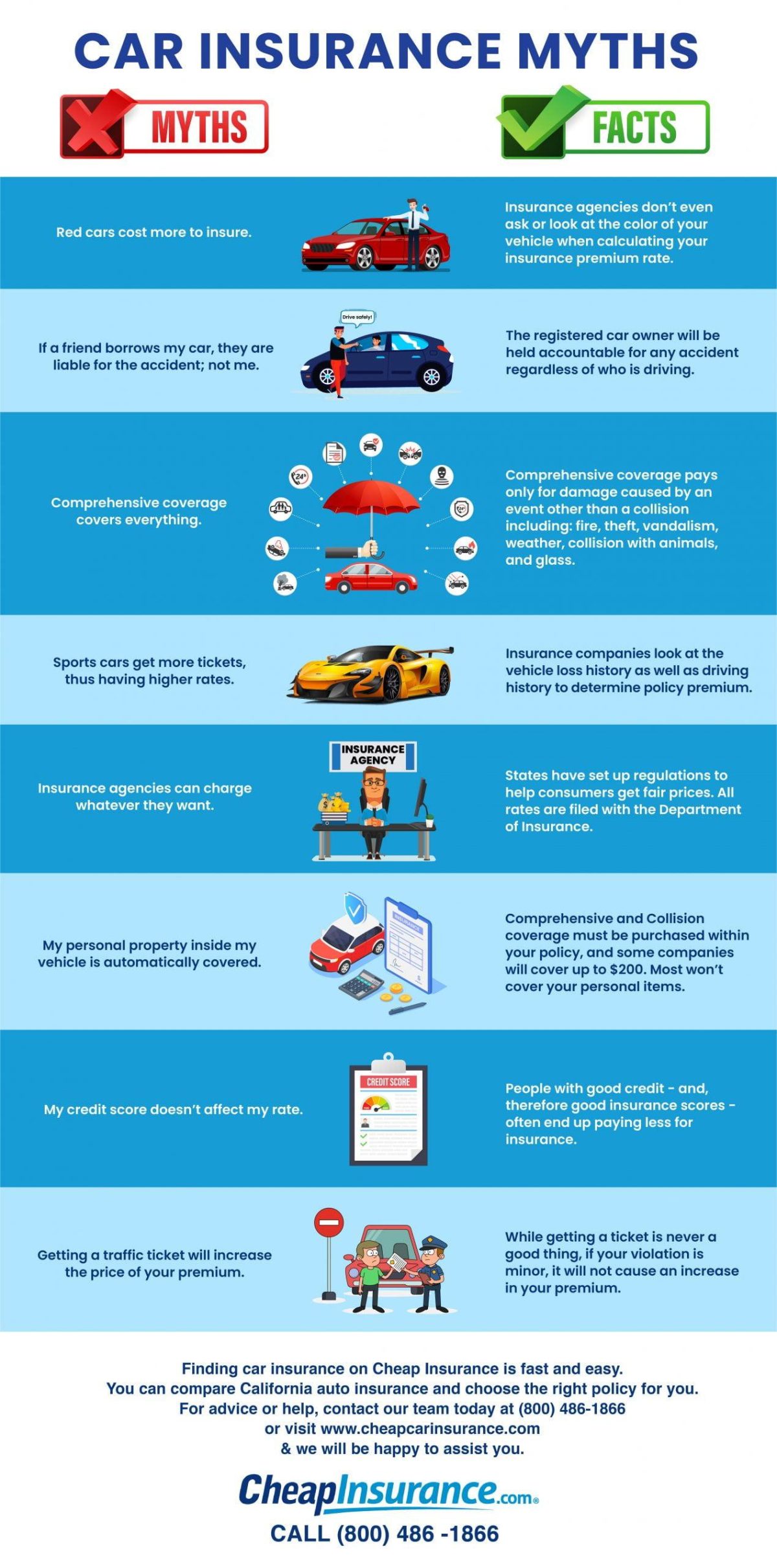
Myth 1: The Color of Your Car Affects Your Premium
One of the most persistent myths in the automotive world is that driving a red car will cause your insurance rates to skyrocket. The logic usually presented is that red cars are more "aggressive," easier for police to spot, or preferred by reckless drivers.
The Reality of Vehicle Identification Numbers (VINs)
Insurance companies do not ask for the color of your vehicle when you apply for a policy. When you provide your Vehicle Identification Number (VIN), the insurer receives a wealth of technical data: the make, model, year, engine size, safety features, and assembly location. The color of the paint is not encoded in the VIN, and it is not a field that insurers use in their pricing algorithms.
What Actually Matters for the Vehicle
Instead of color, insurers focus on the loss history of the specific vehicle model. If you drive a car that is frequently stolen or one that lacks modern Advanced Driver Assistance Systems (ADAS), your rates will be higher. In 2026, insurers place a heavy emphasis on:
- Cost of Repair: High-tech components like LiDAR sensors and LED headlight clusters are expensive to replace after a minor collision.
- Theft Rates: Certain models are perennial favorites for thieves, which increases the Comprehensive portion of the premium.
- Crashworthiness: How well the vehicle protects its occupants directly correlates to the Personal Injury Protection (PIP) or Medical Payments (MedPay) cost.
A silver car with a high-performance engine and poor safety ratings will always be more expensive to insure than a red car with a high safety rating and a modest engine.
Myth 2: Rates Automatically Drop the Day You Turn 25
The "25th Birthday Myth" suggests that as soon as a young man blows out the candles on his 25th birthday, his insurance company sends him a gift in the form of a 30% to 50% rate reduction. While 25 is a significant milestone for actuarial risk, the reality is far more gradual.
The Concept of "Years of Experience"
Insurers value "years of licensed driving experience" more than biological age. A 25-year-old who just received his license last year may still pay "new driver" rates. Conversely, a 24-year-old who has been licensed since 16 and has a perfectly clean record may already be seeing his rates decline.
The Impact of the Three-Year Lookback
Most insurance companies use a three- to five-year "lookback" period for moving violations and accidents. If a driver has a speeding ticket at age 23, that violation will likely continue to impact his rates until he is 26, regardless of the 25th birthday milestone. The "drop" at 25 is essentially the result of moving into a more stable demographic bracket, but it is rarely a single, dramatic event. It is more of a sloping decline that begins around age 21 and plateaus in the early 30s.
Myth 3: Minimum Liability is the Best Way for Young Men to Save Money
Young men under 25 are often looking for the absolute lowest monthly payment. This leads to the myth that "State Minimum" coverage is the smartest financial choice for those on a budget.
The High Cost of Being Underinsured
While minimum liability coverage satisfies the legal requirement to drive, it often leaves the driver's personal assets vulnerable. In 2026, the average cost of a new vehicle has risen significantly, and medical costs continue to climb. If a young driver is at fault in a multi-car accident, state minimums (which in some states are as low as $25,000 for property damage) can be exhausted in seconds.
The "Prior Coverage" Discount
Interestingly, carrying higher limits can actually save money in the long run. Insurance companies view drivers who choose higher limits as "responsible" or "low-risk." When a driver eventually switches insurers or renews their policy, having a history of continuous, high-limit coverage often qualifies them for better "tier" placement, which can result in lower premiums than if they had been carrying minimum limits.
Myth 4: Credit Scores Don't Affect Young Drivers
Many young men believe that because they are "young," their credit history—or lack thereof—is not a factor in their auto insurance premiums. They assume the insurer only cares about their driving record.
The Insurance Score
In the majority of U.S. states, insurers use what is known as a Credit-Based Insurance Score. Actuarial data shows a strong correlation between how a person manages their finances and how they manage risk behind the wheel. A driver with a "Poor" credit score may pay significantly more for insurance than a driver with "Excellent" credit, even if both have clean driving records.
For men under 25, this can be a double-edged sword. A young driver who has already established a positive credit history through a student loan or a well-managed credit card may see lower rates than a peer with no credit history at all. Conversely, a few missed payments on a smartphone contract or a credit card can lead to a "surcharge" on their auto policy that is just as expensive as a speeding ticket.
| Factor | Impact on Premium | Why it Matters in 2026 |
|---|---|---|
| Credit-Based Insurance Score | High | Correlates financial responsibility with driving risk. |
| Years of Driving Experience | High | Indicates familiarity with traffic patterns and emergency maneuvers. |
| Telematics/UBI Participation | Medium-High | Allows drivers to prove safety rather than being judged by age. |
| Vehicle Safety Tech | Medium | Reduces the frequency of small "fender bender" claims. |
| Car Color | None | Not tracked or used in pricing algorithms. |
Myth 5: You Can't Get Affordable Insurance After One Accident
There is a common fear among young men that a single "at-fault" accident or a single speeding ticket will make insurance unaffordable or cause their policy to be canceled immediately.
Accident Forgiveness and Remedial Action
While a first-time accident will likely result in a premium increase at the next renewal, it is rarely "the end of the road." In 2026, many insurers offer "Accident Forgiveness" programs—sometimes even for younger drivers—as a loyalty incentive. Additionally, many states allow drivers to take a certified Defensive Driving Course to remove points from their license or earn a mandatory discount on the liability portion of their insurance.
The Role of High-Risk Carriers
If a young driver's record becomes too "messy" for standard carriers (like State Farm or Progressive), there is a secondary market of non-standard insurers. These companies specialize in high-risk drivers. While more expensive, they provide a way for young men to maintain continuous coverage. Maintaining continuous coverage is vital; even a 30-day "lapse" in insurance can cause future premiums to double when the driver tries to get insured again.
Strategies for Men Under 25 to Lower Rates in 2026
Given that the myths often distract from actual savings opportunities, young men should focus on the variables they can control.
1. Leverage Usage-Based Insurance (UBI)
By 2026, UBI (telematics) has become the most effective way for a young man to "opt-out" of being treated like a high-risk statistic. By allowing an insurer to monitor braking, acceleration, and time of day through a smartphone app or a device plugged into the car's OBD-II port, a safe driver can earn discounts of up to 40%. This shifts the pricing from "who you are" to "how you drive."
2. The "Good Student" and "Away at School" Discounts
For those in college, maintaining a 3.0 GPA or higher remains one of the most consistent ways to lower premiums. Additionally, if a young man is listed on a parent's policy but is attending a school more than 100 miles away without a car, the "Student Away at School" discount can significantly reduce the cost of keeping him on the policy.
3. Choose the Right Vehicle
If you are under 25, the vehicle you choose is your greatest point of leverage. A mid-sized sedan with a 4-cylinder engine and a high IIHS safety rating will always be cheaper to insure than a "muscle car" or a luxury SUV. Before purchasing a vehicle, it is a best practice to get an insurance quote on the specific VIN to avoid "premium shock" after the purchase.
Frequently Asked Questions
Why is insurance more expensive for men than women under 25?
Statistically, young men are more likely to engage in "high-severity" driving behaviors, such as extreme speeding or driving under the influence. This leads to more expensive claims for the insurance company. However, some states (such as California, Massachusetts, and Michigan) have banned gender-based rating in auto insurance.
Does getting married help a man under 25 lower his rates?
Yes, in most states. Insurance data suggests that married drivers are more "settled" and take fewer risks on the road. For a man under 25, getting married is often viewed by insurers as a transition into a more stable, lower-risk life stage, which can lead to a premium reduction.
Can I stay on my parents' policy indefinitely to save money?
You can generally stay on a parent's policy as long as your primary residence is their home. If you move out permanently, you usually need to obtain your own policy. However, "bundling" with a parent's multi-car policy is almost always cheaper than a standalone policy for a young driver because it leverages the parent's established insurance score and loyalty discounts.
Will my rates go up if I just call to ask a question about a potential claim?
Simply asking a question or "inquiring" about your coverage should not raise your rates. However, if you describe a specific incident where damage occurred, the insurer may be required to document it as an "incident," even if no payout is made. It is usually better to speak with an independent agent for advice before officially contacting the carrier's claims department.
Does the "Good Student Discount" apply to trade schools?
Most major insurers apply the Good Student Discount to any full-time student in high school or a vocational/technical school, as well as traditional four-year universities, provided they meet the GPA requirements (usually a "B" average).
Practical Recommendation
If you are a man under 25 looking to reduce your insurance costs in 2026, your first action should be to enroll in a telematics program. While the idea of being "tracked" may be unappealing, it is the only way to immediately prove you are an outlier to the high-risk statistics. Simultaneously, ensure you are maintaining a high credit score and avoid any "lapses" in coverage, as the "Continuous Insurance" discount is often the largest single discount available to drivers as they transition into their late 20s.