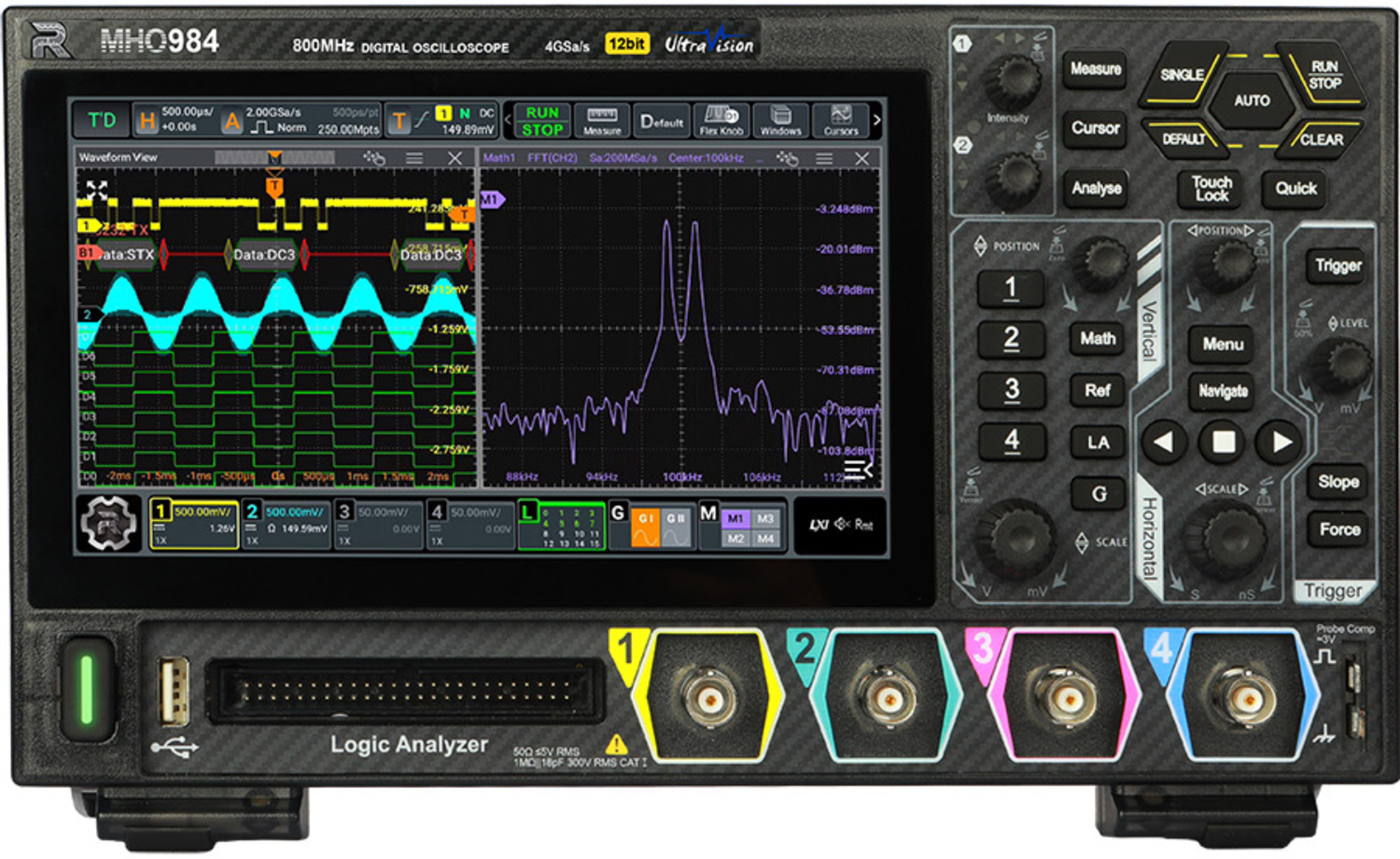
A 4-channel automotive oscilloscope is a diagnostic tool that captures and displays four independent electrical signals as waveforms simultaneously. By visualizing voltage over time across multiple channels, it allows technicians to identify intermittent faults, verify timing correlations between sensors, and analyze high-speed data networks that standard diagnostic scanners cannot accurately interpret.
As of 2026, the automotive landscape has shifted dramatically toward complex Electronic Control Unit (ECU) architectures, Advanced Driver Assistance Systems (ADAS), and high-voltage Electric Vehicle (EV) powertrains. In this environment, a simple code reader is no longer sufficient for deep-tier diagnostics. The 4-channel automotive oscilloscope, often referred to as a "lab scope," has become the definitive bridge between guessing and knowing. By providing a high-resolution visual representation of electrical behavior, these tools allow technicians to see "the picture" behind the data, revealing glitches, dropouts, and timing errors that occur in milliseconds.
The Necessity of Four Channels in Modern Diagnostics
While 2-channel oscilloscopes have served the industry for decades, the move to 4-channel units is driven by the interconnected nature of modern vehicle systems. A single channel can show you what a sensor is doing, but it cannot show you how that sensor relates to others in the system.
Simultaneous Signal Correlation
The primary advantage of having four channels is the ability to monitor the relationship between multiple components. For example, when diagnosing a "crank but no start" condition related to engine timing, a technician can use Channel A for the Crankshaft Position (CKP) sensor, Channel B for Camshaft Position (CMP) Sensor 1, and Channel C for CMP Sensor 2. This allows for a direct visual comparison of the timing marks. If the Cam/Crank correlation is off by even a few degrees, the 4-channel scope will reveal the misalignment instantly, a feat impossible with a tool that can only view one or two signals at a time.
Network Integrity and CAN Bus Analysis
In 2026, vehicles utilize high-speed Controller Area Network (CAN) buses and Automotive Ethernet. A 4-channel scope is essential for checking network health. A technician can monitor CAN-High and CAN-Low on two channels while using the remaining two channels to monitor the power and ground circuits of the module in question. This holistic view ensures that a "U-code" (network communication code) is actually a data issue and not a simple power supply fluctuation or a "noisy" ground causing interference.
Technical Specifications and Hardware Requirements
Selecting a 4-channel oscilloscope requires an understanding of several key technical parameters that dictate the tool's effectiveness in a workshop environment.
Sampling Rate and Bandwidth
The sampling rate, measured in Megasamples per second (MS/s), determines how many data points the scope captures every second. For automotive use in 2026, a minimum sampling rate of 80 MS/s is generally recommended, though high-end units like the PicoScope 4425A offer significantly higher rates. High sampling rates are critical for capturing "glitches"—momentary voltage drops that happen too fast for a multimeter or scan tool to register. Bandwidth, usually measured in Megahertz (MHz), defines the maximum frequency the scope can accurately measure. For most automotive applications, including high-speed CAN, a bandwidth of 20 MHz to 100 MHz is more than sufficient.
Buffer Memory and Resolution
Buffer memory refers to the amount of data the scope can store during a single capture. Larger memory allows for longer "capture times" at high sampling rates, which is vital when hunting for intermittent faults that only happen once every few minutes. Vertical resolution, typically 12-bit or 16-bit in modern automotive scopes, dictates the precision of the voltage measurements. A 16-bit resolution provides much smoother waveforms and allows for zooming in on tiny signal details without the image becoming "pixelated" or "blocky."
Input Protection and Isolation
Automotive environments are electrically "noisy" and can involve high voltage spikes, particularly from ignition coils or EV inverters. Professional-grade 4-channel scopes feature "floating" inputs or significant over-voltage protection. This prevents a surge on one channel from damaging the scope or the connected laptop, and it ensures that the ground of the scope does not create a short circuit within the vehicle’s sensitive electronics.
Practical Applications: Unlocking Insight Across Vehicle Systems
To truly unlock vehicle signal insight, one must apply the 4-channel scope to specific diagnostic scenarios where its multi-channel capability shines.
1. Ignition System Analysis
Even in 2026, internal combustion engines and hybrids remain prevalent. A 4-channel scope allows for the simultaneous monitoring of primary ignition (the trigger signal from the ECU), secondary ignition (the actual spark high-voltage event), and the current draw of the ignition coil. By comparing these three signals alongside a fourth channel monitoring a fuel injector, a technician can determine if a misfire is caused by a failing coil, a fouled plug, or a lean-out condition from a clogged injector.
2. Variable Valve Timing (VVT) and Solenoid Testing
VVT systems rely on precise oil pressure control via pulse-width modulated (PWM) solenoids. A technician can use the scope to monitor:
- Channel 1: The PWM command from the ECU.
- Channel 2: The actual movement of the VVT solenoid (via current ramp).
- Channel 3: The resulting change in the Camshaft position signal.
- Channel 4: Engine oil pressure or Crankshaft position. This setup confirms whether the ECU is sending the command, whether the solenoid is responding electrically, and whether the mechanical components are actually moving the camshaft.
3. Electric Vehicle (EV) and Hybrid Diagnostics
In EV platforms, the 4-channel scope is used to analyze the three phases of the motor drive (U, V, and W). Monitoring all three phases simultaneously is necessary to ensure the inverter is balancing the load correctly. Any imbalance in these high-voltage signals can lead to catastrophic motor failure or efficiency loss. Furthermore, the fourth channel can be used to monitor the resolver signal, which provides the ECU with the exact rotor position.
Comparison of Leading 4-Channel Automotive Oscilloscopes (2026)
| Feature | PicoScope 4425A | Autel MaxiFlash VCMI | Hantek 6074BE |
|---|---|---|---|
| Resolution | 12-bit to 16-bit | 12-bit | 8-bit |
| Sampling Rate | 400 MS/s | 20 MS/s | 80 MS/s |
| Connection | USB 3.0 (PC Based) | Wireless/USB (Tablet) | USB 2.0 (PC Based) |
| Special Features | PicoBNC+ (Auto-probe detection) | Built-in Signal Generator | Ultra-budget friendly |
| Primary Use | Master Technician / Lab Research | General Workshop / Quick Scan | Entry-level / Student DIY |
| Software Updates | Free Lifetime Updates | Subscription-based | Limited / Legacy |
Interpreting Waveforms: Moving Beyond the "Squiggly Line"
The value of a 4-channel scope is not in the hardware alone, but in the technician's ability to interpret what the waveforms represent. When looking at a signal, several factors must be analyzed:
- Amplitude: Is the voltage reaching the specified level? A 5V reference sensor only hitting 4.2V suggests high resistance in the circuit.
- Frequency: Is the signal repeating at the correct rate? This is crucial for speed sensors and MAF (Mass Air Flow) sensors.
- Duty Cycle: In PWM circuits (like cooling fans or fuel pumps), is the "on-time" versus "off-time" matching the scan tool’s commanded percentage?
- Shape: Does the waveform have clean edges? Rounded corners on a square wave (like a Hall Effect sensor) indicate capacitance issues or failing components.
- Noise: Are there "spikes" or "grass" on the signal? Electrical noise from a failing alternator diode can "pollute" sensor signals, causing the ECU to behave erratically.
Common Pitfalls and Troubleshooting the Scope
Even the best 4-channel scope can provide misleading data if not used correctly. Technicians must be aware of common errors.
Grounding Issues
The most common mistake is a "bad ground." If the scope's ground lead is connected to a "noisy" part of the chassis or a circuit with high resistance, the resulting waveform will look distorted. Always attempt to ground the scope as close to the component being tested as possible, or use a known-good battery ground.
Scaling and Timebase Errors
If the timebase is set too slow, high-frequency signals will "alias," appearing as a completely different (and incorrect) frequency. Conversely, if the voltage scale is set too high, small glitches will be invisible. Most modern scopes in 2026 feature "Auto-Setup" functions, but a professional should always verify these settings manually to ensure the signal isn't being "filtered" by the software.
Probe Compensation
Using 10:1 attenuator probes is common for high-voltage signals. Failing to tell the software that an attenuator is in use will result in voltage readings being off by a factor of ten. High-quality scopes like those from Pico Technology now use smart probes that automatically configure the software when plugged in.
FAQ: Frequently Asked Questions
Why do I need 4 channels instead of 2?
A 2-channel scope allows you to see two things at once, but in modern diagnostics, you often need to see the "cause and effect" across multiple systems. For example, you might need to see the trigger signal (1), the power supply (2), the ground (3), and the resulting output signal (4) to diagnose a failing sensor. Four channels provide the context necessary to avoid "part-hanging" (replacing parts without a confirmed diagnosis).
Can a 4-channel scope damage my car's computer?
If used properly, no. Oscilloscopes are "high impedance" tools, meaning they "listen" to the circuit without drawing significant current or affecting the signal. However, if you accidentally probe a signal wire with a lead that is shorted to power or ground, damage can occur. Always use proper back-probing pins rather than piercing wires.
Is a PC-based scope better than a handheld unit?
In 2026, PC-based scopes are generally preferred for deep diagnostics because they offer larger screens, more processing power for complex analysis, and easier data sharing. Handheld units (integrated into scan tools) are excellent for quick "road-test" captures where portability is the priority.
Do I need to be an electrical engineer to use one?
No. While there is a learning curve, most modern automotive scopes include "guided tests" and a library of "known good" waveforms. These resources show you exactly where to connect the probes and what the resulting signal should look like for a specific vehicle year, make, and model.
Can I use a standard electronics scope for automotive work?
While a standard lab scope (like a Rigol or Siglent) can measure signals, they lack the automotive-specific presets, high-voltage protection, and specialized probes (like amp clamps and pressure transducers) needed for vehicle work. Furthermore, standard scopes often share a common ground between channels, which can lead to short circuits if you ground them to different points on a vehicle.
Practical Recommendation for 2026
For any technician or shop looking to stay competitive in 2026, investing in a high-resolution 4-channel automotive oscilloscope is no longer optional. If your primary work involves heavy engine diagnostics and complex electrical troubleshooting, a PC-based system with at least 12-bit resolution and a comprehensive automotive software package is the best choice. For those primarily doing mobile diagnostics or quick inspections, an integrated 4-channel module in a high-end scan tool provides the best balance of speed and utility.
Start by mastering "Crank vs. Cam" timing and "CAN Bus" integrity. These two tests alone will pay for the tool by significantly reducing diagnostic time and preventing the installation of unnecessary parts. As vehicle technology continues to advance toward fully autonomous and high-voltage systems, the ability to "see" electricity via a 4-channel scope will remain the most valuable skill in the technician's toolkit.