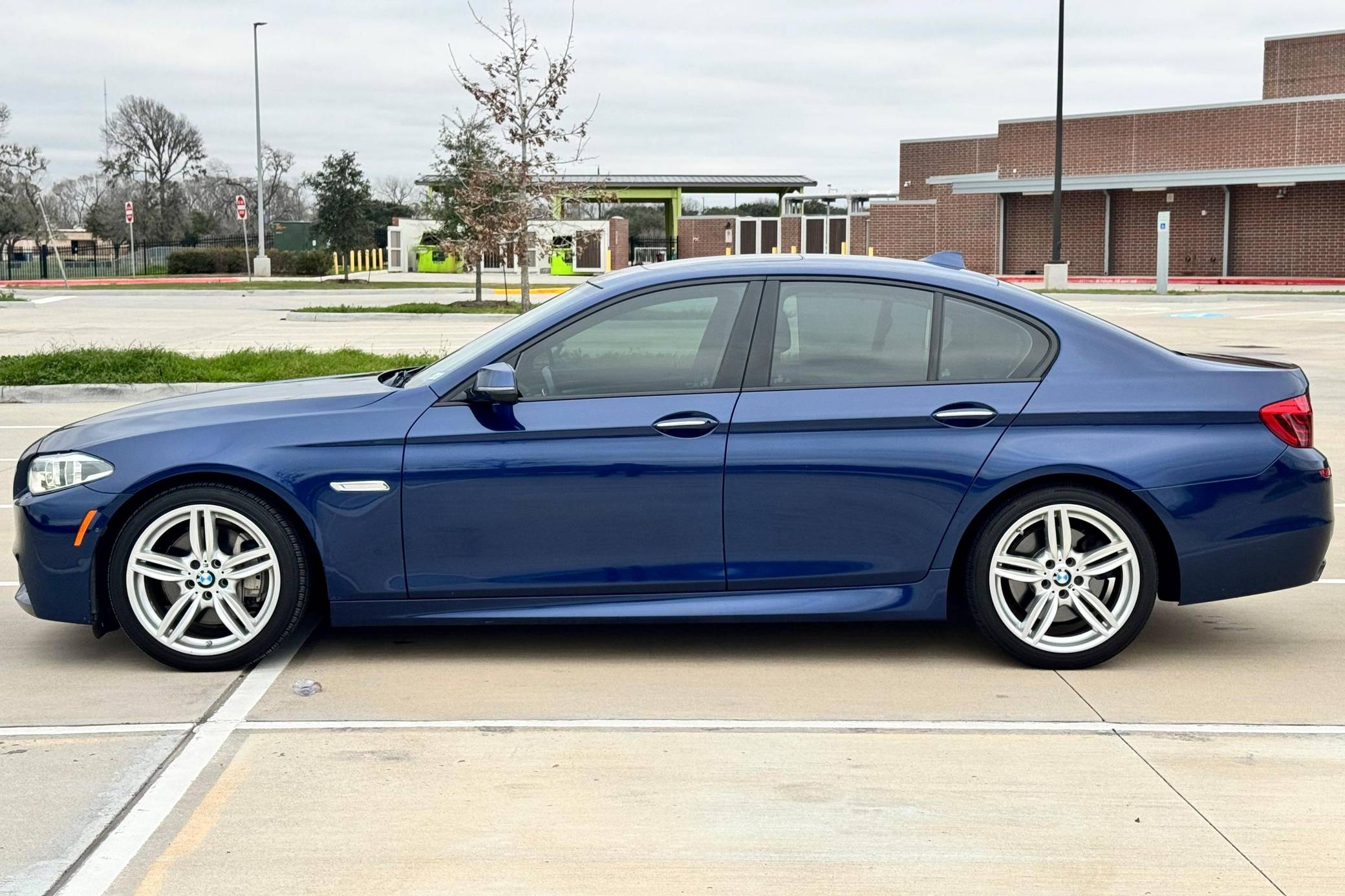
The 2014 BMW 550i xDrive achieves a 0-60 mph time of approximately 4.3 seconds, while the rear-wheel-drive (RWD) variant accomplishes the same sprint in about 4.5 seconds. This performance difference is primarily driven by how the intelligent all-wheel-drive system manages traction off the line compared to the traditional rear-wheel-drive layout.
Performance metrics are often the cornerstone of automotive evaluation, particularly when examining high-powered executive sedans from past model years. Among the F10-generation BMW 5 Series variants, the 2014 model year stands out due to a significant mid-cycle refresh that brought engine updates, exterior styling tweaks, and revised interior electronics. Within this lineup, the 550i—powered by the N63TU (Technical Update) V8 engine—represents a sweet spot for buyers seeking sports car acceleration wrapped in a quiet, luxurious four-door package.
Analyzing the acceleration figures of 4.3 seconds for the xDrive all-wheel-drive model and 4.5 seconds for the rear-wheel-drive version requires a comprehensive look at powertrain engineering, weight distribution, tire technology, and environmental factors. Understanding these dynamics helps enthusiasts, potential second-hand buyers, and automotive historians grasp how these luxury cruisers achieve such impressive straight-line performance.
The Powertrain: Heart of the 2014 BMW 550i
At the core of both the xDrive and RWD 2014 BMW 550i models is a 4.4-liter twin-turbocharged V8 engine, designated internally as the N63B44O2 (or N63TU). Unlike the initial iteration of the N63 found in 2011–2013 models, the Technical Update introduced for the 2014 model year incorporated BMW’s Valvetronic fully variable valve timing system. This addition improved engine breathing, efficiency, and throttle response.
The N63TU engine produces a robust 445 horsepower between 5,500 and 6,000 rpm, alongside 480 lb-ft of torque available from a remarkably low 1,750 rpm up to 4,500 rpm. This broad torque band is crucial for understanding the car's real-world acceleration. Because peak twisting power is delivered almost immediately off idle, the vehicle does not need to be wrung out to high revs to feel exceptionally fast.
Power is routed through a ZF 8-speed automatic transmission (specifically the ZF 8HP75). This gearbox is widely praised in the automotive industry for its rapid, seamless shifts and wide gear spread, which keeps the V8 engine operating in its optimal power band whether launching from a standstill or executing highway passing maneuvers.
Decoding the 0-60 MPH Times: xDrive vs. RWD
The 0.2-second advantage that the xDrive all-wheel-drive system holds over the rear-wheel-drive layout—4.3 seconds versus 4.5 seconds—is a textbook demonstration of physics in automotive engineering. While 0.2 seconds may seem negligible on paper, it highlights the distinct characteristics of how each drivetrain delivers power to the pavement.
The 4.3-Second xDrive Advantage
The xDrive system is BMW’s intelligent, electronically controlled all-wheel-drive system. It utilizes a wet multi-plate clutch housed in the transfer case to continuously and variably distribute torque between the front and rear axles in milliseconds based on driving conditions, steering angle, and wheel slip.
When executing a hard launch from a dead stop:
- Traction Management: The xDrive system instantly channels power to the front wheels the moment rear wheel slip is detected, maximizing the contact patch's grip.
- Weight Transfer: During acceleration, weight transfers to the rear axle. While this helps rear-wheel-drive cars, the front wheels of an xDrive car pull the vehicle forward simultaneously, mitigating initial wheel spin entirely on standard dry pavement.
- Repeatability: Because the electronic brain manages wheel slip proactively, achieving a 4.3-second 0-60 mph run requires less specialized driving technique; the driver can simply brake-torque the engine and release the brake pedal.
The 4.5-Second Rear-Wheel-Drive Dynamic
The rear-wheel-drive variant of the 2014 BMW 550i relies entirely on its rear tires to translate 480 lb-ft of torque into forward motion.
- Weight Penalty vs. Simplicity: The RWD model is lighter than the xDrive variant by approximately 150 to 200 pounds because it omits the front differential, front axle shafts, and transfer case. However, this weight reduction does not automatically translate to a faster 0-60 mph time.
- Traction Limitations: Uncorking 480 lb-ft of torque at 1,750 rpm to the rear tires overwhelms available mechanical grip on standard street tires. The car’s traction control system must actively intervene to cut power momentarily, or the tires will spin, resulting in a slightly slower initial launch.
- Roll-Out and Momentum: Once past the initial launch phase—typically past 20 or 30 mph—the power-to-weight advantage of the lighter RWD chassis helps close the gap, though the xDrive model typically retains its slight lead through the quarter-mile mark.
| Specification | 2014 BMW 550i xDrive | 2014 BMW 550i Rear-Wheel Drive (RWD) |
|---|---|---|
| 0-60 mph Time | ~4.3 seconds | ~4.5 seconds |
| Engine | 4.4L Twin-Turbo V8 (N63TU) | 4.4L Twin-Turbo V8 (N63TU) |
| Horsepower | 445 hp @ 5,500–6,000 rpm | 445 hp @ 5,500–6,000 rpm |
| Torque | 480 lb-ft @ 1,750–4,500 rpm | 480 lb-ft @ 1,750–4,500 rpm |
| Transmission | 8-Speed ZF Automatic | 8-Speed ZF Automatic |
| Drivetrain Layout | Intelligent All-Wheel Drive | Rear-Wheel Drive |
| Curb Weight (Approx.) | ~4,450 lbs | ~4,270 lbs |
Real-World Driving Dynamics and Performance Context
While manufacturer specifications and instrumented testing provide exact figures like 4.3 and 4.5 seconds, the subjective driving experience of the 2014 BMW 550i tells a broader story about luxury performance sedans of the era.
Straight-Line Urgency
In daily driving, the 550i feels considerably faster than its official numbers suggest due to the massive low-end torque. Merging onto a highway or passing slower traffic requires minimal throttle input. The transmission drops a few gears instantaneously, and the car surges forward with effortless authority. The engine note is a subdued, cultured V8 rumble that emphasizes refinement over raw aggression, fitting the executive character of the 5 Series.
Handling and Chassis Balance
- xDrive Handling: The xDrive model offers supreme all-weather composure. It inspires confidence in wet, snowy, or variable conditions. However, it can feel slightly heavier in tight corners, exhibiting more understeer when pushed to its limits on twisty back roads.
- RWD Handling: Purists often prefer the RWD variant for its purer steering feedback. Without front drivetrain components interfering with the steering rack, the RWD steering feels more direct and communicative. The chassis also exhibits a more neutral balance during aggressive cornering.
Ownership Considerations and Maintenance Realities
Evaluating a 2014 BMW 550i today requires looking past showroom acceleration figures to understand the long-term realities of owning a high-performance twin-turbo V8 luxury vehicle.
Common Technical Areas
- Thermal Management: The N63TU engine operates at high oil and coolant temperatures to maximize efficiency. This places heavy thermal stress on rubber hoses, plastic coolant fittings, and valve stem seals over long periods.
- Battery and Electrical Load: Modern F10 BMWs are rolling computers with complex electrical architectures. A weak battery can trigger a cascade of false error codes and sensor malfunctions.
- Suspension Components: Weighing over 4,200 pounds, the 550i places significant load on control arm bushings, thrust arms, and active stabilizer bar components (if equipped with Dynamic Drive). Regular inspection of these suspension bits is necessary to maintain precise handling and high-speed stability.
Preventive Maintenance Best Practices
Maintaining the 4.3-second or 4.5-second performance capability of a 550i relies heavily on proactive maintenance:
- Shortened Oil Change Intervals: Eschew the factory 10,000-mile recommendation in favor of 5,000-mile oil changes using high-grade, manufacturer-approved synthetic oil to protect the turbocharger bearings.
- Spark Plug and Coil Replacement: High-output direct-injection turbo engines consume spark plugs faster than naturally aspirated engines. Replacing plugs every 30,000 to 40,000 miles prevents misfires under hard acceleration.
- High-Performance Tires: Neither the xDrive nor the RWD model can achieve its benchmark acceleration without quality rubber. Worn or budget tires will severely compromise grip, extending 0-60 times and degrading braking distances.
Frequently Asked Questions
Can a stock 2014 BMW 550i actually hit 0-60 mph in 4.3 seconds?
Yes. Professional automotive testing publications routinely recorded 0-60 mph times of 4.2 to 4.4 seconds for the xDrive model under optimal conditions, utilizing a slight rollout and premium 93-octane fuel. Real-world results can vary based on ambient temperature, altitude, tire condition, and road surface preparation.
Is the 2014 BMW 550i faster than the contemporary BMW M5 (F10)?
No. The F10 BMW M5 of the same era utilized a higher-output version of the V8 engine (the S63TU), producing 560 horsepower (or up to 575/600 hp with the Competition Package). The M5 was designed as a dedicated track-capable sports sedan, whereas the 550i bridges the gap between a standard luxury cruiser and a high-performance M car.
Does the xDrive system affect fuel economy significantly?
The all-wheel-drive system adds mechanical drag and weight, which results in a minor penalty in EPA fuel economy ratings compared to the rear-wheel-drive version, though both models consume fuel at a relatively high rate given their V8 performance capabilities. Real-world highway efficiency typically hovers around 22–25 mpg depending on driving style and cruising speed.
Are there tuning options to make the car faster?
Yes. The N63TU engine responds exceptionally well to ECU software tunes (often called "stage 1" flashes). Without altering any physical hardware, a reputable software tune can elevate horsepower and torque well past factory figures, cutting the 0-60 mph time closer to the 3.8-to-4.0-second range, though this increases stress on the drivetrain and cooling systems.
Which model should I choose: xDrive or RWD?
The choice depends on geographic location and driving preference. If you live in a region with heavy winter snow and rain, the xDrive model provides indispensable all-weather traction and a slightly quicker launch off the line. If you reside in a dry climate and prioritize classic sports sedan steering feel and dynamic balance, the RWD model is the preferred choice.