The 3Vs of big data—volume, velocity, and variety—define the fundamental characteristics that separate modern data management from traditional database systems. Coined by industry analyst Doug Laney in 2001, this framework helps organizations identify, process, and architect solutions for datasets that exceed the storage, processing, and analytical capabilities of conventional relational database management systems.
Introduction to the Evolution of Data Architecture
For decades, enterprise computing relied heavily on structured data stored in relational databases (RDBMS) running on centralized servers. These systems excelled at maintaining transactional integrity using structured schemas. However, the proliferation of the internet, mobile devices, Internet of Things (IoT) sensors, and digital logs fundamentally shifted the technological landscape. Organizations were suddenly flooded with massive streams of information that did not fit neatly into rows and columns.
To make sense of this paradigm shift, architects and engineers adopted the 3Vs framework. This model acts as a diagnostic tool, allowing data teams to assess the nature of incoming data streams and select appropriate technologies—such as distributed file systems, stream processing engines, and NoSQL databases—to handle workloads that scale horizontally rather than vertically.
Volume: Managing the Scale of Enterprise Data
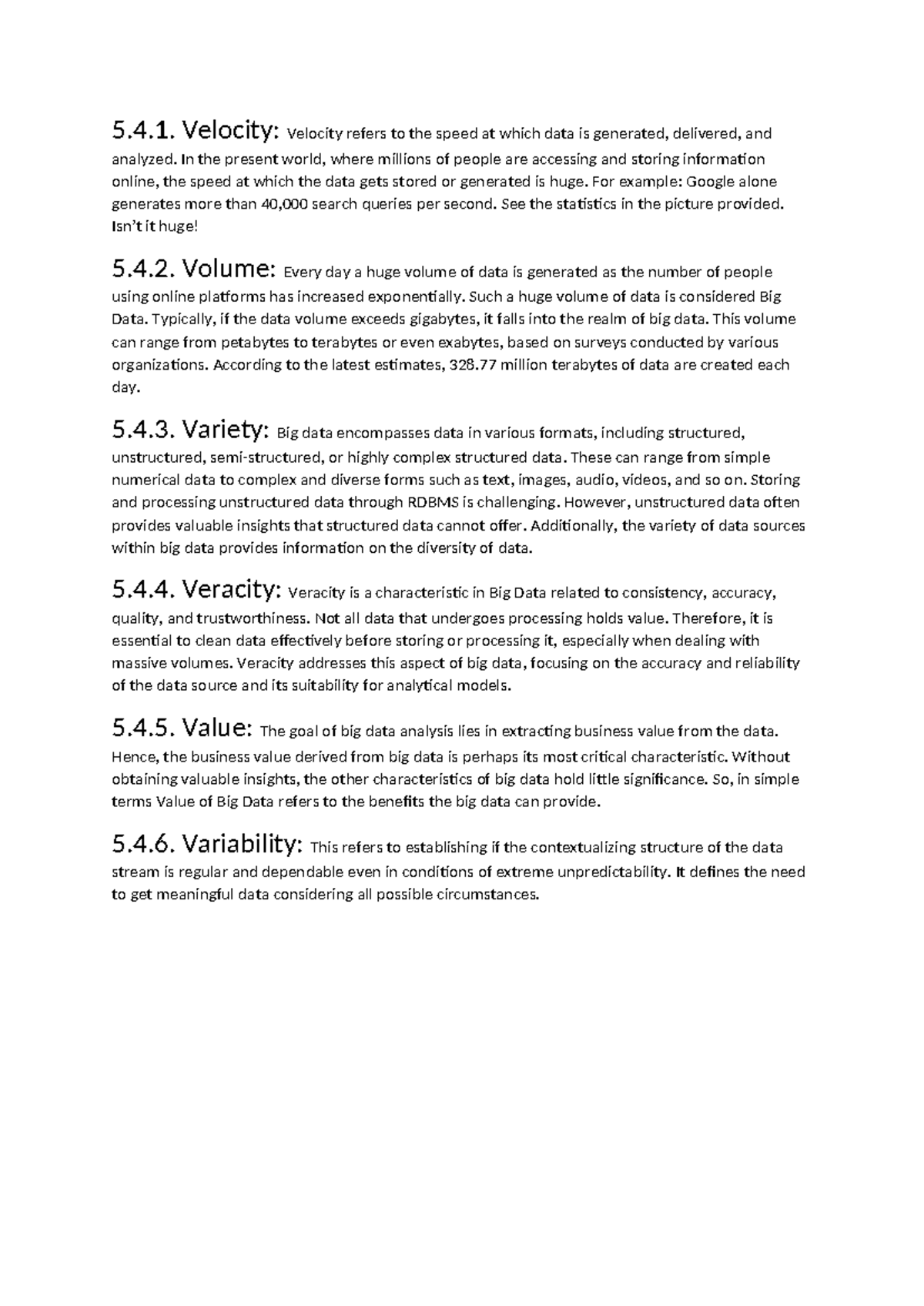
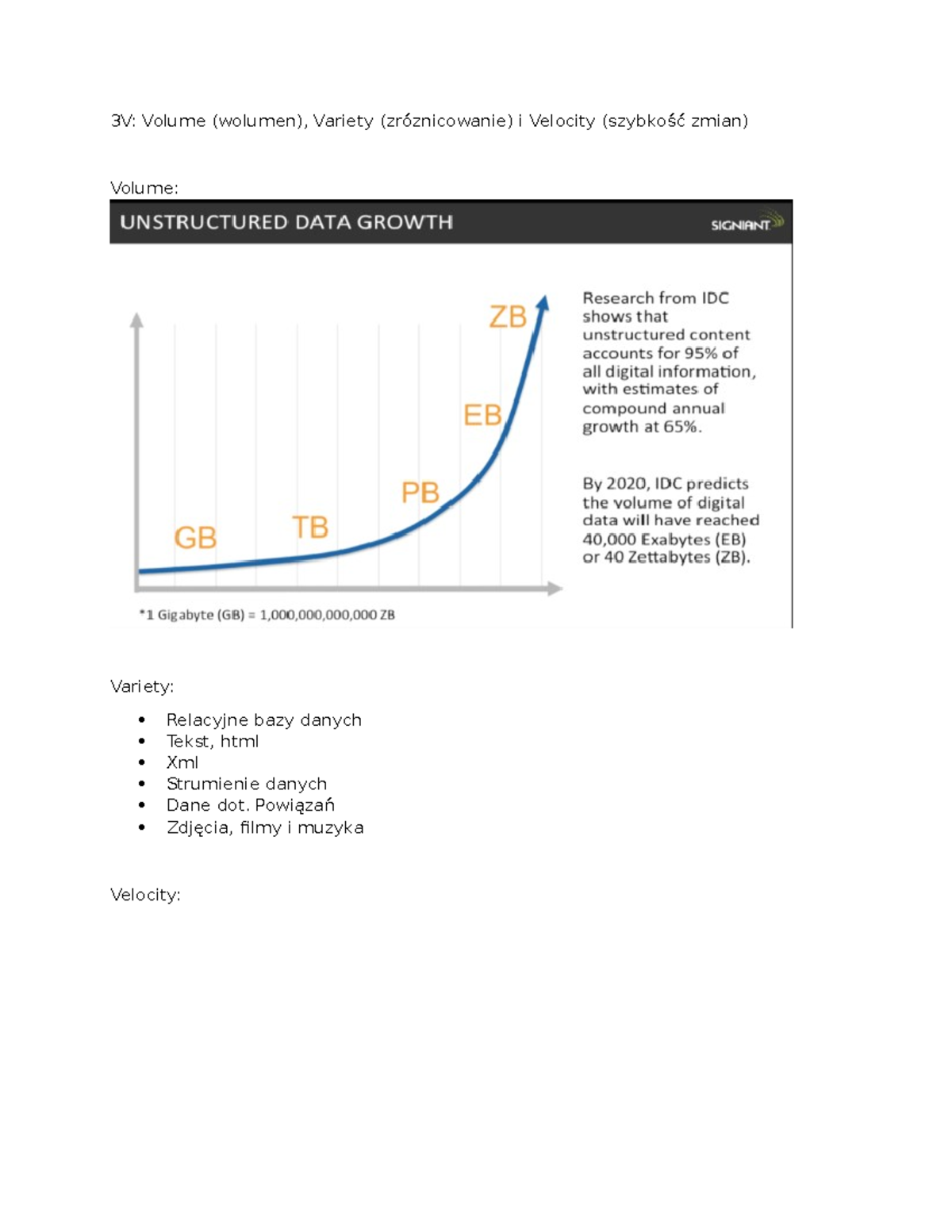
Volume refers to the sheer magnitude of data generated and stored every second. While data repositories once measured in gigabytes (GB) and terabytes (TB), modern organizations regularly process petabytes (PB) and exabytes (EB) of information. This massive scale introduces severe bottlenecks in data storage, network bandwidth, and computational processing time.
The Engineering Challenges of High Volume
When data reaches high-volume thresholds, traditional storage area networks (SAN) and network-attached storage (NAS) become economically and technically unviable. Storing a petabyte of data on high-end enterprise storage arrays incurs prohibitive capital expenditure. Furthermore, running a traditional SQL query across a multi-terabyte table on a single server can consume hours or lock the database entirely.
To solve this, modern big data architectures abandon vertical scaling (adding more CPU and RAM to a single machine) in favor of horizontal scaling (adding multiple commodity servers to a distributed cluster). Technologies like the Hadoop Distributed File System (HDFS) and cloud-native object stores break large files into blocks and distribute them across a cluster. When a query runs, the computation is pushed to the data nodes (data locality), minimizing network transfer overhead and processing petabytes of information in parallel.
Real-World Examples of Volume
- Financial Services: High-frequency trading firms generate terabytes of tick data daily, capturing every market movement, order placement, and cancellation across global exchanges.
- Healthcare: Genomic sequencing platforms produce hundreds of gigabytes of raw DNA data per individual patient, requiring massive repositories for personalized medicine research.
- Telecommunications: Call detail records (CDRs) and cellular tower handshakes generate continuous logs tracking the activity of millions of subscribers simultaneously.
Velocity: Processing Real-Time and Streaming Data
Velocity measures the speed at which new data is generated, captured, and processed. In many modern use cases, data loses its value almost instantly if it is not analyzed in real time. Batch processing—where data is collected during the day and processed overnight—is no longer sufficient for applications that require immediate operational intervention.
Streaming Architectures Versus Batch Processing
High-velocity data requires an architectural shift from batch processing to stream processing. Traditional ETL (Extract, Transform, Load) pipelines are designed to move static batches of data periodically. In contrast, streaming frameworks ingest, analyze, and react to data in motion.
Message brokers like Apache Kafka and cloud-native event hubs act as high-throughput buffers, ingesting millions of events per second from distributed producers. Stream processing engines like Apache Flink or Apache Spark Streaming then consume these queues, applying transformations, machine learning inference, or windowed aggregations with sub-second latency.
Operational Impacts of High Velocity
Organizations dealing with high-velocity data must account for several technical considerations:
- Out-of-Order Events: Network latency can cause data packets to arrive out of chronological sequence, requiring complex event processing (CEP) engines to reconstruct timelines.
- Backpressure Management: If downstream systems cannot keep pace with the ingestion rate, buffers can overflow, leading to data loss or system crashes.
- State Management: Real-time applications often need to maintain state (e.g., tracking user sessions over a sliding window), requiring distributed memory-caching layers.
Variety: Unifying Structured, Semi-Structured, and Unstructured Data
Variety describes the diverse forms, formats, and types of data that organizations must collect and analyze. Unlike legacy systems that enforced rigid schemas, modern big data environments must ingest anything from clean relational tables to messy, unstructured human language.
Categorizing Data Types in Big Data
Data is generally categorized into three distinct formats, each demanding different handling techniques:
| Data Type | Description | Common Formats | Typical Processing Method |
|---|---|---|---|
| Structured | Highly organized data that fits neatly into relational tables with predefined schemas. | CSV, SQL tables, Excel spreadsheets | Relational databases, SQL-on-Hadoop engines |
| Semi-Structured | Data that does not reside in a relational structure but contains organizational markers or tags (schemas on read). | JSON, XML, Avro, Parquet | Document stores, NoSQL databases, schema-flexible data lakes |
| Unstructured | Information lacking a predefined data model or organizational structure, making up the vast majority of enterprise data. | Audio files, video recordings, PDFs, emails, social media posts | Natural language processing (NLP), computer vision, object storage |
Schema-on-Write Versus Schema-on-Read
Traditional databases use schema-on-write, meaning data must be strictly validated and transformed to fit a predefined schema before it can be stored. While this ensures data cleanliness, it makes ingesting new or evolving data formats difficult and slow.
Big data platforms leverage schema-on-read. Data is ingested and stored in its raw, native format without upfront transformation. The schema is only applied when the data is read or queried. This approach provides immense flexibility, allowing data scientists and analysts to adapt queries as business requirements change without needing to re-architect upstream ingestion pipelines.
| Dimension | Volume | Velocity | Variety |
|---|---|---|---|
| Core Challenge | Storage capacity and processing scale | Latency and throughput | Heterogeneity and schema complexity |
| Primary Metric | Terabytes to exabytes | Events per second (EPS) | Data types (JSON, text, binary) |
| Key Technology | Distributed file systems, cloud object stores | Message queues, stream processors | Data lakes, NoSQL, vector databases |
| Architectural Shift | Vertical to horizontal scaling | Batch to real-time pipelines | Schema-on-write to schema-on-read |
Expanding the Framework: Beyond the Original 3Vs
While volume, velocity, and variety form the foundation of big data, the industry quickly realized that three dimensions were insufficient to describe the complexities of enterprise data ecosystems. Over time, industry analysts and practitioners expanded the model to include additional Vs. Understanding these supplementary dimensions provides a complete picture of modern data engineering requirements.
Veracity
Veracity refers to the trustworthiness, quality, and accuracy of data. In massive datasets, noise, bias, and anomalies are common. Inaccurate data can lead to flawed machine learning models and misguided business decisions. Data governance, cleansing routines, and data lineage tracking are essential tools for ensuring data veracity before it reaches analytical dashboards.
Value
Data holds no intrinsic worth unless it can be translated into actionable insights, automated processes, or revenue streams. The value dimension forces organizations to evaluate the return on investment (ROI) of storing and processing massive datasets. Collecting data simply because it is available incurs unnecessary storage costs and increases compliance risks under privacy regulations like GDPR and CCPA.
Frequently Asked Questions
What is the primary purpose of the 3Vs in big data?
The 3Vs framework helps organizations categorize data characteristics—volume, velocity, and variety—so data architects can select the right storage, processing, and analytical technologies to handle workloads that exceed traditional database capabilities.
How do modern systems handle high data volume?
Modern big data architectures use horizontal scaling by distributing data and computational tasks across clusters of commodity servers using distributed file systems and cloud-native object storage, rather than relying on a single powerful server.
What is the difference between schema-on-write and schema-on-read?
Schema-on-write enforces a strict data structure before data is saved to a database, common in relational systems. Schema-on-read stores data in its raw, native format and applies structural rules only when the data is queried, providing greater flexibility for varied data types.
Why is data velocity important for businesses?
Data velocity determines how quickly data must be processed to retain its business value. High-velocity applications, such as fraud detection or real-time recommendation engines, require stream processing pipelines to analyze events in milliseconds rather than waiting for nightly batch jobs.
Are there more than three Vs in big data?
Yes. While volume, velocity, and variety are the foundational pillars, industry standards often include additional dimensions such as veracity (data quality and trustworthiness) and value (the business utility derived from the data).
Practical Next Steps for Data Professionals
Evaluating your organization's data landscape through the lens of volume, velocity, and variety is the first step toward building a scalable data architecture. Start by auditing your current data ingestion pipelines. Identify whether your bottlenecks stem from storage limits (volume), processing delays (velocity), or incompatible data formats (variety). Once these constraints are mapped, design your data platform utilizing cloud-native object storage, distributed query engines, and streaming infrastructure tailored to your specific enterprise requirements.