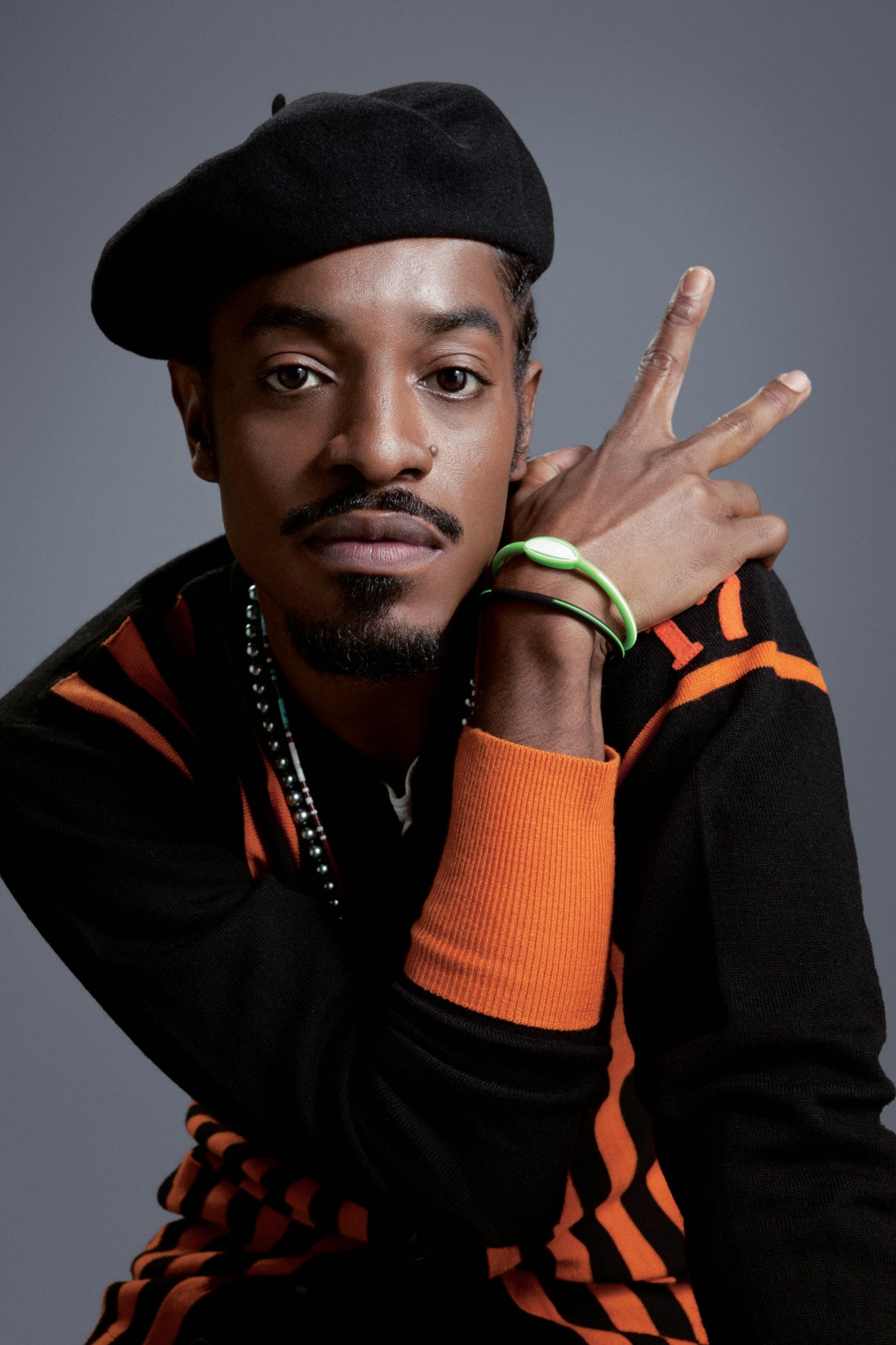
André 3000’s adoption of the kilt represents a seminal moment in fashion history where traditional Scottish heritage met the avant-garde sensibilities of Southern hip-hop. This stylistic choice challenged rigid definitions of masculinity within the rap community while simultaneously subverting Western garment traditions. By 2026, this "cultural clash" is recognized as a foundational shift toward the gender-fluid and experimental menswear landscapes we see today.
The Origins of a Style Icon: André 3000’s Aesthetic Evolution
To understand the impact of the kilt, one must first examine the trajectory of André Benjamin, known globally as André 3000. Emerging from the Atlanta-based duo Outkast, Benjamin’s early career was rooted in the "Dirty South" aesthetic—oversized jerseys, braids, and street-style staples. However, as the 1990s transitioned into the early 2000s, his wardrobe underwent a radical transformation.
By the release of the double album Speakerboxxx/The Love Below in 2003, André 3000 had fully transitioned into a "fashion dandy." This period was characterized by an obsession with tailored silhouettes, equestrian gear, and historical European garments. He wasn't merely wearing clothes; he was performing an identity that refused to be pigeonholed by the expectations of the hip-hop industry. The kilt was perhaps the most provocative tool in this arsenal, serving as a visual manifesto against the hyper-masculine status quo.
In 2026, fashion historians point to this era as the "Great Divergence" in hip-hop style. While his peers were doubling down on urban luxury, André was looking toward the Scottish Highlands and the eccentricities of British tailoring. This contrast created a friction—a cultural clash—that forced the public to rethink the boundaries of Black masculine expression.
The Anatomy of the Kilt: From Highlands to High Fashion
The kilt is a garment steeped in centuries of tradition, primarily associated with Scottish Gaelic culture. Traditionally made of wool in a tartan pattern, it was historically a symbol of clan identity and military prowess. For a Black artist from Atlanta to adopt this garment in the early 2000s was an act of significant cultural recontextualization.
The Shift to the Runway
Long before André 3000 stepped out in pleated skirts, high fashion had been flirting with the silhouette. Designers like Vivienne Westwood and Jean Paul Gaultier had integrated kilts into their collections as symbols of punk rebellion or gender-bending provocation. Alexander McQueen, of Scottish descent himself, famously used the kilt to explore themes of heritage and "The Highland Rape."
However, André 3000’s use of the kilt was different. It wasn't a punk statement or a high-fashion runway prop; it was part of a lived, daily aesthetic. When he wore a kilt or a long skirt during performances or in the iconic "Hey Ya!" music video, he wasn't just referencing Scottish history—he was claiming the right to universal style. He bridged the gap between the rigid formality of the garment's origins and the rhythmic, fluid energy of modern music.
The Hip-Hop Frontier: Masculinity and the "Skirt" Controversy
The primary "clash" occurred at the intersection of fashion and the social norms of the hip-hop community. In the early 2000s, the genre was heavily influenced by a specific brand of masculinity that prioritized toughness, street credibility, and traditional gender roles. Anything perceived as "feminine"—including skirts or kilts—was often met with skepticism or outright hostility.
André 3000 faced significant scrutiny. Critics and some fans questioned his "realness," a term often used to gatekeep identity in rap. Yet, his response was rooted in an unshakeable confidence. He demonstrated that masculinity was not a fixed point but a spectrum. By refusing to engage in the defensive posturing often expected of men in his position, he effectively defused the "clash."
Redefining the Silhouette
The kilt provided a silhouette that was inherently dramatic. It offered movement that trousers could not, which was essential for an artist whose performances were as much about physical expression as they were about lyricism. This technical aspect of the garment—the way it caught the air during a dance move or framed a pose—contributed to the "The Love Below" aesthetic, which was whimsical, theatrical, and deeply soulful.
Decoding the Cultural Clash: Subverting Tradition
The "cultural clash" mentioned in fashion critiques is often two-fold: the clash of the garment with the wearer's identity, and the clash of the wearer's identity with the garment's history.
- Heritage vs. Innovation: The kilt is a protected symbol in some Scottish circles. Seeing it appropriated into a futuristic, funk-inspired wardrobe was jarring for traditionalists. However, this tension is precisely what made the look iconic. It suggested that no piece of clothing is "off-limits" based on geography or race.
- The Black Dandyism Movement: André 3000 became a face for modern "Black Dandyism." This movement involves the strategic use of dress to subvert stereotypical notions of Black masculinity. By adopting "gentlemanly" or historically European attire, Black men could reclaim a sense of elegance and complexity that the "thug" archetype denied them.
- The Gender Divide: In 2026, the "menswear" and "womenswear" labels have become increasingly porous. André’s kilt was an early catalyst for this. It forced a conversation about why a piece of fabric wrapped around the waist was considered "masculine" in Scotland but "feminine" in the United States.
André’s Influence on 2020s and 2026 Gender-Fluid Fashion
Fast forward to the 2020s and into 2026, the ripples of André 3000’s style choices are ubiquitous. We see the legacy of the kilt in the wardrobes of artists like Harry Styles, A$AP Rocky, Lil Nas X, and Young Thug. These artists have moved beyond the "clash" phase and into a space of total stylistic freedom.
In 2026, the "men's skirt" is no longer a tabloid headline; it is a recurring feature in seasonal collections from major fashion houses like Thom Browne and Loewe. Thom Browne, in particular, has mastered the art of the pleated gray kilt as a staple of modern professional attire. This normalization was made possible by the early, high-stakes experimentation of pioneers like André 3000.
Comparative Analysis of Male Silhouettes in Modern Fashion (2026)
| Garment Type | Traditional Context | Modern (2026) Perception | Key Influencers |
|---|---|---|---|
| Scottish Kilt | Military/Highland Heritage | Avant-garde / Formal | André 3000, Alexander McQueen |
| Utility Skirt | Punk / Workwear | Urban Practicality | A$AP Rocky, Rick Owens |
| Sarong / Wrap | Tropical / Indigenous | Leisure / High-End Resort | David Beckham, Jacquemus |
| Pleated Midi | Traditional Womenswear | Gender-Neutral High Fashion | Harry Styles, Thom Browne |
Technical and Material Considerations of the Kilt
The kilt is a technically complex garment. Unlike a simple wrap skirt, a traditional kilt requires significant yardage of fabric—often eight yards—to create the deep pleats that allow for its characteristic "swing."
For André 3000, the material choice was crucial. During his most active fashion years, he favored heavier wools that maintained their structure, even when paired with more casual items like polo shirts or sneakers. This blend of "high" and "low" materials is a hallmark of his style. In 2026, we see this evolution continuing with the use of technical fabrics—nylon, Gore-Tex, and recycled synthetics—to create kilts that are functional for modern urban life rather than just ceremonial use.
The Problem of "Costume" vs. "Style"
One of the major hurdles André 3000 had to clear was the perception of his clothing as a "costume." Because the kilt is so visually dominant, it can easily overwhelm the wearer. André avoided this by integrating the kilt into a cohesive color palette and pairing it with accessories—such as his signature hats and spectacles—that made the look feel personal rather than performative.
Psychological and Sociological Impacts of Boundary-Pushing Style
The cultural clash sparked by André 3000 was not just about clothes; it was about the psychology of identity. When a public figure breaks a visual taboo, it gives the audience permission to do the same. This is known in sociology as "norm entrepreneurship." André 3000 was a norm entrepreneur who changed the "cost" of being different for young Black men and fashion enthusiasts globally.
By 2026, the psychological barrier to wearing non-traditional silhouettes has lowered significantly. The "clash" has been replaced by "curation." Consumers are now more likely to ask "Does this fit my personal brand?" rather than "Is this garment allowed for my gender or race?"
Practical Guidance: Incorporating Non-Traditional Silhouettes in 2026
For those looking to draw inspiration from André 3000's legacy, the key is balance. The kilt remains a bold choice, but in the current fashion climate, it can be styled with more ease than in the early 2000s.
- Start with Proportions: If you are new to kilts or skirts, balance the volume of the bottom with a structured top. A tailored blazer or a cropped leather jacket can provide a masculine counterweight to the pleats.
- Focus on Footwear: André 3000 often paired his more eccentric pieces with classic footwear—boots, brogues, or clean sneakers. This grounds the outfit and prevents it from looking like a historical reenactment.
- Understand the History: To avoid "cultural appropriation" issues, especially with specific Scottish tartans, it is often better to opt for solid colors or modern patterns (like pinstripes or windowpane checks) unless you have a specific connection to a clan.
- Confidence is the "Accessory": The most important lesson from André 3000 is that the wearer defines the clothes. The "clash" only exists if the wearer appears uncomfortable.
Common Mistakes to Avoid
- Over-accessorizing: The kilt is already a statement. Adding too many chains, hats, or loud patterns can make the look cluttered.
- Poor Tailoring: A kilt that is too long can look like a maxi skirt, while one that is too short can lose its regal quality. The traditional length is at the center of the knee.
- Ignoring Context: While kilts are more accepted in 2026, they still carry a degree of formality or artistic weight. Choosing the right environment for the look is key to a successful execution.
Frequently Asked Questions
Why did André 3000 start wearing kilts? André 3000's transition to kilts and skirts was part of a larger artistic shift during the The Love Below era. He sought to distance himself from the stereotypical "rapper" image and explore a more eccentric, dandy-inspired persona that reflected his eclectic musical influences, ranging from Prince to British rock.
Was there a specific incident where André 3000’s kilt caused controversy? While there wasn't a single "breaking point," his appearance in the "Hey Ya!" video and various award shows sparked intense debate in hip-hop magazines and online forums during 2003 and 2004. At the time, hip-hop culture was less receptive to gender-fluid fashion, leading to significant "cultural clash" in the media.
How does André 3000’s kilt differ from a traditional Scottish kilt? André often wore variations that were more "skirt-like" in their construction—sometimes using lighter fabrics or unconventional lengths. While he did wear traditional tartan kilts, he frequently opted for "utility" styles or avant-garde versions that prioritized fashion over historical accuracy.
What is the "cultural clash" specifically referring to? The clash refers to the tension between the kilt’s origins (European, white, military, traditional) and the wearer’s context (African-American, hip-hop, progressive, Southern). It also refers to the internal clash within the fashion industry as it struggled to categorize André’s refusal to stick to gendered clothing norms.
Can I wear a kilt in 2026 without it being a "statement"? In 2026, fashion has become much more pluralistic. While a kilt will still attract attention, it is increasingly viewed as a valid stylistic choice rather than a political or social statement. In urban centers like New York, London, or Tokyo, it is a recognized element of high-fashion menswear.
Final Recommendation for Style Enthusiasts
If you are looking to explore the "André 3000 effect" in 2026, prioritize authenticity over imitation. The goal isn't to look like a Scottish soldier or a 2003-era rapper, but to use the kilt as a tool for personal expression. Look for modern interpretations in neutral colors—charcoal, navy, or black—and pair them with high-quality knitwear or structured outerwear. The "cultural clash" of the past has paved the way for the stylistic harmony of the present; embrace it with confidence.