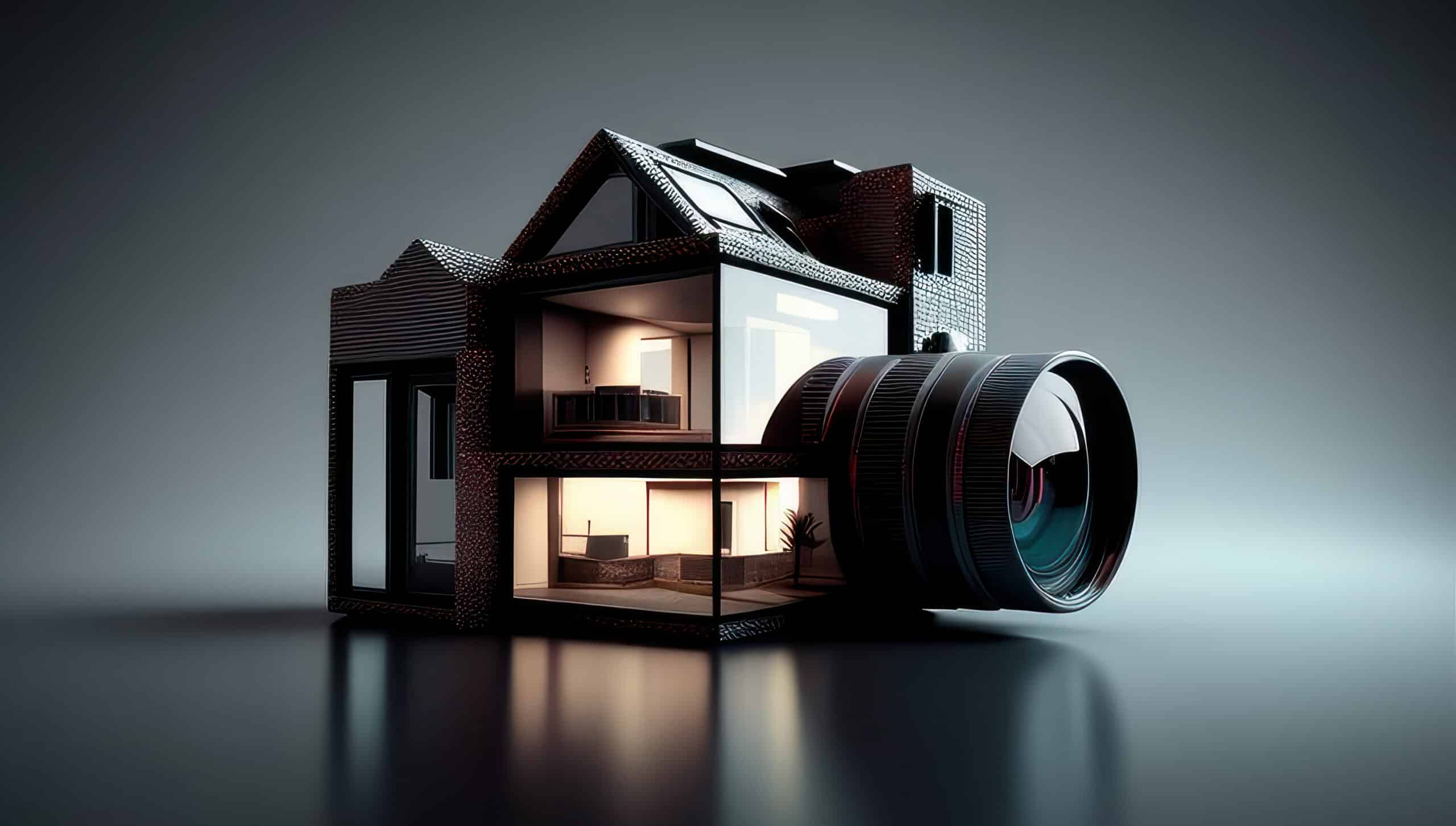
3D real estate photography transforms property marketing by replacing static 2D images with immersive, interactive digital twins that allow prospective buyers to navigate rooms, measure spaces, and evaluate layouts remotely with complete spatial accuracy.
The real estate industry has long relied on visual media to capture buyer interest. From the early days of printed MLS catalog sheets to the widespread adoption of high-definition digital photography and aerial drone footage, marketing a property has always been about visual storytelling. Yet, traditional media inherently possesses a flat perspective. A standard photograph or even a curated video walk-through dictates a fixed viewpoint, forcing viewers to see a property strictly through the lens of the photographer or agent.
As consumer expectations shift toward on-demand, digital-first experiences, 3D real estate photography has emerged as a definitive standard in property marketing. Far more than a passing technological novelty, this medium provides an immersive, data-rich environment that changes how residential and commercial properties are bought, sold, and managed. Understanding how this technology works, its economic impact, and its implementation requirements is essential for real estate professionals navigating modern property markets.
The Evolution of Property Visualization
Property marketing has evolved through distinct technological phases, each expanding the buyer's ability to visualize a space before visiting it in person. Understanding this progression clarifies why 3D capture represents such a significant leap forward.
In the pre-digital era, marketing relied on static print photography paired with descriptive text. While functional, print media limited geographic reach and offered zero interactivity. The advent of the internet brought these same static images online via listing portals, significantly increasing market velocity but retaining the limitations of the flat frame.
The introduction of virtual tours in the late 1990s and 2000s marked the first attempt at interactivity. However, early virtual tours typically consisted of stitched 360-degree panoramas linked by clunky navigation arrows, often resulting in low-resolution images and a disjointed user experience. Video walk-throughs solved the resolution problem, but they remained passive mediums. A video cannot answer a specific spatial question, such as whether a particular living room wall can accommodate a specific sectional sofa, nor does it allow a viewer to revisit a specific corner independently.
3D real estate photography bridges these gaps by combining panoramic photography with infrared or LiDAR (Light Detection and Ranging) depth sensing. The result is a complete 3D digital model—often called a digital twin—that users can explore fluidly on desktop computers, mobile devices, and virtual reality (VR) headsets.
| Visualization Medium | Interactivity Level | Spatial Accuracy |
|---|---|---|
| Static 2D Photography | None (Fixed perspective) | None (Visual distortion possible) |
| Standard Video | Passive (Viewer controls play/pause) | None (Subjective scaling) |
| Basic 360 Panoramas | Low (Click-to-jump navigation points) | Low to Moderate |
| 3D Real Estate Models | High (Full 360-degree, free movement) | High (Measurable floor plans) |
How 3D Real Estate Photography Works
Creating a professional 3D property model involves specialized hardware and software workflows. Unlike a standard camera that captures a single light field from one point, a 3D capture system maps both the visual appearance and the geometry of a physical space.
Capture Hardware and Scanning Technology
Professional 3D tours typically rely on specialized cameras equipped with multiple lenses and depth sensors. Devices from manufacturers like Matterport, Ricoh, and Leica use infrared light, structured light, or laser scanning to calculate the precise distance between the camera and surrounding objects, walls, and ceilings.
During a shoot, the photographer places the camera on a tripod at strategic intervals throughout the property—usually in every room, hallways, and key exterior spaces. The camera rotates 360 degrees, capturing a series of high-dynamic-range (HDR) photographs while simultaneously gathering millions of spatial data points, known as a point cloud.
Post-Processing and Stitching
Once the data is captured, it is uploaded to cloud-based processing platforms. Proprietary algorithms align the visual imagery with the spatial point cloud, stitching individual scan locations together into a cohesive, continuous model. This automated processing corrects exposure variations, aligns vertical lines, and removes minor stitching artifacts.
The final output is rendered into multiple view modes:
- The 3D Dollhouse View: A miniature, cutaway 3D rendering of the entire property, allowing users to see the layout of rooms and levels from an overhead perspective.
- The Floor Plan View: A top-down 2D schematic layout derived directly from the spatial data, often including room dimensions.
- The Walk-Through View: The primary immersive mode where the user navigates the interior from a first-person perspective, moving smoothly from point to point.
Strategic Benefits for Sellers and Agents
Implementing 3D photography yields measurable advantages across the entire property lifecycle, benefiting sellers, listing agents, and buyers alike.
Expanded Geographic Reach and Qualified Leads
In competitive real estate markets, properties frequently attract interest from out-of-town buyers, relocating corporate executives, and international investors. A 3D digital twin acts as an open house available 24 hours a day, 7 days a week, across any time zone.
Crucially, this technology pre-qualifies leads. Buyers who tour a property thoroughly in 3D before booking an in-person showing arrive with a realistic understanding of the layout, traffic flow, and overall condition. Consequently, physical viewings are more likely to result in serious offers, reducing wasted time for both agents and sellers.
Enhanced Listing Engagement and SEO Performance
Real estate listing portals heavily favor rich media. Listings featuring interactive 3D tours consistently experience higher user engagement metrics, including longer average time-on-page and lower bounce rates. Search algorithms on major aggregation sites often reward media-rich listings with higher visibility, pushing them closer to the top of search results pages.
Trust and Transparency
Modern consumers value transparency. Overly styled photographs or wide-angle lenses that artificially inflate room sizes can lead to buyer disappointment during physical inspections. 3D tours provide an unvarnished, accurate representation of a property. When buyers tour a digital twin prior to arrival, their expectations match reality, fostering greater trust between the buyer and the listing agent.
Economic Considerations: Costs, Time, and ROI
While the benefits are clear, stakeholders must evaluate the financial and operational investment required to integrate 3D photography into standard marketing packages.
Direct Costs vs. Traditional Photography
A standard professional real estate photography shoot generally ranges from $150 to $500 depending on the property's square footage and geographic location. Adding a 3D scan typically increases the total media package cost by an additional $100 to $400. For luxury properties exceeding 5,000 square feet, comprehensive commercial-grade scanning can cost upwards of $1,000.
Time Investment on Site
Scanning a property takes longer than taking standard photographs. While a skilled photographer can capture a 2,000-square-foot home in under an hour for 2D shots, a 3D scan of the same property may require 90 minutes to two hours. The property must be thoroughly staged and decluttered beforehand, as the camera captures every angle of every room simultaneously.
Return on Investment (ROI)
Despite the higher upfront cost, the return on investment manifests in several ways:
- Faster Sales Cycles: Properties marketed with immersive tours often sell faster because they attract committed buyers immediately upon listing.
- Reduced Marketing Costs: Fewer physical open houses and reduced travel requirements save time and operational expenses.
- Higher Listing Wins: Agents who offer advanced 3D media packages secure more listing presentations with discerning home sellers.
Best Practices for Preparing a Property for a 3D Scan
Because 3D cameras capture every surface indiscriminately, property preparation requires a higher level of detail than standard photography.
- Deep Cleaning and Decluttering: Countertops, floors, and surfaces must be cleared of personal items, papers, and excess furniture. Unlike a staged 2D photo where clutter can be moved just out of frame, a 3D camera captures all 360 degrees.
- Lighting Consistency: Turn on all interior lights, replace burned-out bulbs with matching color-temperature LEDs, and open window blinds to balance natural and artificial light.
- Hiding the Staging Crew: During the scan, people and pets must remain out of the camera's line of sight, often waiting in a designated room or outside until the sweep of that area is complete.
- Exterior Preparation: If exterior spaces are included in the scan, ensure patios are swept, cushions are arranged, and pool covers are clean.
Frequently Asked Questions
What equipment is needed to create a 3D real estate tour?
Creating a professional 3D tour requires a specialized depth-sensing camera (such as a Matterport Pro series or Leica BLK360), a heavy-duty tripod, a stable panoramic rotator, and a compatible mobile device or tablet running the capture application.
Can 3D tours replace physical property viewings entirely?
While 3D tours significantly reduce the need for preliminary or second-round physical viewings, they rarely replace the final in-person inspection entirely. Buyers generally prefer to walk through a home physically to evaluate neighborhood ambiance, check material finishes up close, and confirm emotional resonance before closing a multi-million-dollar transaction.
Are 3D models compatible with mobile phones and VR headsets?
Yes. Modern 3D real estate tours run in standard web browsers using WebGL technology, requiring no special software downloads. They are fully responsive on smartphones and tablets, and many platforms support immersive viewing via virtual reality headsets like the Meta Quest.
How accurate are the measurements provided in 3D tours?
Professional 3D capture systems boast high spatial accuracy, typically within one percent of actual physical dimensions. This allows agents and buyers to use the integrated measurement tools to verify if furniture, rugs, or appliances will fit specific spaces without returning to the property with a tape measure.
Do 3D tours work well in bright sunlight outdoors?
Infrared and laser-based scanning systems face limitations in direct, bright sunlight because sunlight washes out infrared signals. Consequently, most 3D real estate tours focus primarily on interior spaces, supplemented by traditional exterior drone photography and standard 360-degree outdoor panoramas.
Conclusion and Next Actions
3D real estate photography has fundamentally transformed property marketing from a static visual exercise into an interactive, data-driven experience. By providing absolute spatial transparency, extending geographic market reach, and driving higher engagement on listing portals, digital twins deliver verified value to modern real estate professionals. To leverage this technology effectively, agents and sellers should audit their current marketing budgets, identify trusted local scanning service providers, and incorporate 3D digital twins as a standard component of every high-value listing package.