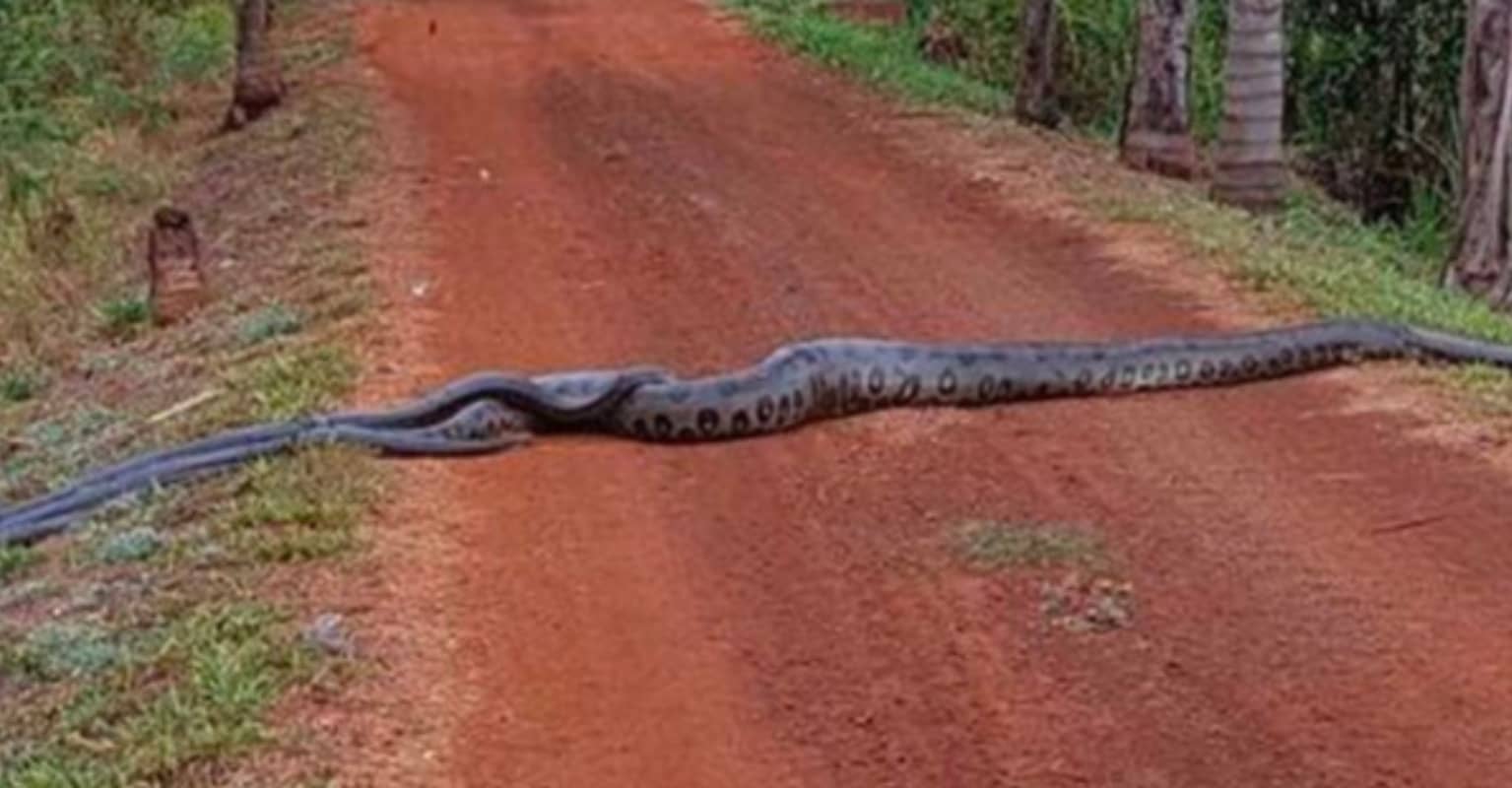
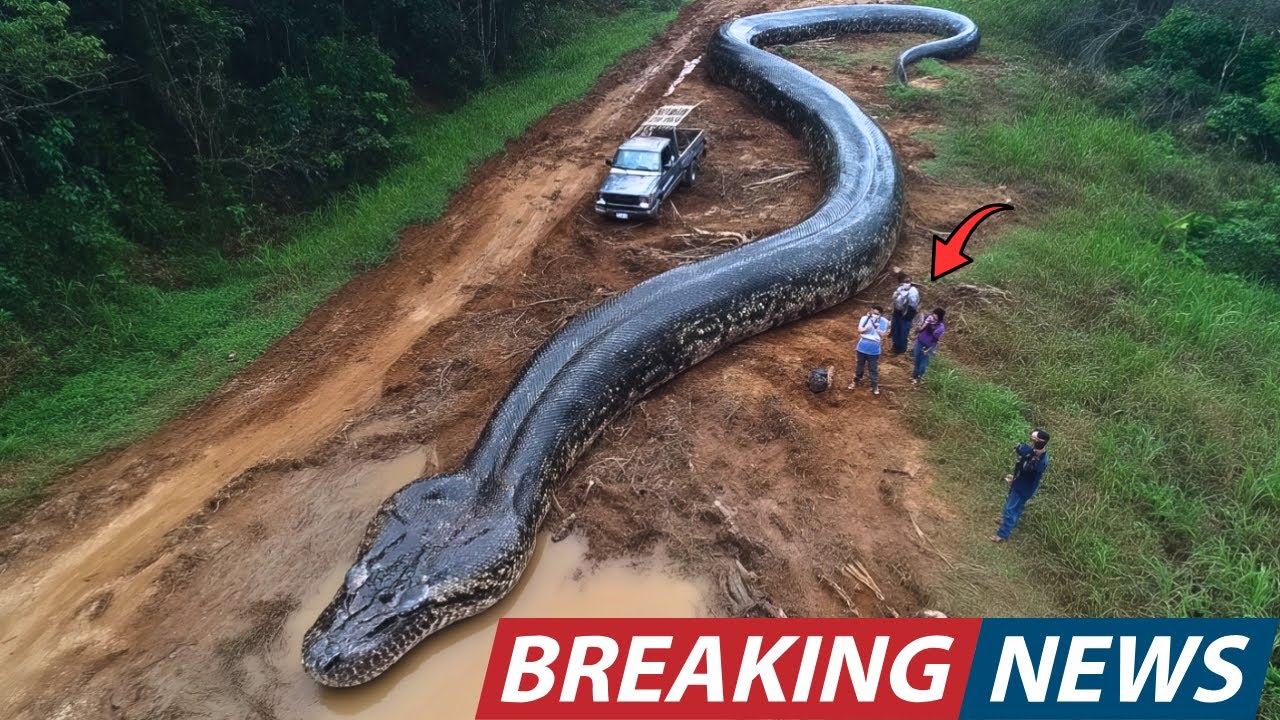
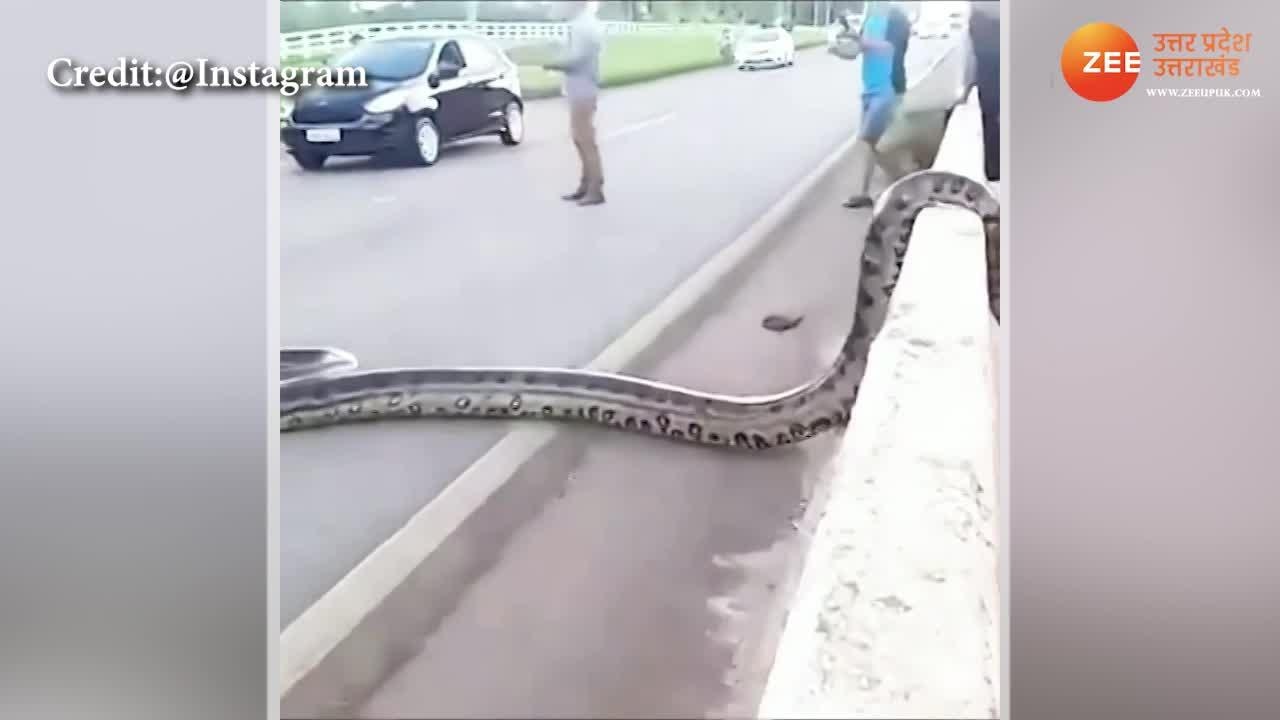
Viral footage and persistent rumors of a 25-foot anaconda crossing a Brazil highway frequently circulate online, often misidentifying large snakes as record-breaking specimens. In reality, scientific records confirm the green anaconda (Eunectes murinus) rarely exceeds 17 to 20 feet, and no verifiable evidence exists for a 25-foot individual surviving in the wild or appearing on public roadways.
The Anatomy of a Viral Legend
The perception of "giant" snakes often stems from a combination of camera perspective, human error, and the inherent difficulty of measuring a moving animal in a high-stress environment. When a snake is filmed crossing a road, the proximity of the camera to the ground can create a "forced perspective" effect, making the snake appear significantly larger than its actual dimensions.
Furthermore, the green anaconda is a thick-bodied snake; its girth often leads observers to overestimate its length. When a snake is moving, its body undulates, which makes it nearly impossible to obtain an accurate length measurement without restraining the animal. Most "giant" snake reports involve individuals that are physically impressive—perhaps 15 or 16 feet—but fall far short of the mythical 25-foot threshold.
Understanding the Green Anaconda
The green anaconda is the heaviest snake in the world and one of the longest. It is endemic to the tropical regions of South America, primarily within the Amazon and Orinoco river basins. They are semi-aquatic, spending the vast majority of their time in slow-moving streams, marshes, or swamps.
Key Biological Realities
- Maximum Size: While historical claims occasionally suggest lengths of 30 feet or more, peer-reviewed scientific studies and professional herpetology records consistently cap the realistic maximum for the green anaconda at approximately 20 feet. Specimens exceeding this size are extremely rare and generally lack verifiable evidence.
- Diet and Growth: As sit-and-wait predators, anacondas rely on their size to constrict and subdue prey, including capybaras, caimans, and deer. Because they require vast amounts of food to maintain their metabolism, the energy cost of reaching extreme lengths is prohibitive in a wild ecosystem.
- Highway Crossings: Roads constructed through the Amazon rainforest often bisect the natural habitats of these reptiles. During the dry season or when their wetland territories are disrupted by environmental changes, anacondas are sometimes forced to move across paved surfaces to reach new water sources, leading to the viral sightings frequently reported by motorists.
Why the 25-Foot Claim Persists
The human fascination with "monsters" and extreme biological anomalies drives the longevity of the 25-foot anaconda narrative. Media outlets and social media users often amplify these stories because they are visually striking, even when the underlying footage shows a standard-sized specimen.
Scientific verification requires more than a video clip. It demands a direct physical measurement by a qualified researcher, usually while the animal is anesthetized or deceased. Since these conditions are rarely met in roadside encounters, the "25-foot" label remains a placeholder for the mystery and fear that large predators often evoke in public discourse.
Comparison of Snake Measurements and Reality
To understand why observers consistently misjudge the size of these animals, it is helpful to compare the physical reality of the green anaconda against other large, often confused species.
| Feature | Green Anaconda | Reticulated Python | Common Misconception |
|---|---|---|---|
| Typical Adult Length | 10–16 feet | 15–20 feet | 25+ feet |
| Primary Habitat | Semi-aquatic (Brazil/Amazon) | Terrestrial (Southeast Asia) | Anywhere near a road |
| Build | Heavy/Robust | Slender/Long | Infinite expansion |
| Verified Max Length | ~20 feet | ~22 feet | Subjective estimates |
Safety and Interactions on Brazil Highways
When motorists encounter an anaconda on a highway in Brazil, the primary concern should be safety for both the human and the animal. Despite their reputation, anacondas are not aggressive toward humans and will almost always choose to flee or remain motionless if they feel threatened.
What to Do During an Encounter
- Maintain Distance: Do not attempt to exit the vehicle to get a closer look or to film. Anacondas can strike with surprising speed if they feel cornered.
- Alert Other Drivers: Use hazard lights to warn oncoming traffic of an obstruction. A large snake on the road is a hazard to motorists, and the snake itself is at high risk of being killed by a vehicle.
- Do Not Attempt Capture: Handling a wild anaconda, especially one of significant size, requires specialized training and equipment. It is dangerous and frequently illegal under local environmental protection laws in Brazil to interfere with wildlife.
- Report to Authorities: If the snake appears injured or if the obstruction is creating a major traffic risk, contact local environmental police or the Instituto Brasileiro do Meio Ambiente e dos Recursos Naturais Renováveis (IBAMA).
Environmental Impact and Habitat Fragmentation
The frequency of anacondas crossing highways is a symptom of broader environmental issues in South America. As infrastructure expands, the fragmentation of tropical wetlands forces native species into dangerous proximity to humans.
This leads to a higher mortality rate for snakes that are hit by vehicles, which in turn affects the local predator-prey balance. Scientists monitoring these areas have noted that road kills are a significant threat to local populations, even if the individuals being killed are well within the "normal" size range for the species.
Frequently Asked Questions
Are there any records of a 25-foot anaconda ever being caught? No. There are no scientifically verified records of a 25-foot green anaconda. While various cash rewards and historical claims have been proposed over the last century, none have passed the scrutiny of legitimate herpetological measurement.
Why do some videos look like they show a 25-foot snake? Most of these videos rely on camera angles, the distortion caused by wide-angle lenses, and the lack of a recognizable scale object (like a car or a person standing directly next to the snake) for reference.
Is it dangerous to drive past an anaconda on a road? No, staying inside your vehicle is perfectly safe. The danger arises only if you exit the vehicle and approach the animal, which could trigger a defensive strike.
How fast does an anaconda grow? Growth rates are highly dependent on food availability and environment. Anacondas grow throughout their lives, but growth slows significantly once they reach sexual maturity, making the caloric requirement for reaching 25 feet biologically impossible for most individuals in the wild.
What is the best way to report a sighting? If you are in Brazil, sighting data can sometimes be useful for ecological research. You can report significant encounters to local environmental agencies or university biology departments that focus on neotropical reptiles.
Recommendations for Future Observation
If you encounter a large snake on a roadway, prioritize observation over interaction. If you wish to contribute to the scientific community, take a photograph from a safe distance inside your vehicle. Including a stationary object in the frame, such as a road marker or your vehicle's bumper, can provide researchers with a baseline to estimate the animal's size more accurately. Respecting the animal's space is the best way to ensure that these magnificent predators continue to play their vital role in the Amazonian ecosystem.