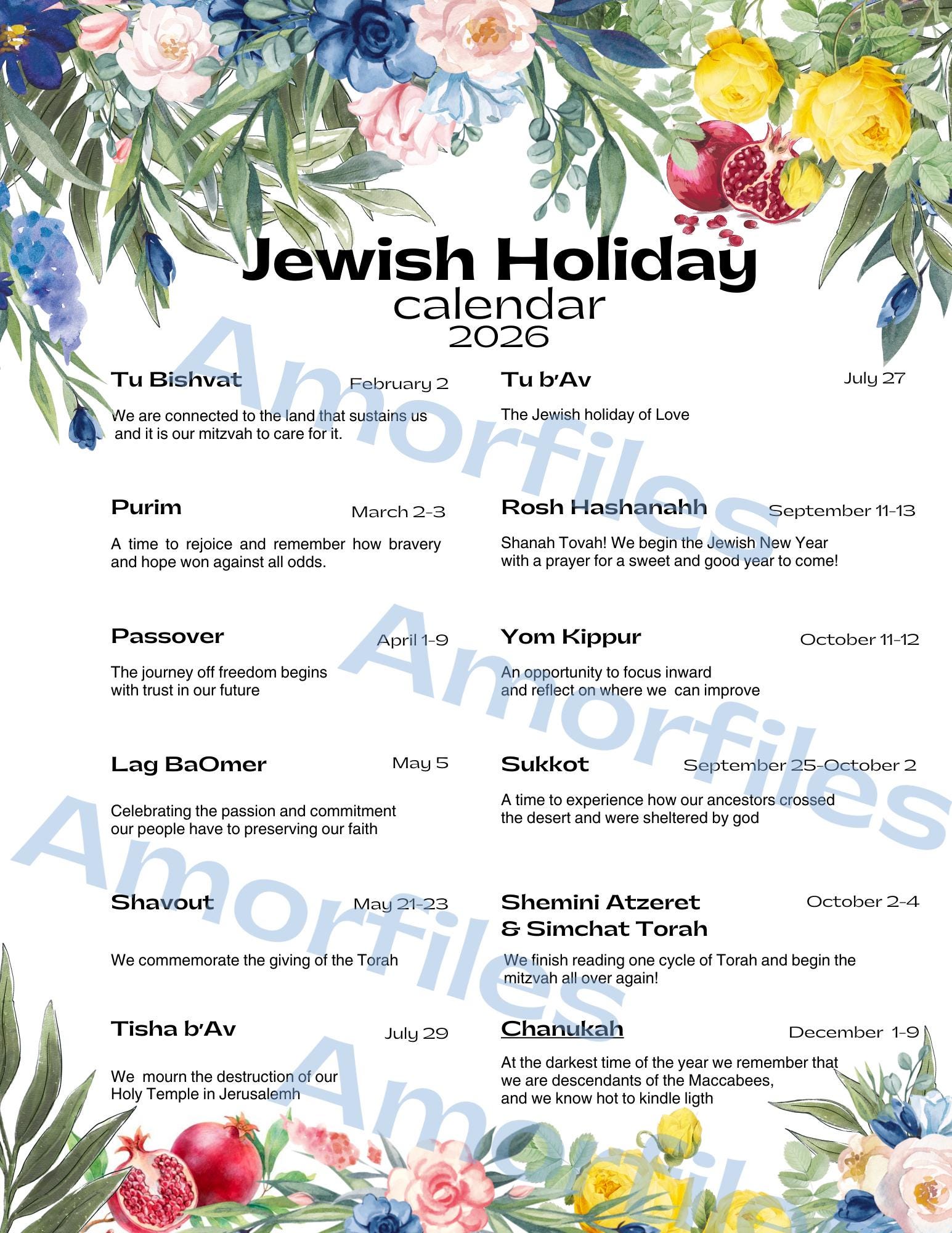
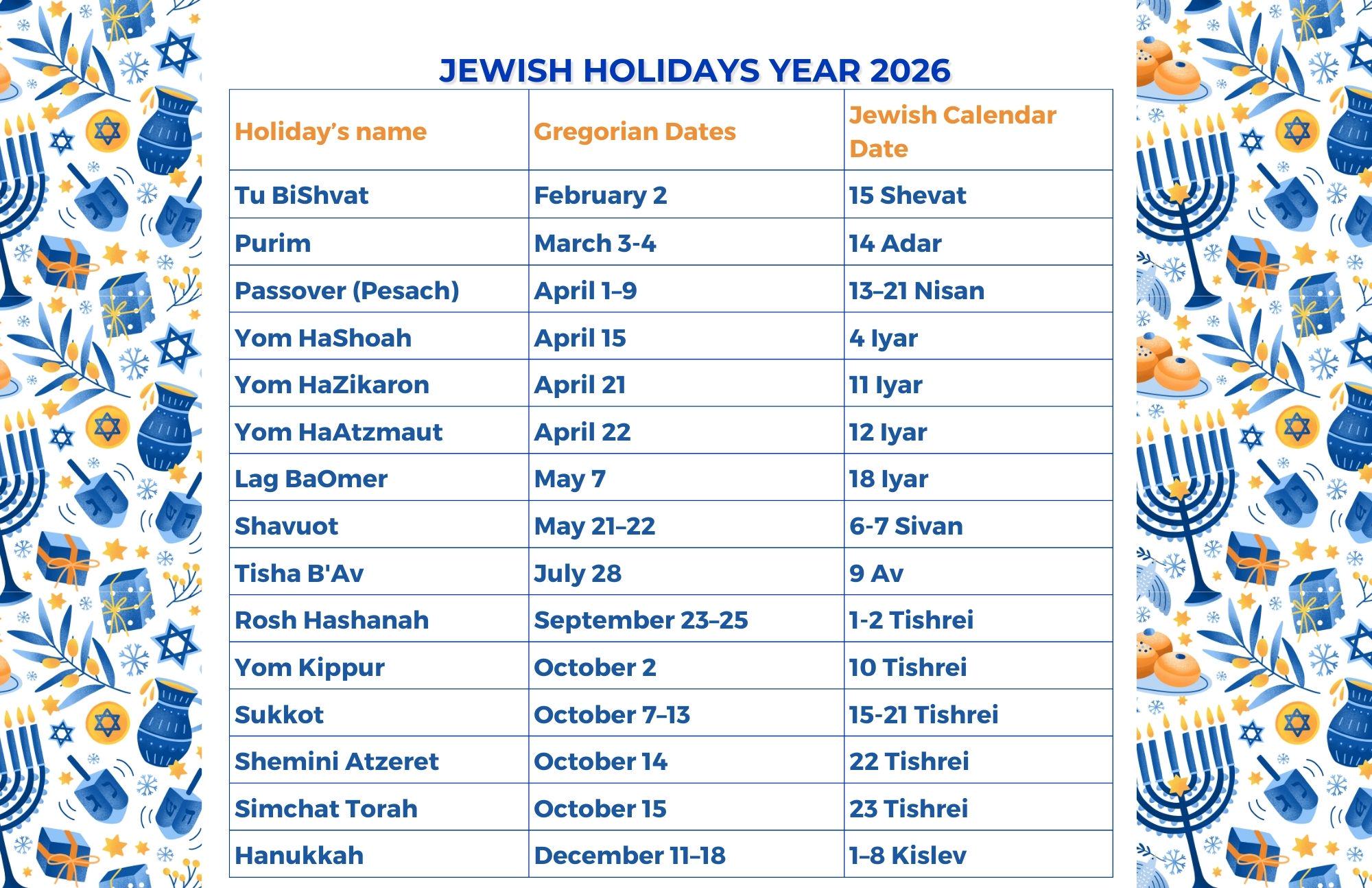
The 2026 Jewish calendar facilitates the synchronization of the Gregorian year with the Hebrew years 5786 and 5787. This year features major observances such as Passover starting on April 2 and Rosh Hashanah beginning at sunset on September 11. High-quality PDF overviews provide essential data for planning, including Shabbat times, Torah portions, and festival dates.
Understanding the Jewish Calendar Structure for 2026
The year 2026 presents a unique intersection of the solar and lunar cycles that define Jewish timekeeping. Unlike the standard Gregorian calendar, which is purely solar-based, the Jewish calendar is lunisolar. This means months are determined by the phases of the moon, while the overall year is adjusted to stay in sync with the solar seasons. In 2026, we navigate the concluding months of the Hebrew year 5786 and transition into the Hebrew year 5787.
The first half of 2026 belongs to 5786, which is a "regular" year (Shanah Peshutah) consisting of 12 months. Since the Jewish calendar follows a 19-year Metonic cycle to reconcile lunar months with the solar year, leap years occur seven times in that cycle by adding an extra month (Adar II). However, 5786 is not a leap year. This ensures that the spring festivals, such as Passover, fall in their biblically mandated agricultural season.
When downloading or viewing a 2026 Jewish calendar PDF, users will notice that dates begin at sunset of the previous evening. This is a fundamental concept in Jewish law (Halacha): "And there was evening and there was morning, one day." Therefore, a holiday listed on a specific Gregorian date actually begins the night before. For instance, while Rosh Hashanah is noted for September 12, 2026, the festive meals and candle lighting occur on the evening of Friday, September 11.
Key Holidays and Observances in the 5786–5787 Cycle
The 2026 calendar year is packed with significant liturgical and historical milestones. For those using a PDF overview for communal or personal planning, understanding the timing of these events is crucial for scheduling work, travel, and religious commitments.
The Spring Festivals: Purim and Passover
In the early months of 2026, the focus is on the transition from the winter gloom to the redemption of spring. Purim, celebrated on March 3, 2026 (14 Adar), commemorates the saving of the Jewish people from Haman in the ancient Persian Empire. A comprehensive PDF will often include the "Fast of Esther" (Ta'anit Esther) on the day preceding Purim, which is observed on March 2.
Following Purim, the central event of the spring is Passover (Pesach). In 2026, the first Seder takes place on the night of April 1, with the first official day of the holiday falling on April 2. This eight-day festival (seven days in Israel) concludes on April 9. Because Passover involves significant dietary changes and home preparation, having a PDF overview helps households track the "Search for Leaven" (Bedikat Chametz) and the specific times for the cessation of eating bread.
The Summer Fast Days and Shavuot
As we move into May, the calendar marks Shavuot, the Festival of Weeks, celebrating the giving of the Torah at Mount Sinai. In 2026, Shavuot begins the evening of May 21 and continues through May 23. This is followed by the somber summer months, which include the "Three Weeks" of mourning leading up to Tisha B'Av on July 23, 2026. This fast day commemorates the destruction of the First and Second Temples in Jerusalem and is a focal point of the summer liturgical cycle.
The High Holy Days: Rosh Hashanah and Yom Kippur
The transition to the Hebrew year 5787 occurs in September 2026. Rosh Hashanah, the Jewish New Year, begins at sunset on September 11 and lasts through September 13. This period initiates the Ten Days of Repentance, culminating in Yom Kippur, the Day of Atonement, on September 21, 2026. For professionals and students, these are the most critical dates to note in a 2026 PDF overview, as they typically involve a complete cessation of work and school activities.
Essential Features of a 2026 Jewish Calendar PDF
A high-quality PDF overview serves as more than just a list of dates; it is a technical tool for religious observance. When selecting or generating a calendar for 2026, ensure it includes the following technical specifications:
- Zmanim (Halachic Times): These are calculated based on the sun's position and vary by geographic location. A robust PDF will list times for sunrise (Alot HaShachar), the latest time for morning prayers (Shma), and candle lighting for Shabbat and holidays.
- Parashat HaShavua: The weekly Torah portion read in synagogues worldwide every Saturday. For 2026, the PDF should clearly label each Shabbat with its corresponding portion, such as Bereshit or Noach, to help those following the annual reading cycle.
- Modern Observances: In addition to biblical festivals, the 2026 calendar includes modern Israeli holidays such as Yom HaZikaron (Memorial Day) and Yom Ha'atzmaut (Independence Day), which falls on April 22, 2026. These dates are vital for community organizations and Zionist educational programs.
- Rosh Chodesh: The beginning of the new Hebrew month. Many PDF overviews highlight these days, as they involve specific additions to the daily prayer service and are traditionally celebrated as a minor festival, particularly by women.
2026 Jewish Holiday Reference Table
The following table provides a quick-reference guide for the major holidays occurring within the 2026 Gregorian year. Note that holidays begin at sunset on the evening preceding the date listed.
| Holiday | Hebrew Date | 2026 Gregorian Date | Day(s) of the Week |
|---|---|---|---|
| Tu BiShvat | 15 Shevat 5786 | February 2 | Monday |
| Purim | 14 Adar 5786 | March 3 | Tuesday |
| Passover (1st Day) | 15 Nisan 5786 | April 2 | Thursday |
| Yom HaShoah | 27 Nisan 5786 | April 14 | Tuesday |
| Yom Ha'atzmaut | 5 Iyar 5786 | April 22 | Wednesday |
| Lag BaOmer | 18 Iyar 5786 | May 5 | Tuesday |
| Shavuot | 6 Sivan 5786 | May 22 | Friday |
| Tisha B'Av | 9 Av 5786 | July 23 | Thursday |
| Rosh Hashanah | 1 Tishrei 5787 | September 12–13 | Saturday–Sunday |
| Yom Kippur | 10 Tishrei 5787 | September 21 | Monday |
| Sukkot (1st Day) | 15 Tishrei 5787 | September 26 | Saturday |
| Shemini Atzeret | 22 Tishrei 5787 | October 3 | Saturday |
| Simchat Torah | 23 Tishrei 5787 | October 4 | Sunday |
| Hanukkah (1st Light) | 25 Kislev 5787 | December 4 (Evening) | Friday |
Why Use a PDF Format for the 2026 Calendar?
While many users rely on digital apps or Google Calendar integrations, the PDF overview remains a staple for the Jewish community for several practical reasons.
First, the PDF format is "Shabbat-friendly." On the Sabbath and major festivals, the use of electronic devices is prohibited under Orthodox and many Conservative interpretations of Jewish law. Having a printed PDF allows families to check prayer times, meal schedules, and holiday end-times without violating the sanctity of the day.
Second, a PDF provides a comprehensive visual layout that apps often lack. Seeing an entire month or year at a glance allows for better long-term planning. For example, in 2026, Hanukkah begins quite early in December. By reviewing a PDF overview in advance, families can identify that the first candle is lit on the evening of Friday, December 4, which coincides with the preparation for the Sabbath.
Third, the PDF format is easily sharable and standardizable for organizations. Synagogues, schools, and community centers often create a master 2026 calendar PDF that includes their specific events, such as Bar Mitzvahs or board meetings, ensuring everyone in the community is working from the same chronological blueprint.
Technical Nuances of the 5786-5787 Transition
The transition from 5786 to 5787 in the autumn of 2026 involves specific astronomical and halachic considerations. 5786 is a "Regular" year, meaning it has 354 or 355 days. The year 5787 is also a regular year. This sequence affects the "Omer" count—the 49-day period between Passover and Shavuot.
In 2026, the Omer count begins on the second night of Passover (April 2). For those using a PDF to track this period, it is essential that the document includes the nightly count numbers, as missing a day can affect the ability to recite the blessing on subsequent nights.
Furthermore, the 2026 calendar must account for "postponements" (Dehirot). The Jewish calendar rules state that Rosh Hashanah cannot fall on a Sunday, Wednesday, or Friday to prevent Yom Kippur from falling on a Friday or Sunday (which would cause logistical issues with the Sabbath) and to prevent Hoshanah Rabbah from falling on a Sabbath. The 2026 calculations for 5787 ensure that Rosh Hashanah falls on a Saturday, which is perfectly aligned with these ancient mathematical requirements.
Common Planning Mistakes to Avoid in 2026
When utilizing a 2026 Jewish calendar PDF, planners often overlook a few critical details that can disrupt scheduling.
- The "Sunset" Rule: Many secular planners mark a holiday on a Tuesday, for example, but fail to realize that the celebration and the cessation of work actually begin Monday evening. In 2026, this is especially important for Yom Kippur, which is on a Monday (Sept 21). The fast begins Sunday evening, Sept 20.
- Second Day of Festivals: Outside of Israel, most major holidays (Passover, Shavuot, Sukkot) are observed for two days instead of one. A standard PDF overview should clearly distinguish between "Israel dates" and "Diaspora dates." If you are planning an event for an international audience in 2026, this distinction is paramount.
- Minor Fasts: Dates like the Fast of Gedaliah (September 14, 2026) or the Fast of the 10th of Tevet (December 20, 2026) are often omitted from generic calendars but are vital for observant individuals. Ensure your PDF source includes these "minor" yet significant dates.
Frequently Asked Questions
When does Passover start in 2026?
Passover begins at sunset on Wednesday, April 1, 2026. The first full day of the holiday is Thursday, April 2. In the Diaspora, the first two days (April 2 and April 3) and the last two days (April 8 and April 9) are observed as full holidays where work is prohibited.
Is 2026 a Jewish leap year?
No, the Hebrew year 5786 (which covers most of 2026) is a regular year with 12 months. It does not include an Adar II. The next Jewish leap year will be 5787, but the extra month (Adar Aleph) will not occur until early 2027.
What are the dates for Hanukkah in 2026?
Hanukkah 2026 begins on the evening of Friday, December 4, when the first candle is lit. The eight-day festival continues through Saturday, December 12. Because it starts on a Friday night, the Hanukkah candles must be lit before the Shabbat candles.
When is Rosh Hashanah 2026?
Rosh Hashanah 2026 (the start of the year 5787) begins at sunset on Friday, September 11. The holiday is observed on Saturday, September 12, and Sunday, September 13.
How can I find Shabbat times in a 2026 PDF?
Most Jewish calendar PDFs are customized by city because Shabbat start times depend on the local sunset. To get accurate times, you should download a PDF from a source like Hebcal or Chabad that allows you to input your specific zip code or city.
Final Recommendation for 2026 Planning
For the most effective planning in 2026, users should seek a PDF calendar that integrates both Gregorian and Hebrew dates with local Zmanim (prayer times). Relying on a generic calendar can lead to errors in holiday observance and Shabbat preparation. It is recommended to print a 12-month overview and post it in a central location, such as a kitchen or community board, to ensure that the unique rhythms of the Jewish year—from the early Hanukkah lights in December to the spring redemption of Passover—are honored accurately.