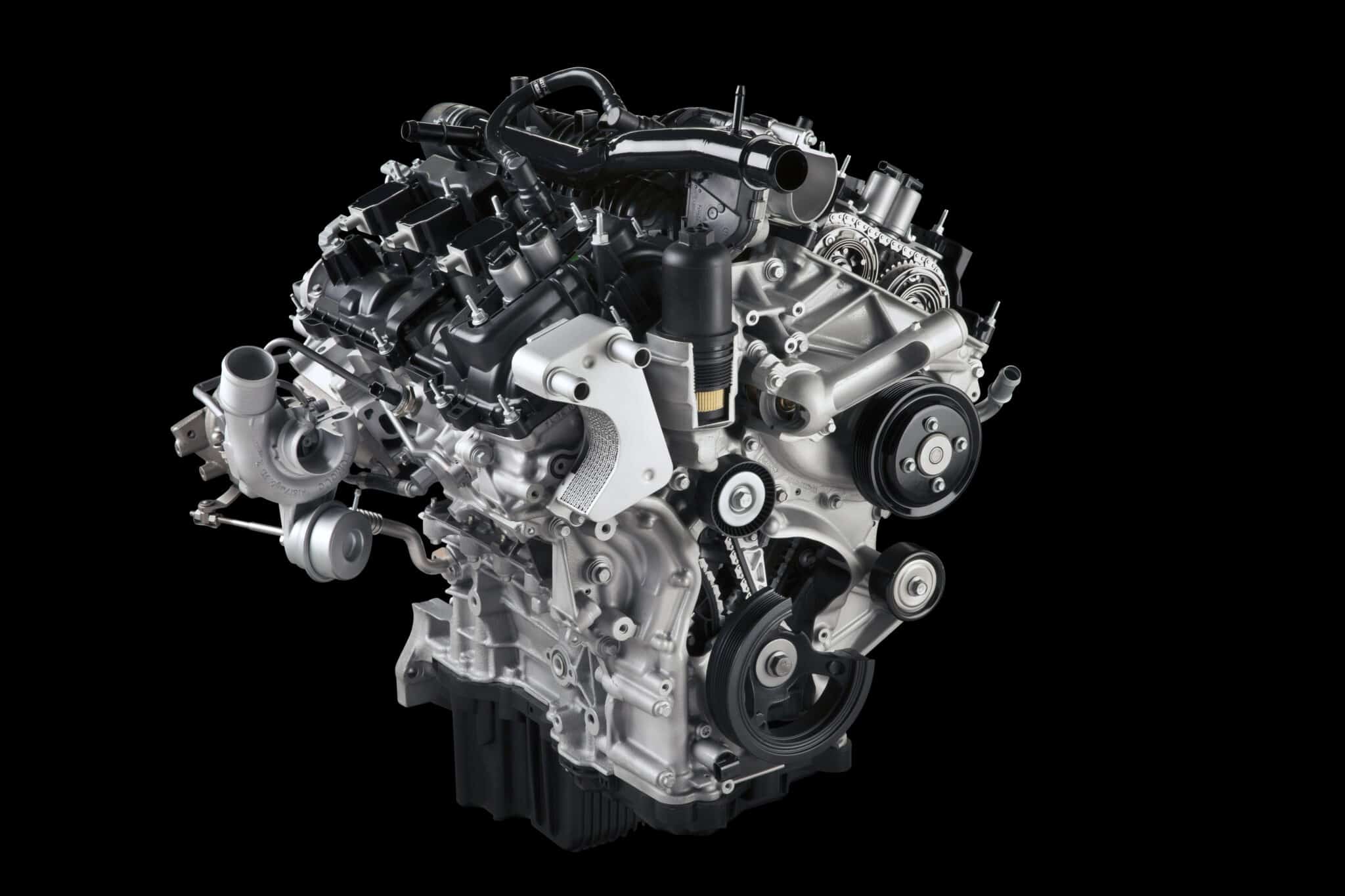
The 2015 Ford F-150 3.5-liter EcoBoost V6 engine produces 365 horsepower at 5,000 RPM and 420 lb-ft of torque at 2,500 RPM. This twin-turbocharged powerplant was engineered to deliver V8-like capability with the efficiency of a smaller displacement engine, leveraging direct fuel injection and dual turbochargers to achieve peak torque at remarkably low engine speeds.
Introduction to the 2015 Ford F-150 3.5L EcoBoost Powertrain
When Ford redesigned the F-150 for the 2015 model year, it introduced a revolutionary military-grade aluminum-alloy body that shed up to 700 pounds compared to its predecessor. To maximize the performance advantages of this weight reduction, Ford restructured its engine lineup, placing a heavy strategic emphasis on its EcoBoost technology. Among these powerplants, the first-generation 3.5-liter twin-turbocharged EcoBoost V6 stood out as the premium engine option for buyers seeking maximum towing capacity and heavy-duty utility.
Understanding the horsepower and torque dynamics of the 2015 Ford F-150 3.5 EcoBoost requires looking past simple peak rating numbers. While horsepower dictates top-end acceleration and high-speed passing power, torque is the metric that defines everyday drivability, heavy hauling, and trailer towing. This analysis explores how the engine generates its power, how it compares to other engine options in the 2015 lineup, what factors influence its real-world performance, and what owners should keep in mind for long-term maintenance.
Core Technical Specifications of the 3.5L EcoBoost V6
To comprehend the horsepower delivery of the 2015 3.5L EcoBoost, it is essential to examine the mechanical architecture beneath the valve covers. This engine is not a naturally aspirated V6; rather, it is a sophisticated forced-induction system built around a lightweight cast-iron block and aluminum cylinder heads.
| Engine Specification | 2015 Ford F-150 3.5L EcoBoost V6 |
|---|---|
| Horsepower | 365 hp @ 5,000 RPM |
| Torque | 420 lb-ft @ 2,500 RPM |
| Induction System | Twin Turbochargers with Air-to-Air IC |
| Fuel System | Gasoline Direct Injection (GTDI) |
| Compression Ratio | 10.0:1 |
| Displacement | 3.5 Liters (3,496 cc / 213 cubic inches) |
The integration of Gasoline Direct Injection (GDI) injects fuel directly into each combustion chamber at high pressure, cooling the air charge and allowing for a higher 10.0:1 compression ratio despite the presence of forced induction. This precise fuel metering works in tandem with twin parallel turbochargers to virtually eliminate turbo lag. Each turbocharger feeds one bank of cylinders, spooling up quickly thanks to the engine's low exhaust gas volume and efficient turbine design.
How Horsepower and Torque Deliver Real-World Performance
Horsepower is calculated as a function of torque and engine speed using the formula: $Horsepower = (Torque \times RPM) / 5,252$. In the case of the 2015 3.5L EcoBoost, the engine reaches its maximum torque of 420 lb-ft at a remarkably low 2,500 RPM and sustains a flat torque curve across a wide operational band.
The Significance of Low-End Torque
Traditional naturally aspirated V8 engines require high RPMs to build maximum power, meaning drivers must push the accelerator deep into the floor and wait for the transmission to downshift when towing up an incline. In contrast, the 3.5L EcoBoost reaches its massive twist capability just off idle. When pulling a heavy trailer, the truck rarely needs to scream at 4,500 RPM to maintain highway speeds. The turbochargers build positive manifold pressure early, keeping the vehicle in a relaxed, low-rev cruise state while effortlessly moving heavy loads.
High-RPM Horsepower Characteristics
While torque handles the heavy lifting, the 365 horsepower rating peaks at 5,000 RPM. This provides ample top-end breathing room for merging onto fast-moving freeways or passing slow traffic on two-lane roads. Once the turbochargers reach their maximum wastegate limits, the engine sustains its horsepower output up to the electronic redline, ensuring that performance does not abruptly fall off after the initial launch.
Comparison with Other 2015 F-150 Engine Options
Ford offered four distinct engine choices for the 2015 model year, catering to everyone from commercial fleet operators to heavy-duty towing enthusiasts. Evaluating the 3.5L EcoBoost against its stablemates highlights why it commanded a premium price.
- 2.7L EcoBoost V6: Rated at 325 horsepower and 375 lb-ft of torque. Designed primarily for lighter-duty tasks and superior fuel economy, it out-accelerates the base V6 and matches small V8s, but falls short of the 3.5L's massive towing ceiling.
- 3.5L Ti-VCT V6: A naturally aspirated base engine producing 283 horsepower and 253 lb-ft of torque. Built for cost-conscious fleet buyers and light payload duties, it lacks the forced-induction punch of the EcoBoost variants.
- 5.0L Ti-VCT V8: The traditional Coyote V8 pushes out 385 horsepower and 387 lb-ft of torque. While it beats the 3.5L EcoBoost in peak horsepower by 20 units, it requires much higher RPMs (4,250 RPM) to reach its peak torque, making the EcoBoost feel more responsive during everyday driving and heavy towing.
Impact of Altitude and Environmental Factors on Forced Induction
One of the greatest advantages of the twin-turbocharged 3.5L EcoBoost over traditional naturally aspirated V8 engines is its performance consistency at high elevations.
Naturally aspirated engines suffer from a loss of volumetric efficiency as atmospheric pressure drops at higher altitudes. For every thousand feet of elevation gain, a naturally aspirated engine loses roughly three percent of its power because there is less oxygen available in the ambient air.
Because the 3.5L EcoBoost utilizes computer-controlled wastegates, the powertrain control module (PCM) can compensate for thin air by commanding the turbochargers to spin slightly faster to maintain target manifold pressure. As a result, driving through mountainous terrain in Colorado or Wyoming results in little to no noticeable power loss for a 3.5L EcoBoost owner, whereas a traditional V8 will feel sluggish and strained under the exact same conditions.
Maintenance and Operational Factors Affecting Horsepower
To maintain the factory-rated 365 horsepower and 420 lb-ft of torque over hundreds of thousands of miles, owners must adhere to strict maintenance protocols. Forced-induction engines place higher thermal and mechanical stresses on internal components than naturally aspirated engines.
Fuel Quality Requirements
While the 2015 3.5L EcoBoost is designed to run on standard 87-octane regular unleaded gasoline, the engine management system will automatically pull ignition timing if it detects low-grade fuel under heavy load to prevent destructive engine knock. To experience the true, uncompromised horsepower and torque figures advertised by Ford, utilizing 91-octane or higher premium fuel is recommended, especially when towing or driving in ambient high-temperature environments.
Carbon Buildup and Direct Injection
Because fuel is sprayed directly into the combustion chambers rather than washing over the back of the intake valves (as seen in port-injection setups), the intake valves on direct-injection engines can accumulate carbon deposits over time. Heavy carbon restriction can disrupt airflow into the cylinders, leading to hesitation, rough idling, and a gradual degradation of horsepower. Using top-tier detergents in fuel and performing periodic intake valve cleanings helps preserve optimal airflow and combustion efficiency.
Intercooler Condensation and Management
Early-generation EcoBoost engines occasionally suffered from moisture accumulation inside the charge air cooler (intercooler) during high-humidity, sustained-speed driving conditions. When the driver abruptly demanded full throttle, the engine could ingest this accumulated condensation, causing temporary misfires and power loss. Ford later released technical service bulletins and updated charge air cooler shields to mitigate this issue, which remains an important diagnostic check for used vehicle buyers.
Frequently Asked Questions
What is the maximum towing capacity of a 2015 Ford F-150 with the 3.5L EcoBoost engine?
When properly equipped with the Max Trailer Tow Package, the 2015 Ford F-150 3.5L EcoBoost can tow up to 12,200 pounds. This class-leading capability is a direct result of its low-end torque delivery and robust cooling system upgrades.
Does the 2015 3.5L EcoBoost require premium fuel to make 365 horsepower?
No, the engine achieves its official 365 horsepower and 420 lb-ft ratings on standard 87-octane fuel according to SAE J1349 standards. However, the computer will adjust timing on lower grades, meaning premium fuel optimizes performance under extreme load.
How does the 3.5L EcoBoost compare to the 5.0L V8 in fuel economy?
While both engines achieve similar EPA ratings in mixed driving (typically around 16–17 mpg city and 22–23 mpg highway depending on axle ratio and cab configuration), the EcoBoost generally maintains better efficiency when operating under moderate boost loads, whereas heavy towing drops fuel economy significantly for both.
What are common signs of failing turbochargers on a 2015 EcoBoost?
Signs of turbocharger wear include excessive blue or white smoke from the exhaust, a noticeable high-pitched whining or scraping noise under acceleration, sluggish throttle response, and underboost diagnostic trouble codes stored in the PCM.
Is the 2015 model year considered reliable for the 3.5L EcoBoost?
Yes, the 2015 model represents the second year of the second-generation body style, but it utilizes the robust first-generation 3.5L EcoBoost architecture. While it requires diligent maintenance regarding spark plug gaps and oil changes, it is widely regarded as a durable, high-output truck engine.
Conclusion and Recommendations
The 2015 Ford F-150 3.5 EcoBoost balances heavy-duty capability and daily-drivable efficiency through forced-induction engineering. Delivering 365 horsepower and 420 lb-ft of torque at low RPMs, it provides effortless towing performance that outclasses many traditional V8s, particularly at high elevations. For prospective buyers or current owners, maintaining clean oil, proper spark plug gaps, and high-quality fuel ensures this powertrain delivers reliable performance.