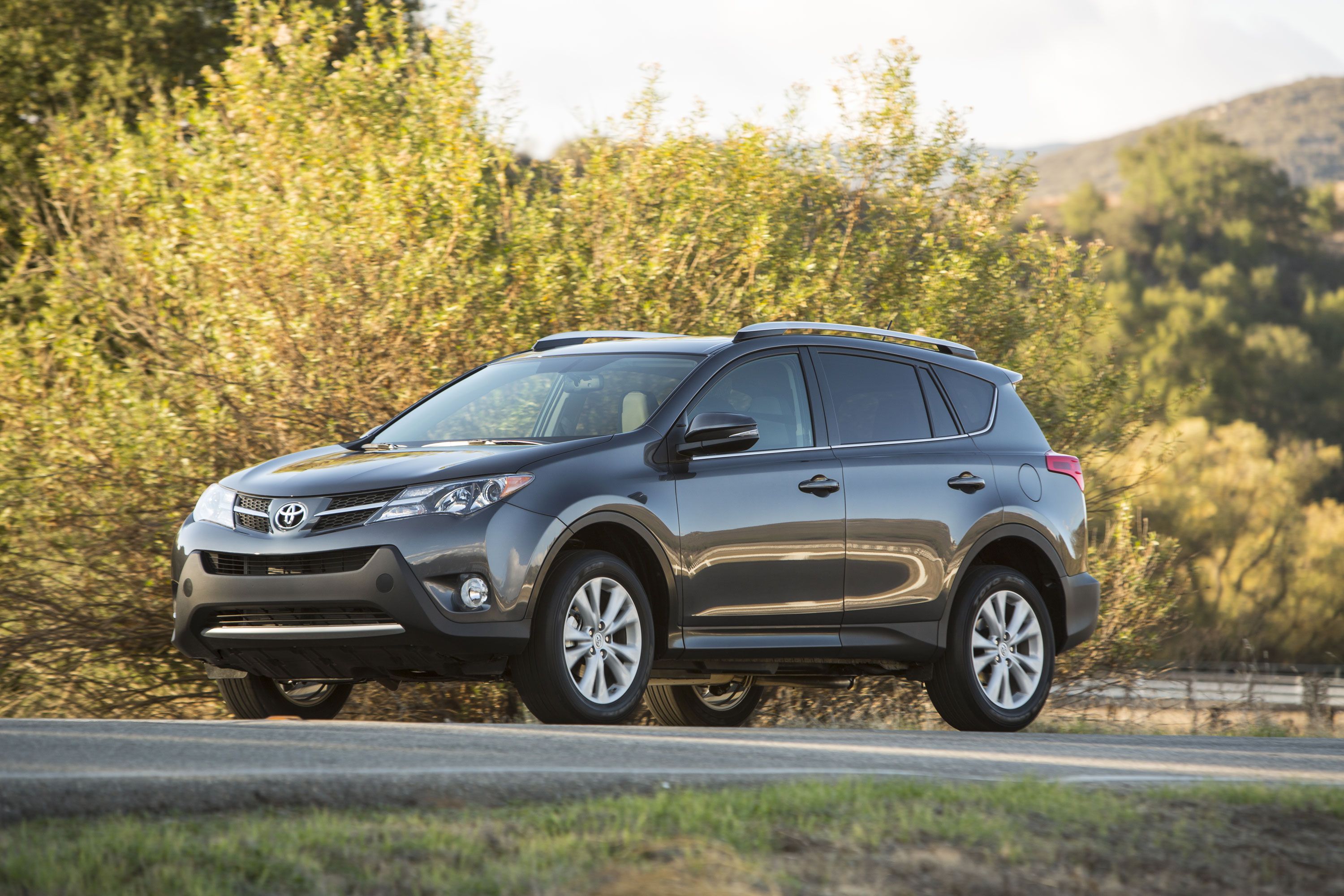
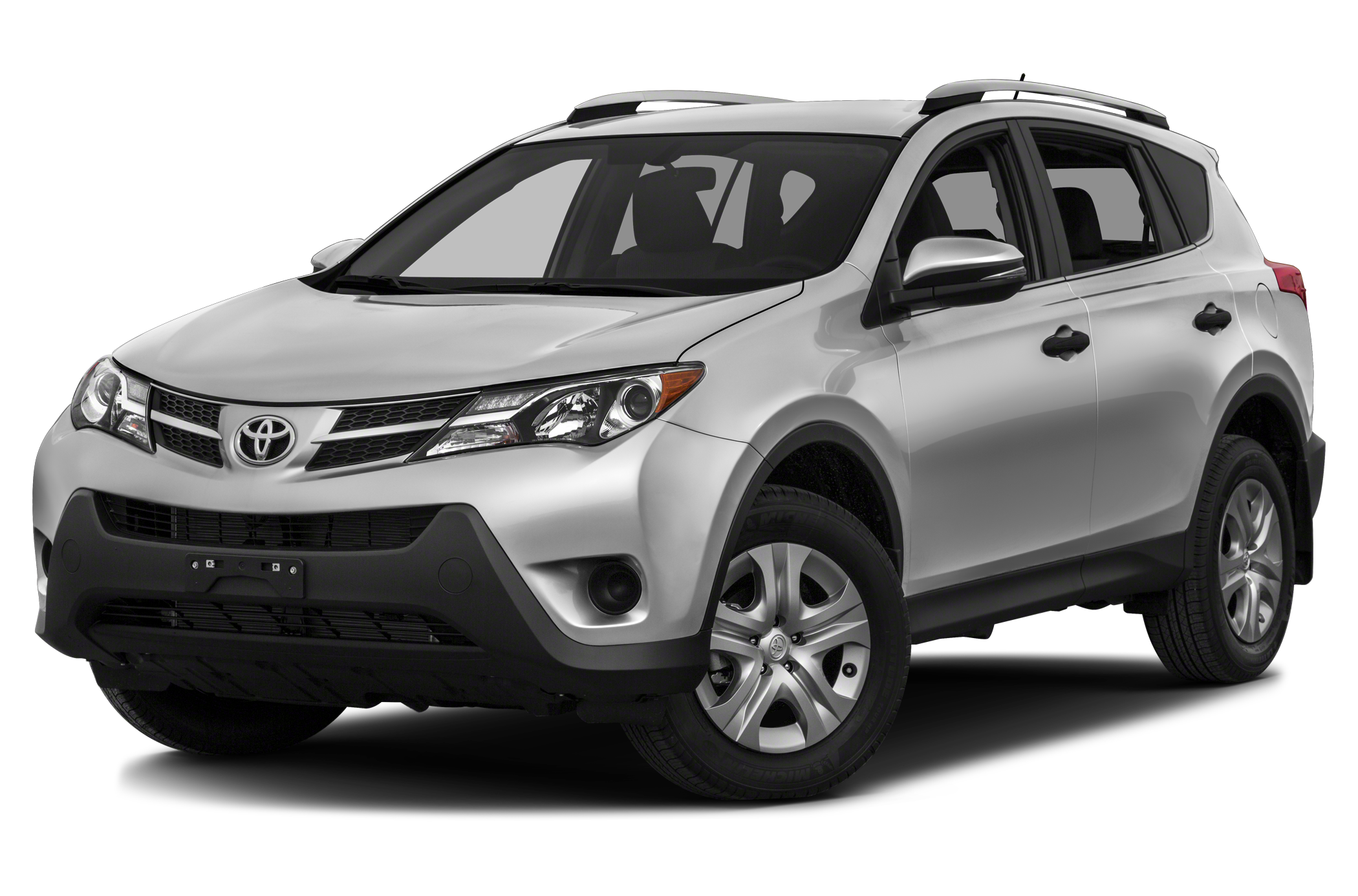
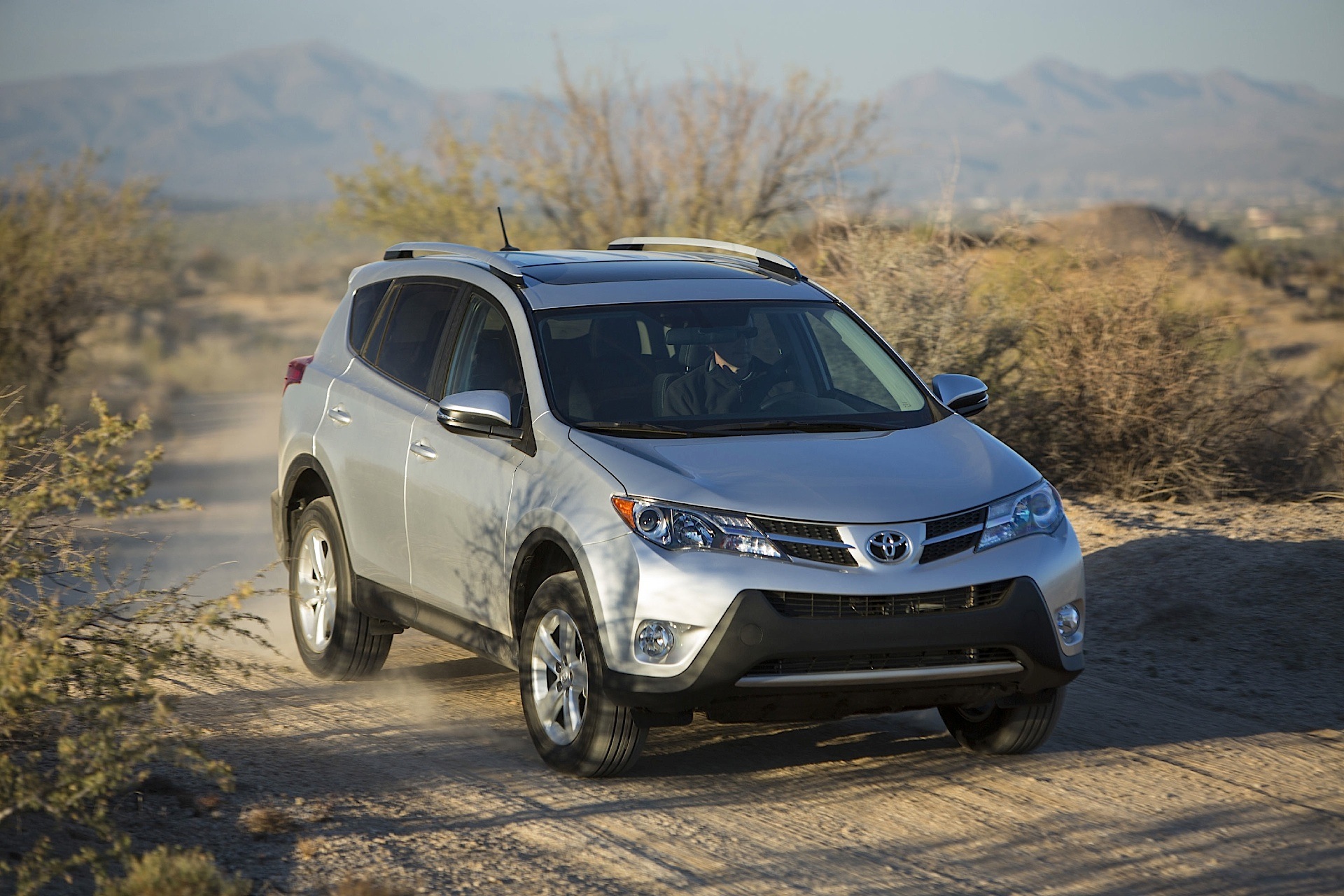
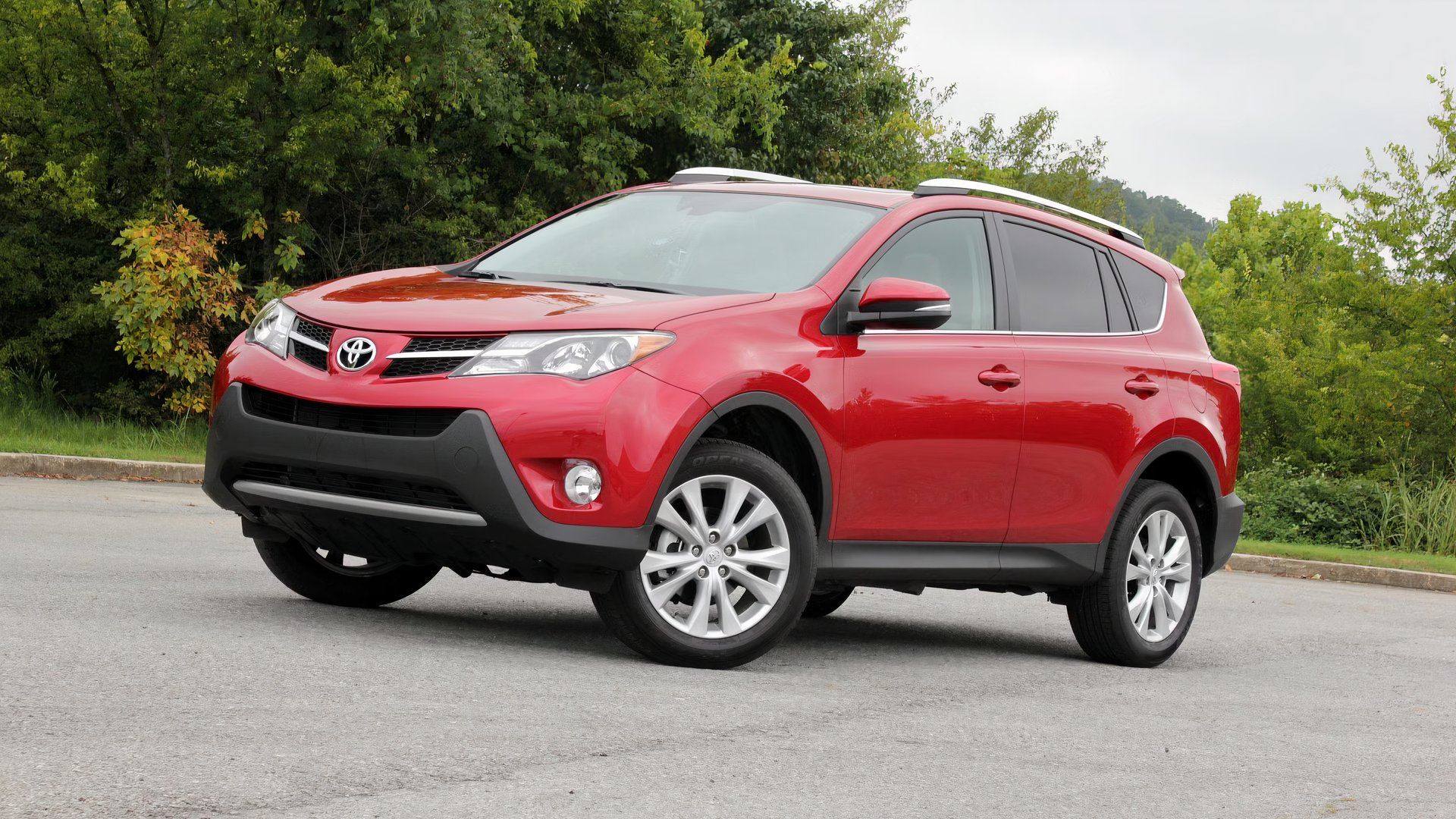
The 2013 Toyota RAV4 features a standard 2.5-liter four-cylinder engine producing 176 horsepower and 172 lb-ft of torque, paired exclusively with a six-speed automatic transmission. Available in front-wheel drive or dynamic torque-control all-wheel drive, it delivers up to 73.4 cubic feet of cargo capacity and an EPA-rated combined fuel economy of 25 to 26 mpg.
Architectural Shift: The Fourth-Generation Redesign
The 2013 model year marked the debut of the fourth-generation Toyota RAV4 (internal platform code XA40). This redesign realigned the vehicle's role in the compact crossover segment, departing from its predecessor's layout in several ways.
For the 2013 overhaul, Toyota eliminated the optional 3.5-liter V6 engine and the optional cramped third-row jump seats. Instead, the engineering team prioritized aerodynamic efficiency, cargo versatility, and platform rigidity.
Toyota also redesigned the rear tailgate. Previous generations featured a heavy, side-hinged rear door with a tailgate-mounted spare tire that swung open toward the curbside. The 2013 RAV4 replaced this with a traditional, top-hinged, roof-mounted liftgate, relocating the compact spare tire beneath the interior cargo floor. This change reduced rear-end weight, improved rearward visibility, and made loading cargo curbside easier.
The fourth-generation body shell used high-strength steel throughout the A- and B-pillars, rocker panels, and roof cross-members. This raised torsional stiffness, yielding sharper steering response and improved energy absorption during structural impacts.
Powertrain and Mechanical Specifications
Unlike its third-generation predecessor, which offered a choice between a four-cylinder and a potent V6, the 2013 RAV4 adopted a single-engine configuration across all trims.
- 2.5L 4-Cylinder Engine (Toyota 2AR-FE) - 176 hp / 172 lb-ft TQ
- 6-Speed Automatic Trans (U760E / U760F)
- Front-Wheel Drive (FWD) - Standard on LE, XLE, Ltd
- Dynamic Torque Control AWD - 100:0 to 50:50 Split
The 2.5-Liter 2AR-FE Inline-Four Engine
At the center of the 2013 RAV4 powertrain is the naturally aspirated 2AR-FE engine. This aluminum-block, aluminum-head 2.5-liter inline-four engine includes dual overhead camshafts (DOHC), 16 valves, and Toyota’s Dual Variable Valve Timing with intelligence (Dual VVT-i), which continuously adjusts valve timing on both the intake and exhaust camshafts.
- Displacement: 2,494 cc (2.5 liters)
- Bore and Stroke: 90.0 mm x 98.0 mm
- Compression Ratio: 10.4:1
- Horsepower Output: 176 hp @ 6,000 RPM
- Peak Torque: 172 lb-ft @ 4,100 RPM
- Valvetrain: Chain-driven DOHC, 4 valves per cylinder, roller rocker arms with hydraulic lash adjusters
- Fuel System: Sequential multi-port electronic fuel injection (EFI)
- Recommended Fuel: 87-octane regular unleaded
The long-stroke architecture (98.0 mm stroke versus a 90.0 mm bore) provides usable low-to-mid-range torque. This aids stop-and-go driving and highway merging, although it lacks the outright passing power of the discontinued 269-horsepower V6.
Transmission: The U760E Six-Speed Automatic
Replacing the four-speed automatic from the 2012 four-cylinder model, the 2013 RAV4 uses an electronically controlled six-speed automatic transmission (designated U760E for front-wheel-drive models and U760F for all-wheel-drive configurations).
The transmission features wider overall gear ratios than the outgoing four-speed unit. A low 3.30:1 first-gear ratio improves off-the-line acceleration, while a tall 0.728:1 sixth-gear overdrive drops engine cruising RPM at highway speeds to reduce cabin noise and improve fuel consumption.
The transmission also includes three driver-selectable modes:
- Normal Mode: Configured for balanced throttle response and standard shift maps.
- ECO Mode: Modulates throttle sensitivity, smooths acceleration inputs, and limits air-conditioning compressor usage to save fuel.
- Sport Mode: Sharpens throttle input, raises transmission shift points, initiates earlier downshifts during braking, and alters the electric power steering assist curve.
Drivetrain Options: FWD vs. Dynamic Torque Control AWD
The 2013 Toyota RAV4 came standard with front-wheel drive (FWD) across all trim lines, while Toyota’s Dynamic Torque Control All-Wheel Drive (AWD) was an optional upgrade on every model.
The Dynamic Torque Control system uses an electromagnetically controlled coupling mounted directly in front of the rear differential. It actively distributes torque between the front and rear axles based on vehicle speed, steering angle, throttle position, and yaw rate sensors:
- Auto Mode: Under normal highway cruising conditions, the system directs 100% of driving torque to the front wheels to minimize parasitic drag and save fuel. When slip is detected, it automatically routes up to 50% of available torque to the rear wheels.
- Sport Mode AWD Intervention: When the driver engages Sport Mode on an AWD model, the system proactively transfers 10% of torque to the rear wheels upon turn-in, increasing up to 50% under aggressive cornering to reduce front understeer.
- AWD Lock Mode: For low-speed situations in deep snow, sand, or mud, a dashboard-mounted AWD Lock switch forces a fixed 50:50 front-to-rear torque distribution. This lock automatically disengages once vehicle speed exceeds 25 mph, returning the drivetrain to Auto Mode to prevent driveline binding.
Exterior Dimensions, Chassis, and Suspension
The XA40 platform sits lower, wider, and slightly shorter overall than the third-generation RAV4, resulting in a more planted stance.
- Length: 179.9"
- Width: 72.6"
- Height: 67.1"
- Wheelbase: 104.7"
- Ground Clearance: 6.3"
Exterior Measurements
- Overall Length: 179.9 in (4,569 mm)
- Overall Width: 72.6 in (1,844 mm)
- Overall Height (without roof rails): 65.4 in (1,661 mm)
- Overall Height (with roof rails): 67.1 in (1,704 mm)
- Wheelbase: 104.7 in (2,659 mm)
- Front Track Width: 61.8 in (1,570 mm)
- Rear Track Width: 61.8 in (1,570 mm)
- Ground Clearance: 6.3 in (160 mm)
- Approach Angle: 29.0 degrees
- Departure Angle: 22.0 degrees
- Coefficient of Drag ($C_d$): 0.329
The 6.3-inch ground clearance is lower than some competing compact SUVs—such as the Subaru Forester (8.7 inches)—demonstrating the 2013 RAV4's focus on road stability and easy ingress rather than rough off-road terrain.
Suspension and Braking Hardware
The chassis rides on an independent front suspension with MacPherson struts, coil springs, and an integrated stabilizer bar. The rear features a double-wishbone independent suspension with coil springs, trailing arms, and a separate stabilizer bar.
Toyota calibrated the 2013 suspension with firmer damping rates than earlier models. While this stiffened the ride over road imperfections, it reduced body roll through turns.
Braking is managed by a standard four-wheel disc brake setup paired with an Anti-lock Braking System (ABS), Electronic Brakeforce Distribution (EBD), and Brake Assist (BA):
- Front Brakes: 11.65-inch ventilated front rotors with single-piston floating calipers.
- Rear Brakes: 11.06-inch solid rear rotors with single-piston calipers.
- Steering: Electric Power Steering (EPS) rack-and-pinion system yielding a turning circle diameter of 34.8 feet curb-to-curb.
Interior Dimensions, Seating, and Cargo Volume
Eliminating the third-row seating option allowed Toyota to optimize interior packaging. The 2013 model offers comfortable space for five passengers along with competitive cargo capacity in the compact crossover segment.
| Interior Metric | Measurement |
|---|---|
| Total Passenger Volume | 101.9 cu ft (LE/XLE) |
| Total Passenger Volume (Moonroof) | 100.7 cu ft (Limited) |
| Cargo Volume Behind Rear Seats | 38.4 cu ft |
| Cargo Volume Behind Front Seats | 73.4 cu ft |
| Front Headroom (without moonroof) | 39.8 in |
| Front Headroom (with moonroof) | 38.9 in |
| Rear Headroom | 38.9 in |
| Front Legroom | 42.6 in |
| Rear Legroom | 37.2 in |
| Front Shoulder Room | 56.7 in |
| Rear Shoulder Room | 55.4 in |
| Front Hip Room | 54.3 in |
| Rear Hip Room | 48.9 in |
Cargo Design and Practicality
The cargo floor is notably low, with a lift-over height of just 25.5 inches from the ground, simplifying the loading of heavy cargo.
The 60/40-split second-row seats fold flat with a single lever pull. Unlike setups where seat bottoms must be flipped forward first, the RAV4’s rear seat cushions drop slightly into the floor pan as the backrest folds down. This creates a flat load floor without a raised lip, allowing long items to slide straight through to the front seatbacks.
Fuel Economy and Towing Limits
The 2.5-liter engine and six-speed automatic transmission delivered improved fuel economy ratings compared to earlier four-cylinder models.
Official EPA Fuel Economy Ratings
- Front-Wheel Drive (FWD):
- City: 24 MPG
- Highway: 31 MPG
- Combined: 26 MPG
- All-Wheel Drive (AWD):
- City: 22 MPG
- Highway: 29 MPG
- Combined: 25 MPG
- Fuel Capacity: 15.9 US Gallons (60.2 Liters)
- Theoretical Cruising Range (AWD Combined): ~397 miles
- Theoretical Cruising Range (FWD Highway): ~492 miles
Towing Capacity and Payload
Towing capacity was reduced compared to the previous generation's 3,500-pound maximum rating on the V6 model:
- Maximum Towing Capacity: 1,500 lbs (680 kg) across all trims (FWD and AWD)
- Maximum Tongue Weight: 150 lbs (68 kg)
- Maximum Payload Capacity: 900 lbs (Limited AWD) to 1,020 lbs (LE FWD)
Because the 2013 RAV4 does not feature an auxiliary transmission fluid cooler, towing loads are limited to small utility trailers, light pop-up campers, or hitch-mounted bike racks.
Trim Level Breakdown: LE vs. XLE vs. Limited
The 2013 Toyota RAV4 was structured around three trim grades: LE, XLE, and Limited. Every trim could be configured in either FWD or AWD.
1. RAV4 LE (Base Grade)
The LE focused on essential utility and value, riding on 17-inch steel wheels with full wheel covers. Standard features included:
- Projector-beam halogen headlights
- Power side mirrors with integrated blind-spot mirrors
- 6.1-inch Entune touchscreen display audio system with AM/FM/CD/MP3
- Bluetooth hands-free phone and audio streaming
- Integrated backup camera with static trajectory guidelines
- Remote keyless entry system
- Manual air conditioning with cabin air filter
- Six-way manually adjustable driver seat and four-way manual passenger seat
2. RAV4 XLE (Mid-Tier Grade)
The XLE added comfort and exterior styling accents, including:
- 17-inch five-spoke alloy wheels
- Power tilt/slide moonroof with sliding sunshade
- Dual-zone automatic climate control with individual temperature settings
- Front fog lights integrated into the lower fascia
- Heated power side mirrors with integrated turn signal indicators
- Sport bolsters on fabric-trimmed seats
- Variable intermittent windshield wipers
- Cargo management net and tonneau cover
3. RAV4 Limited (Top-Tier Grade)
The Limited trim included luxury amenities, advanced driver assistance options, and distinct styling cues:
- 18-inch machine-finished alloy wheels with painted accents
- SofTex synthetic leather upholstery
- Eight-way power-adjustable driver seat with memory system and lumbar support
- Heated front bucket seats
- Smart Key system with push-button start
- Height-adjustable power liftgate with memory presets
- Auto-dimming rearview mirror with integrated compass
- Leather-wrapped steering wheel and gear shift knob
- Optional equipment: Entune Premium audio with navigation, JBL 11-speaker sound system, and Blind Spot Monitor (BSM) with Rear Cross-Traffic Alert (RCTA).
Detailed Specifications Comparison by Trim
The following table outlines the mechanical, dimensional, and standard equipment differences across the 2013 RAV4 lineup.
| Specification / Feature | RAV4 LE | RAV4 XLE | RAV4 Limited |
|---|---|---|---|
| Engine Code | 2.5L 2AR-FE I4 | 2.5L 2AR-FE I4 | 2.5L 2AR-FE I4 |
| Horsepower @ RPM | 176 @ 6,000 | 176 @ 6,000 | 176 @ 6,000 |
| Torque @ RPM | 172 @ 4,100 | 172 @ 4,100 | 172 @ 4,100 |
| Transmission | 6-speed auto | 6-speed auto | 6-speed auto |
| Curb Weight (FWD / AWD) | 3,435 / 3,550 lbs | 3,465 / 3,585 lbs | 3,495 / 3,610 lbs |
| Wheel Size & Type | 17-in Steel w/ covers | 17-in Alloy | 18-in Alloy |
| Tire Dimensions | P225/65R17 | P225/65R17 | P235/55R18 |
| Air Conditioning | Single-zone manual | Dual-zone automatic | Dual-zone automatic |
| Seating Surface | Standard Fabric | Premium Fabric | SofTex Synthetic Leather |
| Driver Seat Adjustment | 6-way manual | 6-way manual | 8-way power with memory |
| Heated Front Seats | Not Available | Not Available | Standard |
| Power Sunroof | Not Available | Standard | Standard |
| Power Liftgate | Not Available | Not Available | Standard (programmable) |
| Rear Camera | Standard | Standard | Standard |
| Blind Spot Monitor | Not Available | Not Available | Optional |
Safety Systems and Crash Test Ratings
Every 2013 RAV4 came equipped with the Toyota Star Safety System, an integrated suite of six active vehicle technologies:
- Enhanced Vehicle Stability Control (VSC)
- Traction Control (TRAC)
- Anti-lock Brake System (ABS)
- Electronic Brake-force Distribution (EBD)
- Brake Assist (BA)
- Smart Stop Technology (SST), which reduces engine power when both the brake and accelerator pedals are pressed simultaneously.
The cabin features eight standard airbags: advanced front airbags for driver and passenger, front-seat-mounted side airbags, a driver knee airbag, a front passenger seat-cushion airbag (designed to prevent submarining under the lap belt), and front/rear roll-sensing side-curtain airbags.
Independent Crash Testing Results
Safety ratings for the 2013 model reflect the structural design priorities of its era:
- National Highway Traffic Safety Administration (NHTSA): The 2013 RAV4 received a 4-Star Overall Safety Rating. It scored four stars in the frontal crash barrier test, five stars in the side barrier impact test, and four stars in the rollover resistance evaluation.
- Insurance Institute for Highway Safety (IIHS): The vehicle earned the top rating of "Good" in moderate overlap frontal, side-impact, roof strength, and head restraint/seat tests. However, it received a "Poor" rating in the challenging small overlap front driver-side test, which IIHS introduced shortly before this generation launched. Toyota later reinforced the front subframe and door frames in subsequent model years to improve this score.
Reliability and Common Mechanical Considerations
Long-term real-world data highlights common wear items and mechanical points to verify on the 2013 RAV4:
1. Torque Converter Shudder (Service Campaign)
A notable service issue on early fourth-generation RAV4s (2013–2015) is a low-speed driveline shudder, typically occurring between 20 and 50 mph under light throttle acceleration.
This condition was caused by software calibration issues and internal clutch wear within the torque converter of the U760E/F transmission.
Toyota issued a Technical Service Bulletin (TSB) and an extended warranty program (Customer Support Program ZE5) to address the issue by reprogramming the Engine Control Module (ECM) and, if necessary, replacing the torque converter.
When shopping the used market, test-drive at low throttle between 25 and 40 mph to verify smooth shifts without vibration.
2. Suspension Firmness
Compared to the softer third-generation model, the 2013 suspension calibration is distinctly firm. Some drivers note that the rear suspension can feel stiff over expansion joints and broken pavement, especially on Limited trims equipped with lower-profile 18-inch tires (P235/55R18).
Tire selection plays a major role here; installing touring tires with compliant sidewalls helps soften the ride.
3. All-Wheel-Drive Electromagnetic Coupler
On high-mileage AWD models, the rear differential dynamic torque coupling can develop a faint humming or groaning bearing noise during low-speed, sharp turning maneuvers.
Regularly changing the differential fluid every 30,000 to 60,000 miles helps protect the rear coupling assembly.
Frequently Asked Questions
Does the 2013 Toyota RAV4 have a timing belt or a timing chain?
The 2013 RAV4 uses a maintenance-free timing chain on its 2.5-liter 2AR-FE engine. Unlike rubber timing belts that require replacement every 60,000 to 100,000 miles, this timing chain is designed to last the life of the engine, provided oil changes are performed at recommended intervals.
Can the 2013 Toyota RAV4 run on E85 flex fuel?
No. The 2013 RAV4 is calibrated exclusively for regular unleaded gasoline with an octane rating of 87 or higher, containing no more than 15% ethanol (E10 or E15). Using E85 fuel can damage the fuel pump, fuel injectors, and fuel lines.
Did the 2013 RAV4 offer a V6 engine?
No. Toyota discontinued the 3.5-liter 2GR-FE V6 after the 2012 model year. All 2013 RAV4 models came equipped with the 2.5-liter four-cylinder engine to optimize fleet fuel efficiency and simplify the chassis layout.
Why is the small overlap crash rating "Poor" on the 2013 RAV4?
The IIHS introduced its rigorous small overlap front crash test in late 2012, after engineering for the 2013 RAV4 had already been finalized. The impact energy concentrated outside the main front frame rails bypassed the front crash structure. Toyota re-engineered the front subframe and structural door ring assemblies starting with the 2015 model year to earn higher safety ratings.
How much weight can a 2013 Toyota RAV4 tow?
The 2013 RAV4 has a maximum tow rating of 1,500 pounds with a maximum tongue weight of 150 pounds, across all trims and drivetrains. It is not rated for heavy towing and lacks an auxiliary transmission cooler.
Does the 2013 RAV4 come with Apple CarPlay or Android Auto?
No. The 2013 RAV4 used early versions of Toyota's proprietary Entune infotainment system. Neither Apple CarPlay nor Android Auto were offered by Toyota in 2013. Adding smartphone integration requires an aftermarket double-DIN head unit and installation harness.
Verification and Next Steps
For used-vehicle shoppers and current owners evaluating a 2013 Toyota RAV4, focus on these key inspection points:
- Verify Torque Converter Service Records: Check the vehicle history through the National Highway Traffic Safety Administration (NHTSA) Recalls Portal or a Toyota dealership using the 17-digit VIN to confirm whether warranty bulletin ZE5 (torque converter software update or replacement) was completed.
- Inspect Rear Differential and Transfer Case Fluid: If buying an AWD model with more than 100,000 miles, inspect the condition of the fluids in the transfer case and rear differential. Dark, burnt fluid or metallic residue indicates overdue drivetrain maintenance.
- Check the Liftgate Struts: On Limited trims with the power liftgate, check for smooth operation through both opening and closing cycles. Worn liftgate struts can strain the electric drive motor, leading to intermittent stops or failed latching.