The 1994 Italian World Cup team, colloquially known as Gli Azzurri, remains one of the most polarizing and fascinating squads in international football history. Led by the visionary but demanding Arrigo Sacchi, the team overcame a disastrous start and internal tactical friction to reach the final of the FIFA World Cup in the United States, eventually falling to Brazil in a historic penalty shootout. Their journey was defined by the individual brilliance of Roberto Baggio and a defensive masterclass anchored by Franco Baresi and Paolo Maldini.
Looking back from 2026, the 1994 tournament represents a pivotal era for Italian football—a bridge between the traditional "Catenaccio" defensive style and the modern, pressing game that Sacchi pioneered. While the image of Roberto Baggio’s missed penalty at the Rose Bowl remains the tournament's most enduring memory, the 1994 team’s path to that moment was a saga of tactical evolution, physical endurance under the American sun, and sheer psychological grit.
The Architect: Arrigo Sacchi and the Tactical Shift
By 1994, Arrigo Sacchi had already revolutionized club football with his legendary AC Milan side. When he took over the national team, he sought to implement the same high-pressing, zonal-marking 4-4-2 system that had brought him European dominance. This was a radical departure from the man-marking systems traditional to the Italian game.
Sacchi’s selection process was notoriously rigorous and often controversial. He prioritized "functional" players who could adapt to his system over established stars who preferred more freedom. This led to high-profile omissions and friction, most notably with Gianluca Vialli, who was left out of the squad despite his talent. Sacchi’s insistence on collective movement and tactical discipline meant that every player, from the forwards to the defenders, had to work in a cohesive unit.
However, the transition to this system at the international level was far from smooth. International teams have less time to train together than club sides, making Sacchi’s complex tactical demands difficult to implement. Throughout the tournament, the team often looked disjointed, only finding its rhythm when individual brilliance—specifically from Roberto Baggio—intervened to save the tactical structure.
The 22-Man Squad: A Blend of Milanese Steel and Creative Spark
The 1994 roster was heavily influenced by the dominant AC Milan and Parma sides of the early 1990s. The defense was largely a Milanese affair, providing a level of chemistry that was essential for Sacchi’s zonal system to function under pressure.
The Defensive Foundation
The backline featured the legendary Franco Baresi, who served as the captain and tactical on-field leader. Alongside him were Paolo Maldini, Alessandro Costacurta, and Mauro Tassotti. This defensive unit is often cited as one of the greatest in football history. When Baresi suffered a meniscus injury in the second group game, it was expected his tournament was over. His return for the final, just 25 days later, remains a feat of medical and professional resilience.
The Midfield Engine
The midfield was built around Demetrio Albertini, a deep-lying playmaker with exceptional vision and passing range. He was often paired with Dino Baggio (no relation to Roberto), a tireless box-to-box midfielder who provided crucial goals during the tournament. On the wings, Sacchi utilized players like Roberto Donadoni and Nicola Berti, who were required to track back and support the full-backs constantly.
The Attack: The Baggio Factor
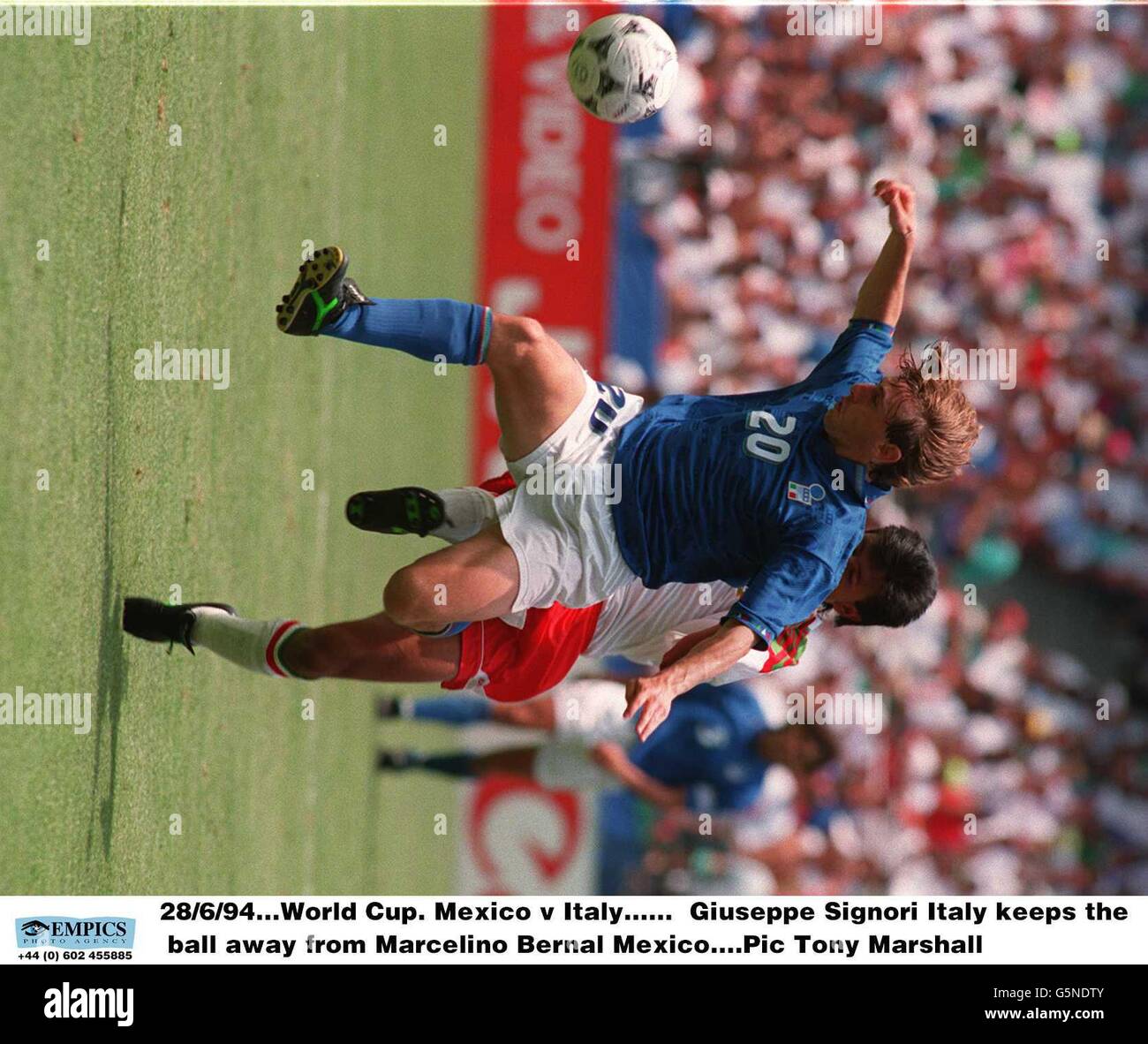
While Sacchi preached the collective, the 1994 team was undeniably reliant on Roberto Baggio. Known as "Il Divin Codino" (The Divine Ponytail), Baggio arrived at the tournament as the reigning Ballon d'Or winner. Supporting him were forwards like Giuseppe Signori, Daniele Massaro, and Pierluigi Casiraghi. Signori, in particular, found himself in a difficult position, often being asked by Sacchi to play as a left-sided midfielder to accommodate the defensive structure, a role the prolific striker famously disliked.
| Position | Player | Club (in 1994) | Notable Contribution |
|---|---|---|---|
| GK | Gianluca Pagliuca | Sampdoria | First goalkeeper sent off in World Cup history. |
| DF | Franco Baresi | AC Milan | Captain; recovered from surgery to play the final. |
| DF | Paolo Maldini | AC Milan | Played both LB and CB with world-class efficiency. |
| DF | Alessandro Costacurta | AC Milan | Key defender; missed the final due to suspension. |
| MF | Demetrio Albertini | AC Milan | Tactical heartbeat and primary playmaker. |
| MF | Dino Baggio | Juventus | Scored vital goals vs Norway and Spain. |
| MF | Roberto Donadoni | AC Milan | Provided width and veteran experience. |
| FW | Roberto Baggio | Juventus | Scored 5 goals in the knockout stages. |
| FW | Giuseppe Signori | Lazio | Sacrifice-heavy role; assisted Baggio vs Spain. |
| FW | Daniele Massaro | AC Milan | Lead striker; scored against Mexico. |
The Group Stage: A Near-Catastrophe in the "Group of Death"
Italy was drawn into Group E alongside the Republic of Ireland, Norway, and Mexico. This group became legendary for its parity; by the end of the three games, every team had four points and a neutral goal difference. Italy’s progression was anything but certain.
The opening match against Ireland at Giants Stadium was a shock to the system. Italy lost 1-0 to a Ray Houghton lob, looking sluggish in the oppressive East Coast heat. Sacchi’s pressing game seemed to falter against the physical, direct play of the Irish.
The second match against Norway was a turning point of high drama. Early in the game, goalkeeper Gianluca Pagliuca was sent off for a professional foul outside the area—the first time a goalkeeper had been dismissed in World Cup history. Sacchi made a tactical decision that stunned the world: he substituted Roberto Baggio to bring on backup keeper Luca Marchegiani. Baggio was seen mouthing "He’s crazy" as he walked off. Despite being down to ten men, Italy won 1-0 thanks to a towering header from Dino Baggio.
A 1-1 draw with Mexico in the final group game was just enough to see Italy through. They qualified for the knockout rounds as one of the best third-placed teams, a precarious start for a team with title ambitions.
The Knockout Rounds: The Redemption of Roberto Baggio
The knockout phase is where the legend of the 1994 Italian team was truly forged. It was a series of narrow escapes and late victories driven almost entirely by Roberto Baggio’s resurgence.
Round of 16 vs. Nigeria
Nigeria was the reigning African champion and looked set to knock Italy out. They led 1-0 until the 88th minute. Italy was down to ten men again after Gianfranco Zola was controversially sent off. Just as the clock was running out, Roberto Baggio clinicaly placed a shot into the bottom corner to force extra time. In the additional period, Baggio converted a penalty to send Italy through. This match is often cited as the turning point for Baggio’s confidence and Italy’s momentum.
Quarter-final vs. Spain
This match was a brutal, physical encounter. It is famously remembered for Mauro Tassotti’s elbow on Luis Enrique, which went unpunished during the game but resulted in an eight-match ban later—effectively ending Tassotti's international career. Dino Baggio opened the scoring with a long-range strike, but Spain equalized. In the 88th minute, Signori played a brilliant ball to Roberto Baggio, who rounded the keeper and scored from a tight angle to secure a 2-1 win.
Semi-final vs. Bulgaria
Bulgaria, led by Hristo Stoichkov, had been the tournament’s dark horse after knocking out Germany. However, Italy produced their best performance of the tournament in the first half. Roberto Baggio scored two magnificent goals in a five-minute span—one a solo run and the other a clinical finish from an Albertini chip. Stoichkov pulled one back via a penalty, but Italy held on to reach their first final since 1982.
The Rose Bowl Final: Heat, Heartbreak, and Penalties
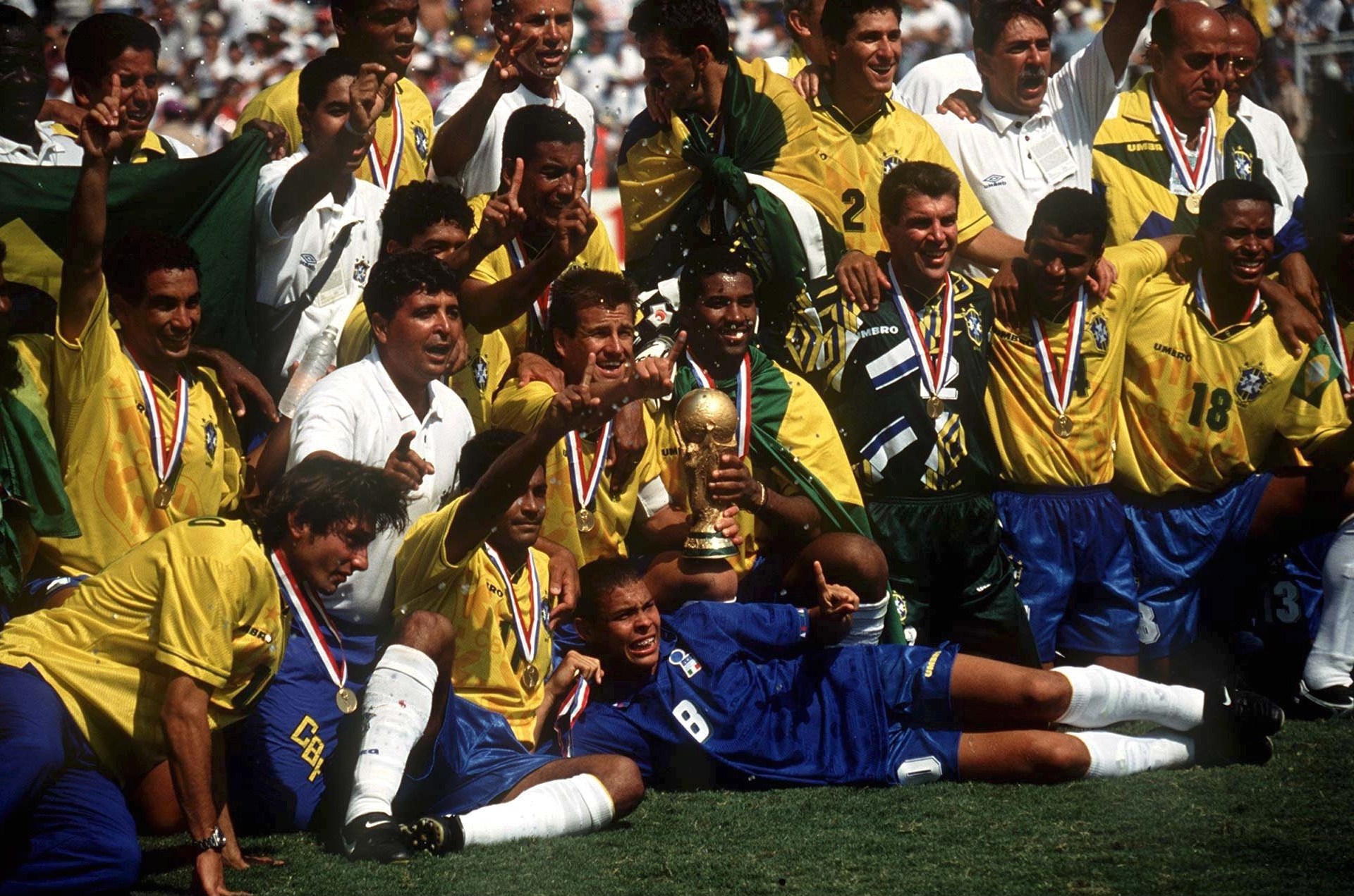
The final against Brazil on July 17, 1994, was the first in World Cup history to end scoreless after 120 minutes. Played in the searing midday heat of Pasadena, California, the match was a tactical stalemate.
The headline story was the return of Franco Baresi. Having undergone knee surgery less than a month prior, Baresi delivered a performance for the ages, completely neutralizing the Brazilian strike duo of Romário and Bebeto. Paolo Maldini was equally impressive, and Gianluca Pagliuca made several crucial saves to keep Italy in the game.
However, the physical toll on Italy was immense. Roberto Baggio was playing with a heavily bandaged hamstring, and the team was exhausted from three consecutive knockout matches that had gone to the wire. When the match went to penalties, the psychological pressure mounted.
Baresi, the captain, stepped up first and missed. After Pagliuca saved a Brazilian effort and Albertini and Evani scored theirs, Daniele Massaro saw his shot saved. Finally, Roberto Baggio stepped up to the spot. He had to score to keep Italy’s hopes alive. To the shock of millions, the man who had carried the team to the final sent the ball sailing over the crossbar. Brazil were champions, and Baggio was left standing alone in the box, an image that remains one of the most poignant in sports history.
The Legacy of the 1994 Squad
The 1994 Italian World Cup team is often remembered more for the "what if" than the reality of their achievement. Despite the heartbreak in the final, the team’s legacy is profound.
- Tactical Influence: Sacchi’s attempt to modernize the Italian game paved the way for future coaches. While his rigid system was criticized, it broke the mold of defensive passivity and introduced a more proactive defensive style that influenced the 2006 World Cup-winning side.
- Individual Greatness: The tournament cemented Paolo Maldini’s status as the world’s premier defender and Roberto Baggio as one of the greatest "Number 10s" to ever play the game.
- Resilience: Few teams have survived the "Group of Death," a goalkeeper red card, and a captain’s mid-tournament surgery to reach a final. The 1994 squad demonstrated a psychological fortitude that has become a hallmark of Italian national teams.
- Cultural Impact: This was the first World Cup to truly capture the American market, and the Italian team, with its dramatic flair and superstar players, played a massive role in that success.
Frequently Asked Questions
Why did Roberto Baggio miss the penalty in the 1994 final?
Baggio was playing the final with a significant hamstring injury sustained in the semi-final against Bulgaria. While he was a prolific penalty taker, the physical exhaustion of 120 minutes in 100-degree heat, combined with his injury and the immense pressure of the moment, contributed to the miss. It is also noted that earlier Italian misses by Baresi and Massaro had already put the team in a precarious position.
Was Arrigo Sacchi’s tactical system considered a success?
It is a subject of debate. On one hand, Sacchi took the team to a World Cup final, which is a major achievement. On the other hand, many critics argued that his rigid 4-4-2 system stifled the creativity of players like Signori and Zola, and that the team relied too heavily on individual moments from Baggio rather than the collective system Sacchi preached.
How did Franco Baresi return from surgery so quickly?
Baresi underwent arthroscopic surgery on his meniscus immediately after the second group game against Norway. His recovery in just 25 days was considered a medical miracle in 1994. It was a combination of his immense professional discipline, elite-level physiotherapy, and the high stakes of a World Cup final that drove his return.
Why was Gianluca Vialli not part of the 1994 squad?
Gianluca Vialli, one of Italy's best strikers at the time, had a fractured relationship with Arrigo Sacchi. Sacchi required total adherence to his tactical instructions, and Vialli's outspoken nature and preferred style of play led to a falling out. Sacchi chose to leave him out in favor of players he felt were better "fits" for his system.
What happened to the 1994 players after the tournament?
Many members of the 1994 squad transitioned into successful coaching and management careers. Antonio Conte, Roberto Donadoni, and Gianfranco Zola all went on to manage at the highest levels of European football. Paolo Maldini eventually became a legendary sporting director at AC Milan, while Roberto Baggio has remained a beloved ambassador for the sport.
Moving Forward: Lessons from 1994
For students of the game and fans alike, the 1994 Italian World Cup team serves as a masterclass in overcoming adversity. Their story teaches that even the most well-laid tactical plans often require the spark of individual genius to succeed. As we observe the tactical landscape of 2026, the fingerprints of Sacchi's 1994 experiment—the high line, the coordinated press, and the importance of versatile defenders—are visible in nearly every top-tier international side. To truly understand the evolution of the Azzurri, one must first understand the sweat, heat, and heartbreak of USA '94.
For further historical data on Italy's international performance, fans can consult the official FIGC (Italian Football Federation) archives or the FIFA World Cup historical database.