The 1976 Ford F-350 represents a pivotal moment in the transition between the utilitarian, rugged roots of mid-century work trucks and the more comfort-oriented, performance-heavy vehicles that defined the late 1970s. As a heavy-duty member of the sixth generation of Ford’s F-Series (1973–1979), the 1976 model sits at the intersection of mechanical simplicity and the increasing demand for versatility. This era solidified the F-Series as the "Built Ford Tough" standard, balancing chassis rigidity with a burgeoning interest in recreational towing and personal utility.
The Sixth Generation Context: Setting the Stage
To understand the 1976 F-350, one must look at the inception of the sixth generation in 1973. This generation was designed to address growing concerns regarding passenger safety, rust resistance, and overall driver comfort. Ford engineers prioritized the use of galvanized steel for body panels and introduced "super cooling" systems and improved electrical infrastructure.
By 1976, the F-350 had fully established itself as the "one-ton" workhorse. Unlike the F-100 or F-250, the F-350 was engineered specifically for heavy-duty commercial applications, including stake-body configurations, chassis cabs for custom utility beds, and towing setups that required higher Gross Vehicle Weight Ratings (GVWR). The 1976 model year was notable for its refined front-end aesthetics, which leaned into the "high-boy" and "low-boy" chassis variations that defined the heavy-duty segment of that era.
Mechanical Specifications and Powertrain Evolution
The 1976 F-350 featured a diverse range of powertrains, reflecting Ford’s adaptation to changing emissions standards and the need for high torque. The primary engines found in these trucks included the 360 cubic-inch (5.9L) FE V8 as the standard workhorse, with the massive 460 cubic-inch (7.5L) V8 available for those requiring maximum hauling power.
Engine Dynamics
- 360 FE V8: Known for its longevity, this engine was the go-to for mid-range hauling. While not particularly fuel-efficient, its low-end torque made it ideal for the 1976 F-350’s intended purpose.
- 460 V8: The heavy lifter. Introduced to the light-duty truck line in 1975, it became a staple for the F-350 by 1976. It provided the necessary grunt for large trailers and campers, which were gaining popularity in the mid-1970s.
- Inline-Six (300 CID): Often overlooked in the heavy-duty sector, the 300-cubic-inch straight-six remained a respected option for fleet operators who prioritized reliability and fuel economy over raw acceleration.
Transmission and Drivetrain
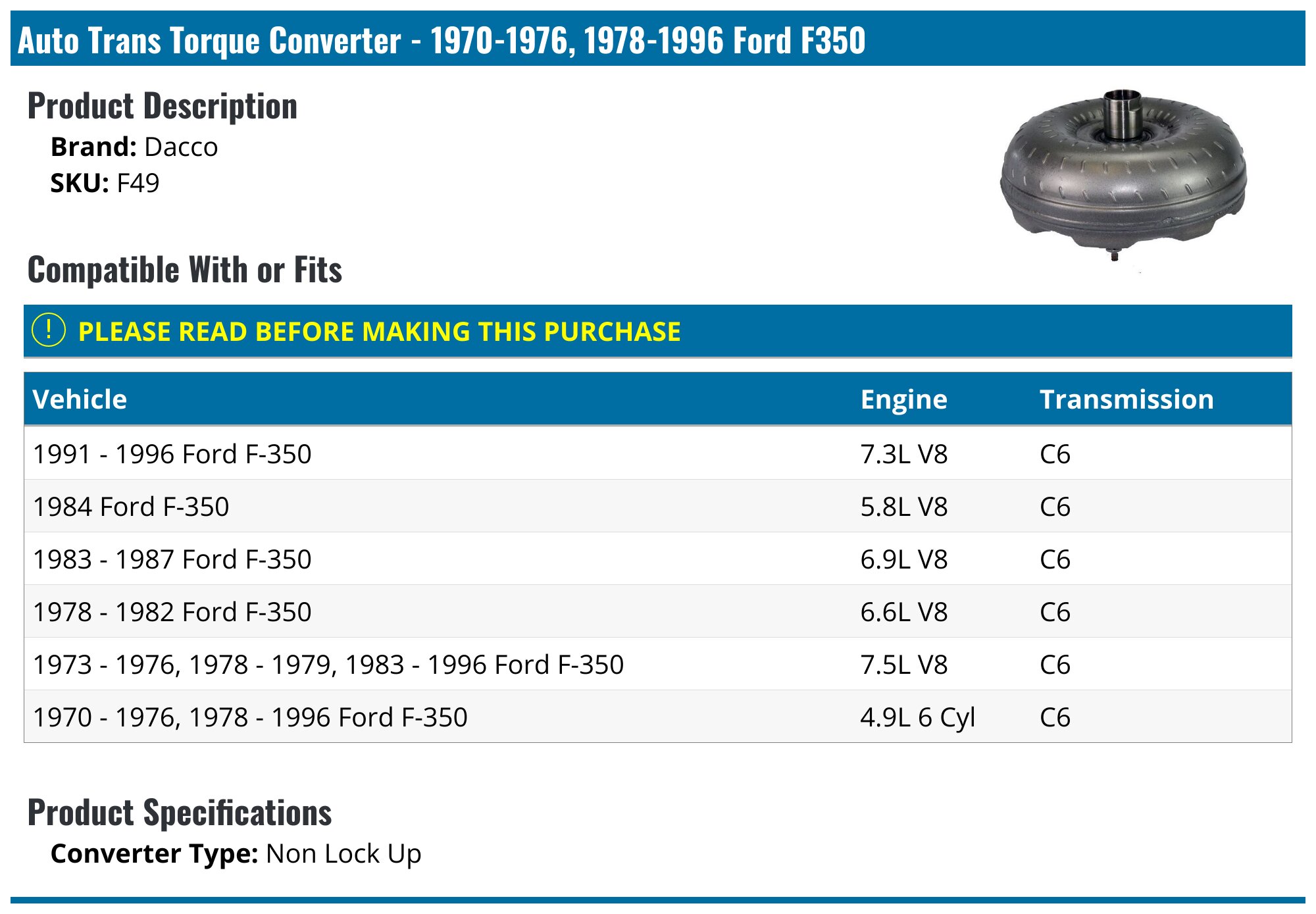
Transmission options were equally robust, featuring the C6 three-speed automatic or the New Process 435 four-speed manual. The latter, characterized by its "granny" first gear, was essential for starting heavy loads on inclines without taxing the clutch excessively. The 1976 model also solidified the transition toward more reliable transfer cases in 4x4 configurations, moving away from some of the complex linkages of earlier years.
Chassis Design and GVWR Capabilities
The core identity of the 1976 F-350 was its chassis rigidity. Ford utilized a ladder-frame construction that provided exceptional resistance to twisting, a critical requirement for trucks carrying top-heavy payloads or towing significant weight.
The 1976 model year was also a period of transition in suspension tuning. Ford’s Twin I-Beam front suspension, which had been introduced a decade prior, was further refined by 1976. This system was designed to provide a smoother ride than traditional solid axles while maintaining the durability required for commercial tasks. For the F-350, this meant a complex interplay between leaf spring rates and dampened axle oscillation, ensuring that the truck remained stable under load.
Technical Comparison: 1976 F-Series Heavy-Duty Spectrum
| Feature | F-250 (3/4 Ton) | F-350 (1 Ton) | Primary Difference |
|---|---|---|---|
| Max Payload | ~3,500 lbs | ~5,000+ lbs | F-350 uses thicker frame rails |
| Braking System | Standard Hydraulic | Vacuum Boosted/Large Drums | F-350 required for heavy haul |
| Rear Axle | Dana 60 | Dana 70 (or 60 HD) | Increased weight capacity |
| Wheel Configuration | Single Rear Wheel (SRW) | SRW or Dually (DRW) | F-350 allowed for dual rears |
Interior Comfort and Driver Ergonomics
In 1976, "luxury" in a truck was beginning to emerge, though it remained distinct from modern expectations. The F-350 was primarily a tool, but Ford began introducing options that made the cabin bearable for long hauls. These included improved sound deadening, more resilient bench seat materials, and an optional AM/FM radio, which was becoming standard for the era’s "Ranger" and "XLT" trim levels.
The dashboard layout in the 1976 F-350 was functional and symmetrical, prioritizing visibility of the oil pressure, temperature, and alternator gauges—features essential for the commercial owner-operator who monitored engine health constantly.
Maintenance and Preservation: The 2026 Perspective
As we move through 2026, the 1976 F-350 is no longer just a work vehicle; it is a vintage asset. Owners today face unique challenges, primarily regarding the availability of specific trim-related parts and the maintenance of older fuel delivery systems.
Critical Maintenance Focus Areas:
- Fuel System: The 1976 models used mechanical fuel pumps and older carbureted systems. In 2026, finding ethanol-free fuel is a priority to prevent deterioration of vintage rubber seals and diaphragms.
- Rust Mitigation: The sixth-generation F-Series is notorious for cabin floor, rocker panel, and bed-side rust. Preventive maintenance involves cavity waxing and keeping the frame free of debris that holds moisture.
- Electrical Gremlins: The wiring harnesses from 1976 are reaching their functional limit. Owners looking for reliability in 2026 often choose to perform a "re-wire" using modern fuse blocks to prevent parasitic draw and lighting failures.
- Braking Components: While brake shoes and master cylinders are widely available, the proportioning valves specific to the F-350 can be difficult to source. Proper fluid flushing is essential to prevent sludge build-up in these rare components.
Practical Usage in the Modern Era
Using a 1976 F-350 in 2026 requires an understanding of its limitations. While it is fully capable of towing and hauling, it lacks modern driver-assistance features, such as Anti-lock Braking Systems (ABS), cruise control stability, and advanced traction control.
When operating this vehicle today, consider these guidelines:
- Braking Distance: Plan for twice the stopping distance of a modern truck. The drum-heavy braking systems of 1976 require more pedal effort and lack the refinement of modern disc/disc setups.
- Steering Play: Older steering boxes often develop "slop." Even if the truck has been restored, the steering ratio is significantly slower than modern vehicles, requiring proactive steering inputs.
- Weight Distribution: Due to the F-350’s firm suspension, the truck will ride significantly better when loaded than when empty. For daily driving, some owners add a small amount of weight to the bed to improve tire traction and ride quality.
Frequently Asked Questions
What makes the 1976 F-350 different from the 1975 model?
The 1976 model year introduced minor cosmetic refinements to the grille and trim badging. Mechanically, it benefited from the gradual optimization of the 460 V8 cooling systems, making it slightly more reliable in high-heat towing environments compared to the 1975 debut.
Is the 1976 F-350 considered a "Highboy"?
Generally, "Highboy" refers to the F-250 4x4 models from 1973–1977. However, the F-350's frame architecture shares similar heavy-duty sensibilities. While the F-350 was not traditionally classified as a "Highboy" in the same nomenclature, its stance and suspension design are functionally similar in terms of durability and clearance.
Can I run modern unleaded fuel in a 1976 engine?
Yes, but with caution. Most engines from 1976 were designed for leaded gasoline. If the engine has not had a valve seat replacement (a common machine shop upgrade), you should use a lead additive to prevent valve seat recession. Additionally, minimize ethanol blends to protect the carburetor and fuel lines.
What is the most sought-after configuration for collectors?
The "SuperCab" configuration, which gained traction during this period, combined with the "XLT" trim and the 460 V8 engine, is the most highly valued by collectors today. These combinations represent the peak of the sixth-generation luxury and capability.
Are replacement body panels easy to find?
Yes. Because the 1973–1979 F-Series is a favorite among enthusiasts, companies specializing in reproduction steel—including fenders, bedsides, and floor pans—have ensured consistent availability of parts in 2026.
Next Actions for Owners
If you own or are looking to purchase a 1976 F-350, your first step should be a comprehensive frame inspection. Given the truck’s age, focus on the area above the rear axle and the cab mounts. Following this, prioritize upgrading the cooling system if you intend to use the truck for towing in 2026 traffic conditions. Investing in a high-quality electronic ignition conversion is also highly recommended to replace the finicky points-based distributors, which will drastically improve cold-start reliability and overall fuel combustion.