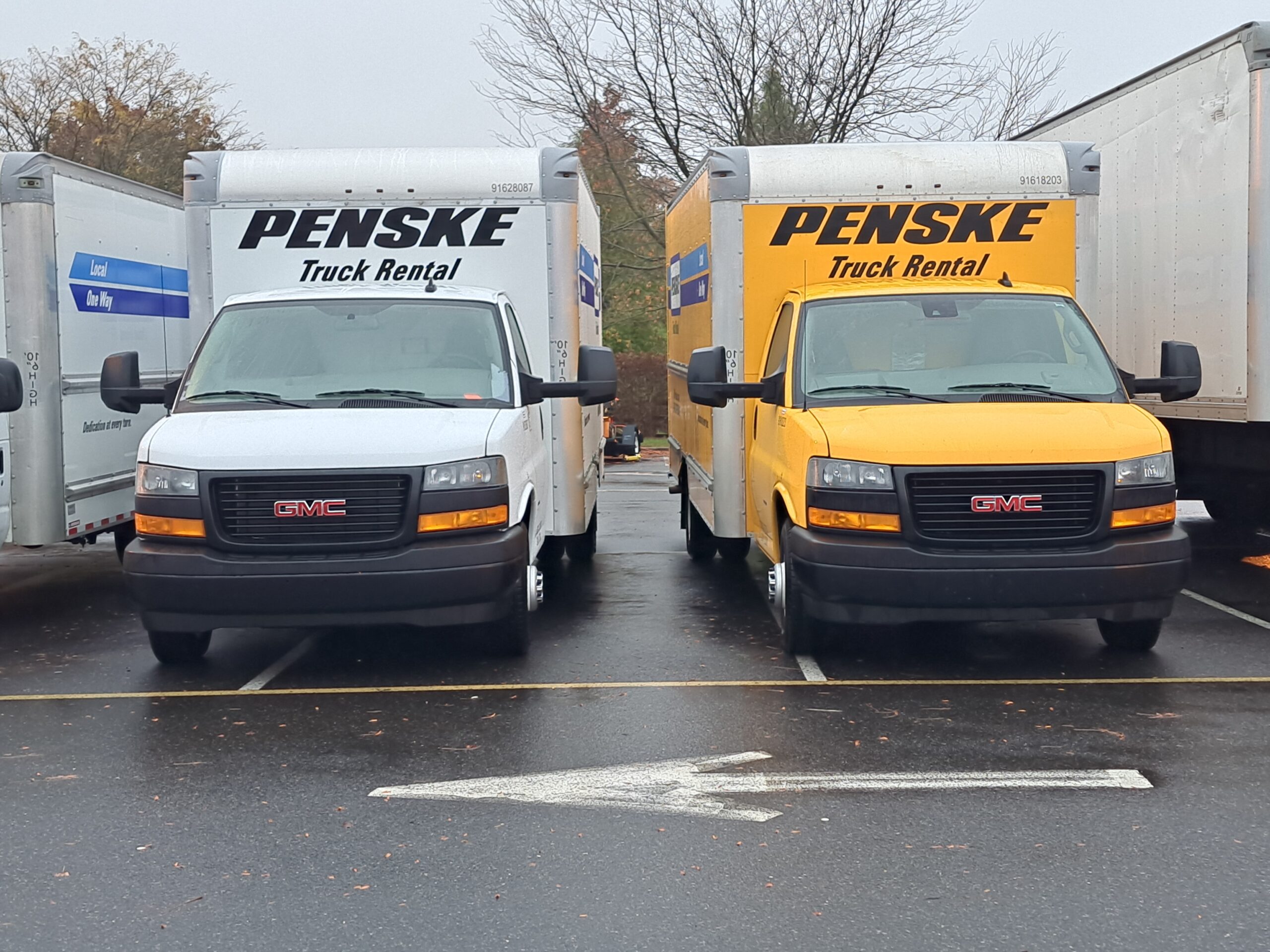
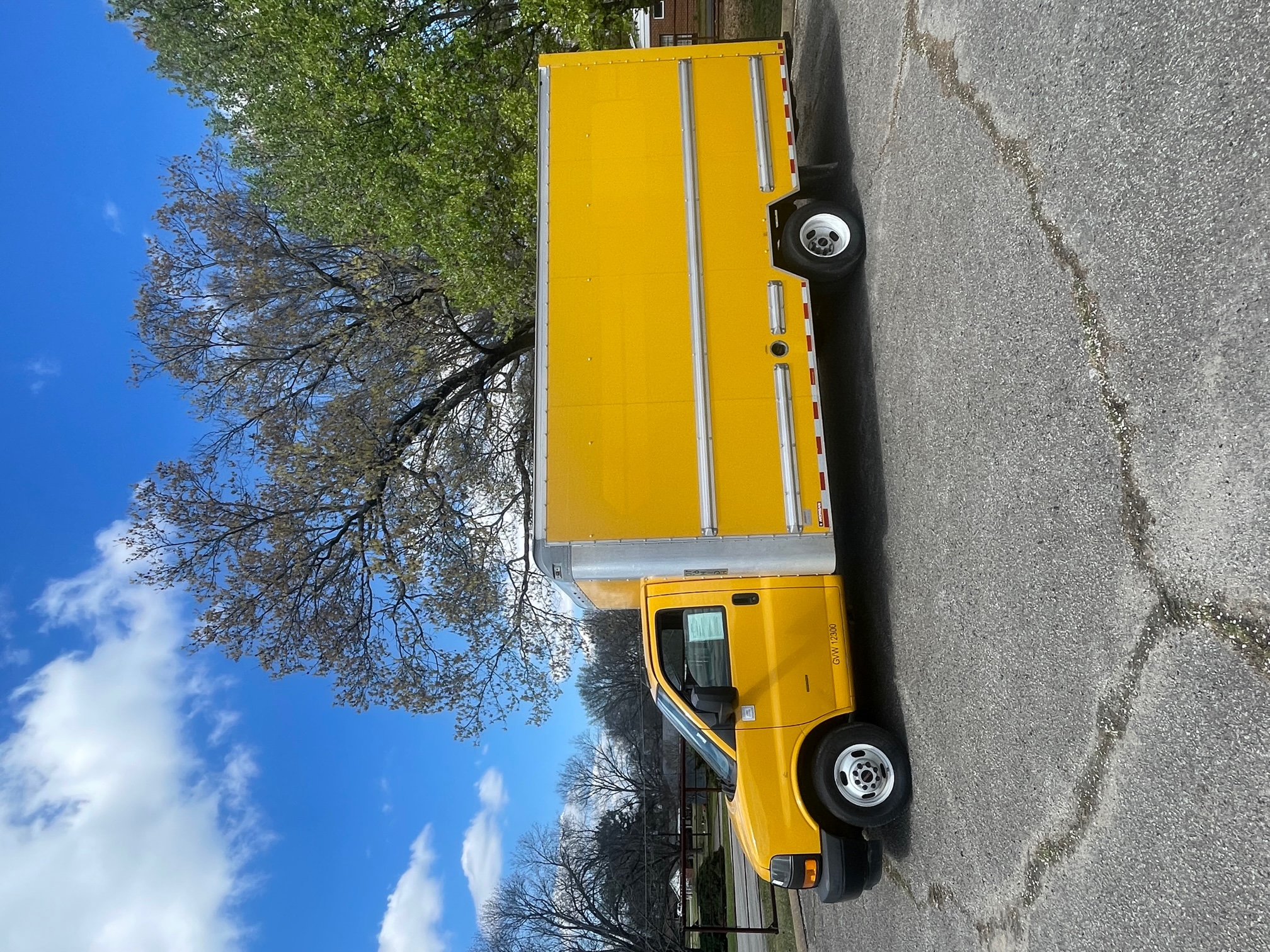
A 16-foot Penske rental truck typically achieves between 6 and 12 miles per gallon (MPG). This efficiency range is highly dependent on whether the vehicle is gasoline or diesel-powered, the total weight of your cargo, and your average driving speed. For planning purposes in 2026, most DIY movers should budget for an average of 8 to 9 MPG when the truck is fully loaded and traveling at highway speeds.
The 16-foot box truck is the "workhorse" of the consumer rental fleet, often cited by Penske as the ideal size for moving a one-to-two-bedroom apartment or a small house. However, because these vehicles are shaped like large bricks and carry significant weight, their fuel economy is a fraction of what a standard passenger vehicle achieves. Understanding the nuances of fuel consumption for this specific model is essential for accurate move budgeting and route planning.
Understanding the Base Specifications of the 16-Foot Penske Truck
To explain the gas mileage of a 16-foot Penske truck, one must first look at the mechanical foundation of the vehicle. Penske typically utilizes chassis from major manufacturers like GMC, Ford, or Isuzu for their 16-foot fleet. In 2026, these vehicles are generally built on the GMC Savana 3500 or Ford E-350/E-450 chassis.
Engine and Fuel Types
Penske is unique among many consumer rental companies because they offer both gasoline and diesel options in their medium-duty fleet.
- Gasoline Models: Usually equipped with a 6.0L or 6.6L V8 engine. These are powerful and reliable but have lower thermal efficiency than diesel, leading to a typical range of 6–10 MPG.
- Diesel Models: Often featuring a Duramax or Power Stroke turbo-diesel engine. Diesel engines provide more torque for heavy loads and generally offer 20-30% better fuel economy, often reaching 10–13 MPG under ideal conditions.
Weight and Aerodynamics
The "box" of a 16-foot truck is roughly 16 feet long, 7 feet 7 inches wide, and 6 feet 6 inches high (interior dimensions). This creates a massive frontal area that generates significant wind resistance. The Gross Vehicle Weight Rating (GVWR) for these trucks is usually around 12,500 to 14,500 pounds. When you add a payload capacity of approximately 4,300 pounds, the engine has to work significantly harder to maintain momentum compared to an empty van, directly impacting the fuel economy.
Realistic MPG Ranges: Empty vs. Fully Loaded
One of the most common mistakes movers make is assuming the "up to" MPG rating provided by a rental agent applies to their specific trip. Gas mileage is dynamic, not static.
The "Empty" Baseline
If you are picking up the truck and driving it across town to your loading site, you may see the higher end of the spectrum. An empty 16-foot gas truck on a flat highway at 55 MPH can occasionally hit 11 or 12 MPG. At this stage, the engine isn't fighting the inertia of several thousand pounds of furniture; it is only fighting its own curb weight and wind resistance.
The "Fully Loaded" Reality
Once you load the truck with the contents of a two-bedroom home—heavy appliances, boxes of books, and solid wood furniture—the fuel economy will drop. A fully loaded 16-foot Penske truck typically averages 7 to 8.5 MPG. The engine must consume more fuel to overcome the increased rolling resistance of the tires and the gravity-related drag when climbing inclines.
The Terrain Factor
Terrain is the "silent killer" of fuel budgets. If your move takes you through the Rocky Mountains or the Appalachians, your MPG can dip as low as 5 or 6 MPG during long uphill climbs. Conversely, you may see a spike in efficiency on long descents, but the average for the segment will remain low because of the energy required to reach the summit.
Factors Influencing Fuel Efficiency in a 16-Foot Box Truck
Several variables beyond just the weight of your boxes dictate how many times you will need to stop at a filling station.
Driving Speed and Aerodynamic Drag
Aerodynamic drag increases with the square of the vehicle's speed. For a vehicle with a large, flat front like a Penske truck, the difference between driving 55 MPH and 75 MPH is massive. In most 16-foot box trucks, driving at 75 MPH can reduce your fuel economy by as much as 20% compared to driving at 60 MPH. In 2026, with fuel prices remaining a significant portion of moving costs, maintaining a steady, moderate speed is the most effective way to stay at the higher end of the MPG range.
Tire Pressure and Maintenance
Penske maintains one of the newest and best-maintained fleets in the industry, which helps with efficiency. However, it is always wise to check tire pressure during your pre-trip inspection. Under-inflated tires increase the contact patch with the road, creating more friction and lowering your MPG.
Use of Towing Equipment
If you are using your 16-foot Penske truck to tow a car carrier or a tow dolly, your gas mileage will suffer significantly. Adding a 3,000-pound vehicle behind a 12,000-pound truck increases the total mass the engine must move and adds another set of axles with rolling resistance. Expect a drop of 1.5 to 2.5 MPG when towing.
Gas vs. Diesel: Which 16-Foot Penske is Better for Your Move?
When making a reservation, you may be asked to choose between a gas or diesel model, depending on local availability. Both have distinct advantages.
| Feature | 16-Ft Gasoline Truck | 16-Ft Diesel Truck |
|---|---|---|
| Typical MPG | 6 – 10 MPG | 10 – 13 MPG |
| Fuel Capacity | ~33–35 Gallons | ~30–35 Gallons |
| Estimated Range | 200 – 300 Miles | 300 – 450 Miles |
| Fuel Availability | Ubiquitous (Any station) | Common (Truck stops/major stations) |
| Engine Torque | Lower (Higher RPMs on hills) | Higher (Better for heavy loads/hills) |
| Cost Per Gallon | Usually Lower | Usually Higher |
Choosing Gasoline
Gasoline trucks are generally easier for most drivers to handle because the refueling process is identical to a standard car. You don't have to worry about finding ultra-low-sulfur diesel (ULSD) or dealing with Diesel Exhaust Fluid (DEF) refills (though Penske usually handles DEF). If your move is short (under 100 miles), the higher cost of diesel fuel may offset the MPG gains, making gas the more economical choice.
Choosing Diesel
For long-distance or "one-way" moves (e.g., 500+ miles), diesel is often the superior choice. The increased MPG means fewer stops and a longer range per tank. Furthermore, diesel engines are built for "long-haul" duty cycles, meaning they often maintain their speed better on highway grades without the constant downshifting and high-revving noise associated with gas V8 engines.
Calculating Your Moving Fuel Costs for 2026
To avoid surprises at the pump, you should calculate your estimated fuel cost before you even pick up the keys. Use the following formula:
[(Total Trip Mileage / Estimated MPG) x Price Per Gallon] = Total Fuel Cost
Scenario: A 500-Mile Move
If you are moving 500 miles and assume a conservative 8 MPG for a gasoline 16-foot truck:
- 500 / 8 = 62.5 gallons of fuel required.
- Assuming a 2026 average gas price of $4.00 per gallon: 62.5 x $4.00 = $250.00.
If you used a diesel truck getting 11 MPG:
- 500 / 11 = 45.45 gallons of fuel required.
- Assuming a 2026 average diesel price of $4.50 per gallon: 45.45 x $4.50 = $204.52.
In this long-distance scenario, the diesel truck saves nearly $50 in fuel despite the higher price per gallon of the fuel itself.
Practical Tips to Improve Your Rental Truck’s Gas Mileage
While the physics of a large truck are working against you, driver behavior can influence the final MPG by as much as 15%.
- Avoid Excessive Idling: Modern engines do not need to "warm up" for long periods. Idling a large truck can consume half a gallon to a gallon of fuel per hour without moving an inch.
- Progressive Acceleration: Avoid "flooring it" when merging onto the highway. Box trucks are not built for speed; aggressive acceleration dumps excess fuel into the cylinders that the engine cannot efficiently convert into motion.
- Use Cruise Control Wisely: On flat highways, cruise control helps maintain a steady fuel flow. However, in very hilly terrain, it is often better to deactivate cruise control so you can slightly increase speed before a hill and let it bleed off naturally as you climb, rather than forcing the transmission to downshift aggressively to maintain a set speed.
- Plan Your Route: Avoid routes with heavy stop-and-go traffic or numerous traffic lights. Starting a 14,000-pound vehicle from a complete stop is the most fuel-intensive action the truck performs.
- Check the Roof Line: If you are moving through a city with low-hanging trees or structures, pay attention. While not a direct fuel tip, damaging the "upper radius" of the box can affect the aerodynamics (and cost you thousands in repairs).
Comparing the 16-Foot Penske to Major Competitors
In the rental market of 2026, Penske's 16-foot truck is often compared to U-Haul's 15-foot and 17-foot options or Budget's 16-foot truck.
Penske's advantage often lies in the age of their fleet. Newer engines are generally more fuel-efficient due to updated ECU (Engine Control Unit) mapping and better transmission gearing (6-speed or 8-speed automatics). U-Haul's 15-foot truck is built on a similar chassis but often features a "Mom's Attic" compartment over the cab. While this provides more space, it can slightly increase wind resistance compared to the more streamlined cab-to-box transition often seen in Penske’s professional-grade chassis.
Budget's 16-foot trucks are very similar to Penske's, usually utilizing the same Ford or GMC platforms. The MPG differences between these brands usually come down to the specific maintenance level of the individual unit and whether the truck is equipped with a fuel-efficient V8 or an older, thirstier V10 engine.
Frequently Asked Questions
Does the 16-foot Penske truck take regular gas?
Yes, the gasoline versions of the 16-foot Penske truck are designed to run on regular 87-octane unleaded fuel. You do not need mid-grade or premium fuel. If you have a diesel model, it will be clearly labeled at the fuel door and on the dashboard; these require Ultra-Low Sulfur Diesel (ULSD).
How large is the fuel tank on a 16-foot Penske truck?
The fuel tank capacity typically ranges from 33 to 35 gallons. Based on an average of 8 MPG, this gives you a functional driving range of approximately 240 to 280 miles before you need to look for a gas station. It is highly recommended to start looking for fuel once the tank reaches the quarter-mark to avoid being stranded.
Does turning off the air conditioning save gas in a box truck?
While turning off the AC does reduce the load on the engine, the effect is minimal compared to the impact of wind resistance. At highway speeds, the aerodynamic drag caused by driving with the windows down to stay cool actually consumes more fuel than running the AC with the windows up.
How much does weight really affect the MPG?
Weight has a significant impact on city driving (stop-and-go), where energy is required to get the mass moving. On a flat highway, once the truck is at speed, the impact of weight is secondary to wind resistance. However, a fully loaded truck (near its 4,300 lbs payload limit) will likely see a 1–2 MPG drop compared to a lightly loaded one.
Is the MPG better on Penske trucks than U-Haul?
Generally, Penske trucks are perceived to have slightly better or more consistent MPG because the company cycles its fleet every few years. Newer trucks benefit from modern fuel-injection technology and more efficient transmissions. However, the difference is usually within 0.5 to 1 MPG and can be negated by poor driving habits.
Summary of Next Actions
When planning your move with a 16-foot Penske truck, do not rely on the most optimistic MPG figures. To ensure you have enough funds and a realistic schedule:
- Identify your fuel type at the time of reservation (Gas vs. Diesel).
- Budget for 8 MPG to provide a "safety cushion" in your finances.
- Plan fuel stops every 200 miles to account for the ~35-gallon tank and the desire to never run the tank to empty.
- Check current fuel prices along your specific route using a real-time fuel app, as prices can vary significantly across state lines.
By accounting for the 6–12 MPG range and the factors that influence it, you can ensure a smoother, more predictable moving experience in 2026.