1010data functions as a powerful, cloud-based consumer behavior and market analytics platform rather than a traditional consumer-facing travel booking engine. In the travel and tourism sector, major airlines, hospitality brands, and agencies leverage 1010data’s granular data-sharing and analytics capabilities to track consumer trends, optimize pricing strategies, and evaluate competitive performance across vast datasets.
The travel industry generates an unprecedented volume of data every second. From airline seat bookings and hotel reservations to dynamic pricing fluctuations and digital ad impressions, travel organizations swim in information. However, raw data alone does not generate revenue or enhance customer experiences; analytical clarity does.
Understanding how enterprise platforms process this information reveals the mechanics behind modern travel marketing, consumer behavior tracking, and inventory management. This examination explores how large-scale consumer analytics platforms operate within the travel sector, their core technical architecture, their applications for industry stakeholders, and the strategic advantages they provide.
The Role of Data Analytics in the Modern Travel Ecosystem
The travel sector operates on complex, perishable inventory. An empty airline seat or an unbooked hotel room represents lost revenue that can never be recovered once the flight departs or the night passes. Consequently, travel providers rely heavily on predictive analytics, historical trend tracking, and real-time market monitoring to maximize yield and occupancy.
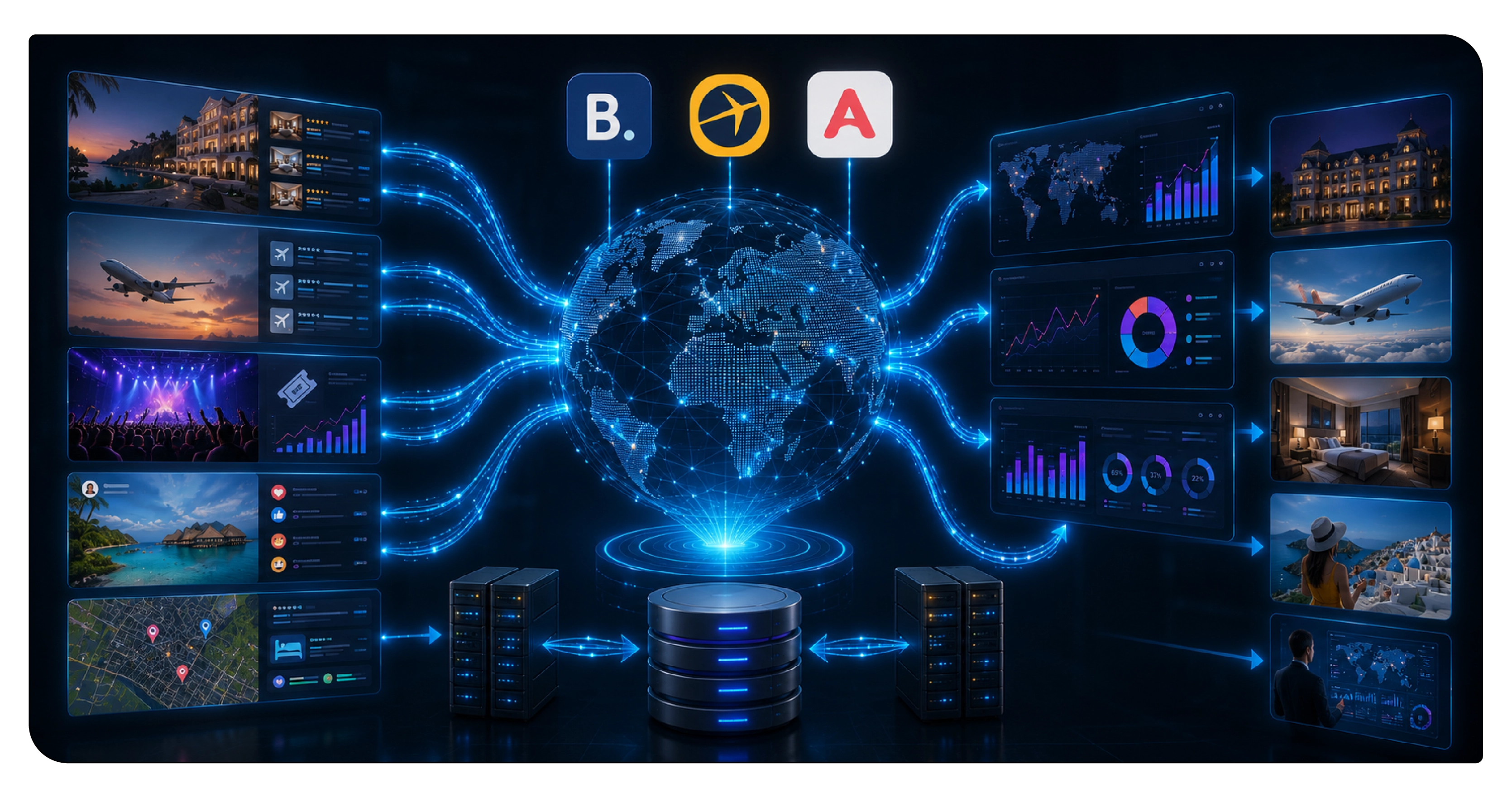
Enterprise analytics platforms bridge the gap between massive data repositories and actionable business decisions. Unlike traditional business intelligence (BI) tools that struggle with massive, high-velocity datasets, specialized platforms aggregate disparate data streams—including point-of-sale transactions, consumer search patterns, and third-party market research—into a unified environment.
Bridging Consumer Behavior and Market Intelligence
Travel brands must look beyond their own internal booking systems to understand broader market movements. A hotel chain might notice a drop in weekend bookings, but without external context, it cannot determine whether the decline stems from poor marketing, regional economic shifts, or a competitor launching aggressive promotions.
Data-driven platforms ingest multi-source data to answer critical questions:
- Where are consumers searching for flights and accommodations before they book?
- How do seasonal pricing fluctuations impact booking windows across different demographics?
- Which digital marketing channels yield the highest return on investment (ROI) for specific travel packages?
By unifying these disparate threads, decision-makers gain a comprehensive view of the travel consumer journey, allowing them to adapt pricing and promotional strategies dynamically.
Core Capabilities of Enterprise Analytics Platforms
Platforms operating at the scale required by multinational travel brands rely on specific technical capabilities. To evaluate how these systems function, it is necessary to examine their data ingestion, processing speed, and collaborative sharing features.
Massive Data Ingestion and Normalization
Travel organizations pull data from myriad sources: Global Distribution Systems (GDS), property management systems (PMS), customer relationship management (CRM) software, and external web-scraped market feeds. These sources use different formats, taxonomies, and update frequencies.
An effective platform ingests these heterogeneous streams and normalizes them into a consistent structure. This process eliminates data silos, ensuring that marketing, finance, and revenue management teams analyze the exact same metrics.
High-Speed Query Processing
When dealing with billions of rows of transactional data, traditional relational databases often experience severe performance degradation during complex queries. Enterprise-grade analytics solutions utilize columnar database architecture and in-memory processing to execute complex multi-variable queries in seconds rather than hours. This speed is vital for revenue managers who adjust pricing multiple times a day based on shifting demand signals.
Collaborative Data Sharing
In the travel ecosystem, manufacturers (such as airlines and hotel groups) and retailers (such as online travel agencies and tour operators) must share insights without compromising proprietary information or consumer privacy. Cloud-based analytics platforms provide secure, permissioned workspaces where multiple organizations can collaborate, run joint analyses, and benchmark performance against industry standards.
Applications Across Key Travel Segments
Different segments of the travel industry leverage advanced data analytics to address unique operational challenges. The utility of these platforms extends across aviation, hospitality, and intermediary booking channels.
| Travel Segment | Primary Operational Challenge | How Data-Driven Platforms Help |
|---|---|---|
| Airlines | Perishable inventory, fluctuating fuel costs, ancillary revenue optimization. | Track booking curves, analyze competitor fare structures, and identify optimal ancillary upsell timing. |
| Hospitality & Hotels | Managing RevPAR (Revenue Per Available Room), local event impact, and direct booking acquisition. | Monitor local market demand surges, evaluate OTA vs. direct channel performance, and refine loyalty programs. |
| Online Travel Agencies (OTAs) | High customer acquisition costs and fierce price competition. | Optimize programmatic advertising spend, analyze user search behavior, and personalize search results. |
Aviation and Yield Management
Airlines operate on razor-thin margins, making yield management a critical discipline. By utilizing deep consumer analytics, commercial aviation teams can analyze historical booking curves to predict when demand will spike for specific routes.
Furthermore, analytics platforms help airlines monitor ancillary sales—such as baggage fees, seat selection, and in-flight services—identifying which passenger segments are most likely to purchase specific bundles. This allows for hyper-targeted marketing campaigns rather than broad, expensive advertising blasts.
Hospitality and Competitive Benchmarking
Hotels face intense competition from both traditional properties and short-term rental platforms. Enterprise data platforms allow hospitality brands to track market share shifts in real time. If a competitor drops room rates in a specific sub-market, property managers can instantly assess the impact on their own booking velocity and adjust pricing or value-add packages accordingly.
Additionally, hoteliers use consumer spend data to understand guest behavior beyond the room. Analyzing on-property spending patterns helps optimize restaurant hours, spa staffing, and concierge services.
Technical Architecture and Implementation Considerations
Implementing an enterprise-level data platform requires careful planning regarding data governance, security, and integration with legacy systems. Organizations cannot simply plug a new analytics tool into unstructured databases and expect immediate insights.
Data Governance and Privacy Compliance
Handling travel data involves navigating strict regulatory frameworks, such as the General Data Protection Regulation (GDPR) and the California Consumer Privacy Act (CCPA). Enterprise analytics platforms must ensure that personally identifiable information (PII) is appropriately masked, tokenized, or anonymized before it enters analytical workflows.
Organizations must establish clear data lineage protocols, ensuring that every data point's origin, transformation history, and access log remain fully auditable.
Integration with Legacy Infrastructure
Many legacy travel providers—particularly legacy airlines and major hotel chains—still rely on older mainframe systems for core reservations and inventory management. Modern analytics platforms utilize robust APIs (Application Programming Interfaces) and secure ETL (Extract, Transform, Load) pipelines to extract data from these older systems without disrupting mission-critical booking engines.
Advantages and Limitations of Data-Driven Travel Platforms
While advanced analytics platforms provide immense strategic value, organizations must weigh their benefits against inherent operational challenges.
Strategic Advantages
- Granular Market Visibility: Access to tokenized, aggregated consumer purchase data provides insights far beyond internal metrics.
- Agility in Pricing: Real-time query speeds enable rapid response to sudden market disruptions or demand surges.
- Cross-Enterprise Collaboration: Secure environments allow brands and retail partners to share insights and measure campaign effectiveness transparently.
Operational Limitations
- Steep Learning Curve: Powerful analytical engines often require specialized technical training, limiting adoption to dedicated data science and business intelligence teams.
- Implementation Complexity: Integrating disparate legacy systems with cloud-based analytical environments demands significant time and engineering resources.
- Cost Structure: Enterprise-tier data solutions involve substantial subscription and data storage costs, making them primarily viable for large-scale operators rather than small boutique travel providers.
Frequently Asked Questions
Is 1010data a travel booking website for consumers?
No. 1010data is an enterprise consumer behavior and market analytics platform. It is not a consumer-facing travel portal where individuals can book flights, hotels, or rental cars. Travel brands and corporate analysts use its software backend for market research and data collaboration.
How do travel companies use big data platforms?
Travel companies use these platforms to ingest massive streams of transactional, search, and marketing data. This information helps them optimize pricing strategies, track market share against competitors, forecast consumer demand, and measure the effectiveness of digital advertising campaigns.
What kind of data is analyzed on these platforms?
Platforms in this category typically process point-of-sale transactions, consumer search patterns, loyalty program engagement metrics, digital advertising impressions, and aggregated industry benchmark reports while maintaining strict data privacy compliance.
Why is speed important in travel data analytics?
The travel industry features highly perishable inventory, such as empty hotel rooms and vacant airline seats. Rapid query processing allows revenue managers to monitor live market changes and adjust pricing strategies dynamically before inventory expires.
Do small travel agencies need enterprise analytics platforms?
Generally, no. Enterprise analytics platforms are designed for large corporations, major airlines, hotel chains, and large retail enterprises that handle millions of data points daily. Smaller agencies typically rely on standard business intelligence tools or built-in reporting features provided by their booking engines.
Conclusion and Next Actions
Data-driven decision-making remains the cornerstone of modern travel industry operations. Platforms that aggregate, normalize, and analyze consumer behavior empower airlines, hotels, and agencies to navigate complex market dynamics with precision. For organizations evaluating enterprise analytics solutions, the primary next steps involve auditing internal data infrastructure, defining specific analytical use cases—such as yield optimization or competitive benchmarking—and ensuring compliance with data privacy regulations before beginning platform integration.