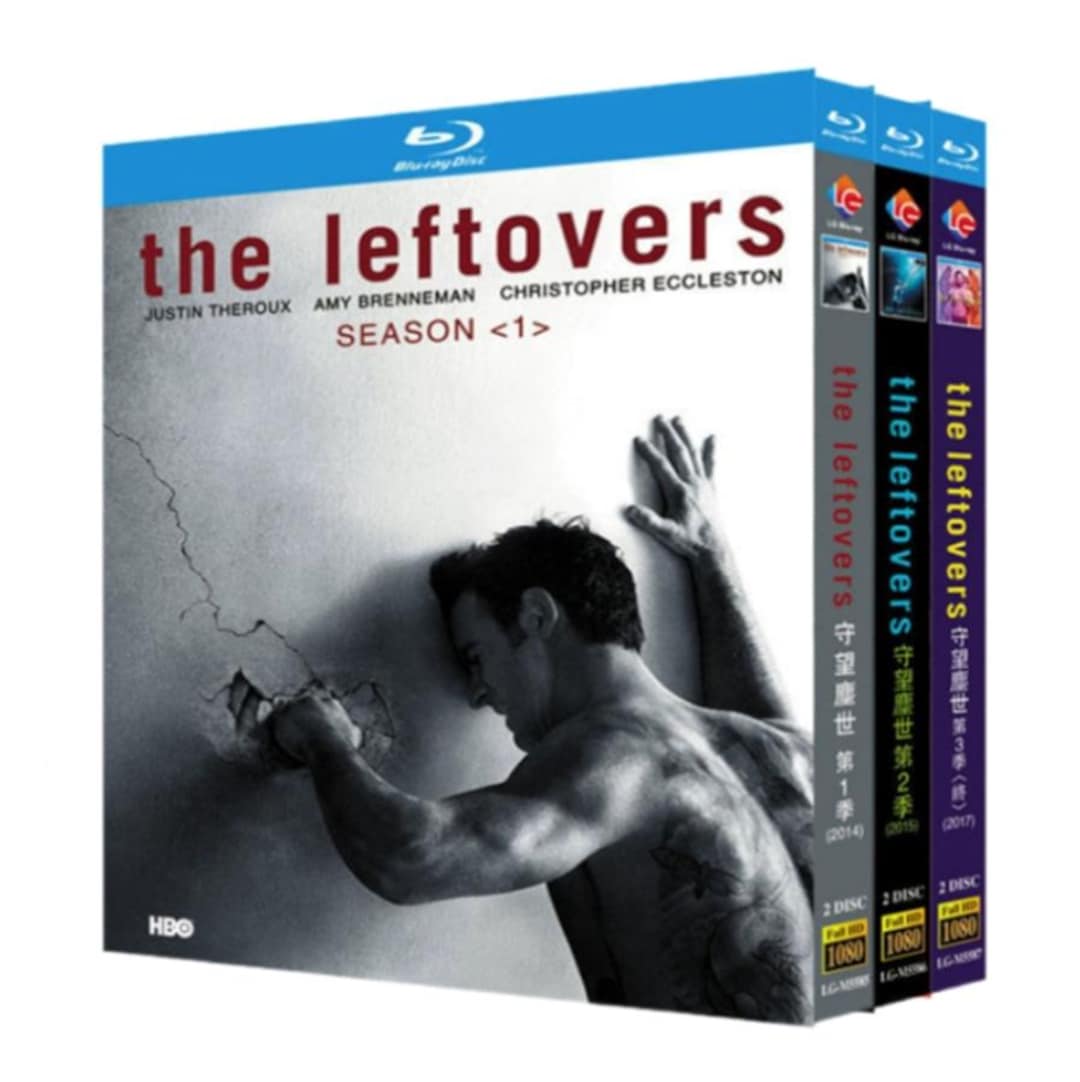
The first season of the HBO series The Leftovers, created by Damon Lindelof and Tom Perrotta, explores the aftermath of a global cataclysmic event known as the "Sudden Departure," in which 2% of the world's population vanishes without explanation. The season follows the residents of Mapleton, New York, three years later, as they struggle to reconcile with the trauma, grief, and existential void left in the wake of the unexplained disappearances.
The Premise: Three Years After the Sudden Departure
On October 14, over 100 million people—roughly 2% of the global population—vanished instantly. Unlike other post-apocalyptic narratives that focus on the collapse of government or the struggle for physical resources, The Leftovers examines the psychological and sociological aftermath of a world that did not end, but rather, fundamentally shifted. There was no scientific explanation, no alien landing, and no rapture-like religious validation.
By the time the events of Season 1 commence, the world is characterized by a pervasive, low-level dread. The town of Mapleton serves as a microcosm for this global malaise. The residents are not starving, but they are spiritually famished. The disappearance of loved ones without a trace has stripped the survivors of the ability to find closure. This central mystery—the "why" and "where"—is deliberately left unaddressed by the show, forcing the characters to confront their inability to control or understand their reality.
Key Characters and Their Trajectories
The narrative centers on Kevin Garvey, the Chief of Police in Mapleton. Kevin is an archetype of the "fragile protector." He attempts to maintain order in a society that has lost faith in the institutions tasked with safeguarding it. Kevin’s personal life is in shambles: his wife, Laurie, has abandoned their family to join a cult; his son, Tom, has left town to follow a mysterious "prophet"; and his daughter, Jill, is spiraling through teenage rebellion characterized by dangerous thrill-seeking.
Opposing the town’s attempt at normalcy is the Guilty Remnant (GR). This group is perhaps the most defining element of the first season. They are a cult that has taken a vow of silence, wearing all-white clothing and chain-smoking cigarettes to signify their commitment to "remembering" the Departure. They do not view themselves as victims, but as "living reminders" of the event. Their goal is to prevent the town from moving on or forgetting what happened, which brings them into direct conflict with those who are trying to bury the pain.
The interplay between the following characters defines the season's structural tension:
- Kevin Garvey: Struggles to manage both his police department and his fracturing family while questioning his own sanity.
- Laurie Garvey: Represents the complete abandonment of the "old life" to seek a nihilistic purpose within the Guilty Remnant.
- Matt Jamison: A reverend who spends his time documenting the sins of the departed to prove that they were not "righteous" people taken in a rapture.
- Nora Durst: A woman who lost her entire family in the Departure, becoming the ultimate symbol of the tragedy and the frustration of those left behind.
Thematic Exploration of Grief and Faith
Season 1 is primarily a study of how human beings process loss when they are denied the ritual of a funeral or a tangible body. When death occurs, humanity relies on grief to initiate the healing process. When people vanish into thin air, the uncertainty prevents that process from beginning.
The religious and pseudo-religious elements in the show are not meant to provide answers, but to highlight the desperation for meaning. Matt Jamison’s attempts to find God in the chaos contrast sharply with the nihilism of the Guilty Remnant. The show suggests that in the absence of a verified truth, people will construct their own realities—whether through traditional faith, radical activism, or the pursuit of hedonism—just to survive the day-to-day burden of existing in an "un-answered" world.
Narrative Pacing and Tone
Viewers entering Season 1 should anticipate a slow-burn, atmospheric experience. The show does not rely on traditional mystery tropes; there is no "whodunit" investigation that will lead to a neat conclusion. Instead, the pacing mirrors the stagnated state of the characters' lives. The cinematography often utilizes close-ups that emphasize the isolation of the characters, even when they are in crowded rooms.
The music, composed by Max Richter, serves as an essential component of the storytelling. The melancholic, repetitive themes underscore the idea that while time is moving forward, the emotional landscape of Mapleton is stuck in the moment of October 14.
Comparison of Key Factions and Perspectives
| Faction/Perspective | Core Belief | Public Method |
|---|---|---|
| The Mainstream/Police | Life must return to normal. | Maintaining law, order, and public silence. |
| The Guilty Remnant | The world ended; we must not forget. | Silence, white clothing, constant smoking. |
| The Faithful (Matt Jamison) | The Departure was a test of faith. | Preaching, documentation, persistence. |
| The Seekers (Holy Wayne) | The pain can be hugged away. | Radical, supernatural-adjacent spiritualism. |
Technical Challenges and "The Leftovers" Style
The show is notable for its refusal to offer the audience "fan service" or easy explanations. Many viewers found the early episodes of the first season difficult due to the sheer intensity of the nihilism presented. However, the technical execution—specifically the writing and acting—is designed to force the viewer into the same state of confusion and frustration as the characters. By the end of the season, the audience understands that the "problem" of the show is not the mystery of the Departure, but the mystery of how to keep living when the floor has fallen out from underneath you.
Common Misconceptions
A common mistake for first-time viewers is treating the show as a sci-fi mystery in the vein of Lost. While both shows were co-created by Damon Lindelof, The Leftovers is an exercise in character-driven drama. If you watch this season expecting a definitive answer regarding what happened to the 2%, you will be disappointed. If you watch it as an exploration of human resilience, the lack of a "correct" answer becomes the point of the narrative.
Frequently Asked Questions
Does the show explain where the people went by the end of the season? No. The show intentionally avoids providing a scientific or supernatural explanation for the Sudden Departure. The narrative focus remains strictly on the survivors and their attempts to cope with the absence of their loved ones.
Why does the Guilty Remnant wear white and smoke? The Guilty Remnant wears white as a uniform to strip away individual identity and the distractions of the world. They smoke constantly to demonstrate that they no longer care about their future or their health, as they believe the world effectively ended on October 14.
Is it necessary to have read Tom Perrotta’s novel before watching? It is not required. While the first season is based on the novel The Leftovers, the show expands significantly upon the source material. You can enjoy the series as a standalone visual experience without prior knowledge of the book.
What is the "Holy Wayne" plotline? Holy Wayne is a figure who claims to have the ability to "hug out" the pain of the Departure. His subplot introduces the element of charismatic cults and the human desire for a messiah figure, even one who is clearly fraudulent or dangerous.
Why is the tone of the show so consistently dark? The show aims to mirror the psychological trauma of an event that defies logic. The creators chose a dark, somber tone to accurately reflect the weight of the collective grief experienced by the inhabitants of Mapleton.
Next Actions for Viewers
If you have just begun or finished the first season, the best approach is to shift your focus from the "event" to the "character." Pay close attention to how the characters' actions are not necessarily logical, but are rather emotional responses to extreme stress. The series is widely regarded for its character growth over its three-season arc. To fully appreciate the trajectory, move into the second season with the understanding that the show’s setting will undergo a significant change, allowing for a fresh exploration of the same themes of faith and trauma.