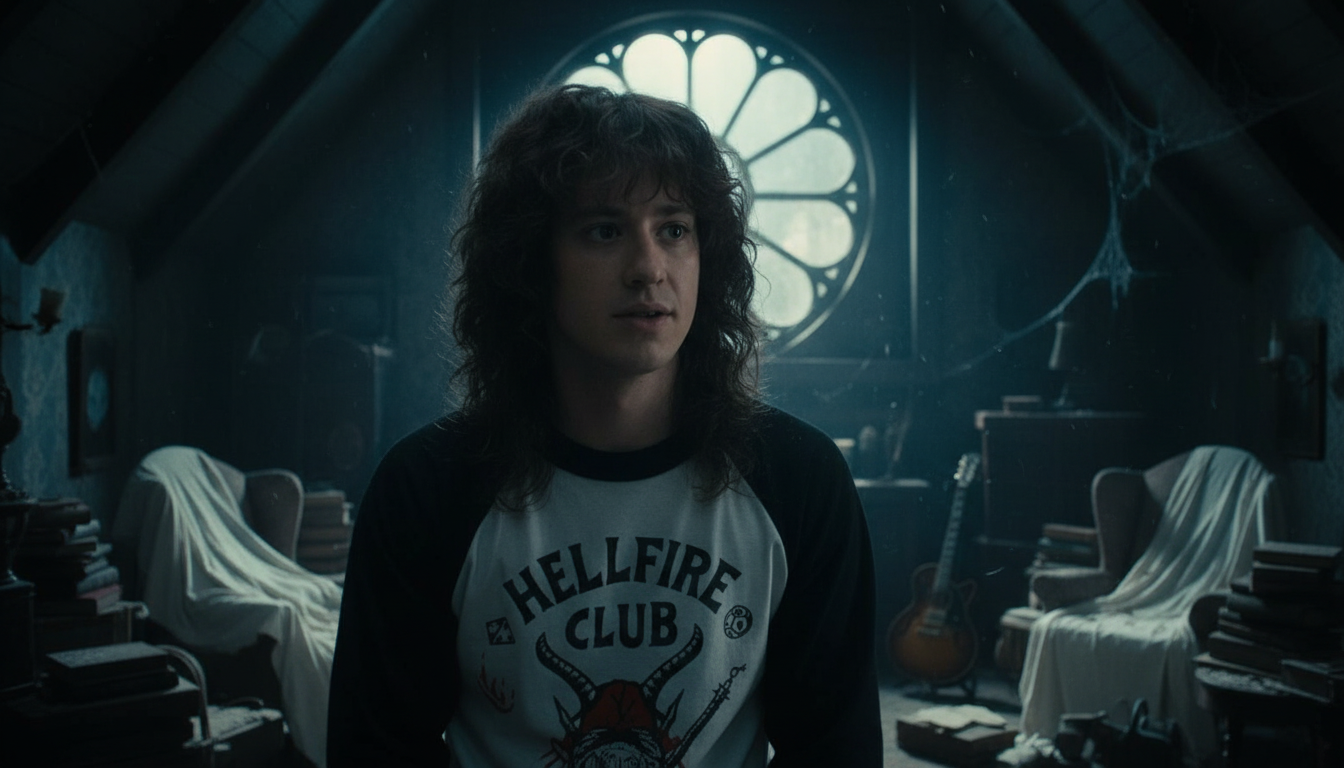
Joseph Quinn’s portrayal of Eddie Munson in Stranger Things demonstrates how subverting a one-dimensional counter-culture trope through raw, unvarnished vulnerability can trigger an immediate cultural and industrial earthquake. This single breakout role revitalized 1980s thrash metal globally and bypassed years of traditional industry ladder-climbing, propelling Quinn directly into major franchise blockbusters.
The Core Insight: Subverting the Archetype of the Doomed Misfit
The fundamental insight behind Joseph Quinn’s impact in Stranger Things Season 4 lies in his deliberate subversion of the 1980s "metalhead burnout." Where standard television tropes often frame heavy metal fans, high school repeaters, and tabletop roleplayers as either aggressive antagonists or punchline outcasts, Quinn infused Eddie Munson with frantic charm, visible fear, and deep maternal protectiveness toward younger peers.
Eddie Munson was introduced during a period historically defined by the real-world Satanic Panic—a cultural hysteria that targeted Dungeons & Dragons players and heavy metal fans. A lesser actor or shallower writing might have played Eddie as detached, callous, or uniformly cynical. Instead, Quinn anchored the performance in high physical energy and expressive vulnerability. Eddie was loud, dramatic, and theatrical on the surface, but unmistakably terrified when cornered by forces he could neither understand nor control.
This emotional transparency transformed what was conceived as an episodic guest character into the emotional spine of Season 4. Quinn chose not to mask Eddie’s cowardice. In early episodes, when cheerleader Chrissy Cunningham suffers a horrific death in Eddie’s trailer, Eddie does not respond with action-hero composure; he screams, scrambles backward, and flees. By allowing Eddie to experience genuine, unglamorous panic, Quinn established an emotional baseline that made his ultimate stand in the Upside Down earned rather than cliché. The character's self-sacrifice was not the act of a fearless warrior, but the hard-won redemption of an ordinary, terrified young man choosing loyalty over survival.
The Sonic Ripple: Revitalizing Thrash Metal for a New Generation
The cultural ripple of Quinn’s performance exploded into the music industry through a single climatic sequence: Eddie Munson playing Metallica’s 1986 thrash metal masterpiece, "Master of Puppets," on an electric guitar atop an Upside Down trailer home to divert a horde of demonic creatures.
Rather than relying entirely on a stunt double or pre-recorded pantomime, Quinn played the guitar himself for the majority of the shots. Having played guitar since childhood, Quinn rehearsed the track obsessively before shooting. This authenticity registered instantly with audiences and seasoned metal enthusiasts alike.
Key Musical Milestones of the Eddie Munson Effect:
- Song: "Master of Puppets" by Metallica (originally released March 3, 1986)
- Chart Impact: Entered the Billboard Hot 100 for the first time in 36 years (peaking at #35)
- Streaming Growth: Surpassed 17.5 million weekly US streams during the episode's release week
- Direct Collaboration: Quinn met and jammed backstage with Metallica at Lollapalooza 2022
The sequence built a rare cross-generational bridge. While Stranger Things had already revived Kate Bush’s "Running Up That Hill" earlier in the same season, the resurrection of "Master of Puppets" carried a distinct edge. Thrash metal had long been considered inaccessible to mainstream younger listeners. Quinn’s performance demystified the genre, packaging the sheer technical exhilaration of heavy metal within high-stakes narrative storytelling.
Metallica publicly embraced the scene, creating split-screen videos on social platforms duetting with Quinn’s performance and issuing limited-edition merchandise with the fictional Hellfire Club. The ripple expanded beyond streaming metrics; it introduced physical guitar sales, pedal inquiries, and vintage metal aesthetics to an audience born decades after the track was recorded.
The Digital Multiplier: Algorithmic Virality and Fan Mobilization
Quinn's impact was amplified exponentially by modern social video ecosystems, illustrating how algorithmic distribution can turn a supporting role into a worldwide phenomenon in a matter of days.
The phrase "Chrissy, Wake Up"—improvised and delivered with desperate cadence by Quinn in the season premiere—was sampled by musicians and creators across TikTok and YouTube Shorts. The resulting fan edits generated billions of views, transforming a horrifying plot point into an ubiquitous audio meme.
Unlike conventional viral trends that fade quickly, the Eddie Munson phenomenon converted passive viewers into an active subculture:
- Hellfire Club Merchandising: The simple three-quarter raglan shirt bearing the Hellfire Club logo became an overnight retail powerhouse, selling out across major fashion outlets and driving extensive bootleg markets worldwide.
- Grassroots Campaigns: Following Eddie's on-screen death, fans launched petitions and social media campaigns demanding his resurrection for the final season, mirroring historical television fandoms like those surrounding Sherlock or The X-Files, but at modern streaming velocity.
- Convention Fan Dynamics: Quinn’s appearances at comic conventions in London, North America, and Europe drew unprecedented crowds, causing ticketing bottlenecks and highlighting an intense, personal connection between an actor and an audience that had known him for only nine episodes.
This digital footprint proved to film studios that Quinn possessed something more valuable than traditional name recognition: an engaged, active demographic willing to mobilize across digital and physical spaces.
Hollywood’s Fast-Tracking: Bypassing the Traditional Industry Ladder
Prior to Stranger Things, Joseph Quinn was a respected, classically trained British stage and television actor. Educated at the London Academy of Music and Dramatic Art (LAMDA), his credits included period dramas like the BBC’s Dickensian, HBO’s Catherine the Great, and a brief, one-scene role as a Stark soldier in Game of Thrones.
The international response to Eddie Munson shattered the standard timeline for British character actors moving into American cinema. Instead of spending years navigating independent features or mid-level television supporting roles, Quinn was immediately recruited by major studios to anchor high-budget franchise properties.
Career Trajectory Comparison: Pre- and Post-Stranger Things
| Dimension | Pre-Stranger Things (Prior to 2022) | Post-Stranger Things (2022–Present Era) | | :--- | :--- | :--- || Primary Industry Space | UK stage productions, BBC/ITV period dramas | Major Hollywood studio tentpoles, international IP | | Notable Credits | Dickensian, Howards End, Les Misérables, Make Up | A Quiet Place: Day One, Gladiator II, The Fantastic Four: First Steps | | Target Demographics | Specialized theatergoers, UK domestic television viewers | Global cross-generational box office audiences | | Role Types | Ensemble support, historic characters, grounded drama | Co-leads, iconic comic book heroes, high-profile antagonists | | Casting Pipeline | Traditional multi-tier auditions, agency pitching | Direct studio outreach, director-led meetings | | Commercial Influence | Limited to performance merit within indie spaces | Capable of moving music charts, retail apparel, and ticket presales |
This structural pivot became tangible when director Michael Sarnoski cast Quinn alongside Lupita Nyong'o in Paramount's A Quiet Place: Day One (2024). Rather than casting him for comic relief, Sarnoski leveraged Quinn’s proven talent for physical vulnerability and understated, wordless terror.
Shortly after, Ridley Scott selected Quinn to portray Emperor Caracalla in Gladiator II (2024), placing him alongside Paul Mescal and Denzel Washington. The ultimate confirmation of his new industry standing arrived with Marvel Studios casting Quinn as Johnny Storm (The Human Torch) in The Fantastic Four: First Steps. Taking over a marquee role previously played by Chris Evans and Michael B. Jordan established Quinn as a central pillar in modern franchise cinema.
Analytical Evaluation: The Pressures of Rapid Franchise Escalation
While the rapid ascent from television supporting player to multi-franchise lead offers undeniable professional advantages, it also introduces clear artistic and commercial hazards that industry analysts closely track.
- Streaming Breakout (Eddie Munson / Season 4)
- Explosive Digital Virality (Memes, Chart Impact, Fandom)
- Direct Studio Blockbuster Entry (Paramount, Paramount/Scott Free, Marvel)
- Opportunity: Sustained Leading Man Versatility
- Vulnerability: IP Saturation & Typecasting Risk
The primary risk for any actor experiencing an overnight streaming boom is the pressure of IP saturation. When an actor signs simultaneously with multiple major film universes—Paramount's horror franchise, a high-stakes historical sequel, and the Marvel Cinematic Universe—their individual artistic identity can be eclipsed by corporate brand stewardship.
Quinn's deliberate career choices, however, suggest a calculated effort to avoid typecasting:
- In A Quiet Place: Day One, he stripped away the extroverted bravado of Eddie Munson, delivering an internal, near-silent performance centered on quiet grief and survival.
- In Gladiator II, he pivoted toward volatile, unhinged political power, challenging audiences who associated him exclusively with sympathetic underdog figures.
- In The Fantastic Four: First Steps, he faces the challenge of reinterpreting a brash, pop-culture icon without repeating the charming rogue cadences that made Eddie Munson work.
The long-term viability of Quinn's career will depend not on the initial wave of fan adoration sparked by Stranger Things, but on his ability to retain his classical theater instincts—discipline, vocal precision, and emotional authenticity—inside the rigid constraints of massive CGI-driven productions.
Practical Takeaways for Creators, Performers, and Industry Observers
The explosive rise of Joseph Quinn offers several concrete lessons for working actors, screenwriters, and creative executives operating in the modern streaming ecosystem:
- Reject Tropes in Supporting Roles: Characters written as outcasts or background misfits must not be performed with simple, archetypal broad strokes. Quinn distinguished himself by giving a temporary guest role the psychological complexity and emotional variability typically reserved for series leads.
- Prioritize Practical Skill Acquisition: Quinn’s ability to actually play the guitar changed the execution of the "Master of Puppets" sequence. Production teams can capture wider, longer, and more dynamic single-take shots when an actor possesses genuine physical competence in the required skill.
- Embrace Emotional Exposure over False Heroism: Modern audiences respond strongly to characters who show unvarnished terror before finding resolve. Stoic invulnerability frequently isolates viewers; honest panic invites empathy.
- Prepare for the Global Velocity of Streaming Media: A single successful television season on an international platform can bypass a decade of conventional domestic career milestones. Representation and personal brand planning must be equipped to handle overnight shifts from local casting to global franchise negotiations.
Frequently Asked Questions
Did Joseph Quinn actually play the guitar in the "Master of Puppets" scene?
Yes, Joseph Quinn played the majority of the guitar parts shown on screen himself. He had played guitar recreationally since childhood and rehearsed heavily for months leading up to filming. For the lightning-fast, highly intricate guitar solo, production utilized hands-down reference tracks and close-up assist work from musician Aidan Fisher, but Quinn executed the rhythm, posture, and wide-shot playing seen in the final cut.
Why was Eddie Munson killed off in Season 4 instead of returning for Season 5?
The show’s creators, the Duffer Brothers, conceptualized Eddie Munson as a self-contained, tragic arc for Season 4. Because Eddie was framed by the town of Hawkins for multiple murders driven by the Satanic Panic, his survival would have necessitated an extensive, grounded legal defense plotline that clashed with the supernatural, apocalyptic scale planned for the final season. His sacrifice resolved his personal internal struggle with cowardice while providing an emotional climax for Dustin Henderson (Gaten Matarazzo).
What major film roles did Joseph Quinn secure directly after Stranger Things?
Following his breakout performance in 2022, Quinn landed key roles in three high-profile cinematic releases: Michael Sarnoski's post-apocalyptic thriller A Quiet Place: Day One (2024), Ridley Scott’s historical epic Gladiator II (2024) as Emperor Caracalla, and Marvel Studios' The Fantastic Four: First Steps as Johnny Storm (The Human Torch).
How did the Hellfire Club affect real-world pop culture?
The Hellfire Club transformed from an in-universe high school gaming group into a massive real-world fashion and pop-culture staple. Official and licensed merchandise generated millions of dollars globally, while simultaneously revitalizing interest in tabletop games like Dungeons & Dragons among demographics that had previously considered the hobby niche or outdated.
What distinguished Quinn’s casting from previous breakout actors on the series?
Earlier breakout stars from Stranger Things, such as Millie Bobby Brown or Finn Wolfhard, grew up within the production over several years, allowing their market value to build gradually. Quinn, by contrast, entered the show as a fully trained adult actor (LAMDA graduate) in its fourth season, performed in only nine episodes, and transitioned directly into headlining multiple multi-million-dollar film franchises within twenty-four months.
Recommended Next Steps for Media Analysts and Film Enthusiasts
To truly understand the operational ripple of Joseph Quinn’s breakthrough, examine his trajectory through comparative media study:
- Review the Performance Nuance: Re-watch Stranger Things Season 4, Episode 1 ("The Hellfire Club") alongside Season 4, Episode 9 ("The Piggyback"). Track how Quinn modulates Eddie’s physical posture, shifting from performative dominance in the cafeteria to small, defensive physical movements in the trailer scenes, establishing his emotional dynamic before the final guitar solo.
- Track the Post-2022 Box Office Pipeline: Compare the critical and commercial reception of Quinn’s performances across A Quiet Place: Day One, Gladiator II, and Marvel's The Fantastic Four: First Steps to evaluate how well his signature vulnerability translates across disparate genre frameworks.
- Observe Streaming Casting Trends: Watch how studios handle breakout guest characters in major television releases moving forward, as casting directors increasingly look for theater-trained performers capable of generating organic, authentic digital engagement.