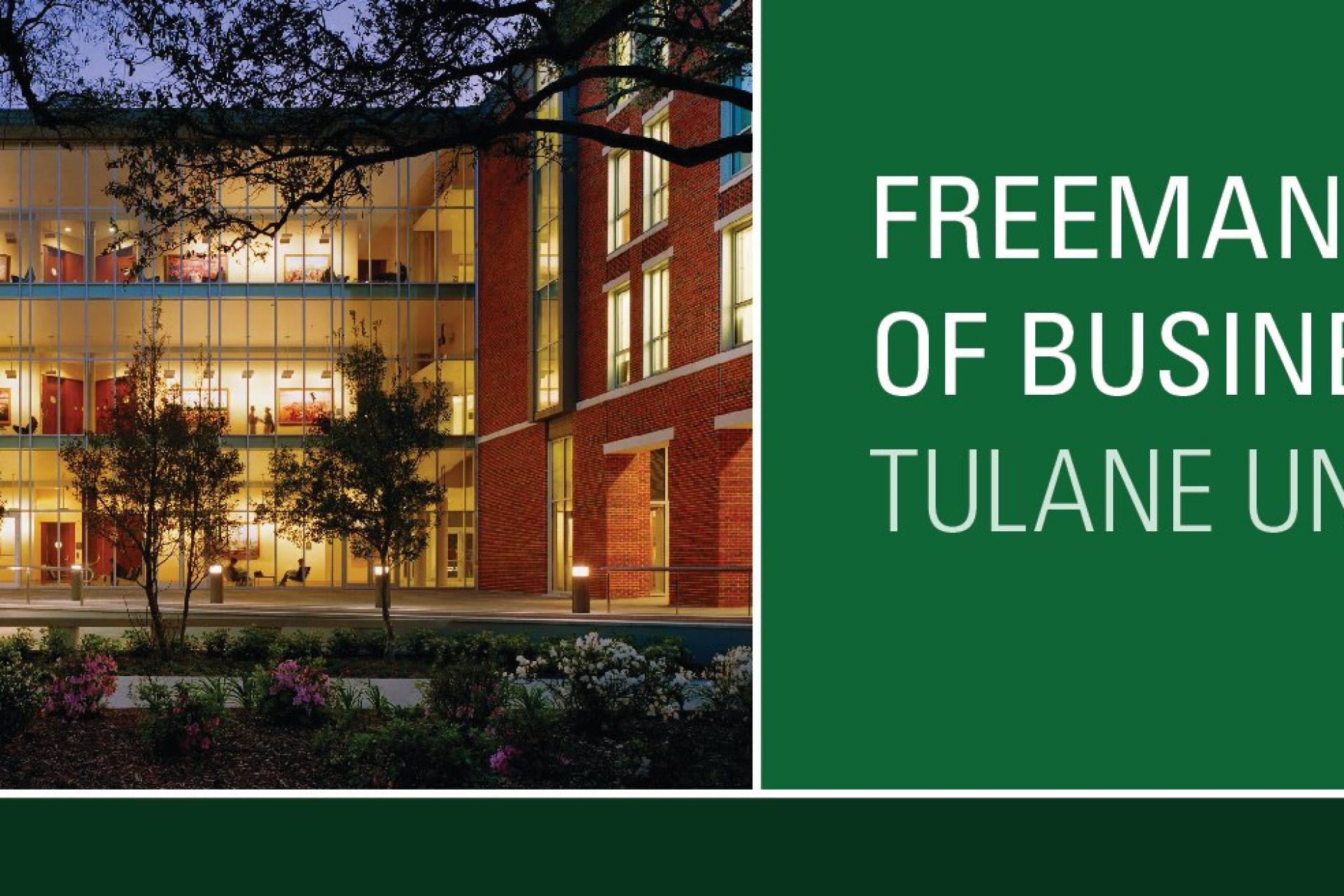
The A. B. Freeman School of Business at Tulane University is a premier institution in New Orleans, recognized for its emphasis on experiential learning, global business strategy, and financial excellence. Offering a range of undergraduate and graduate degrees, the school combines a rigorous academic curriculum with real-world application, preparing students for leadership in a rapidly evolving global economy.
Founded in 1914, the A. B. Freeman School of Business has evolved from a local center for commerce into an internationally ranked powerhouse of business education. As of 2026, the school continues to leverage its unique position in New Orleans—a city defined by its resilience, cultural depth, and emerging status as a "Silicon Bayou"—to offer students an education that is both technically sound and entrepreneurially spirited. The Freeman School is a founding member of the Association to Advance Collegiate Schools of Business (AACSB), a hallmark of its commitment to the highest standards of faculty research and student instruction.
The Freeman Educational Philosophy: Bridging Theory and Practice
The core philosophy of the Freeman School is rooted in the belief that business education should not exist in a vacuum. While theoretical frameworks are essential, the school prioritizes the application of these theories to solve actual business problems. This is achieved through a multi-faceted approach involving deep industry partnerships, student-managed investment funds, and intensive consulting projects.
In 2026, this philosophy is most visible in the school’s "Action Learning" initiatives. These programs require students to move beyond the classroom and into the boardroom, where they interact with executives from Fortune 500 companies and local startups alike. By the time a student graduates from Freeman, they have typically engaged in multiple high-stakes projects that mimic the pressures and complexities of the professional world.
Undergraduate Programs: The Bachelor of Science in Management (BSM)
The undergraduate experience at the Freeman School is built around the Bachelor of Science in Management (BSM). This degree is designed to provide a broad foundation in liberal arts while diving deep into specialized business disciplines.
Core Curriculum and Specializations
Every BSM student begins with a common core that covers the fundamentals of accounting, finance, marketing, management, and business communication. However, what sets the Freeman BSM apart is the requirement for students to think globally from day one. In the current 2026 academic year, the curriculum emphasizes data literacy and ethical leadership as non-negotiable pillars of the business degree.
Students can choose from several majors, including:
- Finance: Consistently ranked among the best in the nation, this major prepares students for roles in investment banking, corporate finance, and wealth management.
- Marketing: Focused on consumer behavior, digital analytics, and brand strategy in an era where data drives creative decisions.
- Management: Aimed at future leaders and entrepreneurs, focusing on organizational behavior and strategic planning.
- Legal Studies in Business: A unique offering for students interested in the intersection of commerce and the legal system.
The TIDES and Global Experience
Undergraduate students also participate in the Tulane Interdisciplinary Experience Seminars (TIDES), which help freshmen integrate into the university community. Furthermore, Freeman strongly encourages international study. With partnerships at leading business schools in Europe, Asia, and Latin America, students often spend a semester abroad to gain firsthand experience in different economic environments.
Graduate Education: The Freeman MBA and Beyond
The graduate division of the Freeman School is characterized by its flexibility and its focus on market-relevant skills. Whether a student is a recent graduate or a seasoned executive, the school offers a pathway to advancement.
The Full-Time MBA
The Full-Time MBA at Freeman is a transformative two-year program. By 2026, the curriculum has been further refined to integrate "Business for Good" principles, focusing on how profitability and social impact can coexist. The program is structured to allow for intensive concentration in fields like Energy, Entrepreneurship, or Analytics.
Professional and Executive MBA
Recognizing the needs of working professionals, the Freeman School offers the Professional MBA (PMBA) and the Executive MBA (EMBA). The PMBA is designed for early-to-mid-career professionals who wish to continue working while they study, offering evening classes and a modular format. The EMBA, on the other hand, is tailored for senior leaders, focusing on high-level strategy, leadership coaching, and global macroscopic trends.
Specialized Master’s Degrees
For those seeking deep expertise in a specific niche, Freeman offers several one-year specialized programs:
- Master of Finance (MFIN): A world-renowned program that utilizes the school’s state-of-the-art trading center to teach complex financial modeling and risk management.
- Master of Business Analytics (MANA): Designed to meet the skyrocketing demand for professionals who can interpret big data to drive business strategy.
- Master of Accounting (MACCT): Prepares students for the CPA exam and careers in audit, tax, and forensic accounting.
Distinctive Features: The "Freeman Advantage"
Several programs and centers of excellence define the Freeman experience and provide students with competitive advantages in the job market.
Burkenroad Reports
The Burkenroad Reports is perhaps the most famous program at the Freeman School. It is the nation’s first university-sponsored securities analysis program. Under the guidance of experienced faculty, students conduct in-depth research on "under-followed" public companies in the Gulf South region. Their final equity research reports are used by investment professionals, giving students unparalleled exposure to the world of equity analysis.
The Lepage Center for Entrepreneurship and Innovation
The Lepage Center serves as a hub for the New Orleans entrepreneurial ecosystem. It connects students with mentors, investors, and local business owners. Through the center, students can participate in pitch competitions, incubator programs, and the "Innovators-in-Residence" program, which brings successful founders to campus to teach and advise.
Goldring/Woldenberg Business Complex
Following significant expansions in the late 2010s, the school’s physical footprint in 2026 is a marvel of modern educational architecture. The complex features collaborative workspaces, advanced lecture halls, and a dedicated financial trading lab equipped with Bloomberg terminals and real-time market data feeds.
Comparison of Key Graduate Programs (2026 Data)
| Program | Duration | Target Audience | Primary Focus |
|---|---|---|---|
| Full-Time MBA | 21 Months | Career Changers/Advancers | General Management & Leadership |
| Master of Finance | 11-18 Months | Recent Grads/Early Career | Quantitative Analysis & Markets |
| Business Analytics | 10-12 Months | Data-focused Professionals | Big Data & Strategic Decisioning |
| Executive MBA | 18 Months | Senior Executives (10+ years) | Strategic Leadership & Global Policy |
Career Outcomes and the Freeman Alumni Network
The value of a Freeman degree is heavily tied to its return on investment (ROI). The school maintains a dedicated Career Management Center (CMC) that works individually with students to refine their resumes, practice interviewing, and connect with recruiters.
Graduates of the Freeman School find themselves at top-tier firms such as Goldman Sachs, Deloitte, Google, and ExxonMobil. The "Freeman Network" consists of over 25,000 alumni worldwide, providing a powerful resource for mentorship and job placement. In New Orleans specifically, Freeman alumni hold leadership positions in nearly every major industry, from healthcare and energy to the city’s thriving hospitality and tourism sectors.
Admissions and Financial Aid
Admission to the Freeman School is competitive. For the 2026 intake, the admissions committee looks beyond standardized test scores (GMAT/GRE), placing significant weight on professional experience, leadership potential, and the "Tulane fit"—a combination of academic curiosity and a desire to contribute to the community.
Prerequisites and Deadlines
- Undergraduate: Admissions are handled through Tulane University’s central undergraduate admissions office.
- Graduate: Requires a bachelor's degree from an accredited institution. International students must demonstrate English proficiency through TOEFL or IELTS.
- Financial Aid: Freeman offers a variety of merit-based scholarships and fellowships. Over 60% of graduate students typically receive some form of financial assistance.
Research and Faculty Impact
The faculty at the Freeman School are not just teachers; they are active researchers whose work influences global business policy. Their research is frequently published in top-tier journals such as the Journal of Finance and the Academy of Management Review. In 2026, the school has a specific focus on research regarding sustainable business practices, the economics of climate change (highly relevant to the Gulf Coast), and the impact of artificial intelligence on organizational structure.
Summary of Next Steps for Prospective Students
If you are considering the A. B. Freeman School of Business, the first step is to identify which program aligns with your career trajectory.
- Visit the Campus: If possible, visit the Goldring/Woldenberg Business Complex in New Orleans to experience the culture firsthand.
- Connect with Admissions: Schedule a one-on-one consultation with an admissions counselor to discuss your specific goals.
- Engage with Alumni: Use platforms like LinkedIn to reach out to Freeman alumni in your field of interest.
- Review the Burkenroad Reports: Reading these reports can give you a clear idea of the analytical rigor expected at the school.
The A. B. Freeman School of Business remains a beacon of excellence in the American South, offering a unique blend of high-level finance, entrepreneurial grit, and a global outlook that is essential for the business leaders of 2026 and beyond.
Frequently Asked Questions
What is the most famous program at the Freeman School?
The Burkenroad Reports is widely considered the school's flagship program. It allows students to act as equity research analysts, producing professional-grade reports on small-cap companies. This program has been featured in major financial news outlets and provides students with a unique portfolio piece that is highly valued by investment firms.
How does being in New Orleans benefit business students?
New Orleans provides a "living laboratory" for business. Students have direct access to the energy sector, international trade through the Port of New Orleans, and a rapidly growing technology and entrepreneurship scene. The city’s unique challenges, such as coastal restoration and urban revitalization, also provide fertile ground for studying social entrepreneurship and sustainable business practices.
Is the GMAT or GRE required for 2026 admissions?
As of 2026, the Freeman School maintains a flexible testing policy. While scores are often recommended for those seeking merit-based scholarships or for those with less quantitative undergraduate backgrounds, waivers are available for candidates with significant professional experience or high undergraduate GPAs. It is best to check the specific program's requirements on the official admissions page.
Does the school offer online degree options?
Yes, the Freeman School has expanded its digital offerings by 2026. While the core experience remains residential to facilitate networking, several specialized master’s programs and certificate courses are offered in hybrid or fully online formats to accommodate global students and working professionals.
What are the career prospects for Freeman finance graduates?
Finance graduates from Freeman are highly sought after, particularly in the Gulf South and New York financial hubs. The school’s strong emphasis on quantitative modeling and the use of the Darwin Fenner Student-Managed Fund—where students manage millions of dollars of the university's endowment—ensures that graduates have practical experience that differentiates them from their peers.