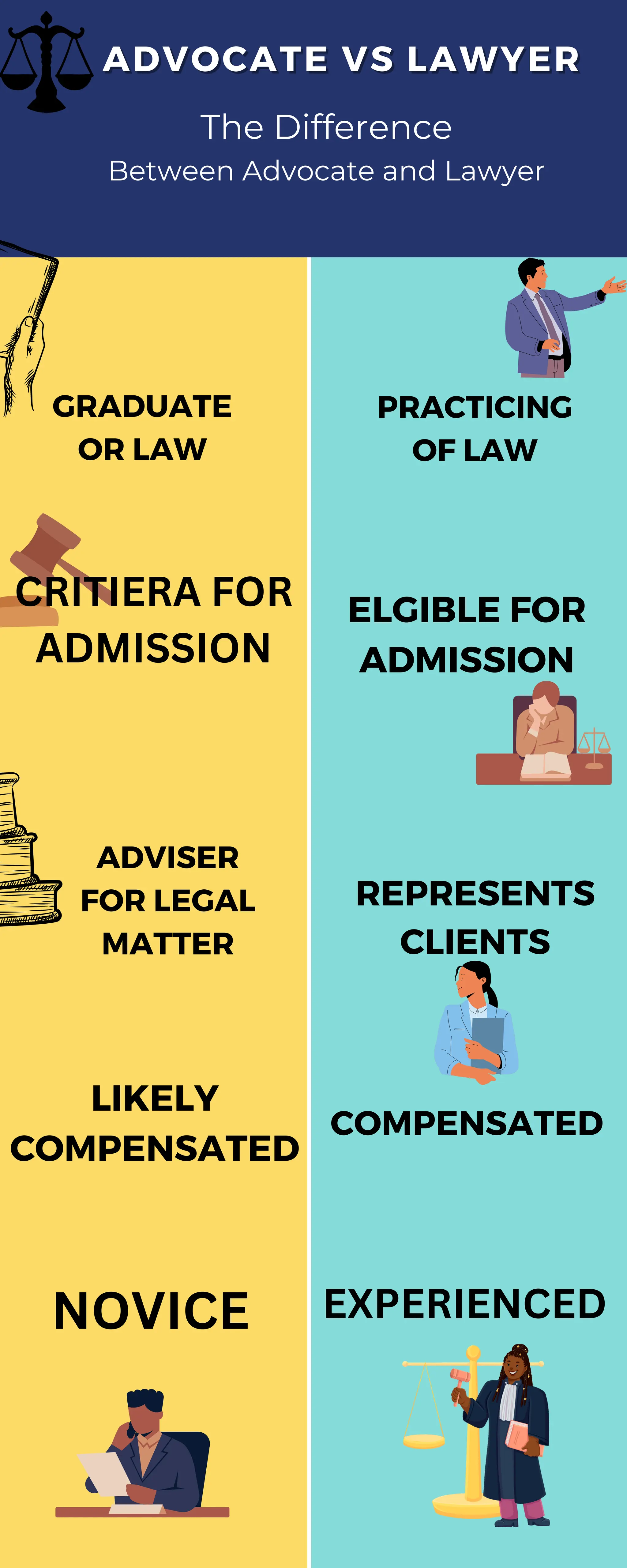
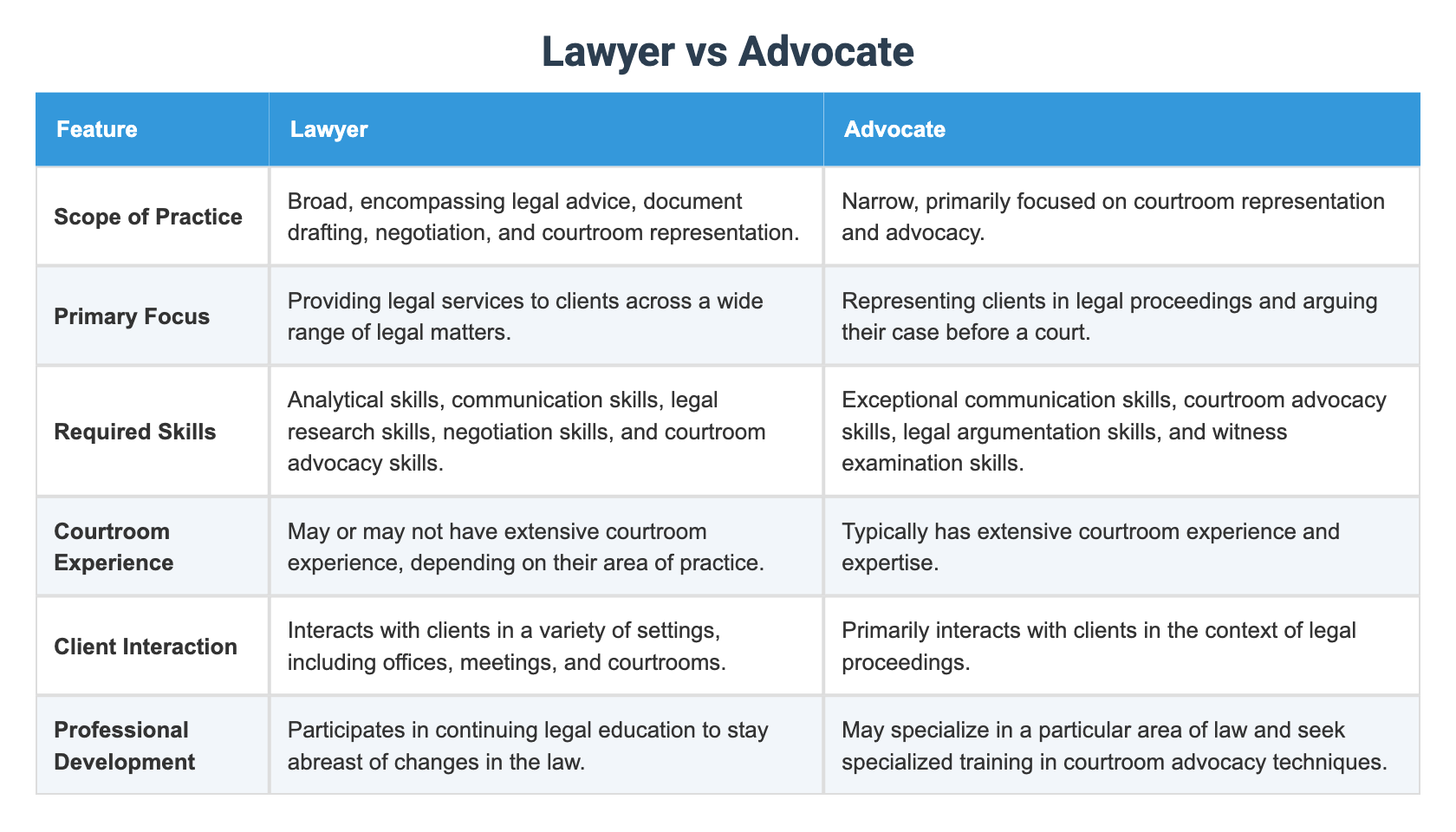
While the terms are often used interchangeably in casual conversation, "lawyer," "attorney," and "advocate" carry distinct meanings and legal qualifications. A lawyer is an individual who has completed law school and earned a law degree; an attorney is a lawyer who has been admitted to a specific bar association to practice law; and an advocate refers to the specific role an individual plays while representing a client in legal proceedings or as a champion for a cause.
The Foundation: What Is a Lawyer?
The term "lawyer" is the most general designation within the legal profession. In the United States and many other jurisdictions, a lawyer is someone who has graduated from an accredited law school and holds a Juris Doctor (J.D.) or an equivalent legal degree.
Possessing a law degree is the academic requirement to enter the profession, but it is not the only requirement to provide legal advice or represent clients in court. Being a "lawyer" is a status defined by education. However, having a law degree does not automatically grant an individual the license to practice law. For instance, many people earn a law degree to work in fields like corporate compliance, human resources, or academia without ever pursuing a license to practice. In these roles, they are lawyers by education but not practitioners of law in the traditional sense.
The Practitioner: Defining an Attorney
The term "attorney" is a shortened version of "attorney-at-law." This title is reserved for individuals who have met all the requirements to practice law in a specific jurisdiction. To become an attorney, a lawyer must pass the bar examination of a state or territory and satisfy the character and fitness requirements mandated by the relevant bar association or high court.
Once licensed, an attorney has the legal authority to represent clients in court, sign pleadings, and offer legal advice that constitutes the "practice of law." This distinction is critical for public protection. If you are seeking legal representation, you are looking for an attorney. While every attorney is technically a lawyer, not every lawyer is an attorney. An attorney-at-law is essentially a lawyer who has passed the regulatory hurdles to become an authorized agent for their clients, capable of binding them to legal agreements and speaking on their behalf in judicial settings.
The Representative: Understanding the Role of an Advocate
The term "advocate" often carries a dual meaning, functioning both as a professional title and a descriptive term for the function a lawyer performs. In many legal systems outside of the United States—particularly those influenced by British common law—an "advocate" is a specific type of legal professional, similar to a barrister, who specializes in courtroom litigation. In these jurisdictions, the distinction between a solicitor (who handles paperwork and client communication) and an advocate (who represents the client in court) is strictly codified.
In the United States context, "advocate" is frequently used to describe the function of an attorney. When an attorney stands before a judge or jury to present arguments, cross-examine witnesses, or protect a client's constitutional rights, they are acting as an advocate. Beyond the courtroom, the term is also used in non-legal or quasi-legal settings, such as a "victim advocate" or a "policy advocate," where the individual provides support or pushes for systemic change without necessarily holding a license to practice law.
Summary Comparison Table
The following table clarifies the functional differences between these three terms as typically applied in modern practice.
| Term | Academic Requirement | Licensing Requirement | Primary Function |
|---|---|---|---|
| Lawyer | Law School Degree | None (by degree alone) | Academic knowledge; legal advisory |
| Attorney | Law School Degree | Passed Bar Exam | Court representation; practice of law |
| Advocate | Varies | Varies by jurisdiction | Public speaking; litigation; persuasion |
Practical Considerations: When You Need Representation
When you are searching for someone to help you with a legal issue, it is important to look for an "attorney." When you review a law firm's website or professional directory, you will likely see the term "Attorney at Law." This signifies that the individual is subject to the rules of professional conduct established by their state bar.
If you are involved in a criminal case or a high-stakes civil dispute, you need an attorney who is licensed in your specific state. A lawyer from another state may have the education, but they lack the standing to advocate for you in a local court unless they are granted "pro hac vice" admission for a specific case. Always verify an individual's license through the official website of the state bar association or the high court of the jurisdiction where the legal matter is occurring.
Common Misconceptions
One of the most frequent errors is assuming that a "lawyer" is automatically authorized to handle your court case. Because the terminology is used loosely in television and movies, the public often assumes that if someone has a law degree, they have the same scope of practice as a partner at a litigation firm.
Another misconception involves the term "attorney-in-fact." This is entirely different from an "attorney-at-law." An attorney-in-fact is someone who has been granted Power of Attorney (POA) to act on behalf of another person regarding financial or health-related decisions. An attorney-in-fact does not need a law degree and is not acting in a legal capacity as an attorney-at-law. Confusing these two can lead to significant errors when drafting estate plans or handling emergency medical decisions.
Frequently Asked Questions
Can I hire a lawyer to represent me in court if they are not an attorney? No. In almost every U.S. jurisdiction, only a licensed attorney may represent a client in court. A person with a law degree who has not passed the bar exam lacks the authority to act as an advocate in judicial proceedings.
Is an advocate the same as a lawyer? In some countries, yes, an advocate is a specific type of lawyer. In the U.S., "advocate" is a functional term. You can be an advocate for a cause without being a lawyer, but if you are an advocate in a courtroom, you must be a licensed attorney.
Do I need an attorney for every legal document? While you do not need an attorney for every document (for example, simple contracts or basic lease agreements), having an attorney-at-law review documents is the best way to ensure your interests are legally protected and that the document complies with local statutes.
What should I verify before hiring someone for legal help? Always check the "Attorney Status" or "Member Directory" on your state bar association's official website. This confirms that the person is in good standing and licensed to practice law in your jurisdiction.
What is the difference between a barrister and a solicitor? These are terms primarily used in the U.K., Canada, and some other Commonwealth nations. A solicitor handles client contact and paperwork, while a barrister (or advocate) specializes in courtroom litigation. The U.S. system merges these roles into the single title of "attorney."
Next Steps for Legal Support
If you have a legal concern, start by identifying the specific area of law, such as family law, criminal defense, or property law. Once you have identified the nature of the issue, search the official state bar association directory to find licensed attorneys. Filter by the attorney’s specialty and ensure they are in good standing. During your initial consultation, ask about their experience in the courtroom—this is where their role as an advocate will be most tested. Do not rely on casual advice from individuals who hold a law degree but lack an active license to practice, as they cannot legally represent your interests in court.