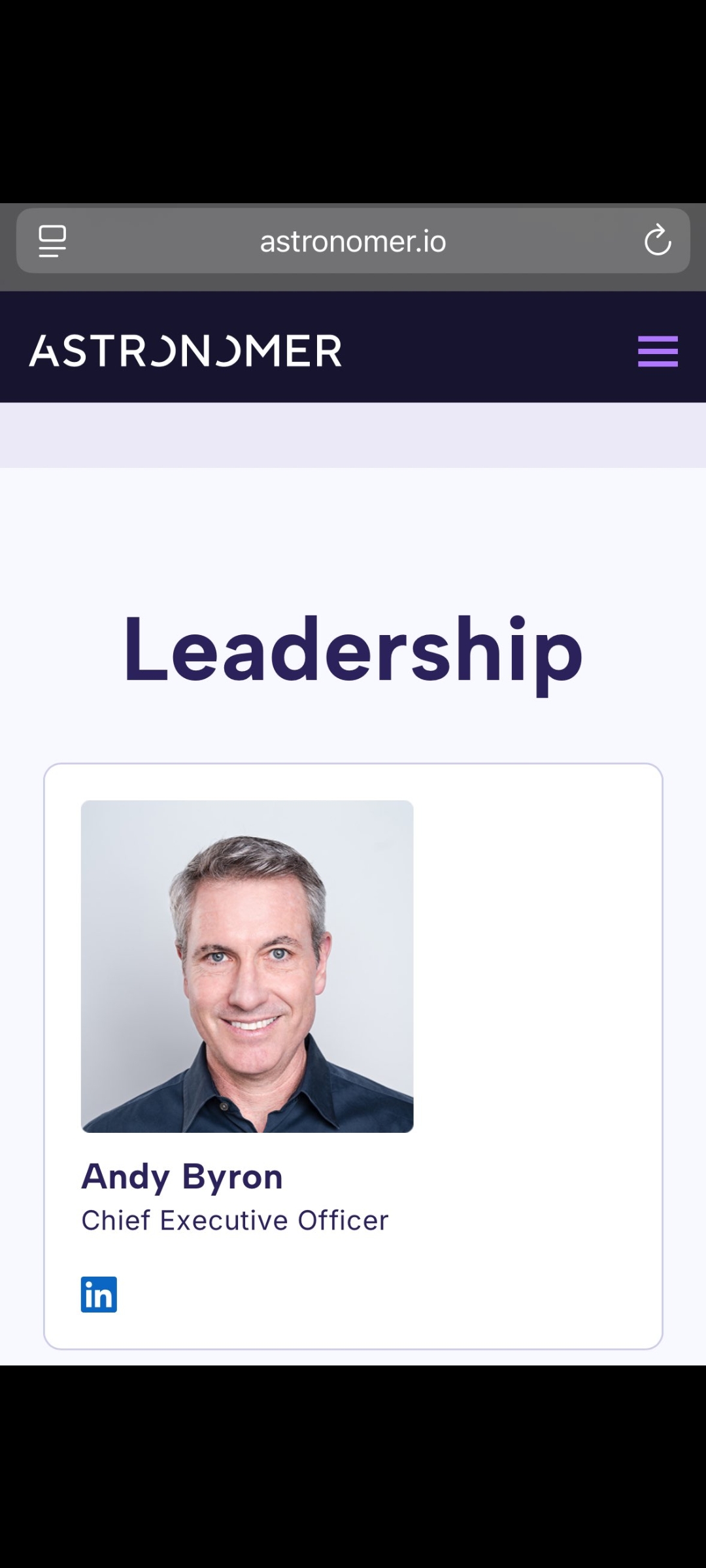
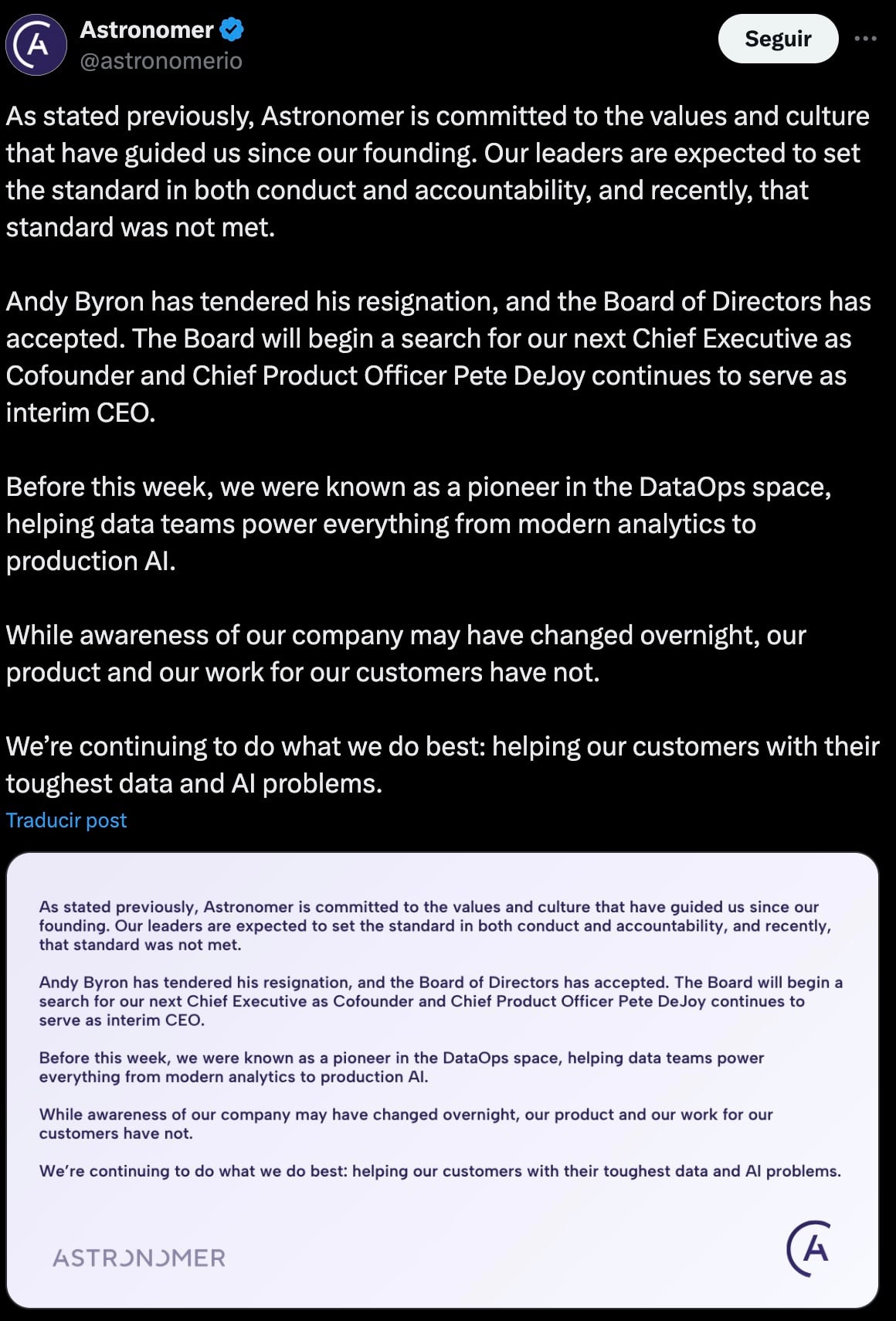
Astronomer CEO Andy Byron’s response to the shifting data ecosystem centers on transforming the company from a managed Apache Airflow provider into a comprehensive "Data Productivity Platform." By integrating OpenLineage for observability and launching AI-native orchestration features, Byron addresses the "complexity" critique of legacy Airflow, positioning the platform as the essential backbone for enterprise AI and large-scale data operations in 2026.
As the leader of the commercial entity behind Apache Airflow, Andy Byron has navigated a period of intense scrutiny and rapid technological evolution. When Byron stepped into the CEO role, succeeding Joe Taranto, the data engineering world was at a crossroads. Newer orchestrators like Dagster and Prefect were gaining traction by claiming Airflow was too "legacy" or "heavyweight." Byron’s response was not merely defensive; it was a proactive re-engineering of how the enterprise perceives and interacts with data orchestration.
The Core Philosophy: From Orchestration to Productivity
At the heart of Andy Byron’s leadership is the concept of "Data Productivity." In multiple public forums and strategic updates, Byron has argued that the industry’s obsession with "orchestration" as a standalone task is outdated. Instead, his response has been to pivot Astronomer toward solving the "Day 2" operations problem—the ongoing maintenance, scaling, and observability that consume the majority of a data engineer's time.
Byron’s strategy emphasizes that while Apache Airflow remains the industry standard due to its massive ecosystem and over 1,500 contributors, the commercial value lies in removing the "toil" associated with managing it. This response effectively reframes the Airflow vs. competitors debate: if Airflow is the engine, Astronomer (Astro) is the high-performance vehicle that ensures the driver (the data engineer) reaches their destination without having to worry about the mechanics under the hood.
Addressing the "Airflow is Complex" Narrative
One of the most significant aspects of Andy Byron’s response has been his direct confrontation with the perception of Airflow’s complexity. Critics often point to the steep learning curve of writing Directed Acyclic Graphs (DAGs) in Python and the overhead of managing Kubernetes clusters.
Byron’s response to this has been two-pronged:
- Simplification via Astro: The launch and continuous refinement of the Astro platform. By providing a "serverless" experience for Airflow, Astronomer allows teams to deploy DAGs in minutes rather than weeks.
- The "Standard" Argument: Byron frequently points out that "complexity" is often a byproduct of "capability." He argues that for global enterprises with thousands of pipelines, the "simple" alternatives often lack the robustness, security, and customizability that only an Airflow-based architecture can provide.
Under his leadership, Astronomer has invested heavily in the UI/UX of the Airflow interface, introducing features that allow for better visualization, easier debugging, and more intuitive management of complex dependencies. This technological response has significantly lowered the barrier to entry for new teams while retaining the power required by expert users.
The AI Pivot: Orchestrating the Generative AI Wave
As we move through 2026, the primary driver of data infrastructure investment is Generative AI and Large Language Models (LLMs). Andy Byron’s response to this trend has been to position Astronomer as the "connective tissue" for AI pipelines.
Modern AI applications are not just about the model; they are about the data supply chain that feeds them. Byron has overseen the development of specialized "Airflow Providers" for vector databases (like Weaviate and Pinecone) and LLM frameworks (like LangChain). By doing so, Astronomer ensures that when a CEO asks, "How are we scaling our AI?" the answer involves the reliability and governance provided by the Astronomer platform.
Byron’s response here is critical: he recognizes that AI workloads are inherently non-deterministic and require rigorous orchestration to ensure data quality and model performance. By integrating these needs into the core Astro platform, he has moved Astronomer beyond traditional ETL (Extract, Transform, Load) into the realm of AI-Ops.
Strategic Acquisitions and the Observability Mandate
A defining moment in Andy Byron’s tenure was the strategic focus on observability, largely catalyzed by the integration of Datakin (the company behind OpenLineage). Byron’s response to the "black box" problem of data pipelines was to make data lineage a first-class citizen in the Astronomer ecosystem.
In 2026, data lineage is no longer a "nice-to-have" for compliance; it is a fundamental requirement for debugging and cost management. Byron’s leadership ensured that Astronomer didn't just support OpenLineage but actively drove the standard. This allows users to see not just that a task failed, but what data was affected downstream, where that data originated, and how the failure impacts the business.
This response addressed a major pain point for C-suite executives: the fear of "silent data corruption." By providing a platform that offers end-to-end visibility, Byron has transitioned Astronomer from a developer tool to an enterprise-grade mission-critical platform.
Comparing Managed Solutions: Why the Byron Strategy Matters
To understand the impact of Byron's response, it is helpful to look at how Astronomer stacks up against both open-source alternatives and direct competitors in the 2026 market.
| Feature | Apache Airflow (OSS) | Astronomer (Astro) | Legacy Orchestrators |
|---|---|---|---|
| Deployment Speed | High (Requires Infra Setup) | Near-Instant (Serverless) | Moderate |
| Observability | Basic (Logging) | Advanced (OpenLineage) | Fragmented |
| AI/LLM Support | Community Providers | Native Integrations | Variable |
| Scalability | Manual Scaling | Auto-scaling (K8s/Serverless) | Limited |
| Governance | User-defined | Enterprise-grade RBAC/Security | Basic |
| Cost Management | Indirect (Cloud Spend) | Direct (Usage-based Billing) | Fixed Seat Licenses |
This comparison highlights how Byron’s response has been to "bridge the gap" between the raw power of open-source and the operational requirements of the modern enterprise.
Financial and Operational Resilience
Under Andy Byron, Astronomer has focused on sustainable growth and "efficiency-first" engineering. In an era where "growth at all costs" has fallen out of favor, Byron’s response has been to prioritize the ROI for his customers.
By introducing tiered pricing and usage-based models, he has made the platform accessible to startups while remaining the default choice for the Fortune 500. This fiscal responsibility, paired with aggressive product innovation, has solidified Astronomer's position despite the volatile venture capital environment of the mid-2020s.
Furthermore, his response to the global shift toward multi-cloud and hybrid-cloud environments has been to ensure that Astro can run anywhere. Whether a customer is on AWS, Azure, GCP, or on-premises, Byron’s vision for a "cloud-agnostic" orchestration layer remains a key selling point for enterprises wary of vendor lock-in.
Addressing the Developer Experience (DX)
A frequent point of discussion in Andy Byron's interviews is the importance of the Developer Experience. He often remarks that "the best tool is the one developers actually want to use."
His response to this philosophy led to the overhaul of the Astro CLI (Command Line Interface). In 2026, the Astro CLI is widely regarded as one of the best in the data engineering space, offering local development environments that perfectly mirror production. This solves the "it worked on my machine" problem that plagued data teams for years. By focusing on these granular developer needs, Byron has fostered a loyal community that acts as a bottom-up driver for enterprise adoption.
Common Obstacles in Orchestration: Byron's Solutions
In his public responses and whitepapers, Byron frequently addresses the three "killers" of data engineering projects:
- Complexity Exhaustion: Teams spend 80% of their time fixing the orchestrator rather than building data products. Byron's Fix: Serverless Airflow.
- The Metadata Gap: Teams know a pipeline ran, but not what it did to the data. Byron's Fix: Deep OpenLineage integration.
- The AI Prototype Trap: Companies build AI models in notebooks but can't deploy them to production reliably. Byron's Fix: Robust AI-native DAG templates and providers.
The Role of Open Source Advocacy
Crucially, Andy Byron has maintained a delicate balance between commercial interests and open-source stewardship. His response to the "Open Source Sustainability" crisis—where companies pull back from OSS to protect their bottom line—has been the opposite. Astronomer remains the primary contributor to Apache Airflow.
Byron understands that the strength of Astronomer is directly tied to the health of the Airflow community. His response has been to fund full-time developers to work on the Airflow core, ensuring that features like the "AIP-44" (Internal API) and better multi-tenancy are available to the entire world, not just Astronomer customers. This "rising tide lifts all boats" approach has earned him significant respect in the open-source community.
FAQs about Astronomer CEO Andy Byron’s Response
What is Andy Byron’s stance on the "Modern Data Stack"?
Andy Byron has argued that the "Modern Data Stack" is evolving into a more integrated "Data Productivity" era. He believes that the era of having 50 different disconnected tools is ending, and the "response" is to provide an orchestration layer that ties these tools together into a single, observable workflow.
How has Byron responded to competitors like Dagster and Prefect?
Byron’s response has been to focus on scale and standardization. While acknowledging the innovation of competitors, he emphasizes that Airflow has a 10-year head start in edge-case handling, security certifications (SOC2, HIPAA), and a global talent pool. He positions Astronomer as the way to get "the best of both worlds"—the modernity of a new tool with the reliability of the global standard.
What is the most significant change Byron brought to Astronomer?
The most significant change was the shift from being a "hosting provider" for Airflow to a "software platform." This involved a massive engineering effort to build the Astro control plane, which manages multiple clusters and clouds through a single interface, rather than just spinning up virtual machines for customers.
How does Byron’s response address the cost of data operations?
Byron introduced more granular, usage-based pricing and "cost-optimized" executor types. This allows teams to pay only for the compute they use during DAG execution, significantly reducing the "idle time" costs associated with traditional managed Airflow services.
Is Astronomer still focused exclusively on Airflow in 2026?
While Airflow remains the core engine, Byron’s response has expanded the platform's scope to include "universal" observability through OpenLineage. This means Astronomer can now provide insights into data moving through tools that aren't Airflow, making it a broader data governance player.
Recommendation for Data Leaders
For data leaders evaluating their orchestration strategy in 2026, the key takeaway from Andy Byron’s strategic response is the importance of future-proofing. Organizations should not choose an orchestrator based on today’s simple ETL tasks, but based on tomorrow’s complex AI and governance requirements.
The recommendation is to move away from managing the "plumbing" of data orchestration. By adopting a platform that follows Byron’s vision of data productivity, teams can redirect their expensive engineering talent toward building value-added features—like predictive models and real-time analytics—rather than troubleshooting infrastructure. Whether you are a small team or a global enterprise, the goal should be to achieve "Day 2" operational maturity as quickly as possible, a goal that Byron has made the central mission of Astronomer.