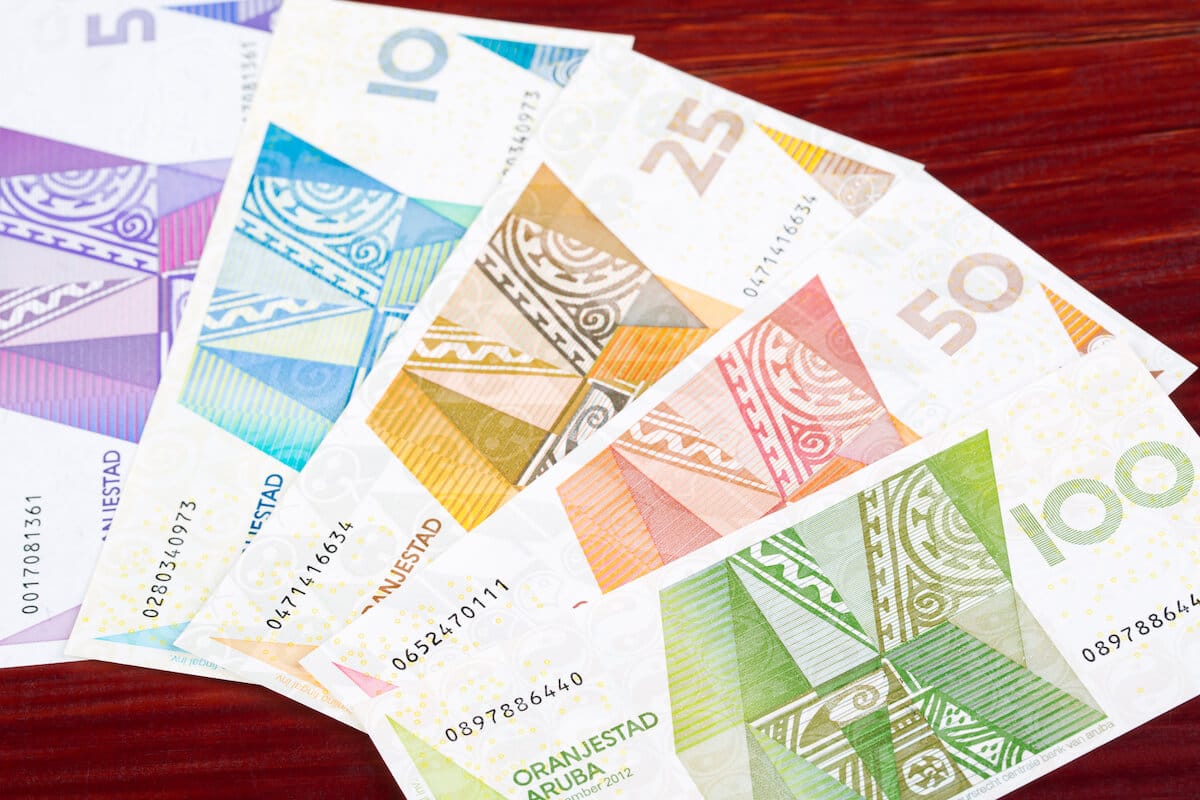
Aruba uses the Aruban Florin (AWG) as its official currency, which is pegged to the US Dollar at a fixed rate of 1.79. However, US Dollars are widely accepted across the island at a standard street rate of 1.75. Travelers can easily navigate the island using both currencies, credit cards, and mobile payments.
Understanding the nuances of currency in Aruba is essential for any traveler or expatriate looking to manage their finances effectively on the "One Happy Island." While the Aruban Florin is the legal tender, the island’s economy is deeply intertwined with US tourism, creating a dual-currency environment that is remarkably user-friendly. As of 2026, while digital payments have become the standard in major tourist hubs like Palm Beach and Oranjestad, cash remains a vital component of local commerce, particularly in smaller "kunuku" (countryside) shops and for specific transportation services.
The Aruban Florin (AWG): History and Stability
The Aruban Florin, denoted by the symbol "Afl." or the ISO code AWG, was introduced in 1986. This was a pivotal year for the island as it gained its Status Aparte (separate status) within the Kingdom of the Netherlands, moving away from the Netherlands Antillean Guilder. The Centrale Bank van Aruba (CBA) manages the currency with a primary focus on maintaining the fixed exchange rate with the US Dollar.
This peg has remained unchanged since the currency’s inception: 1.79 AWG per 1 USD. This stability is a cornerstone of the Aruban economy, providing a predictable environment for international trade and tourism. Because the Florin is not traded on global forex markets like the Euro or Yen, its value is entirely dependent on the US Dollar’s performance. For travelers, this means you never have to worry about fluctuating exchange rates during your stay; the math you do on day one will be the same math you do on day ten.
Understanding the Dual-Currency System
One of the most frequent questions regarding Aruba currency explained is whether one actually needs to exchange money. In short: rarely. Most businesses in Aruba are perfectly comfortable accepting US Dollars (USD). However, there is a slight distinction between the official bank rate and the "street rate" used in commerce.
The 1.79 vs. 1.75 Exchange Rate
While the official bank rate for selling USD is 1.79, almost every shop, restaurant, and supermarket in Aruba uses a simplified exchange rate of 1.75 AWG to 1 USD. This 0.04 difference acts as a small convenience fee for the merchant who must eventually deposit those dollars back into a bank account.
When you pay with USD, you will often receive your change in Aruban Florins. This is a standard practice across the island. For example, if your bill is 35 Florins (20 USD) and you hand over a 50 USD bill, you might receive the remainder of your change in a mix of Florins and Dollars, or entirely in Florins. It is helpful to keep a mental note of the 1.75 conversion to ensure you are receiving the correct change.
Aruban Banknotes: The "Life in Aruba" Series
In 2019, the Central Bank of Aruba released a stunning new series of banknotes titled "Life in Aruba." As we look at the currency landscape in 2026, these notes remain the standard. They are recognized globally for their artistic merit and advanced security features, including high-relief printing, color-shifting ink, and motion-surface technology.
The notes are oriented vertically, a unique design choice that distinguishes them from many other world currencies. Each denomination features Aruban flora, fauna, and cultural heritage:
- 10 Florin (Blue): Features the turtle, representing the island's marine biodiversity.
- 25 Florin (Orange): Showcases the "Shoco" (Aruban burrowing owl), a national symbol.
- 50 Florin (Red/Violet): Depicts the land crab, highlighting the island's coastal life.
- 100 Florin (Green): Features the iguana, perhaps the most ubiquitous reptile on the island.
- 200 Florin (Brown): Displays the "Crested Caracara" bird.
These notes are printed on a durable substrate designed to withstand the tropical climate. It is important to note that the older 500 Florin note was discontinued during the 2019 transition to combat money laundering and is no longer in circulation.
Aruban Coins and the Famous Square "Yotin"
Aruban coins come in denominations of 5, 10, 25, and 50 cents, as well as 1 and 5 Florin coins. The 50-cent coin is particularly famous among tourists; it is square-shaped and often referred to as the "yotin." Historically, this name comes from the word "guillotine," as people used to cut larger coins into pieces to create smaller denominations. Today, the square 50-cent piece is a popular souvenir.
The 1 and 5 Florin coins are gold-colored and have a distinct weight. When dealing with coins, remember that US coins are not accepted in Aruba. While US paper bills are welcomed everywhere, you cannot use US quarters or dimes in local vending machines, parking meters, or shops. If you receive Aruban coins as change, try to use them up before you leave, as they are difficult to exchange back into other currencies outside of the island.
Using Credit Cards and Mobile Payments in 2026
As of 2026, Aruba has seen a significant shift toward a cashless society in its primary tourist zones. Major credit cards—specifically Visa and Mastercard—are accepted almost everywhere, from high-end boutiques in the Renaissance Mall to small beach bars in Savaneta.
Credit Card Considerations
- American Express and Discover: While accepted at major hotels and luxury retailers, they are less commonly accepted at smaller local eateries or grocery stores compared to Visa and Mastercard.
- Foreign Transaction Fees: Always check with your bank before traveling. Using a card with no foreign transaction fees can save you 2% to 3% on every purchase.
- Dynamic Currency Conversion (DCC): If a card terminal asks whether you want to be charged in AWG or USD, always choose AWG. Choosing USD allows the local bank to set the exchange rate, which is almost always worse than the rate your own bank will provide.
Mobile and Contactless Payments
In 2026, Apple Pay, Google Pay, and contactless "tap" cards are standard at nearly all point-of-sale terminals in Aruba. This includes the public bus system (Arubus), though many local taxis still prefer cash. If you are venturing into the Arikok National Park or visiting remote food trucks, having some cash on hand is still recommended, but for the most part, you can navigate the island with just your phone or a single card.
ATM Access and Banking
Finding an ATM (locally called a "Bankomatiko") is easy in Aruba. They are located at the airport, inside all major resorts, at supermarkets, and in the downtown areas of Oranjestad and San Nicolas.
Most ATMs in Aruba offer a choice of withdrawing Aruban Florins or US Dollars.
- When to withdraw USD: If you plan to use the cash for tips or at businesses where you want to keep your currency "standard," USD is a safe bet.
- When to withdraw AWG: If you are shopping at local supermarkets (like Super Food or Ling & Sons) or eating at local "snackology" spots, withdrawing Florins can sometimes save you a few cents on the conversion rate used by the merchant.
Important Note on Fees: Aruban banks usually charge a service fee (often around $5 USD) for international ATM usage, in addition to whatever fees your home bank charges. It is more cost-effective to withdraw larger amounts less frequently than to make multiple small withdrawals.
Tipping and Service Charges: The Financial Etiquette
Tipping in Aruba is a common practice, but it is often a source of confusion due to the "Service Charge." In many Aruban restaurants, a 10% to 15% service charge is automatically added to the bill.
It is crucial to understand that this service charge is often distributed among all staff (including the kitchen and cleaning crews) or, in some cases, retained by the establishment to cover administrative costs. It is not necessarily a direct tip for your server. If the service was excellent, it is customary to add an additional 5% to 10% on top of the service charge. If no service charge is included, a standard tip of 15% to 20% is expected, similar to North American standards.
| Category | Typical Tipping Standard (2026) |
|---|---|
| Restaurants | 15–20% (Check if service charge is already included) |
| Taxis | 10–15% of the fare (usually $1–$3 extra) |
| Porters/Bellhops | $2 USD per bag |
| Housekeeping | $3–$5 USD per day |
| Tour Guides | 10–20% of the tour price |
| Bartenders | $1–$2 USD per drink or 15% of the tab |
Comparison Table: AWG vs. USD for Travelers
| Feature | Aruban Florin (AWG) | US Dollar (USD) |
|---|---|---|
| Acceptance | Everywhere in Aruba | Everywhere in Aruba |
| Exchange Rate | Primary Unit | Fixed at 1.75 (Street) / 1.79 (Bank) |
| Best Used For | Small local shops, public buses, exact change | Hotels, excursions, major restaurants |
| Coins | 5c, 10c, 25c, 50c (Square), 1fl, 5fl | Not accepted (use Florin coins) |
| ATM Availability | High (All ATMs) | High (Most tourist ATMs) |
| Change Returned | Always in Florins | Often in Florins |
Practical Budgeting: What Things Cost in 2026
To give a clearer picture of Aruba currency explained, one must look at the actual purchasing power. Aruba imports almost everything, so prices are generally higher than in the US or Europe.
- Dining: A casual lunch for two at a beach bar will cost approximately 45–60 AWG ($25–$35 USD). A high-end dinner for two in Palm Beach can easily exceed 270 AWG ($150 USD), including drinks and service.
- Transportation: Taxis operate on fixed rates set by the government; they do not use meters. A trip from the airport to the high-rise hotel zone is roughly 55 AWG ($31 USD) as of 2026. The public bus (Arubus) is much cheaper, at approximately 4.50 AWG ($2.60 USD) for a one-way trip.
- Groceries: A gallon of milk is roughly 9 AWG ($5 USD), and a local Balashi beer at a supermarket is about 3.50 AWG ($2 USD).
Common Pitfalls and Money-Saving Tips
Avoid the Airport Exchange Desks
The exchange counters at Queen Beatrix International Airport often offer the least favorable rates. Since USD is accepted everywhere, there is no need to exchange money upon arrival. If you need local cash, use an ATM in the arrivals hall to get a better rate.
Spend Your Florins Before Leaving
While the Florin is beautiful, it is effectively worthless outside of Aruba. Most international banks will not exchange AWG back into USD or Euros. Spend your remaining coins and small notes at the airport duty-free shops or donate them to the charity boxes located near the departure gates.
Watch Out for "Sunday Surcharges"
While not a currency rule, be aware that some services (like taxis) have a small surcharge on Sundays and public holidays. This is usually around 5.40 AWG ($3 USD). Always confirm the rate with the driver before the trip starts to avoid confusion.
Use Local Apps
By 2026, several local apps have integrated payment systems for parking and local deliveries. Linking a travel-friendly credit card to these apps can prevent the need for carrying bulky coins or searching for small bills.
FAQs About Aruba Currency
Can I use Euros in Aruba?
While some major hotels may accept Euros, the exchange rate offered will be very poor. It is highly recommended to use US Dollars or Aruban Florins instead. If you only have Euros, exchange them at a local bank in Oranjestad for the best possible rate.
Is it better to pay in Florins or Dollars?
There is a very marginal benefit to paying in Florins because of the 1.75 vs. 1.79 exchange rate difference. For a $100 purchase, you might save about $2 USD by paying in Florins. For most travelers, the convenience of using USD outweighs these small savings. However, for long-term stays, using Florins for everything can lead to noticeable savings over time.
Are there any counterfeit concerns?
The 2019 "Life in Aruba" series is extremely difficult to counterfeit due to its advanced security features. However, always check for the "motion" feature on the 100 and 200 Florin notes. As with any currency, be cautious if someone offers you older, discontinued notes (like the old 500 Florin note), as they are no longer legal tender.
Will my debit card work in Aruba?
Yes, most debit cards with a Visa or Mastercard logo will work in Aruban ATMs and point-of-sale terminals. Ensure you have notified your bank of your travel plans to prevent the card from being flagged for suspicious activity. Also, ensure your card has a 4-digit PIN, as some older terminals may struggle with longer codes.
Do I need cash for the beach?
Most organized beach concessions for umbrellas and chairs accept credit cards. However, if you are buying a coconut or a snack from a local vendor on a public beach like Baby Beach or Eagle Beach, cash (USD or AWG) is often the only option.
Final Recommendations for Your Trip
To navigate Aruba's financial landscape successfully in 2026, the best strategy is a hybrid approach. Carry a credit card with no foreign transaction fees for your primary expenses like hotel bills, car rentals, and dinners. Supplement this with about $100–$200 in small US denominations ($1s, $5s, and $10s) for tipping and small purchases.
As you receive Aruban Florins in change, use them for your next small purchase to prevent an accumulation of local currency that you cannot use elsewhere. By understanding the 1.75 "street rate" and the ubiquitous nature of the US Dollar, you can focus less on your wallet and more on enjoying the white sands and turquoise waters of Aruba.