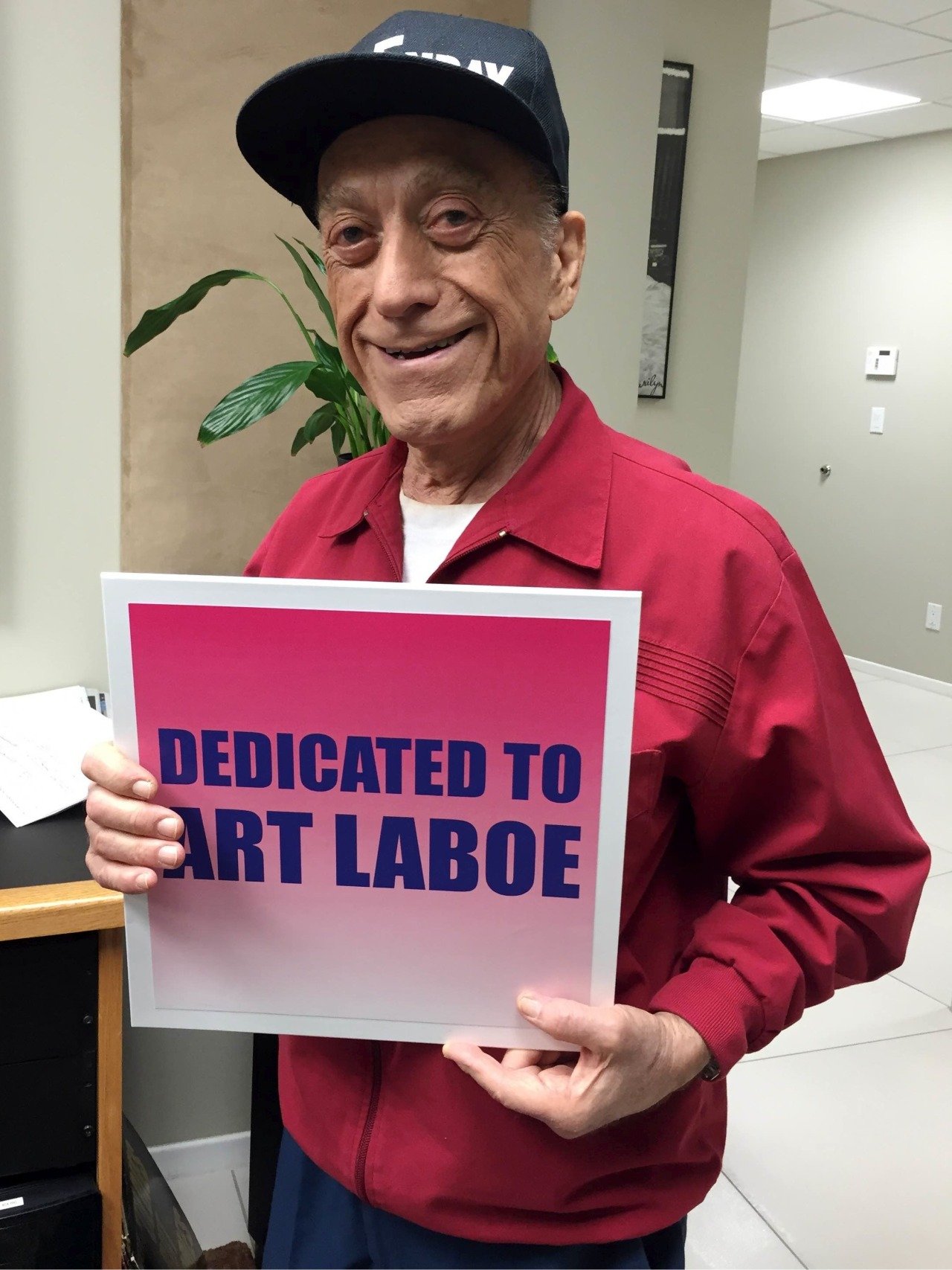
Art Laboe was a legendary disc jockey and music producer who revolutionized radio broadcasting by introducing the request-and-dedication format. Over a career spanning more than seven decades, he became a cultural icon in Southern California and beyond, best known for his "Oldies But Goodies" compilations and his long-running radio show that connected incarcerated individuals with their families and loved ones through song.
The Early Days and the Birth of a Format
Born Arthur Egnoian in 1925 in Salt Lake City, Utah, the man who would become Art Laboe moved to California as a teenager. His fascination with radio and the emerging sounds of the post-war era led him to pursue a career in broadcasting. In the late 1940s and early 1950s, the radio landscape was strictly formatted, often segregated, and lacked the interactive, personal touch that would eventually define Laboe’s career.
Laboe is widely credited with coining the term "Oldies But Goodies." He realized that listeners were not just interested in the latest chart-topping hits but also held a deep emotional attachment to the music of their youth. By creating a platform where these songs could be curated and played alongside new requests, he tapped into a sense of nostalgia that bridged age gaps and cultural divides.
His approach to broadcasting was inherently democratic. He did not operate from behind an ivory tower; he invited the listener into the booth. By taking phone calls on air and allowing listeners to dedicate songs to their partners, family members, or friends, he transformed the radio from a medium of passive consumption into a social gathering point. This innovation helped build a loyal, diverse audience that spanned decades, cementing his place in the history of American media.
The Impact of the "Oldies But Goodies" Series
In 1958, Laboe realized that his radio audience wanted a way to keep the music they heard on the air at home. This led to the launch of his "Oldies But Goodies" record label and compilation series. This was a revolutionary move in the music industry. Before Laboe, the concept of a compilation album focused on a specific genre or era of "oldies" was not a standard business practice.
The series became a massive commercial success, providing a blueprint for the "best of" compilations that would follow. By carefully selecting songs that resonated with the Latino community and the broader Southern California population, Laboe ensured his records were a staple in households across the region. These albums were not merely products; they were cultural artifacts that preserved the sound of a specific era, including doo-wop, R&B, and early soul.
Key Contributions to the Music Industry
| Innovation | Significance |
|---|---|
| Request-Based Radio | Prioritized listener participation over rigid playlists. |
| Oldies Compilation | Pioneered the "Oldies But Goodies" brand, standardizing the compilation format. |
| Cross-Cultural Playlists | Integrated diverse genres, appealing to a wide multicultural audience. |
| Dedication Segment | Transformed radio into a communication channel for social connection. |
Serving the Community: The Power of the Dedication
Perhaps the most defining aspect of Art Laboe’s career—and the one that garnered him the most intense loyalty—was his commitment to the "dedication" segment of his program. Laboe recognized early on that for many of his listeners, particularly those in marginalized communities or those who had family members serving time in prison, the radio was more than entertainment. It was a lifeline.
His show provided a unique, safe, and public space for people to send messages of love, hope, and remembrance. By reading dedications on air and playing the requested song, Laboe became a conduit for families who were otherwise separated. For those behind bars, hearing their name and a message of love on the radio provided a crucial connection to the outside world. This created a profound sense of community, where the radio show acted as an extension of the family dinner table.
This practice continued unabated throughout his career, including his final years at the microphone. Even in an era of digital communication and social media, the simplicity and intimacy of a radio dedication read by Art Laboe remained unmatched. It proved that despite technological advancements, the human need for genuine connection and validation remains constant.
Technical Innovations in Broadcasting
While Laboe is often remembered for his warmth and his playlist, his success was also built on a foundation of technical and professional discipline. Navigating the legal and logistical challenges of live broadcasting—especially when fielding hundreds of listener requests—required a highly efficient workflow.
He moved through various legendary stations in Southern California, including KPOP, KDAY, and KRLA. At each stop, he insisted on maintaining creative control over his program. He understood the nuances of audio production, ensuring that the transition between the warm, conversational tone of his voice and the music was seamless. He treated the radio signal with the respect of a craftsman, knowing that for his listeners, the quality of that signal was the quality of their connection to him.
The Cultural Significance of Art Laboe
Art Laboe’s influence extends far beyond the technical aspects of broadcasting. He became a fixture in the Chicano and Latino culture of Southern California, an influence that remained strong until his passing in 2022. Many scholars of cultural history note that Laboe’s music choices—often centering on mid-tempo ballads and soulful melodies—became the involuntary soundtrack of "lowrider" culture and community celebrations.
His refusal to conform to mainstream programming trends allowed him to build an authentic relationship with his audience. He did not change his style as trends shifted; instead, his audience grew with him. He was a constant. For thousands of people, an Art Laboe show on a Sunday evening was a ritual, a moment of reflection and collective experience that defined the rhythm of their lives.
Navigating the Legacy in 2026
As of 2026, the archives of Art Laboe’s work continue to be studied and appreciated by broadcasters and music historians alike. His contribution to radio serves as a case study in the power of audience engagement. In an increasingly fragmented digital media environment, the lessons from Laboe’s career are perhaps more relevant than ever.
The core of his success was his ability to treat the listener as a participant. Modern podcasters and digital radio hosts often struggle to find that balance between content delivery and community building. Laboe solved this half a century ago by placing the listener’s voice at the center of his show. For those looking to understand the mechanics of community-driven content, there is no better example than the decades-long tenure of Art Laboe.
Common Questions Regarding the Radio Pioneer
What made the "Oldies But Goodies" format so popular? It succeeded by validating the listener's memories. By treating "old" music with the same reverence and production quality usually reserved for new releases, Laboe made his listeners feel that their personal history was valuable.
How did the dedication segment function on his shows? Listeners would mail in or call in requests, often accompanied by a short note. Laboe would read these notes, often addressing the listener by name and expressing the sentiment behind the request before playing the song, creating a highly personal connection.
Why is he so closely associated with the Chicano community? Laboe played music that resonated deeply within these communities, and his unwavering presence through his radio segments provided a consistent cultural touchstone that spanned generations of families.
Did Art Laboe change the way radio stations operated? Yes, he forced stations to reconsider the value of personality-driven, interactive radio. He proved that a host who listens to their audience can build a brand that lasts for decades, often outlasting the management teams of the stations where he worked.
Is there a way to hear his old shows today? Many of his broadcasts are archived and preserved by radio historians and private collectors. Additionally, his "Oldies But Goodies" compilation albums remain available in digital and physical formats, serving as a testament to his curation skills.
Next Steps for Enthusiasts and Researchers
If you are researching the impact of Art Laboe, begin by reviewing the historical archives of Southern California radio stations where he held long-term residencies. These records often contain insights into the evolution of his format. For those interested in the musical history, exploring the "Oldies But Goodies" catalog provides a clear look at the specific soundscapes he championed. His career remains a testament to the idea that a dedicated radio personality, when given the freedom to connect with their audience, can become an indelible part of the cultural fabric.