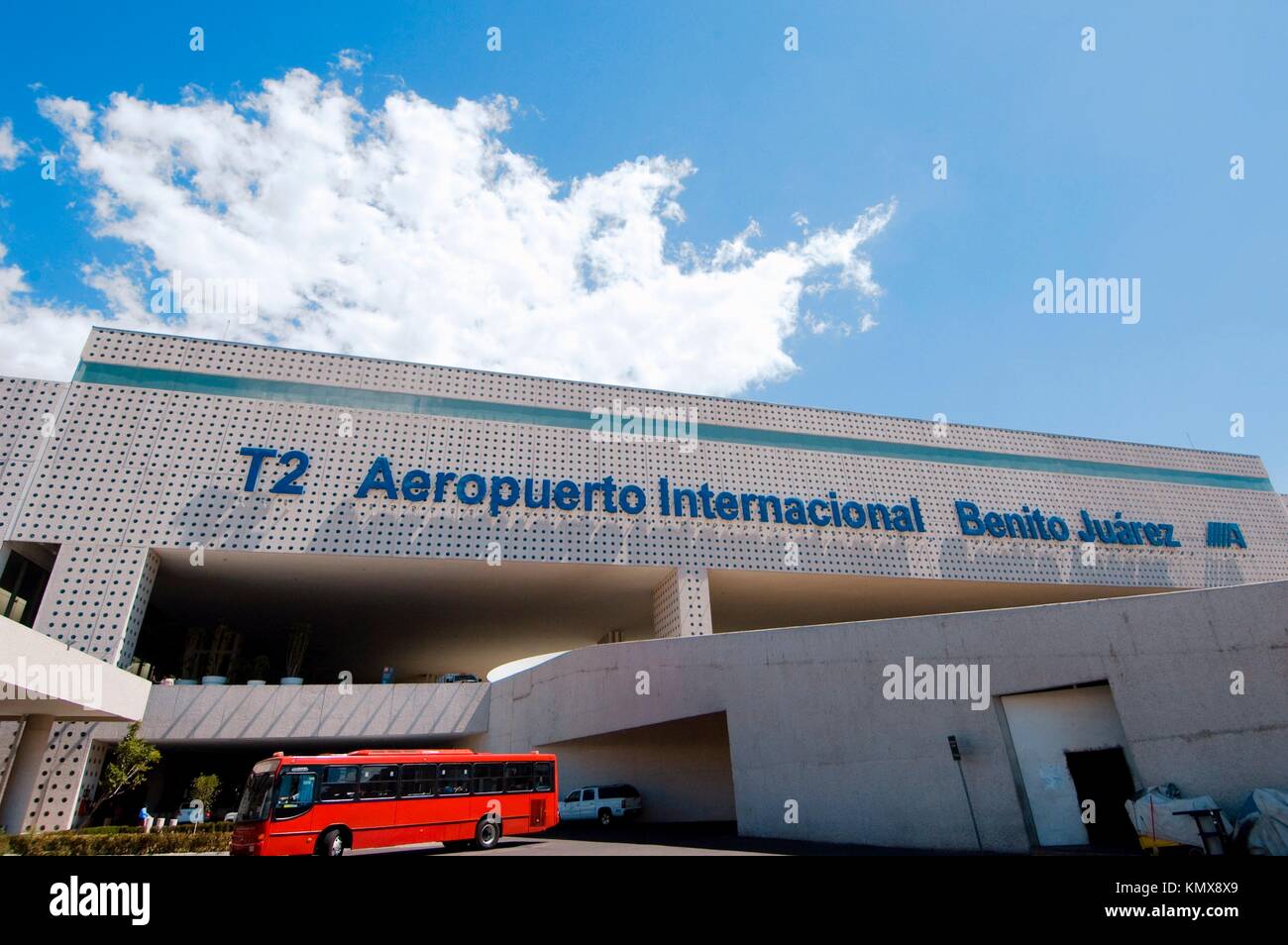
Navigating arrivals at Mexico City International Airport (MEX) requires understanding the distinction between Terminal 1 and Terminal 2, clearing immigration and customs, and selecting secure ground transportation. Whether arriving on a domestic flight or an international long-haul, your experience will depend on your airline's designated terminal and current 2026 digital entry protocols.
Navigating the Dual-Terminal System at MEX
Mexico City International Airport, officially known as Aeropuerto Internacional Benito Juárez, operates through two primary terminals separated by the airport runways. Understanding which terminal you will arrive at is the first step in planning your transit or pickup.
Terminal 1: The Historical Hub
Terminal 1 is one of the largest airport terminals in the world by floor space. It serves the majority of international carriers and domestic low-cost airlines like Volaris and VivaAerobus. If you are arriving from Europe, most of Asia, or via several major U.S. carriers (excluding Delta and United's specific arrangements), you will likely land here.
The layout of Terminal 1 is linear but sprawling. International arrivals typically exit through Gates G or areas near the center of the terminal. The sheer size of T1 means that walking from your arrival gate to the immigration hall can take upwards of 15 minutes. In 2026, terminal signage has been significantly improved, yet the bustling atmosphere remains a constant.
Terminal 2: The Modern Aeroméxico Base
Terminal 2 is the primary hub for Aeroméxico and its SkyTeam partners, including Delta and LATAM. It is a more compact, circular structure compared to Terminal 1. Arrivals here are generally more streamlined because the footprint is smaller, though it can become congested during peak morning and evening banks of international flights.
The distinction between the two terminals is vital because they are not connected by a walkable path. If you land at Terminal 2 but your pre-booked transport or connecting flight is at Terminal 1, you must use the internal transit systems, which require time and specific documentation.
The International Arrival Process: Immigration and Customs
For travelers arriving from outside Mexico, the process involves two distinct stages: Immigration (Instituto Nacional de Migración - INM) and Customs (Aduana).
Digital Immigration and the 2026 FMM
As of 2026, the traditional paper "Forma Migratoria Múltiple" (FMM) has been almost entirely replaced by a digital system for most nationalities. Upon arrival, travelers typically proceed to automated e-gates or traditional officer booths.
- E-Gates: Citizens from countries with visa-waiver agreements often use automated kiosks. You scan your passport, and a digital record of your entry is created.
- Manual Processing: If you are traveling on a specific visa or are from a country requiring manual oversight, an INM officer will interview you.
- Documentation: Always have your return flight details and accommodation address ready. While the paper slip is a rarity in 2026, the digital entry must still be verified if you plan to extend your stay or for certain administrative tasks within Mexico.
Baggage Claim and Customs Inspection
After clearing immigration, you will proceed to the baggage claim carousels. Large screens display flight numbers and corresponding carousel assignments. Once you have retrieved your luggage, you move toward the Customs (Aduana) area.
Mexico utilizes a "Declaration System." If you have nothing to declare (following the standard duty-free allowances for electronics, currency under $10,000 USD, and personal goods), you proceed through the green channel. In 2026, the infamous "stoplight" system has evolved into more sophisticated, non-intrusive X-ray scanning technology. However, customs officers retain the right to perform manual inspections if scanning reveals prohibited items or quantities exceeding personal use limits.
Terminal Transfer: The Aerotrén and Shuttles
Connecting between Terminal 1 and Terminal 2 is a common necessity for passengers switching from an international flagship carrier to a domestic low-cost airline.
The Aerotrén (Terminal Train)
The Aerotrén is a monorail system that links the two terminals. It is the fastest way to transfer, taking approximately 5 to 7 minutes.
- Access: Only passengers with a valid boarding pass or electronic ticket are permitted to use the Aerotrén.
- Location: In Terminal 1, the station is located in the center of the "Puente Piloto" area. In Terminal 2, it is located near Gate M.
- Operating Hours: It typically runs from 05:00 to 23:00.
Inter-Terminal Buses
For those without a boarding pass (such as people meeting arrivals or travelers who have not yet checked in), public buses are the alternative. These "Transporte Interterminales" buses are identifiable by their branding and run frequently. There is a small fee for this service, unlike the Aerotrén which is free for ticketed passengers.
Ground Transportation: Moving from MEX to the City
Mexico City is famous for its traffic, and the airport's location within the city limits makes ground transportation both accessible and occasionally complex.
Authorized Airport Taxis
This is the most recommended method for first-time arrivals. You should never accept a ride from individuals soliciting passengers inside the terminal.
- Purchase a Ticket: Locate the "Taxi Autorizado" kiosks inside the arrivals hall (near the exits).
- Select Your Zone: Pricing is fixed based on the neighborhood (Colonia) you are visiting. Popular areas like Reforma, Roma, or Condesa fall into specific price tiers.
- Payment: You can pay with cash (Pesos) or credit cards at the kiosk.
- Boarding: Take your ticket to the designated taxi rank outside. Attendants will guide you to a registered vehicle (usually white and yellow or pink and white).
Ridesharing (Uber, Didi, and Others)
Ridesharing is legal and widely used in Mexico City, but its availability at MEX has historically been subject to changing regulations. In 2026, rideshare drivers typically pick up at specific designated points to avoid conflict with traditional taxi unions.
- Terminal 1: Pickups often occur at specific gates (such as Gate 4 or across the pedestrian bridges).
- Terminal 2: The pickup point is usually clearly marked outside the arrivals exit, though it may require a short walk to a designated lane.
- Wait Times: Due to high demand, wait times can be 10-15 minutes. Ensure you have the correct terminal selected in the app.
Public Transportation: Metro and Metrobús
For budget-conscious travelers with minimal luggage, public transit is an option.
- Metro: Terminal 1 is served by the "Terminal Aérea" station on Line 5 (Yellow Line). Terminal 2 is a longer walk to the "Pantitlán" station, which is a major (and very crowded) transit hub.
- Metrobús: Line 4 of the Metrobús system connects both Terminal 1 and Terminal 2 directly to the historic center (Centro Histórico) and the Buenavista train station. These buses have dedicated luggage racks and are a reliable, inexpensive way to reach the heart of the city.
Comparison of Arrival Facilities at MEX
The following table compares the essential services available to arriving passengers in both terminals as of 2026.
| Feature | Terminal 1 (T1) | Terminal 2 (T2) |
|---|---|---|
| Primary Airlines | Volaris, VivaAerobus, United, Air France | Aeroméxico, Delta, Copa, LATAM |
| Walkability | Large, linear, requires significant walking | Compact, circular layout |
| Public Transit | Metro Line 5 (Yellow), Metrobús Line 4 | Metrobús Line 4 |
| Currency Exchange | Dozens of booths throughout the hall | Concentrated in the arrivals area |
| SIM Cards/Telecom | Multiple Telcel and AT&T kiosks | Dedicated Telcel and Movistar stores |
| Lounge Access | Centurion Lounge, various airline clubs | Salon Premier (Aeroméxico), Delta Sky Club |
| Hotel Connection | Camino Real, Courtyard (via bridge) | NH Collection (Inside terminal) |
Vital Services for Arriving Passengers
Once you exit the customs area, you will find yourself in the public arrivals hall. This area is equipped with several essential services to help you transition into the city.
Currency Exchange and ATMs
Mexico City Airport is known for having some of the most competitive currency exchange rates in the country, often better than those found in tourist zones like Cancún.
- Comparison Shopping: In Terminal 1, rates can vary significantly between booths. It is worth walking 50 meters in either direction to compare the "Compra" (Buy) and "Venta" (Sell) rates.
- ATMs (Cajeros): Use ATMs located inside the terminal buildings rather than isolated ones. Major banks like BBVA, Santander, and Banorte have a presence here.
Connectivity: SIM Cards and Wi-Fi
While the airport offers free Wi-Fi ("AICM Free Wi-Fi"), it can be spotty in high-traffic arrival zones. For reliable navigation and ridesharing, getting a local SIM card is advisable.
- Telcel: This is the most widely used provider in Mexico with the best coverage. Look for "Telcel" kiosks in the arrivals area. You can purchase a "Amigo" prepaid SIM and a data package (Paquete Sin Límite) for a few hundred pesos.
- eSIM: If your phone supports it, downloading an eSIM before landing is the most efficient method, though local physical SIMs are often cheaper for long stays.
Waiting Areas and Meeting Points
If you are being met by friends or a private driver:
- Terminal 1: Gate A and Gate E are standard meeting points for domestic and international arrivals, respectively.
- Terminal 2: There is a single large arrivals exit where people congregate with signs.
Safety and Security Considerations
Mexico City is a vibrant metropolis, but like any major world city, the airport environment requires a degree of caution for newly arrived travelers.
- Ignore Solicitations: From the moment you exit customs, individuals may approach you offering "cheap taxis" or "tourist help." Politely decline and head directly to an authorized kiosk or your app-designated pickup zone.
- Secure Your Belongings: Keep a close eye on carry-on bags while at the taxi kiosk or exchange booth.
- Use Official Apps: If using Uber or Didi, verify the driver’s name, photo, and license plate before entering the vehicle.
- Late Night Arrivals: If you arrive after midnight, the Metro and Metrobús may be closed. Stick to authorized taxis or pre-booked private transfers for safety.
Frequently Asked Questions (FAQ)
How long does it take to get through arrivals at MEX?
For domestic flights, you can be out in 20-30 minutes if you don't have checked bags. For international arrivals, the combined time for immigration, baggage claim, and customs typically ranges from 45 to 90 minutes. Peak hours (early morning and late afternoon) can see these times increase significantly.
Can I walk between Terminal 1 and Terminal 2?
No, it is not possible to walk between the terminals as they are separated by the airport's runway infrastructure. You must use the Aerotrén (if you have a boarding pass) or the inter-terminal bus/shuttle. The distance by road is several kilometers and takes 10-15 minutes by vehicle.
Is there a luggage storage service at Mexico City Airport?
Yes, both Terminal 1 and Terminal 2 have "Lockers" or "Guardaequipaje" services. These are staffed 24 hours a day. They are useful if you have a long layover and want to visit the city center without carrying your suitcases. Prices are usually charged per bag for a 24-hour period.
What should I do if my luggage doesn't arrive?
Locate the "Equipaje Extraviado" (Lost Luggage) office for your specific airline before you exit the customs area. Once you leave the arrivals hall, it is much harder to get back in to file a report. Ensure you receive a reference number and a contact phone number for the airline’s local ground handling team.
Is the AIFA airport the same as MEX?
No. AIFA (Aeropuerto Internacional Felipe Ángeles) is a newer airport located significantly further north of the city. While some international and many domestic flights have moved there, Benito Juárez (MEX) remains the primary airport for most travelers. Always double-check your ticket to ensure you are arriving at MEX.
Are there showers available in the arrivals area?
Showers are generally only available within certain premium lounges (like the Aeroméxico Salon Premier or Centurion Lounge) or at the "izZzleep" capsule hotels located in both Terminal 1 and Terminal 2. These capsule hotels allow you to rent a pod for a few hours to nap and use a private shower.
Practical Recommendation for New Arrivals
For the most stress-free experience, determine your terminal in advance and have at least 500 Mexican Pesos (MXN) on hand or be prepared to use an ATM immediately upon arrival. If your destination is the city center or popular neighborhoods like Roma or Condesa, the Authorized Taxi (purchased at an internal kiosk) is the gold standard for security and ease. If you are comfortable with technology and walking a short distance to a pickup zone, Uber often provides a more modern vehicle at a slightly lower price point. Always keep your digital immigration status (QR code or email confirmation) accessible on your phone, as you may need it for hotel check-ins or internal travel within Mexico.