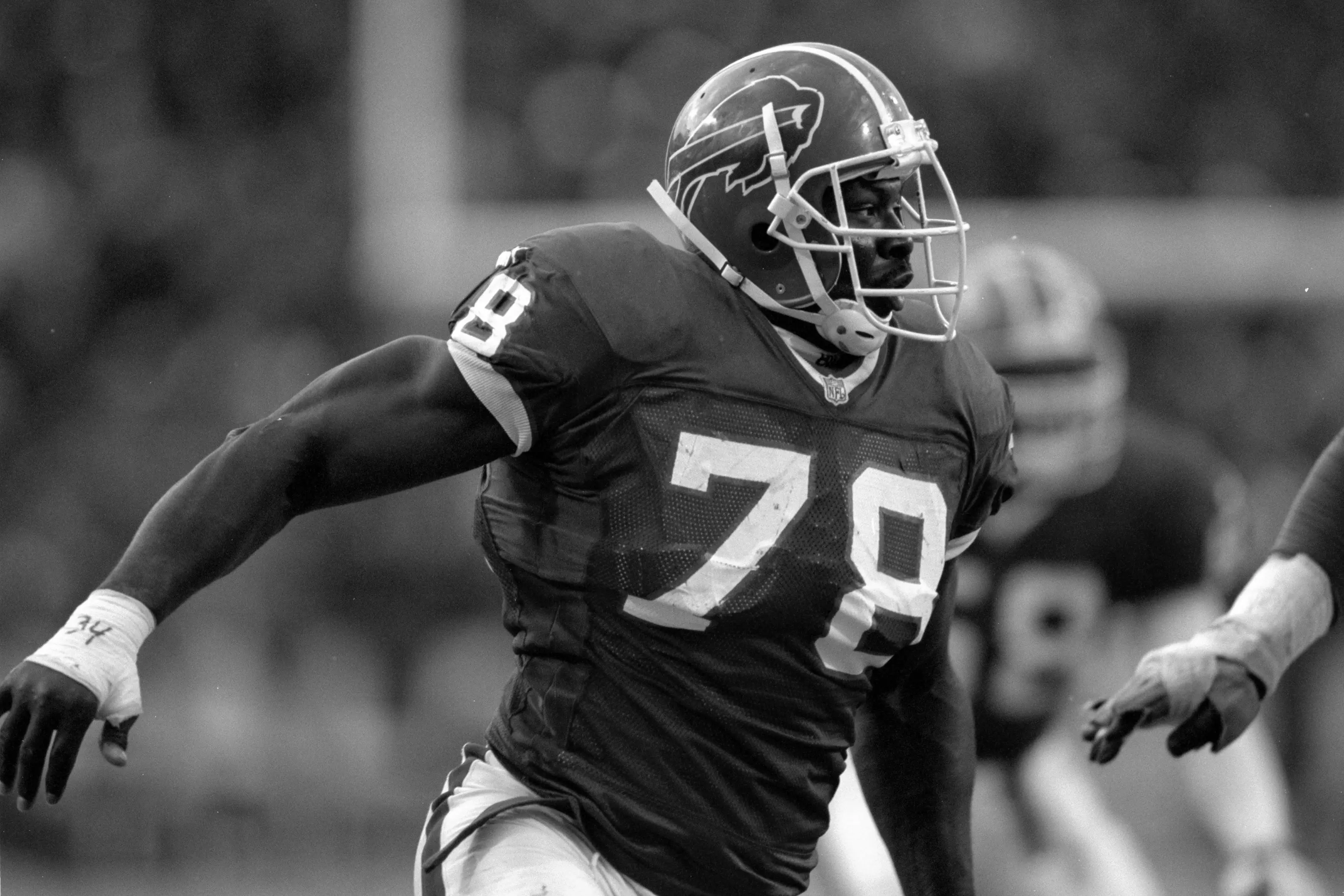
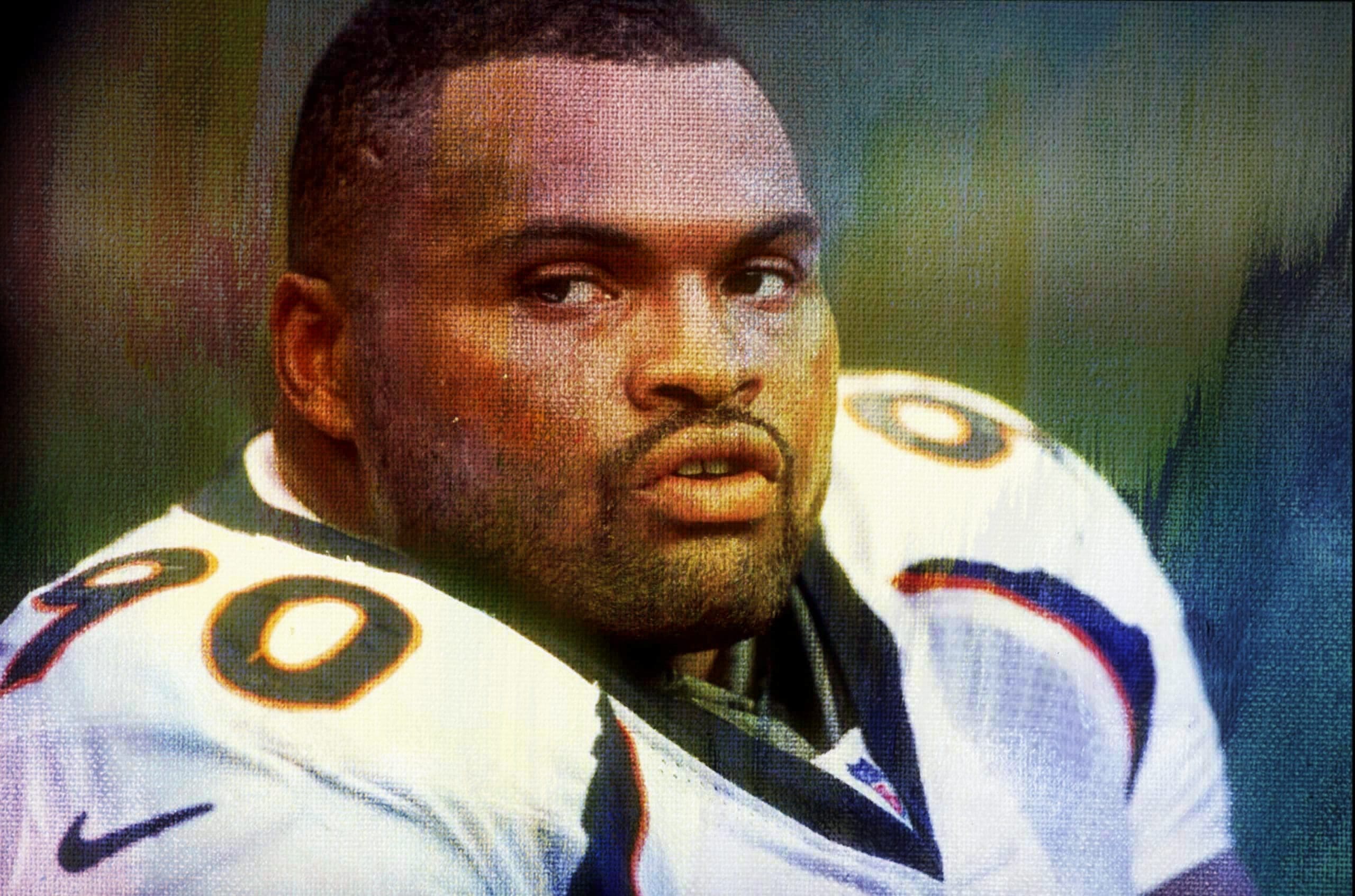
Antonio Smith, a defensive end whose career spanned 13 seasons from 2004 to 2016, is remembered as one of the most durable and charismatic interior pass rushers of his era. Best known for his "Ninja" persona and his pivotal role in the Houston Texans’ "Bulls on Parade" defense, Smith combined technical hand-fighting skills with a relentless motor to record 47.5 career sacks and a Super Bowl title.
The Foundation: From Oklahoma State to NFL Europe
The journey of Antonio Smith is a testament to developmental patience and the now-defunct NFL Europe system. Born in Oklahoma City, Smith played his collegiate football at Oklahoma State University. While he showed flashes of brilliance in the Big 12, he was not considered a "blue-chip" prospect by scouts who worried about his tweener size—standing 6'4" and weighing approximately 285 pounds.
The Arizona Cardinals selected Smith in the fifth round (135th overall) of the 2004 NFL Draft. His transition to the professional level was not instantaneous. Like many late-round picks of that era, he was allocated to the Hamburg Sea Devils of NFL Europe in 2005. This period was crucial for his legacy; it was in Europe that Smith refined his pass-rushing repertoire and developed the discipline that would allow him to play over 180 games in the NFL. Upon returning to the Cardinals, he gradually moved from a special teams contributor to a starting defensive end, eventually becoming a key piece of the 2008 Arizona team that reached Super Bowl XLIII.
The Houston Texans Era and the Rise of "The Ninja"
In 2009, Antonio Smith signed a five-year, $35 million contract with the Houston Texans. It was here that his career reached its zenith. Joining a franchise that was still searching for a defensive identity, Smith became the emotional and technical anchor of the defensive line.
The 3-4 Defensive Evolution
Under defensive coordinator Wade Phillips, who arrived in 2011, the Texans shifted to a one-gap 3-4 system. This scheme was tailor-made for Smith’s skill set. While a traditional 3-4 defensive end (the "5-technique") is often expected to simply occupy blockers to free up linebackers, Phillips’ system encouraged Smith to get upfield and disrupt the pocket.
During this period, Smith formed a lethal tandem with a young J.J. Watt. While Watt garnered most of the national headlines, Smith’s ability to draw double teams and collapse the interior of the pocket was instrumental in the Texans' consecutive AFC South titles in 2011 and 2012.
The Pro Bowl and Technical Mastery
In 2011, Smith was named to the Pro Bowl after recording 6.5 sacks and forcing two fumbles. His "Ninja" nickname became a league-wide brand. Smith practiced martial arts to improve his hand-eye coordination and balance, which translated to the football field as sophisticated "hand-fighting." He was famously difficult to hold because he would use "chop-and-club" movements to keep offensive linemen from getting into his chest.
Statistical Overview and Career Milestones
To understand the scope of Smith's impact, one must look at his consistency across multiple franchises. Unlike many defensive linemen who see a sharp decline after age 30, Smith remained a productive starter well into his mid-30s.
| Category | Arizona Cardinals (2004–2008, 2016) | Houston Texans (2009–2013) | Oakland Raiders (2014) | Denver Broncos (2015) | Career Totals |
|---|---|---|---|---|---|
| Games Played | 73 | 80 | 16 | 16 | 185 |
| Total Sacks | 14.5 | 27.0 | 3.5 | 2.5 | 47.5 |
| Forced Fumbles | 6 | 7 | 0 | 0 | 13 |
| Total Tackles | 142 | 145 | 20 | 9 | 316 |
| Super Bowls | 0 (1 Appearance) | 0 | 0 | 1 (Won) | 1 |
The Oakland and Denver Years: A Veteran’s Value
Following his highly successful stint in Houston, Smith moved to the Oakland Raiders for the 2014 season. Although the team struggled, Smith remained a reliable veteran presence, starting every game and providing a mentorship role for younger players like Khalil Mack.
However, the most significant late-career development occurred in 2015 when he signed with the Denver Broncos. Smith was reunited with Wade Phillips, who was then the defensive coordinator for a historic Denver unit known as the "No Fly Zone."
Smith served as a vital rotational piece on that 2015 Denver defense. While he was no longer a 60-snap-per-game player, his ability to provide fresh-legged pressure during the playoffs was essential. The season culminated in a victory in Super Bowl 50, where Denver’s defense famously dismantled the Carolina Panthers. For Smith, this championship served as the ultimate validation of a career defined by blue-collar work and tactical excellence.
Technical Depth: The Mechanics of the "Ninja" Style
What separated Antonio Smith from his peers was his emphasis on the "art" of defensive line play. In professional football, raw power often wins at the line of scrimmage, but Smith relied on leverage and deception.
- The Swim Move: Smith utilized a high-arm swim move that took advantage of his relatively lean frame for a defensive tackle/end hybrid. By staying low and then suddenly rising with a swimming motion over the offensive guard's shoulder, he could bypass blocks before the lineman could "lock on."
- Lateral Agility in the 3-4: Most 3-4 defensive ends are heavy, "two-gap" players meant to hold their ground. Smith played the position with the agility of a 4-3 edge rusher. This forced offensive coordinators to change their blocking schemes, as they could not rely on a single guard to handle Smith’s lateral quickness.
- Locker Room Culture: Smith’s legacy is also tied to his personality. He was known for his eccentricities—including his post-sack "Ninja" poses and his humorous media interviews. In the high-stress environment of the NFL, his ability to keep a locker room light while maintaining a high standard of play was highly valued by coaches like Gary Kubiak and Bill O'Brien.
Challenges and Controversies
No career is without its hurdles. Smith’s most publicized disciplinary issue occurred in 2013 during a preseason game against the Miami Dolphins. After an altercation with Richie Incognito, Smith pulled off Incognito’s helmet and swung it toward him. This resulted in a multi-game suspension.
While the incident was out of character for the usually jovial Smith, he later explained it as a reaction to what he perceived as dirty play from Incognito. The event served as a reminder of the intense physical and mental battles that take place in the "trenches" of an NFL game—battles Smith fought for over a decade.
Retirement and Long-term Legacy
Antonio Smith officially retired after a brief return to the Arizona Cardinals in 2016. Looking back from the perspective of 2026, his legacy is one of durability and versatility. In an era where defensive linemen often struggle with chronic knee and shoulder injuries, Smith’s ability to play in 185 games is a remarkable feat of athletic training and physical resilience.
He remains a beloved figure in Houston and Arizona. In Houston specifically, he is credited with helping transition the Texans from a league doormat to a perennial defensive powerhouse. His partnership with J.J. Watt is still cited by analysts as a blueprint for how a veteran interior rusher can complement a generational talent on the edge.
Frequently Asked Questions
Why was Antonio Smith called "The Ninja"?
The nickname "The Ninja" originated from Smith's interest in martial arts and his unique sack celebration. He incorporated hand-fighting techniques from various martial arts disciplines into his pass-rushing style. The celebration involved a choreographed series of "ninja" hand movements and a final pose, which became a fan favorite during his years with the Houston Texans.
Did Antonio Smith win a Super Bowl?
Yes, Antonio Smith won a Super Bowl ring with the Denver Broncos in the 2015 season (Super Bowl 50). He was a key rotational defensive lineman for the Broncos' top-ranked defense, which defeated the Carolina Panthers 24-10. This victory occurred in the penultimate year of his career.
What were Antonio Smith’s best statistical years?
Smith's peak statistical years occurred between 2011 and 2013 with the Houston Texans. In 2011, he recorded 6.5 sacks and earned a Pro Bowl selection. In 2012, he set a career-high with 7.0 sacks. Throughout his five-year tenure in Houston, he averaged over 5 sacks per season, which is elite production for an interior defensive lineman in a 3-4 scheme.
What positions did Antonio Smith play?
Smith was a highly versatile defensive lineman. In 4-3 defensive schemes (common during his first stint in Arizona), he played as a traditional Defensive End. In 3-4 schemes (Houston and Denver), he played as a 5-technique Defensive End, which often required him to slide inside and act as a Defensive Tackle during sub-packages and passing downs.
How many teams did Antonio Smith play for during his career?
During his 13-season career, Antonio Smith played for four different NFL franchises: the Arizona Cardinals (two separate stints), the Houston Texans, the Oakland Raiders, and the Denver Broncos. He also played for the Hamburg Sea Devils in NFL Europe.
Final Recommendation for Students of the Game
For those studying the evolution of the modern NFL defensive line, Antonio Smith's film is essential viewing. His career demonstrates that success at the professional level is not solely dependent on being the strongest or fastest player on the field. Instead, Smith's legacy proves that technical proficiency, scheme adaptability, and psychological resilience can sustain a high-level career far longer than raw athleticism alone. Aspiring defensive linemen should focus on his hand-fighting drills and his ability to maintain a low center of gravity against larger opponents, as these are the "Ninja" traits that defined his decade-plus of dominance.