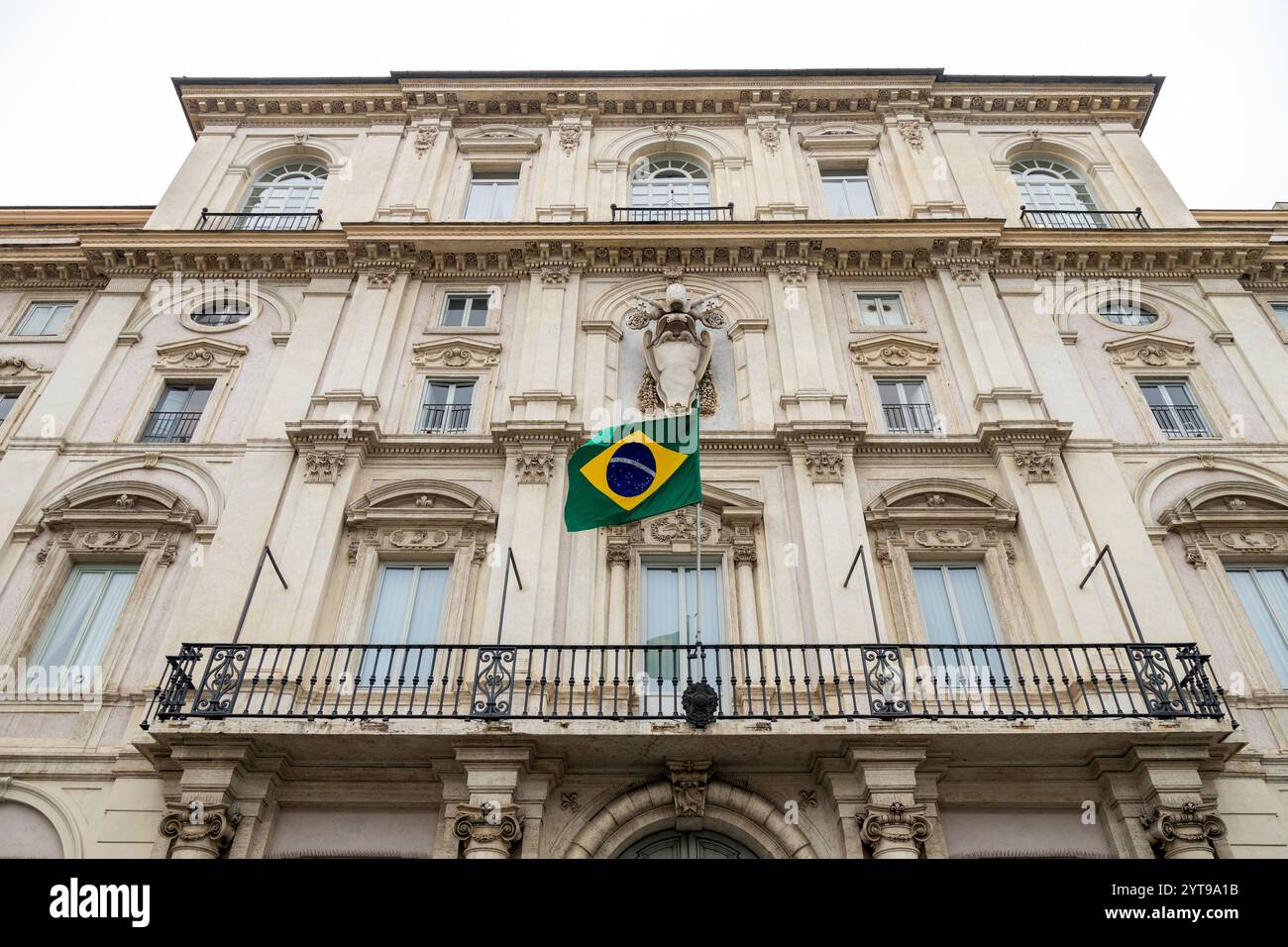
The U.S. Embassy in Brasília and its network of consulates provide critical diplomatic services, including non-immigrant and immigrant visa processing for Brazilian citizens and emergency assistance for U.S. nationals. To access these services in 2026, individuals must navigate a standardized online application process, fulfill specific biometric requirements at a CASV, and attend scheduled interviews.
The diplomatic relationship between the United States and Brazil is one of the oldest in the Americas, reflected in a sprawling network of offices designed to facilitate travel, trade, and citizen safety. Whether you are a Brazilian citizen seeking a tourist visa or a U.S. expat needing to renew a passport, understanding the specific functions and jurisdictional boundaries of the American Embassy in Brazil is essential for a successful outcome.
The U.S. Diplomatic Network in Brazil: Locations and Jurisdictions
The United States maintains a significant presence in Brazil, consisting of the primary Embassy in the capital and four Consulates General, along with a Consular Agency. Each location serves a specific geographic region, though some services—particularly immigrant visas—are centralized in a single city.
The U.S. Embassy in Brasília
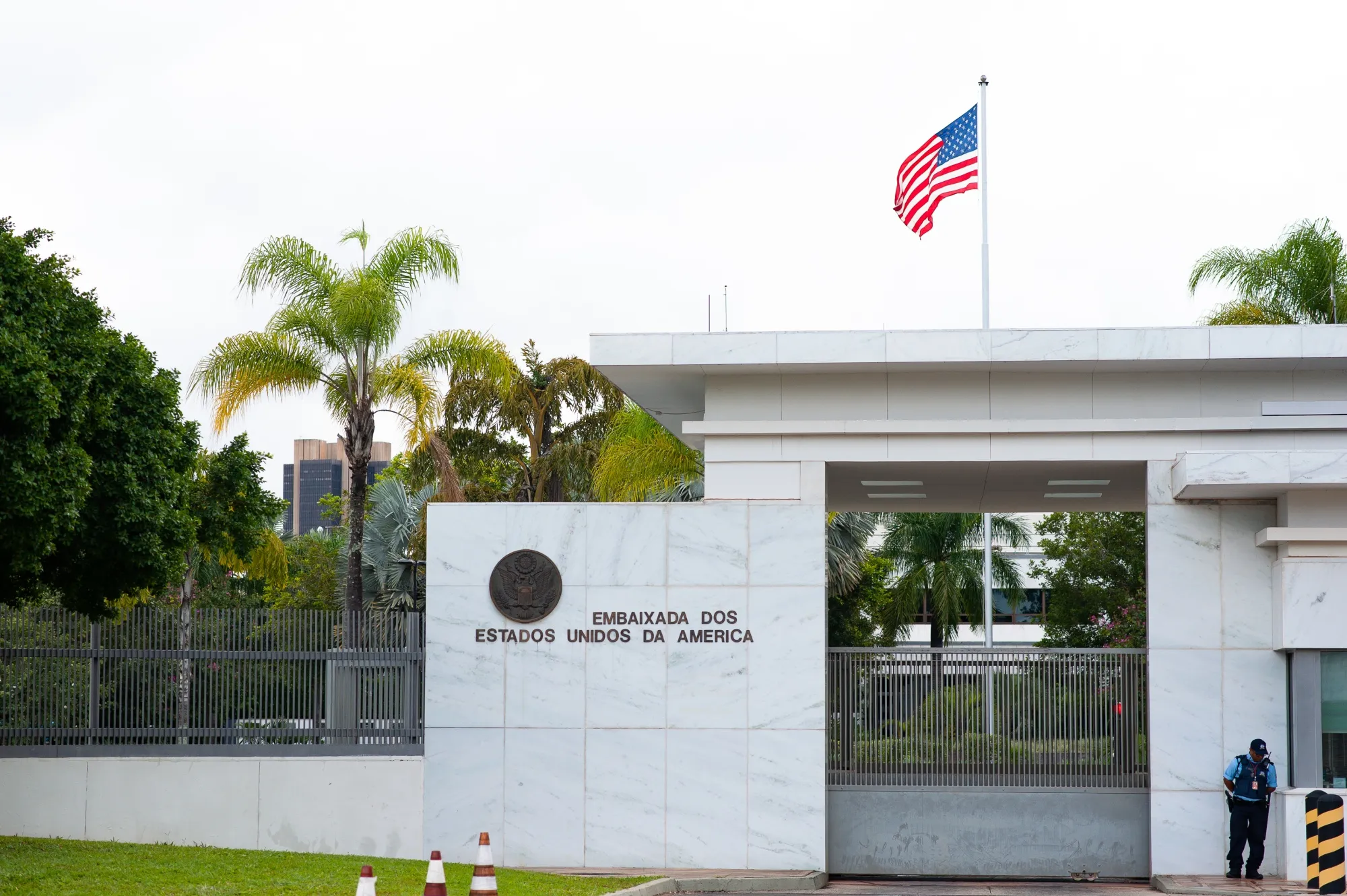
As the primary diplomatic mission, the Embassy in Brasília handles high-level bilateral relations, political and economic affairs, and public diplomacy. For the general public, it serves as a major hub for visa interviews and American Citizen Services (ACS) for residents of the Federal District and surrounding states like Goiás, Mato Grosso, and Tocantins.
Consulates General
The consulates are strategically placed in Brazil’s largest metropolitan hubs to manage the high volume of visa applications and provide local support to U.S. citizens.
- São Paulo: Often the busiest consulate in the world for non-immigrant visas, it serves the state of São Paulo and parts of the South and Midwest.
- Rio de Janeiro: Crucially, this is the only location in Brazil that processes immigrant visas (green cards). It also serves the states of Rio de Janeiro, Espírito Santo, and Minas Gerais.
- Recife: This consulate covers the vast Northeast region of Brazil, providing a vital link for residents of Pernambuco, Bahia, and Ceará.
- Porto Alegre: Serving the southernmost states of Rio Grande do Sul and Santa Catarina, this consulate facilitates travel and business for the southern industrial and agricultural sectors.
Consular Agencies
A Consular Agency, such as the one in Fortaleza, offers limited services. These agencies primarily assist U.S. citizens with emergency services and passport applications but do not conduct visa interviews.
Navigating the Non-Immigrant Visa Process in 2026
For the majority of Brazilian travelers, the primary interaction with the American Embassy involves applying for a non-immigrant visa (NIV). As of 2026, the process remains highly digital and requires careful coordination between two distinct facilities: the CASV (Centro de Atendimento ao Solicitante de Visto) and the Embassy or Consulate itself.
Step 1: The DS-160 Form
The DS-160 is the foundational document for any NIV application. It must be completed online via the Consular Electronic Application Center (CEAC) website. Accuracy is paramount; errors in passport numbers, birth dates, or employment history can lead to immediate administrative processing delays or visa denials. Applicants must upload a digital photograph that meets specific U.S. Department of State requirements regarding size, background, and facial expression.
Step 2: Fee Payment (MRV Fee)
Once the DS-160 is submitted, the applicant must create a profile on the official U.S. Visa Service website for Brazil. Here, the Machine Readable Visa (MRV) fee is paid. As of 2026, the standard fee for B1/B2 (Tourism/Business) visas remains at $185 USD (converted to Brazilian Reais at the prevailing consular exchange rate). Payment can typically be made via credit card or "Boleto Bancário."
Step 3: Scheduling Appointments
Most applicants require two separate appointments:
- The CASV Appointment: This is for the collection of biometric data (fingerprints and photo). There are CASV locations in the same cities as the consulates, plus additional centers in cities like Belo Horizonte.
- The Consular Interview: This takes place at the Embassy or Consulate.
The Interview Waiver Program (IWP)
In 2026, many Brazilian citizens qualify for an interview waiver. This generally applies to:
- Applicants under the age of 14 or over the age of 79.
- Individuals renewing a visa of the same category that has expired within the last 48 months. If you qualify for the waiver, you may only need to visit the CASV (or send your documents via mail) without a formal interview at the Embassy.
The Immigrant Visa Pathway: Centralized in Rio de Janeiro
While non-immigrant visas are distributed across five cities, the Immigrant Visa (IV) process is centralized. Every Brazilian citizen or resident applying for a "Green Card"—whether through family sponsorship, employment, or the Diversity Visa lottery—must eventually visit the U.S. Consulate General in Rio de Janeiro for their final interview.
Medical Examinations and Documentation
Before the interview in Rio, IV applicants must undergo a medical examination with a consulate-approved physician. These physicians are located in major cities, but the results must be sent directly to the consulate or brought in a sealed envelope. Furthermore, applicants must provide "civil documents," including birth certificates, marriage licenses, and police certificates from every country they have lived in for more than six months since age 16.
The Role of the National Visa Center (NVC)
Before the file reaches the American Embassy in Brazil, it is processed by the NVC in the United States. Only after the NVC deems the file "documentarily qualified" is an interview date scheduled in Rio de Janeiro. This transition from domestic U.S. processing to the local consulate is a critical phase where many applicants experience delays if their contact information is not updated.
Comprehensive Services for U.S. Citizens (ACS)
The American Embassy in Brazil prioritizes the safety and documentation of U.S. citizens living in or traveling through the country. The American Citizen Services (ACS) unit operates independently of the visa unit.
Passports and Reports of Birth
U.S. citizens can renew passports and apply for a Consular Report of Birth Abroad (CRBA) for children born in Brazil to American parents. The CRBA is an essential document that establishes U.S. citizenship from birth and allows the child to obtain a U.S. passport.
Emergency Assistance and Safety
The ACS unit provides 24-hour emergency assistance for situations involving:
- Arrests: Consular officers can visit incarcerated citizens, provide a list of local attorneys, and ensure that the individual is being treated humanely under Brazilian law.
- Deaths: The Embassy assists in the repatriation of remains or local burial arrangements.
- Lost/Stolen Passports: For travelers with immediate departure plans, the Embassy can issue an emergency, limited-validity passport, often on the same day.
- Victims of Crime: Consular staff provide support and guidance for navigating the Brazilian legal system.
Notarial Services
The Embassy and Consulates perform notarial acts similar to those of a notary public in the United States. These are often required for documents to be used in the U.S., such as powers of attorney or affidavits for real estate transactions.
2026 Facility Information and Fees
To assist in planning, the following table summarizes the key locations and their primary functions within the Brazilian network.
| Location | Type | Primary Service Area | Immigrant Visas? |
|---|---|---|---|
| Brasília | Embassy | Federal District, GO, MT, TO | No |
| São Paulo | Consulate General | SP, MS, PR | No |
| Rio de Janeiro | Consulate General | RJ, ES, MG | Yes (Exclusive) |
| Recife | Consulate General | PE, BA, CE, MA, PB, PI, RN, AL, SE | No |
| Porto Alegre | Consulate General | RS, SC | No |
| Fortaleza | Consular Agency | Ceará (Emergency/ACS Only) | No |
Current 2026 Fee Schedule (Selected)
- B1/B2, F, M, J Visas: $185 USD
- H, L, O, P, Q, R Visas: $205 USD
- E Visas (Treaty Trader/Investor): $315 USD
- U.S. Passport Renewal (Adult): $130 USD
- Consular Report of Birth Abroad: $100 USD
Security, Logistics, and Appointment Preparation
The American Embassy and Consulates maintain strict security protocols that can catch unprepared visitors off guard. Understanding these rules is essential to avoid being turned away at the gate.
Prohibited Items
Visitors are generally prohibited from bringing large bags, luggage, or electronic devices into the consular section. While small cell phones are sometimes allowed to be stored in lockers at the entrance (depending on the specific location's capacity), it is highly recommended to leave electronics with a trusted person outside or in a vehicle. Other banned items include:
- Weapons or sharp objects (including small pocket knives or nail files).
- Flammable items (lighters, matches).
- Sealed envelopes or packages (unless specifically requested for an immigrant visa).
Entry Requirements
You must present your appointment confirmation page and a valid passport to enter. Arriving more than 15 minutes before your scheduled time is usually discouraged to prevent overcrowding, but arriving late can result in the automatic cancellation of your appointment.
Language Considerations
Consular officers at the American Embassy in Brazil are trained to conduct interviews in both English and Portuguese. Applicants do not need to be fluent in English for tourist or student visa interviews, as the officers are accustomed to the local language. However, for certain employment or high-level academic visas, demonstrating English proficiency may be relevant to the visa category's requirements.
Common Mistakes and Troubleshooting
Navigating the U.S. visa system is complex, and even minor errors can lead to significant setbacks.
- Inconsistent Information: Ensure the information on the DS-160 matches your passport exactly. Discrepancies in the spelling of names or date formats (MM/DD/YYYY vs DD/MM/YYYY) are common triggers for administrative processing.
- Insufficient Financial Proof: While you often do not need to show bank statements at the window unless asked, you must be prepared to clearly explain how you will fund your trip. Vague answers about "savings" without context can lead to a denial under Section 214(b) of the Immigration and Nationality Act (failure to prove non-immigrant intent).
- Third-Party Scams: Only use the official websites ending in
.govor the official scheduling partner site. Be wary of "consultants" who claim to have "inside connections" at the Embassy; no one can guarantee the issuance of a visa except a consular officer. - Incomplete Photo Specs: The U.S. visa photo requirements are strict. Using a photo where you are wearing glasses (prohibited since 2016) or one that was used for a previous visa will result in the CASV rejecting the photo, requiring you to find a nearby studio and potentially miss your window.
Frequently Asked Questions
How long is the wait time for a visa interview in Brazil in 2026?
Wait times fluctuate based on seasonal demand and staffing levels. In 2026, wait times have largely stabilized compared to the post-pandemic backlog, but São Paulo and Brasília still see higher demand. It is advisable to check the current "Visa Appointment Wait Times" tool on the State Department website at least six months before your intended travel date.
Can I renew my U.S. visa by mail in Brazil?
In 2026, most renewals for expired B1/B2 visas (if expired within 48 months) can be handled via the Interview Waiver Program. While you may not need an interview, you still typically need to drop off your passport and DS-160 confirmation at a CASV or use an authorized courier service as directed by the scheduling portal.
What should I do if my U.S. passport is lost or stolen in Brazil?
Immediately file a police report with the Brazilian "Polícia Civil." Once you have the report, schedule an emergency appointment with the ACS unit at the nearest Embassy or Consulate. You will need to provide proof of citizenship (like a birth certificate copy) and identity, along with a new passport photo and the applicable fees.
Is the Fortaleza Consular Agency able to issue visas?
No. The Fortaleza Consular Agency is strictly for American Citizen Services and emergency assistance. Residents of Ceará and surrounding states must travel to the Consulate General in Recife or another full-service consulate for visa interviews.
Can I pay my visa fee at the Embassy on the day of the interview?
No. The MRV fee must be paid in advance through the online scheduling system. The Embassy and Consulates do not accept visa fee payments at the interview window for non-immigrant visas. Only certain administrative fees or immigrant visa fees (in specific cases) are payable on-site.
Practical Recommendation
If you are planning to visit the American Embassy in Brazil for a visa, the most effective next action is to complete your DS-160 form as early as possible. This form generates the unique ID number required to check appointment availability. Because the scheduling system allows you to see available dates only after the fee is paid, starting the process months in advance ensures you have the flexibility to choose a date that fits your travel timeline. Always double-check your "Confirmation Page" before heading to the CASV, as this is the primary document used to track your application throughout the system.