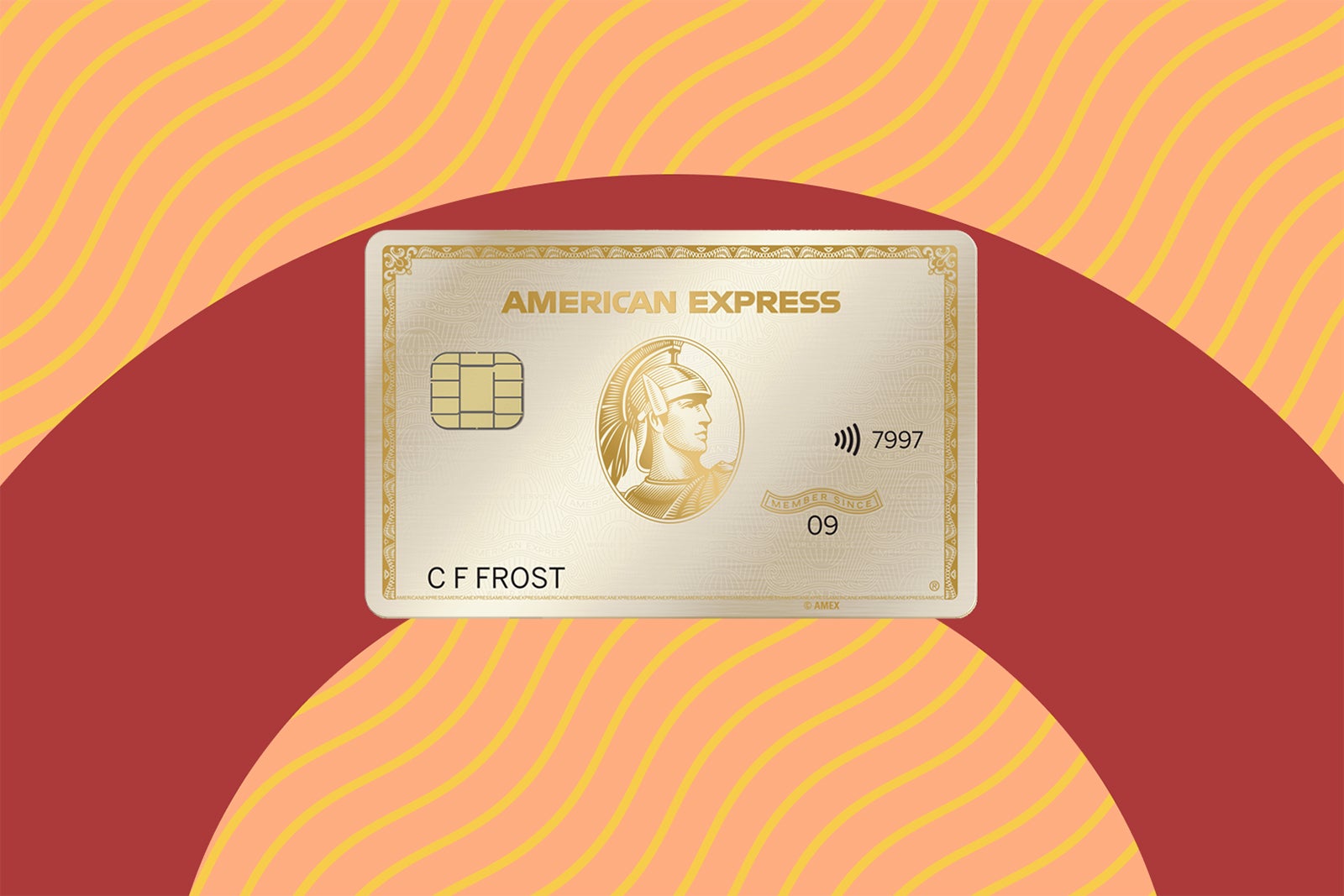
The American Express Gold Card remains a premium financial tool in 2026, primarily valued for its high-yield rewards on dining and groceries. While it offers limited airport lounge access compared to the Platinum Card, its value is often justified through monthly statement credits and travel protections that offset the annual fee for frequent diners.
The debate surrounding the American Express Gold Card often centers on a fundamental misunderstanding of its core purpose. Unlike its more expensive sibling, the Platinum Card, the Amex Gold is not a dedicated "lounge card." However, as travel habits have shifted in 2026, many consumers still weigh the card’s annual "premium"—its yearly fee—against the total travel experience it provides. Determining if the card is "worth it" requires a technical look at the math behind the credits, the specific nature of its limited lounge perks, and the opportunity cost of choosing this card over competitors.
The Evolution of the Amex Gold Premium in 2026
By 2026, the American Express Gold Card has solidified its position as a "lifestyle" card rather than a pure "travel" card. The annual fee, which has seen incremental adjustments over the last few years, now sits at a point where passive cardholders might struggle to break even, while active users can extract double the fee's value.
The "premium" referred to by most users is the annual fee, currently positioned between $250 and $325 depending on specific promotional periods and account types. To evaluate the worth of this premium, one must first look at the direct monetary offsets provided by American Express.
The Statement Credit Ecosystem
The Gold Card’s value proposition is heavily weighted toward its monthly credits. These are not lump-sum reimbursements but are distributed in monthly increments, requiring a "use it or lose it" strategy:
- Dining Credit: Cardholders receive up to $10 monthly ($120 annually) for use at specific partners such as Grubhub, The Cheesecake Factory, Wine.com, Goldbelly, and select Shake Shack locations.
- Uber Cash: By adding the Gold Card to the Uber app, users receive $10 in Uber Cash each month ($120 annually), valid for Uber Eats orders or Uber rides in the United States.
- Resy Credit: A newer addition to the 2026 landscape, many Gold Card iterations now include a semi-annual Resy credit, encouraging spend at boutique restaurants.
When these credits are used fully, the effective annual fee—the "real" cost of the premium—drops significantly, often to less than $100. It is against this "effective fee" that the airport lounge access and other travel perks must be measured.
The Reality of Airport Lounge Access on the Gold Card
There is a common misconception that all premium American Express cards provide unlimited access to the Centurion Lounge network. This is not the case for the Gold Card. In the United States, the Gold Card does not offer a complimentary Priority Pass membership or access to Centurion Lounges.
However, the "worth" of the card regarding lounges comes into play through two specific avenues: regional variations and The Hotel Collection.
International Versions vs. US Version
It is vital to distinguish between the US version of the card and international versions. For example, in the United Kingdom and several European markets, the American Express Gold Card often includes two to four complimentary airport lounge passes per year via Priority Pass. For a traveler who flies only a few times a year, these four passes—valued at roughly $35 to $50 each—can represent $140 to $200 in direct value, effectively wiping out the annual fee.
In the US, the lounge benefit is more indirect. US Gold cardholders often utilize the The Hotel Collection through American Express Travel. When booking a stay of at least two nights at participating properties, cardholders receive a $100 experience credit, which can often be used for on-site services, and occasionally, specialized airport transfer services that include lounge-like amenities.
Access via Third-Party Programs
Many Gold cardholders in 2026 bridge the lounge gap by using their earned Membership Rewards (MR) points. Because the Gold Card earns 4x points at restaurants and US supermarkets (up to $25,000 in spend per year), users accumulate points faster than almost any other cardholder. These points can be transferred to airline partners (like Delta, Emirates, or Singapore Airlines) whose premium cabin tickets—booked with points—include lounge access. In this context, the Gold Card acts as the "engine" that powers lounge access, even if it doesn't provide the "key" itself.
Analyzing the 4x Multipliers: The Math of the Premium
The primary reason the Gold Card is considered "worth the premium" has less to do with the lounge and more to do with the points-earning velocity. For a household spending $1,000 a month on groceries and $500 a month on dining, the math is compelling.
- Groceries ($12,000/year): 48,000 Membership Rewards points.
- Dining ($6,000/year): 24,000 Membership Rewards points.
- Total: 72,000 points annually.
In 2026, the valuation of Membership Rewards points remains approximately 2.0 cents per point when redeemed for high-value international flight transfers. This makes those 72,000 points worth roughly $1,440. Even at a conservative 1.0 cent per point redemption, the value is $720.
When you subtract the annual fee from the point value and add the statement credits, the Gold Card often yields a net profit of over $1,000 for the average suburban family or urban professional. This "profit" easily covers the cost of purchasing a few independent lounge day passes (such as through LoungeBuddy or United Club one-time passes) if the user finds themselves needing a quiet space at the airport.
Comparative Value: Gold vs. Platinum vs. Competitors
To truly understand if the Gold Card is worth its premium, we must compare it to the "Lounge King"—the American Express Platinum Card—and other mid-tier competitors like the Chase Sapphire Preferred or the Capital One Venture X.
| Feature | Amex Gold Card | Amex Platinum Card | Capital One Venture X |
|---|---|---|---|
| Annual Fee | ~$325 | ~$695 | ~$395 |
| Lounge Access | None (US) / Limited (UK) | Global Lounge Collection | Priority Pass & Plaza Premium |
| Dining Rewards | 4x Membership Rewards | 1x Membership Rewards | 2x Miles |
| Grocery Rewards | 4x Membership Rewards | 1x Membership Rewards | 2x Miles |
| Travel Credit | None (Specific) | $200 Hotel / $200 Airline | $300 Travel Portal Credit |
| Best Use Case | Daily Spending & Food | Luxury Travel & Lounges | Simple Travel Value |
The table illustrates a clear divide. If your primary goal is airport lounge access, the Gold Card’s premium is not worth it compared to the Venture X, which offers full lounge access for a similar effective fee. However, if your goal is to maximize the rewards from your largest non-housing expenses (food), the Gold Card’s premium is highly efficient.
Hidden Travel Protections and "Worth"
The value of a premium card also lies in the costs it prevents. In 2026, travel disruptions have become more frequent, making the Gold Card's insurance suite a critical part of the "worth" equation.
- Trip Delay Insurance: If a trip is delayed by more than 12 hours due to a covered reason, cardholders can be reimbursed for up to $300 per trip (up to twice a year) for essential expenses like meals and lodging.
- Baggage Insurance Plan: Provides coverage for lost, damaged, or stolen baggage when the entire fare is charged to the card.
- Car Rental Loss and Damage Insurance: While secondary, this provides a safety net that allows travelers to decline the expensive collision damage waivers offered by rental agencies.
While these aren't "lounges," they solve the same problem: making the airport experience less stressful. A traveler stuck in an airport for 14 hours with $300 in delay coverage can afford a high-end airport meal and a day-pass to a lounge, effectively self-funding the "lounge perk" through the card's protections.
Common Pitfalls: When the Premium is Not Worth It
Despite the benefits, the American Express Gold Card is a poor investment for certain types of consumers.
First, the card requires active management. If you do not use Grubhub or Uber, you are essentially paying the full annual fee for the privilege of earning points. For those who prefer a "set it and forget it" financial life, the $325 outlay is a net loss.
Second, the Gold Card carries a significant opportunity cost for those who do not spend heavily on groceries or dining. If you spend more on gas, streaming services, or general retail, a "catch-all" 2% cash-back card or the American Express Blue Cash Preferred might offer a better return without the high premium.
Finally, the Membership Rewards points themselves are "technical" currency. To get the 2.0 cent-per-point value, you must understand how to transfer points to airline partners. If you only redeem points for statement credits or at Amazon.com, you are getting roughly 0.6 to 0.7 cents per point, which is a mathematically poor return that makes the premium fee unjustifiable.
Expert Guidance: How to Verify the Value for Your Use Case
To determine if the Gold Card is worth it for you in 2026, perform a simple three-step audit:
- Analyze 12 Months of Spending: Look at your credit card statements. If your combined dining and grocery spend is less than $6,000 annually, the 4x multiplier likely won't generate enough "alpha" to beat a no-fee card.
- Audit the Credits: Look at the Uber and Dining partners. Do you already use them? If you have to change your behavior to use a credit (e.g., ordering expensive delivery when you usually cook), the credit is worth only about 50-70% of its face value.
- Define Your Travel Goals: If you travel more than four times a year and demand lounge access every time, the Gold Card should be a supplement to a lounge-specific card, not your primary travel tool.
Frequently Asked Questions
Does the American Express Gold Card give access to the Centurion Lounge?
No, the American Express Gold Card does not provide access to the Centurion Lounge network. This benefit is reserved for the Centurion Card and the Platinum Card. Gold cardholders may occasionally receive targeted "invite-only" passes or can access certain lounges if they are flying in a premium cabin booked via points earned on the card, but there is no native access.
Can I buy a lounge pass with my Amex Gold points?
You cannot directly "swap" points for a lounge pass in a single click on the Amex portal. However, you can use Membership Rewards points to book travel via American Express Travel and use points to cover the cost, or you can transfer points to airline partners where your elite status or ticket class (funded by points) provides access. Additionally, you can use the card to pay for a lounge pass and then use the "Cover Your Charges" feature, though this is generally a low-value use of points.
Is the Amex Gold fee higher in 2026?
The annual fee for the American Express Gold Card has historically seen adjustments to account for inflation and the addition of new credits. In 2026, the fee remains in the premium tier ($250-$325). It is important to check the terms of your specific "Schumer Box" (the standardized table of rates and fees) during the application process to see the exact current rate.
How does the Gold Card compare to the Chase Sapphire Preferred for travel?
The Chase Sapphire Preferred has a lower annual fee (typically $95) and offers 3x on dining. However, it lacks the 4x grocery multiplier and the monthly Uber/Dining credits found on the Amex Gold. For lounge access, neither card provides a complimentary membership, but the Amex Gold generally offers a higher points-earning potential for daily life, whereas the Chase card is often favored for its simpler "Portal" redemption bonus.
Is there a "no-fee" version of the Amex Gold?
No, there is no direct "no-fee" version of the Gold Card. If you wish to stop paying the premium, you would need to "downgrade" to a card like the Amex EveryDay® Credit Card to keep your Membership Rewards points active, or cancel the card entirely after transferring your points to a partner.
Final Recommendation
The American Express Gold Card is worth the premium in 2026 only if you are a "food-first" traveler. If you spend at least $500 monthly on groceries and dining and can naturally utilize the Uber and Dining credits, the card effectively pays you to hold it. However, if your primary "worth" metric is airport lounge access, the Gold Card is a poor choice. In that scenario, you would be better served by the Capital One Venture X or the Amex Platinum, which provide the lounge keys that the Gold Card lacks. Use the Gold Card as your daily "points earner" to fund the flights, but do not expect it to open the lounge doors on its own.