Alpha particles are primarily used in ionization-based smoke detectors, targeted cancer therapies, static eliminators in industrial manufacturing, and as a compact power source for space exploration through Radioisotope Thermoelectric Generators (RTGs). Their high ionizing power and short range make them ideal for precision tasks where localized energy deposition is required without penetrating surrounding materials.
Understanding Alpha Particles: The Physical Foundation
To understand why alpha particles are utilized across diverse fields, one must first grasp their physical nature. An alpha particle consists of two protons and two neutrons bound together, effectively making it a helium-4 nucleus ($^4\text{He}^{2+}$). These particles are emitted during the alpha decay of heavy radioactive isotopes such as uranium, radium, and americium.
Unlike beta particles (electrons) or gamma rays (high-energy photons), alpha particles are relatively massive and carry a +2 elementary charge. This combination of high mass and high charge results in a very high Linear Energy Transfer (LET). In practical terms, this means that as an alpha particle travels through matter, it interacts strongly with atoms, stripping away electrons and causing intense ionization along a very short path. Because they lose energy so quickly, they can be stopped by a single sheet of paper or the outer layer of human skin. While this makes them harmless externally, it makes them exceptionally powerful when utilized in controlled environments or targeted internally.
Residential and Industrial Safety: Ionization Smoke Detectors
Perhaps the most ubiquitous use of alpha particles is in domestic smoke detectors. These devices typically contain a microscopic amount of Americium-241 ($^{241}\text{Am}$), an alpha-emitting isotope with a half-life of approximately 432 years.
The Mechanism of Ionization
The detector contains an ionization chamber with two electrically charged plates. The Americium-241 source emits alpha particles into the air between these plates. As the alpha particles collide with nitrogen and oxygen molecules in the air, they knock electrons off, creating a steady stream of ions. These ions are attracted to the oppositely charged plates, creating a low-level, constant electric current.
Detection of Smoke Particles
When smoke enters the chamber, the smoke particles—which are much larger than air molecules—attach themselves to the ions. This neutralizes the ions or increases their mass, significantly reducing the flow of electricity between the plates. The internal circuitry monitors this current; when it drops below a specific threshold, the alarm is triggered.
Ionization detectors are particularly effective at detecting "fast-flaming" fires, which produce smaller combustion particles that are more efficient at disrupting the ion flow than the larger particles produced by smoldering fires. Despite the presence of radioactive material, these devices are considered safe for 2026 standards because the alpha radiation is entirely contained within the plastic housing and lacks the energy to penetrate the device casing.
Medical Breakthroughs: Targeted Alpha Therapy (TAT)
In the medical sector, the high ionizing power of alpha particles has led to the development of Targeted Alpha Therapy (TAT). This represents a significant advancement over traditional external beam radiation or beta-emitting radiopharmaceuticals.
Precision Cell Killing
Traditional radiation often damages healthy tissue surrounding a tumor. Alpha particles, however, have a range of only 50 to 100 micrometers in human tissue—roughly the diameter of a few cells. When an alpha-emitting isotope is successfully delivered to a tumor site, it releases its massive energy within a very confined volume. This results in double-strand DNA breaks in the cancer cells, which are nearly impossible for the cell to repair, leading to cell death.
Key Isotopes in Oncology
As of 2026, several isotopes are at the forefront of clinical use:
- Radium-223 ($^{223}\text{Ra}$): Marketed as Xofigo, it is used to treat bone metastases in prostate cancer patients. Because radium mimics calcium, it naturally migrates to areas of high bone turnover (like tumors), where it delivers localized alpha radiation.
- Actinium-225 ($^{225}\text{Ac}$): Often used in "alpha-immunotherapy," where the isotope is chemically bound to a monoclonal antibody that specifically targets antigens on the surface of cancer cells.
- Bismuth-213 ($^{213}\text{Bi}$): Utilized for its short half-life in treating various leukemias and lymphomas.
The primary advantage of TAT is the "bystander effect" and "crossfire effect," where the intense radiation kills the target cell and potentially its immediate malignant neighbors, while sparing distant healthy organs.
Space Exploration and Remote Power
For missions into the deep solar system where solar panels are ineffective—such as the exploration of the outer planets or the darkened craters of the moon—alpha emitters provide a reliable source of heat and electricity.
Radioisotope Thermoelectric Generators (RTGs)
RTGs operate on a simple principle: the heat generated by the natural decay of a radioactive isotope is converted into electricity using thermocouples (the Seebeck effect). Plutonium-238 ($^{238}\text{Pu}$) is the isotope of choice for these systems.
Plutonium-238 is a powerful alpha emitter. Because alpha particles are stopped so easily, their kinetic energy is converted almost entirely into thermal energy within the fuel source itself. A single kilogram of Pu-238 can generate several hundred watts of thermal power. Furthermore, Pu-238 emits very low levels of gamma radiation, meaning it requires minimal heavy shielding, which is a critical factor in spacecraft weight management.
Historical and Current Missions
By 2026, RTGs continue to power legacy missions like Voyager 1 and 2, which have operated for nearly 50 years, as well as modern rovers like Perseverance on Mars. These power systems are essential for maintaining the temperature of sensitive electronic components in the sub-zero environments of space.
Industrial Static Elimination
In industrial manufacturing, static electricity is more than a nuisance; it can be a fire hazard or a cause of significant product defects. Static buildup is common in the production of paper, plastic films, and high-precision microelectronics.
Polonium-210 ($^{210}\text{Po}$) is frequently used in industrial static eliminators (static bars). As the Polonium emits alpha particles, it ionizes the surrounding air molecules. This creates a local "cloud" of positive and negative ions. When a statically charged surface passes through this ionized air, it attracts the ions of the opposite charge, neutralizing the surface almost instantly.
These devices are preferred over electronic ionizers in environments where electrical sparks could trigger explosions or where the delicate nature of the components (like semiconductor wafers) cannot tolerate electrical fluctuations.
Scientific Research and Material Analysis
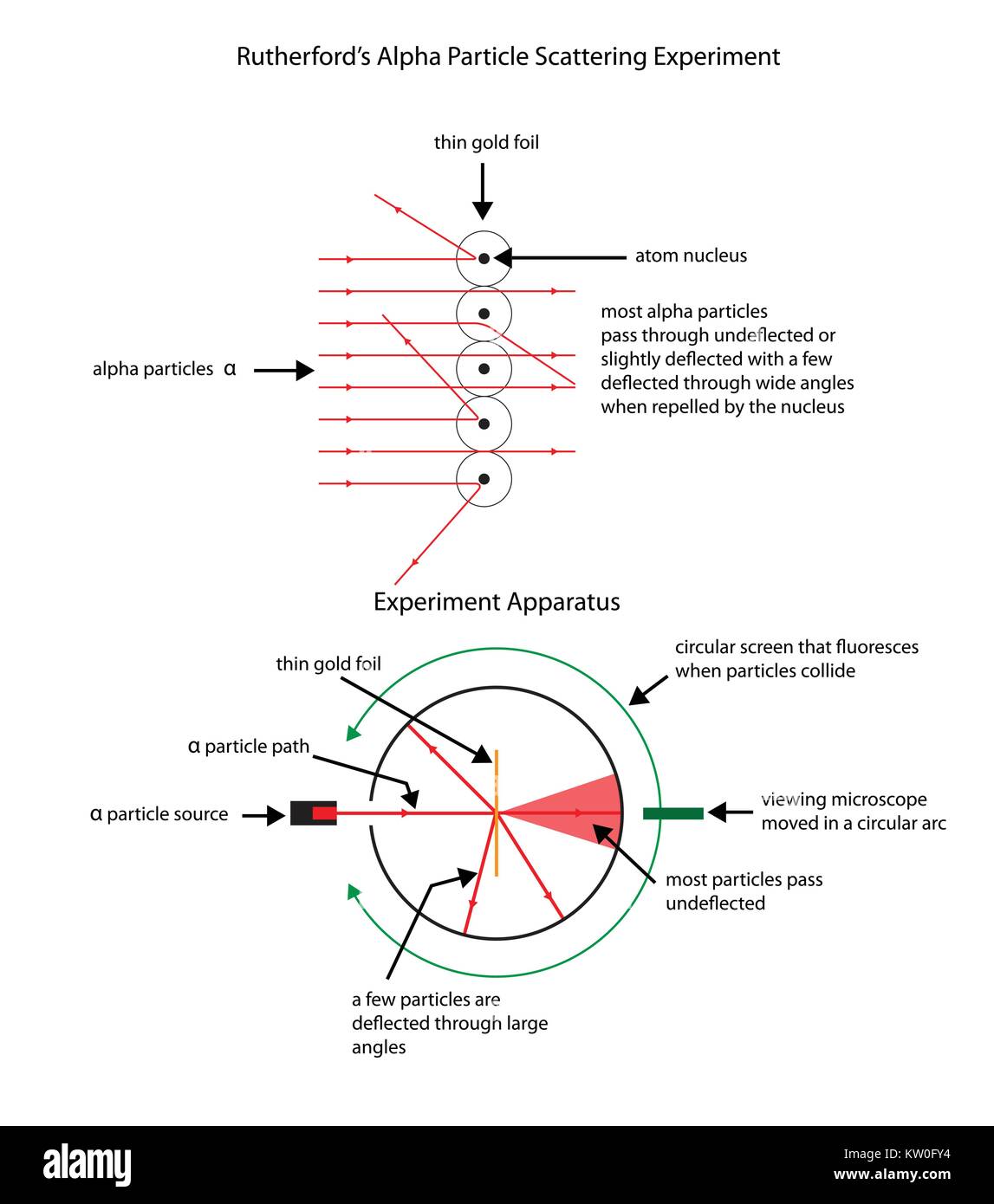
Alpha particles have a long history as a tool for probing the structure of matter, dating back to Ernest Rutherford’s gold foil experiment, which discovered the atomic nucleus. In 2026, they remain vital in several analytical fields.
Alpha Particle X-ray Spectroscopy (APXS)
This technology is a staple on planetary exploration missions. An APXS instrument uses an alpha source (often Curium-244) to bombard a rock or soil sample. This bombardment induces the emission of X-rays and backscattered alpha particles. By analyzing the energy spectrum of these emissions, scientists can determine the exact elemental composition of the sample.
Geochronology and Radon Detection
The study of alpha decay is fundamental to dating geological samples. By measuring the ratio of parent isotopes to daughter products in the uranium-lead decay chain, geologists can determine the age of rocks with extreme precision. Additionally, monitoring alpha emissions is the primary method for detecting Radon-222 gas in homes, a natural byproduct of uranium decay in the soil that poses a significant health risk if it accumulates in basements.
Comparative Overview of Common Alpha-Emitting Isotopes
The following table summarizes the most common alpha-emitting isotopes and their primary technological applications as of 2026.
| Isotope | Symbol | Half-Life | Primary Application | Reason for Use |
|---|---|---|---|---|
| Americium-241 | $^{241}\text{Am}$ | 432.2 Years | Smoke Detectors | Consistent ionization; long life. |
| Plutonium-238 | $^{238}\text{Pu}$ | 87.7 Years | Space Power (RTGs) | High heat density; low gamma emission. |
| Polonium-210 | $^{210}\text{Po}$ | 138 Days | Static Eliminators | High specific activity; pure alpha emitter. |
| Radium-223 | $^{223}\text{Ra}$ | 11.4 Days | Cancer Therapy | Bone-seeking properties; targeted energy. |
| Actinium-225 | $^{225}\text{Ac}$ | 10 Days | Targeted Alpha Therapy | High LET; suitable for antibody binding. |
| Curium-244 | $^{244}\text{Cm}$ | 18.1 Years | Material Analysis (APXS) | Efficient for X-ray fluorescence induction. |
Safety, Risks, and Radiological Protection
While alpha particles are incredibly useful, they require stringent safety protocols. The very property that makes them effective—their high ionizing power—also makes them biologically dangerous if they enter the human body.
External vs. Internal Exposure
Externally, alpha radiation is generally not a threat. A layer of dead skin cells is sufficient to stop an alpha particle. However, if an alpha-emitting substance is inhaled, ingested, or enters through an open wound, the situation changes drastically. Once inside the body, there is no "dead skin" to protect living cells. The alpha particles deposit all their energy into a very small number of living cells, often leading to severe radiation sickness or long-term carcinogenic effects.
Shielding and Handling
In industrial and medical settings, shielding for alpha radiation is simple: plastic, glass, or even a few centimeters of air is sufficient. The primary concern is containment. Alpha sources are usually "sealed sources," meaning the radioactive material is encapsulated in metal or foil to prevent the leakage of radioactive dust or gas. For unsealed sources, such as those used in TAT, practitioners must use specialized fume hoods and rigorous contamination monitoring to ensure no particles are accidentally inhaled.
FAQs
Why are alpha particles more dangerous than gamma rays if swallowed?
Alpha particles have a much higher ionizing power than gamma rays. When a gamma ray passes through a cell, it might pass all the way through without hitting anything, or it might cause minor ionization. When an alpha particle is inside the body, its mass and +2 charge ensure it hits everything in its path, causing massive, irreparable damage to DNA in a localized area.
Can I get radiation poisoning from a smoke detector?
No. The amount of Americium-241 in a smoke detector is extremely small (about 0.3 micrograms). The alpha particles it emits cannot travel more than a few centimeters in the air and cannot pass through the detector's plastic cover. As long as you do not dismantle the source and swallow the radioactive component, there is no risk of radiation poisoning.
Are alpha particles used in nuclear power plants?
Alpha particles are a product of the nuclear fuel cycle (as uranium and plutonium decay), but they are not the primary drivers of the fission reaction. Fission is driven by neutrons. However, the heat generated by alpha decay contributes to the "decay heat" that must be managed after a reactor is shut down.
Why is Polonium-210 used in static eliminators if it is highly toxic?
Polonium-210 is used because it is a very "clean" alpha emitter, meaning it produces very little gamma radiation. This makes it safer to use in open environments without heavy lead shielding. The isotope is plated onto a substrate and covered with a thin layer of gold or other metal to prevent the Polonium from flaking off, making it safe for industrial use provided the device is replaced according to the manufacturer's schedule.
Summary and Next Actions
Alpha particles are indispensable in 2026 for their unique ability to deliver concentrated energy at a microscopic scale. From saving lives in residential fires to powering humanity's reach into the stars and treating late-stage cancers, their applications are defined by their short range and high impact.
For those interested in the practical management of alpha-emitting devices:
- Smoke Detectors: Check the manufacture date on your ionization smoke detectors. They should generally be replaced every 10 years to ensure the source and the sensor remain effective.
- Industrial Safety: If working with static eliminators or analytical equipment, ensure you are trained in "Sealed Source" safety protocols and never attempt to disassemble the source housing.
- Medical Inquiries: If discussing Targeted Alpha Therapy for oncology, consult with a radiologist or nuclear medicine specialist to understand the specific eligibility criteria for isotopes like Radium-223 or Actinium-225.