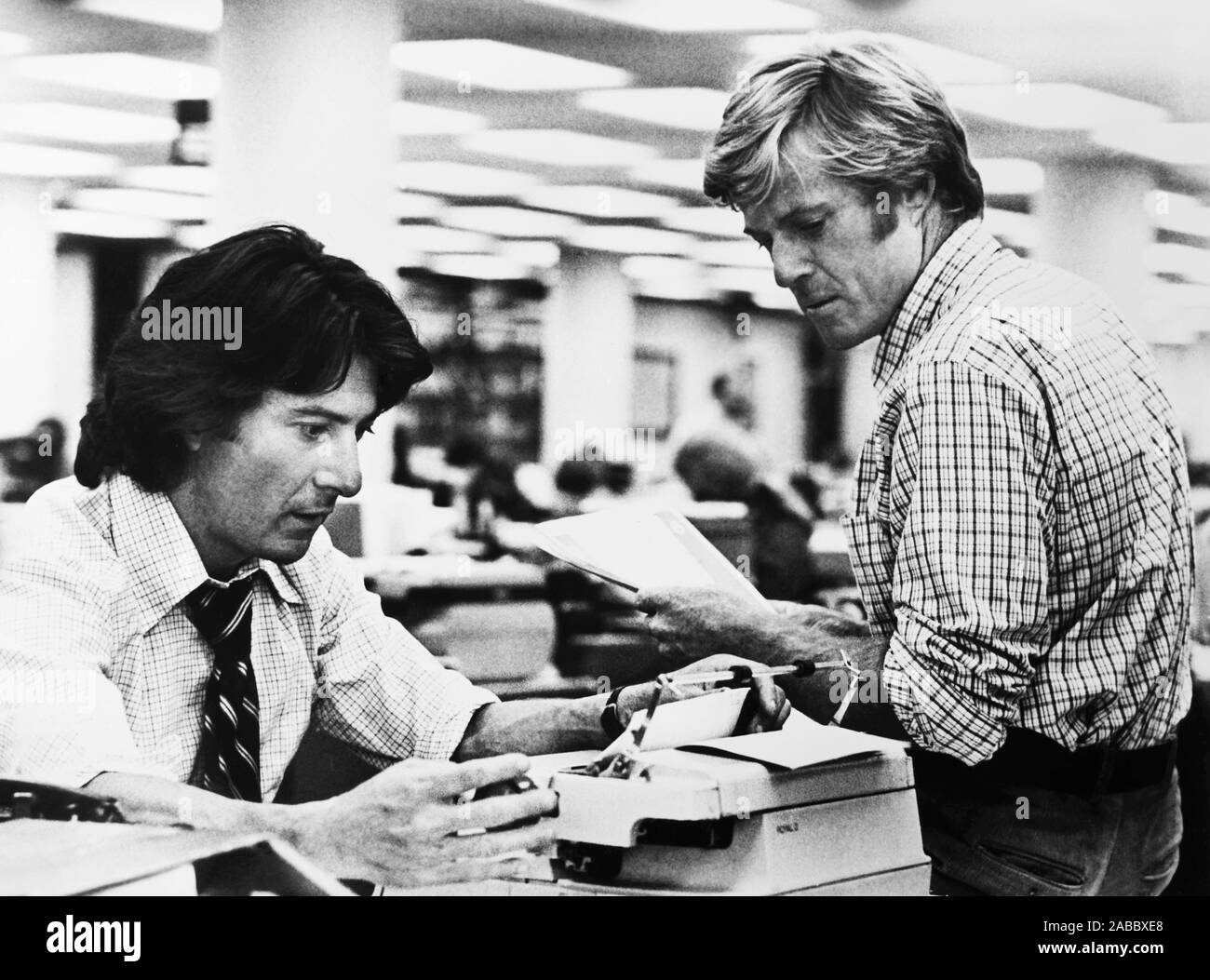
The cast of the 1976 cinematic masterpiece All the President's Men features Robert Redford as Bob Woodward and Dustin Hoffman as Carl Bernstein. Supported by an Academy Award-winning performance from Jason Robards as Ben Bradlee and a haunting turn by Hal Holbrook as Deep Throat, the ensemble meticulously recreates the investigative reporting that exposed the Watergate scandal.
Released during a pivotal era in American cinema, All the President's Men remains the gold standard for political thrillers and journalistic procedurals. As we mark the 50th anniversary of the film’s release in 2026, the performances of its cast continue to be studied for their precision, understated intensity, and historical fidelity. Directed by Alan J. Pakula, the film relied on a cast that could balance the dry, methodical nature of investigative journalism with the high-stakes tension of a government conspiracy.
The Investigative Duo: Robert Redford and Dustin Hoffman
The heart of the film lies in the chemistry and contrast between its two leads. Robert Redford and Dustin Hoffman did not merely play reporters; they embodied the specific temperaments of the men who broke the Watergate story for The Washington Post.
Robert Redford as Bob Woodward
Robert Redford was the driving force behind the film, having purchased the rights to Woodward and Bernstein’s book before it was even completed. Playing Bob Woodward, Redford portrayed the "straight-arrow" Republican reporter—a man of controlled emotions, meticulous note-taking, and a somewhat naive but persistent belief in the system. Redford’s performance is characterized by its stillness. He captures Woodward’s transition from a junior reporter covering a "third-rate burglary" to a hardened investigator realizing the depth of executive corruption.
Dustin Hoffman as Carl Bernstein
Dustin Hoffman brought a frenetic, street-smart energy to the role of Carl Bernstein. While Redford’s Woodward was methodical, Hoffman’s Bernstein was the "mensch" with the intuitive leap, the aggressive questioning style, and the constant cloud of cigarette smoke. Hoffman famously utilized method acting techniques, spending weeks in the Washington Post newsroom to mimic Bernstein’s typing rhythm and social mannerisms. The interaction between the two—Woodward’s caution versus Bernstein’s bravado—serves as the film's narrative engine.
The Washington Post Editorial Room
The power dynamics of the newsroom provided the film with its structural integrity. The actors portraying the editors had to convey the immense pressure of betting the reputation of a major metropolitan newspaper against the President of the United States.
Jason Robards as Ben Bradlee
Jason Robards delivered what many critics consider the definitive portrayal of a newspaper editor. As Executive Editor Ben Bradlee, Robards channeled a blend of aristocratic toughness and journalistic skepticism. He won the Academy Award for Best Supporting Actor for this role. Robards’ Bradlee is not a cheerleader for his reporters; he is their most rigorous critic, demanding "multiple sources" and "hard evidence" before allowing a story to go to print. His performance anchored the film, providing the necessary authority to ground the reporters' frantic investigations.
Jack Warden as Harry M. Rosenfeld
Jack Warden played Harry Rosenfeld, the Metropolitan Editor who directly oversaw Woodward and Bernstein. Warden’s performance captured the "boots-on-the-ground" grit of local news. He served as the bridge between the reporters and the higher-level editors, often acting as a vocal advocate for the young duo when their leads seemed thin.
Martin Balsam as Howard Simons
Martin Balsam portrayed Managing Editor Howard Simons. Balsam’s role was to be the voice of caution and logic. In the newsroom hierarchy, Simons was often the one reminding the team of the catastrophic consequences of a mistake. Balsam’s understated performance highlighted the heavy burden of responsibility felt by the Post leadership during the early 1970s.
The Informants and Key Witnesses
The film’s atmosphere of paranoia was largely built through the supporting cast who played the fearful witnesses and the mysterious informant who guided the investigation.
Hal Holbrook as Deep Throat
Perhaps the most iconic supporting performance in the film is Hal Holbrook as "Deep Throat" (later revealed in 2005 to be W. Mark Felt). Holbrook appears primarily in shadows, in dimly lit parking garages, delivering cryptic advice to Woodward. His delivery of the famous line "Follow the money" (which was actually a creation of the screenwriter William Goldman, not the real Felt) became the defining mantra of the film. Holbrook managed to convey a sense of profound risk and weary patriotism without ever showing his full face in the light.
Jane Alexander as the Bookkeeper
Jane Alexander received an Academy Award nomination for her brief but devastatingly effective role as the Bookkeeper for the Committee for the Re-election of the President (CRP). In just a few scenes, Alexander communicates the sheer terror felt by ordinary citizens caught in the gears of a political machine. Her nervous energy and tearful reluctance to speak provided the emotional stakes of the investigation, showing the human cost of the Nixon administration's tactics.
Stephen Collins as Hugh W. Sloan Jr.
In his film debut, Stephen Collins played Hugh Sloan, the CRP Treasurer who resigned rather than participate in the cover-up. Collins portrayed Sloan as a man of integrity trapped in a den of thieves. His character served as a vital contrast to the "villains" of the piece, showing that even within the administration, there were those who refused to break the law.
Comparative Cast and Character Analysis
To understand the scope of the casting, it is helpful to see how the actors mapped onto the real-life figures of the Watergate era.
| Actor | Real-Life Figure | Role/Position in 1972-74 | Impact of Performance |
|---|---|---|---|
| Robert Redford | Bob Woodward | Investigative Reporter | Established the "modern journalist" archetype. |
| Dustin Hoffman | Carl Bernstein | Investigative Reporter | Highlighted the tenacity and grit of the "mensch." |
| Jason Robards | Ben Bradlee | Executive Editor, The Washington Post | Won Oscar; defined the "tough editor" role. |
| Hal Holbrook | Mark Felt (Deep Throat) | Associate Director of the FBI | Created the cinematic standard for "the whistleblower." |
| Jane Alexander | Judy Hoback Miller | Bookkeeper, CRP | Nominated for Oscar; represented the "human cost." |
| Jack Warden | Harry Rosenfeld | Metro Editor, The Washington Post | Portrayed the link between reporters and management. |
| Martin Balsam | Howard Simons | Managing Editor, The Washington Post | Provided the "voice of reason" in the newsroom. |
| Ned Beatty | Martin Dardis | Investigator, Dade County State Attorney | Showed the importance of the paper trail in Florida. |
Casting Accuracy and Preparation
The authenticity of All the President's Men was no accident. The casting directors and producers sought actors who could disappear into their roles rather than rely on star power alone.
- Newsroom Immersion: Redford and Hoffman spent months at the Washington Post. They attended editorial meetings, learned the shorthand of the newsroom, and even memorized the layout of the desks.
- Set Accuracy: Although the Post did not allow filming in their actual office, the production team built a multimillion-dollar replica in California. The actors were surrounded by real trash and newspapers from the Post to ensure the environment felt lived-in. This helped the cast maintain a level of realism that was rare for 1970s Hollywood.
- Physical Likeness: While Redford didn't look exactly like the real Woodward, he captured the essence of his posture and speech patterns. Conversely, Robards initially looked nothing like Bradlee, but through vocal training and a prosthetic hairpiece, he became the spitting image of the editor.
The Impact of the Cast on Modern Journalism
The performances in this film did more than just tell a story; they influenced an entire generation's perception of the press. The cast's portrayal of journalists as hardworking, unglamorous, and deeply ethical individuals led to a surge in enrollment in journalism schools across the United States in the late 1970s—a phenomenon often called the "Woodward and Bernstein effect."
The actors avoided the cliché of the "crusading hero." Instead, they showed the boredom of checking records, the frustration of doors being slammed in their faces, and the genuine fear of being wrong. This grounded approach made the eventual triumph of the investigation feel earned rather than scripted.
Historical Recognition and Legacy
As of 2026, All the President's Men continues to be cited by the American Film Institute as one of the most significant films in American history. The cast’s ability to turn a talk-heavy, non-linear investigation into a gripping thriller is a testament to the script and the ensemble's discipline.
Jason Robards' win at the 49th Academy Awards was a milestone, as it was one of the few times a supporting actor dominated the cultural conversation about a film starring two of the world's biggest leads. Jane Alexander’s nomination for a role with very little screen time further underscores the high level of talent present throughout the entire production.
Frequently Asked Questions
Did the real Woodward and Bernstein like the actors who played them?
Yes. Both Bob Woodward and Carl Bernstein have praised the film for its accuracy. While they noted small differences—such as the film making them seem slightly more heroic than they felt at the time—they were impressed by Redford and Hoffman’s commitment to capturing the nuances of their partnership.
Why wasn't the identity of "Deep Throat" known when the movie was cast?
When the film was produced in 1976, only Bob Woodward knew the true identity of his source. Hal Holbrook’s casting and performance were based on the description of the man in the book: someone in a high government position who was deeply conflicted. It wasn't until 2005 that the world learned the actor was playing Mark Felt.
Did Robert Redford really produce the movie?
Yes. Redford was instrumental in the film’s existence. He contacted Woodward and Bernstein early on, convinced them to focus the book on their own reporting process rather than just the scandal, and used his star power to secure the budget from Warner Bros.
How many Oscars did the cast win for this film?
Out of the acting cast, only Jason Robards won an Oscar (Best Supporting Actor). Jane Alexander was nominated for Best Supporting Actress. While Redford and Hoffman were eligible, the competitive nature of the 1977 Oscars (which included Rocky and Network) made for a crowded field.
Is the cast from the movie still active in 2026?
Many of the legendary cast members have passed away, including Jason Robards, Jack Warden, and Martin Balsam. Robert Redford (now 89) and Dustin Hoffman (now 88) have largely retired from acting but remain influential figures in the industry, often appearing at retrospectives for the film’s various anniversaries.
Final Recommendation for Viewers
If you are looking to understand the mechanics of power and the importance of a free press, All the President's Men is essential viewing. Pay close attention to the background actors and the supporting editors; their reactions to the unfolding scandal provide the necessary context for why Woodward and Bernstein’s work was so revolutionary. For the best experience, watch the 4K restoration released for the 50th anniversary in 2026, which highlights the incredible detail of the set design and the subtle facial expressions of the cast.