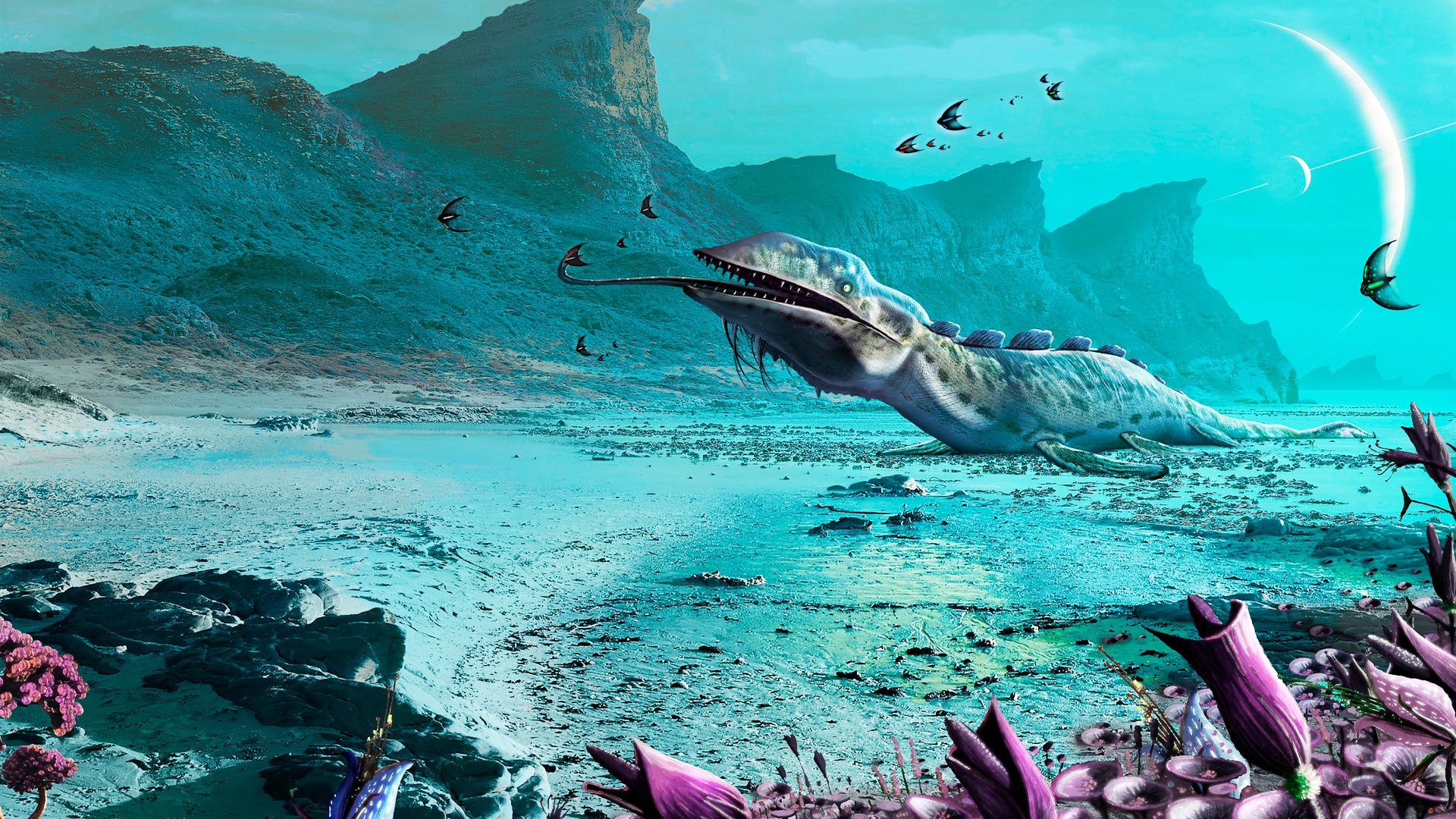
The hypothesis that non-human intelligence or extraterrestrial entities may reside within Earth's oceans—often referred to as the Unidentified Submerged Objects (USO) phenomenon—remains a subject of intense public curiosity and rigorous scientific scrutiny. While popular culture frequently links these sightings to extraterrestrial origins, mainstream oceanography and military intelligence classify such incidents as high-priority data points for national security, primarily focusing on environmental, sensor-related, or adversary-state explanations.
Defining the Unidentified Submerged Object (USO) Phenomenon
The term "Unidentified Submerged Object" (USO) describes any submersible or surface-level object that cannot be immediately identified or explained through conventional maritime, geological, or atmospheric observation. Unlike Unidentified Aerial Phenomena (UAP), which dominate news cycles, USOs present a unique set of challenges due to the physics of the marine environment.
Water is approximately 800 times denser than air, meaning that detecting, tracking, and identifying objects beneath the surface requires sophisticated acoustic, magnetic, and thermal imaging technology. When a sensor picks up an anomaly, investigators must rule out a massive hierarchy of conventional possibilities before entertaining extraordinary theories. Common non-alien explanations include:
- Geological Activity: Underwater seismic shifts, methane hydrates, or volcanic vents can produce sudden localized disturbances that appear on sonar as moving targets.
- Biological Activity: Large marine mammals, schools of fish, or giant squid can create acoustic echoes that mimic solid, manufactured structures.
- Sensor Ghosting: Salinity gradients, thermoclines (rapid changes in water temperature), and pressure differences can cause sonar beams to refract, creating ghost images that seem to exhibit impossible speeds or maneuvers.
- Adversarial Technology: The deployment of advanced, silent, or autonomous underwater vehicles (AUVs) by foreign powers is a legitimate national security concern, often accounting for detections that appear to bypass traditional tracking methods.
The Role of Military and Scientific Surveillance
In 2026, the global approach to monitoring the deep ocean remains heavily militarized. Navies across the world operate vast arrays of hydrophones—the Integrated Undersea Surveillance System (IUSS) in the United States being the most prominent example. These systems are designed to track submarines by monitoring low-frequency acoustic signatures.
When military personnel report a USO, they are not usually looking for aliens; they are looking for threats. The "alien" hypothesis is rarely a formal part of the analytical framework used by organizations like the All-domain Anomaly Resolution Office (AARO). Instead, researchers look for evidence of propulsion, heat signatures, or structural integrity that would suggest an object is not a biological entity or a known piece of maritime equipment.
Challenges of Subaquatic Detection
Detection under the sea faces the "blind spot" problem. Even with modern sonar, the majority of the ocean floor remains unmapped. According to the Seabed 2030 Project, while mapping progress is significant, the vast majority of the deep-sea abyss is still effectively terra incognita. This environment allows for potential anomalies to go unnoticed for decades, fueling public speculation that "alien bases" could exist in these unmapped zones. However, the extreme pressure at depth, which can reach over 15,000 pounds per square inch in the Hadal zone, presents a biological and mechanical barrier that would require highly advanced, durable technology to overcome.
Evaluating the "Underwater Base" Hypothesis
A frequent topic in speculative literature is the existence of semi-permanent underwater bases or transit portals. Proponents argue that the ocean provides the perfect camouflage for extraterrestrial entities, offering protection from detection while allowing for surveillance of the surface.
From an investigative standpoint, this remains entirely speculative. The energy requirements to maintain a permanent facility deep underwater are immense. Any base would require a power source capable of functioning in a highly corrosive, high-pressure environment without venting waste heat that would be immediately detected by existing naval infrared or thermal sensors. Furthermore, any civilization capable of interstellar or trans-dimensional travel would likely possess the capability to remain concealed via cloaking or advanced materials, rendering the need for a physical "base" on the seabed an unnecessary constraint.
Comparative Framework: Known Underwater Anomalies vs. Speculative Claims
To understand how researchers distinguish between known phenomena and potential unknowns, it is helpful to view them through a comparative lens.
| Phenomenon | Known Characteristics | Detection Method | Typical Explanation |
|---|---|---|---|
| Bioluminescence | Light emission from organisms | Optical sensors / Naked eye | Phytoplankton or deep-sea fauna |
| Gas Seeps | Rapid release of methane | Sonar / Gas chromatography | Geological tectonic shifting |
| Acoustic Refraction | Ghost signals | Active Sonar | Thermocline interference |
| Advanced AUVs | Controlled, high-speed movement | Passive/Active Sonar | Classified government testing |
| USO Reports | Unexplained flight-to-water transition | Radar / Satellite / Sonar | Insufficient data / Sensor error |
Methodological Rigor: Analyzing USO Reports
For those interested in investigating claims of aliens under the ocean, the primary challenge is the quality of data. Most reports of USOs rely on anecdotal evidence or degraded video footage. To reach a scientifically valid conclusion, a report must include:
- Multiple Sensor Validation: A single sighting on one sonar device is rarely sufficient. Validated sightings typically require correlation between radar, acoustic, and visual observation.
- Environmental Context: Investigators must account for local tide, weather, and thermal profiles. A report that ignores these environmental variables is scientifically incomplete.
- Physical Evidence: Genuine discovery requires measurable impact, such as debris, radiation spikes, or gravitational fluctuations. As of 2026, no such verified evidence has been released to the public by any international scientific body.
The Intersection of Public Interest and National Security
There is a natural tension between the public’s desire for transparency regarding UAP and USOs and the government’s requirement to protect classified sensor capabilities. When a navy detects a potentially advanced, unidentified object, they are cautious about revealing the exact capabilities of their tracking technology. This caution, while intended to protect national security, is often interpreted by the public as a cover-up, which in turn fosters narratives about "aliens under the ocean."
It is important to acknowledge that the "alien" explanation is a hypothesis that currently lacks falsifiable evidence. In scientific terms, an explanation must be able to be proven false to be valid. Because the deep ocean is so difficult to monitor, the USO hypothesis is inherently difficult to disprove, which gives it longevity in speculative discourse but limits its utility in formal, evidence-based research.
Frequently Asked Questions
Are there official government reports on USOs? Yes, but they are typically integrated into broader UAP reports. The U.S. Office of the Director of National Intelligence (ODNI) issues periodic reports on unidentified phenomena. While these reports occasionally mention trans-medium capabilities (objects moving between air and water), they emphasize that the lack of high-quality data prevents a definitive determination of origin.
Why are USOs often associated with extraterrestrial theories? The association stems from the extreme performance characteristics reported in some sightings, such as moving from flight to deep-sea submersion without creating a splash or sonic boom. Because this level of performance exceeds the publicly known capabilities of human aerospace engineering, the human mind often defaults to "extraterrestrial" as the most convenient explanation.
Is it possible for extraterrestrial life to evolve underwater? From an astrobiological perspective, scientists consider icy moons like Europa (Jupiter) and Enceladus (Saturn) to be the most likely places to find alien life within our solar system. These bodies possess subsurface liquid water oceans. While the existence of intelligent life there remains unproven, the concept of aquatic extraterrestrial life is a legitimate field of study, separate from the phenomenon of USOs on Earth.
How can I verify a reported USO sighting? Verification is nearly impossible for a private citizen. Genuine analysis requires access to classified data. If you see a report, check if it comes from an official military source or a peer-reviewed journal. If the source is a social media post or an unverified blog, it should be treated as anecdotal rather than factual.
What is the most likely explanation for most USOs? The most likely explanation is a combination of sensor error, misidentified conventional human activity, and natural oceanic phenomena. Modern sonar is sensitive, but the ocean is a chaotic, noisy environment. Most "anomalies" are simply things we do not have enough data to categorize effectively.
Practical Next Steps for Enthusiasts
If you are interested in the study of USOs, prioritize learning about oceanography and sensory engineering rather than searching for evidence of extraterrestrial visitors. Understanding how sonar works, the impact of salinity on sound travel, and the basics of bathymetric mapping will provide a more stable foundation for analyzing reports.
The search for truth regarding what hides in the depths of our oceans will continue to be driven by advancements in autonomous underwater vehicle technology and deep-sea exploration. As we map more of the ocean floor, many of the "mysteries" currently attributed to aliens will likely be resolved as geological or biological realities. Until then, maintain a skeptical approach, prioritize data-backed evidence, and recognize that the ocean remains one of the final frontiers of human discovery, holding secrets that are often more complex than they initially appear.