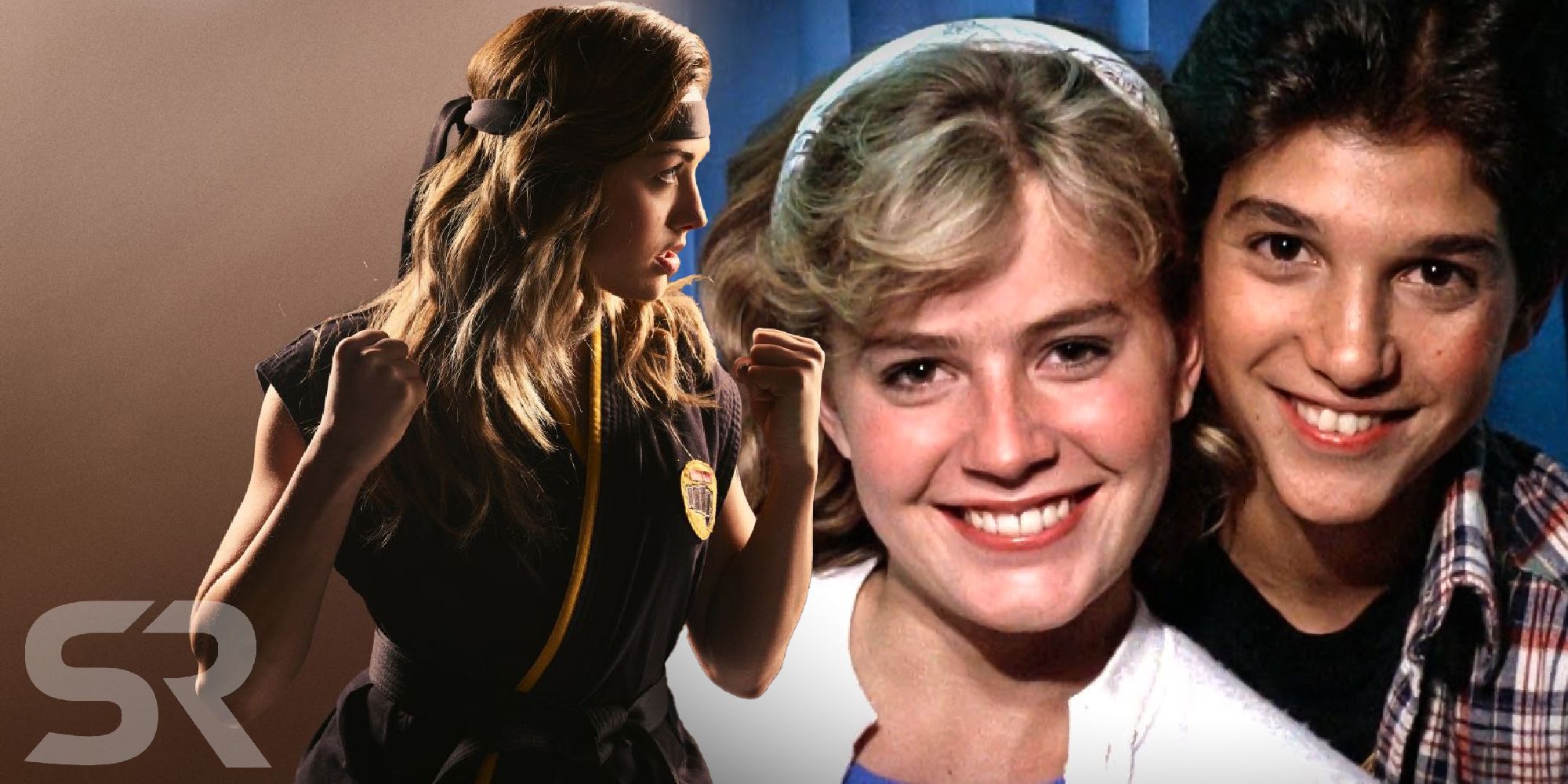
Elisabeth Shue is the acclaimed American actor who portrayed the iconic character Ali Mills in the 1984 martial arts classic The Karate Kid. While the character catalyzed the legendary rivalry between Daniel LaRusso and Johnny Lawrence, Shue’s extensive career spans decades, featuring an Academy Award nomination and roles in major franchises like Cobra Kai, The Boys, and Back to the Future.
The Genesis of Ali Mills in The Karate Kid (1984)
When audiences first met Ali Mills in 1984, she was introduced as a high school student from the affluent hills of Encino, California. As the "actor behind Ali Mills," Elisabeth Shue brought a grounded, relatable charm to a role that could have easily been a two-dimensional love interest. In the context of the original Karate Kid script, Ali serves as the primary motivation for the conflict between the protagonist, Daniel LaRusso (Ralph Macchio), and the antagonist, Johnny Lawrence (William Zabka).
Ali was not merely a trophy for the characters to fight over; she was depicted as independent, athletic, and socially conscious. Shue’s performance emphasized Ali's willingness to defy social norms by dating Daniel, a boy from "the wrong side of the tracks" in Reseda, despite the pressures from her wealthy peer group and her aggressive ex-boyfriend. This characterization established Ali Mills as a feminist archetype for 1980s teen cinema—a young woman with her own agency who refused to be defined by the men around her.
The famous introduction, where she corrects Daniel by saying, "Ali... with an 'I'," became a cultural touchstone. For Shue, this role was a massive breakthrough. Before being cast, she was primarily known for television commercials, most notably for Burger King. Her transition from commercial work to a lead role in a major studio film set the stage for one of the most enduring careers in Hollywood.
Casting and the Early Career of Elisabeth Shue
Elisabeth Shue’s path to becoming the "Ali Mills actor" was marked by a blend of academic pursuit and professional ambition. At the time of her casting, Shue was a student at Wellesley College, later transferring to Harvard University. Her "girl next door" aesthetic, combined with a sharp, intelligent screen presence, made her the ideal candidate for the quintessential 1980s heroine.
The casting directors for The Karate Kid were looking for someone who could convincingly play a cheerleader and gymnast while possessing the gravitas to stand up to the intense personalities of the Cobra Kai dojo. Shue’s real-life background as an athlete—she was a competitive soccer player—aided her in performing the more physical aspects of the role, such as the scene where she practices soccer with Daniel.
Following the massive success of The Karate Kid, Shue quickly became a sought-after talent. However, she was notably absent from the first two sequels. The narrative explanation provided in The Karate Kid Part II—that Ali had fallen in love with a football player and broken Daniel's heart—was often cited by fans as a point of contention. In reality, Shue had returned to her studies at Harvard, and the production chose to move the story in a different direction.
The Cultural Weight of the "Ali with an I" Legacy
The character of Ali Mills remained a ghost in the machine of the Karate Kid franchise for over thirty years. Even as the series transitioned into the Cobra Kai era on Netflix, Ali’s name was frequently invoked. She represented the "one who got away" for both Daniel and Johnny, serving as a symbol of their lost youth and the original trauma that defined their adult lives.
This lingering legacy created a unique challenge for Shue as an actor. While she moved on to complex, dramatic roles, a significant portion of the global audience still identified her primarily as Ali Mills. This phenomenon is common for actors who star in "generation-defining" films. Shue handled this legacy with grace, often speaking fondly of the production while focusing on expanding her range in independent films and television.
The Return: Ali Mills in the Cobra Kai Era
After years of speculation and fan theories, Elisabeth Shue officially reprised her role as Ali Mills in Season 3 of Cobra Kai (2021). Her return was handled with significant narrative care, ensuring that Ali was more than just a nostalgic cameo. In the show, Ali is revealed to be a successful pediatric oncologist living in Colorado, having navigated her own life, marriage, and subsequent divorce.
Shue’s performance in Cobra Kai was praised for its maturity and the way it allowed both Daniel and Johnny to find closure. By reuniting the three characters at a holiday party, the showrunners used Shue’s presence to bridge the gap between their childhood rivalry and their adult responsibilities. It was Ali who ultimately pointed out that both men were more alike than they were different, effectively acting as the catalyst for their eventual (though tenuous) alliance.
According to Entertainment Weekly, Shue was initially hesitant to return, wanting to ensure the character was treated with respect and not used as a punchline. The success of her return solidified Ali Mills as one of the most important characters in the "Miyagi-verse" and reminded audiences of Shue's enduring screen presence.
Beyond the Valley: Elisabeth Shue’s Multi-Faceted Career
While "Ali Mills actor" is a common search term, labeling Shue solely by this role does a disservice to her extensive filmography. She is one of the few actors from the 1980s teen genre to successfully transition into high-stakes dramatic acting and major television productions.
The Academy Award Recognition
The pinnacle of Shue’s critical acclaim came in 1995 with the film Leaving Las Vegas. Shue took a massive professional risk by playing Sera, a hardened but compassionate sex worker who forms a bond with an alcoholic writer (played by Nicolas Cage). The role was a complete departure from her "good girl" image. Her performance earned her a nomination for the Academy Award for Best Actress, as well as nominations for a Golden Globe and a BAFTA. This era of her career proved she possessed the emotional depth required for the most demanding roles in cinema.
Iconic Roles in the 80s and 90s
Beyond Ali Mills, Shue starred in several films that have achieved cult status:
- Adventures in Babysitting (1987): Shue carried this film as Chris Parker, showcasing her comedic timing and ability to lead a cast of younger actors.
- Back to the Future Part II and III (1989-1990): Shue replaced Claudia Wells as Jennifer Parker, Marty McFly’s girlfriend. This role further cemented her status as a fixture of 1980s pop culture.
- Cocktail (1988): Starring alongside Tom Cruise, Shue played Jordan Mooney, once again proving her ability to hold her own against the biggest stars in the world.
Modern Television Success: The Boys and CSI
In the 2010s and 2020s, Shue pivoted toward prestigious television projects. In the Amazon Prime hit series The Boys, she played Madelyn Stillwell, a high-ranking corporate executive at Vought International. Her portrayal of a ruthless, manipulative, yet maternal figure was a highlight of the first season, earning her a new generation of fans who may have never seen the original Karate Kid. Additionally, her multi-season stint on CSI: Crime Scene Investigation as Julie Finlay demonstrated her versatility in the procedural drama format.
Comparative Analysis: Ali Mills and the 80s Heroine Archetype
To understand why the role of Ali Mills remains so relevant in 2026, it is helpful to compare her to other iconic female leads of the same era. Shue’s portrayal helped shift the needle from "damsel in distress" to "active participant."
| Character Name | Film / Franchise | Actor | Key Traits | Legacy Impact |
|---|---|---|---|---|
| Ali Mills | The Karate Kid | Elisabeth Shue | Independent, athletic, mediator | Catalyst for the "Miyagi-verse" rivalry. |
| Jennifer Parker | Back to the Future | Elisabeth Shue (Parts II/III) | Supportive, adventurous | Essential partner in Marty McFly’s timeline. |
| Sloane Peterson | Ferris Bueller's Day Off | Mia Sara | Cool, sophisticated | The idealized "cool girl" of the 80s. |
| Andie Walsh | Pretty in Pink | Molly Ringwald | Creative, resilient | Symbol of class struggle and teen identity. |
| Vickie Lathum | The Outsiders | Michelle Meyrink | Observant, outsider | Representation of the social divide in teen films. |
Why the Identity of the "Ali Mills Actor" Matters Today
In 2026, the fascination with Elisabeth Shue as Ali Mills continues because she represents a rare bridge between the "old Hollywood" of the 1980s and the modern, franchise-driven landscape of streaming television. The character of Ali Mills is more than a name; she is a representation of a specific cultural moment where teen films began to take the emotional lives of young people seriously.
For many, Shue is the face of nostalgia. However, her career serves as a blueprint for actors looking to survive the transition from teen stardom to veteran status. By choosing projects like Hollow Man, Palmetto, and Battle of the Sexes, Shue has maintained a consistent presence in the industry without being pigeonholed by her early success.
Technical Milestones and Professional Achievements
Throughout her career, Elisabeth Shue has been recognized by major institutions within the entertainment industry. Her ability to navigate between independent cinema and blockbusters is reflected in her award history and professional affiliations.
- Academy Awards (Oscars): Best Actress Nomination for Leaving Las Vegas (1996).
- Screen Actors Guild (SAG) Awards: Outstanding Performance by a Female Actor in a Leading Role nomination.
- Los Angeles Film Critics Association: Won Best Actress for Leaving Las Vegas.
- National Society of Film Critics: Won Best Actress (1995).
- Saturn Awards: Nominations for Best Actress in Adventures in Babysitting and The Boys.
Shue’s training and background also contribute to her technical proficiency. Her time at the Royal Academy of Dramatic Art (RADA) for summer workshops and her commitment to character research—such as spending time with residents of Las Vegas' underground for her role in Leaving Las Vegas—demonstrates a high level of professional dedication.
Frequently Asked Questions
Who played Ali Mills in the original Karate Kid?
Elisabeth Shue played the character of Ali Mills in the 1984 film The Karate Kid. She was a newcomer at the time, and the role served as her major cinematic breakthrough.
Why was Elisabeth Shue replaced in Back to the Future?
Elisabeth Shue did not originate the role of Jennifer Parker; she actually replaced the original actor, Claudia Wells. Wells had to step away from the sequels due to family health issues, and Shue took over the role for Back to the Future Part II and Part III.
Does Ali Mills appear in the Cobra Kai series?
Yes, Elisabeth Shue returned as Ali Mills in the third season of Cobra Kai. Her appearance spanned two episodes, where she reunited with both Daniel LaRusso and Johnny Lawrence at a Christmas party.
What is Elisabeth Shue's net worth in 2026?
While exact figures vary, industry estimates in 2026 place Elisabeth Shue's net worth at approximately $20 million. This wealth is a result of her continuous work in high-profile films, television series like The Boys, and her long-standing career in Hollywood.
Did Elisabeth Shue actually do karate for the role of Ali?
While Ali Mills was not a karate student in the film, Elisabeth Shue was a naturally gifted athlete. She participated in the physical training sessions alongside Ralph Macchio and William Zabka to ensure the cast looked authentic as a group of high school athletes.
Practical Recommendations for Fans and Researchers
For those looking to explore the work of the "Ali Mills actor," the following actions are recommended:
- Watch the Foundations: Start with The Karate Kid (1984) to see the origin of Ali Mills, then jump to Cobra Kai Season 3 to see the character's evolution.
- Explore Her Dramatic Range: To understand why Shue is an Oscar-nominated talent, Leaving Las Vegas is essential viewing, though it contains mature themes.
- Modern Television: Watch the first season of The Boys to see her play a sophisticated antagonist, a sharp contrast to her early roles.
- Verified Information: For a complete and verified list of her work, visit her official profile on IMDb or the Academy of Motion Picture Arts and Sciences archives.
Elisabeth Shue remains a vital force in the entertainment industry. Whether she is remembered as Ali Mills or admired for her complex dramatic turns, her impact on film and television history is undeniable.