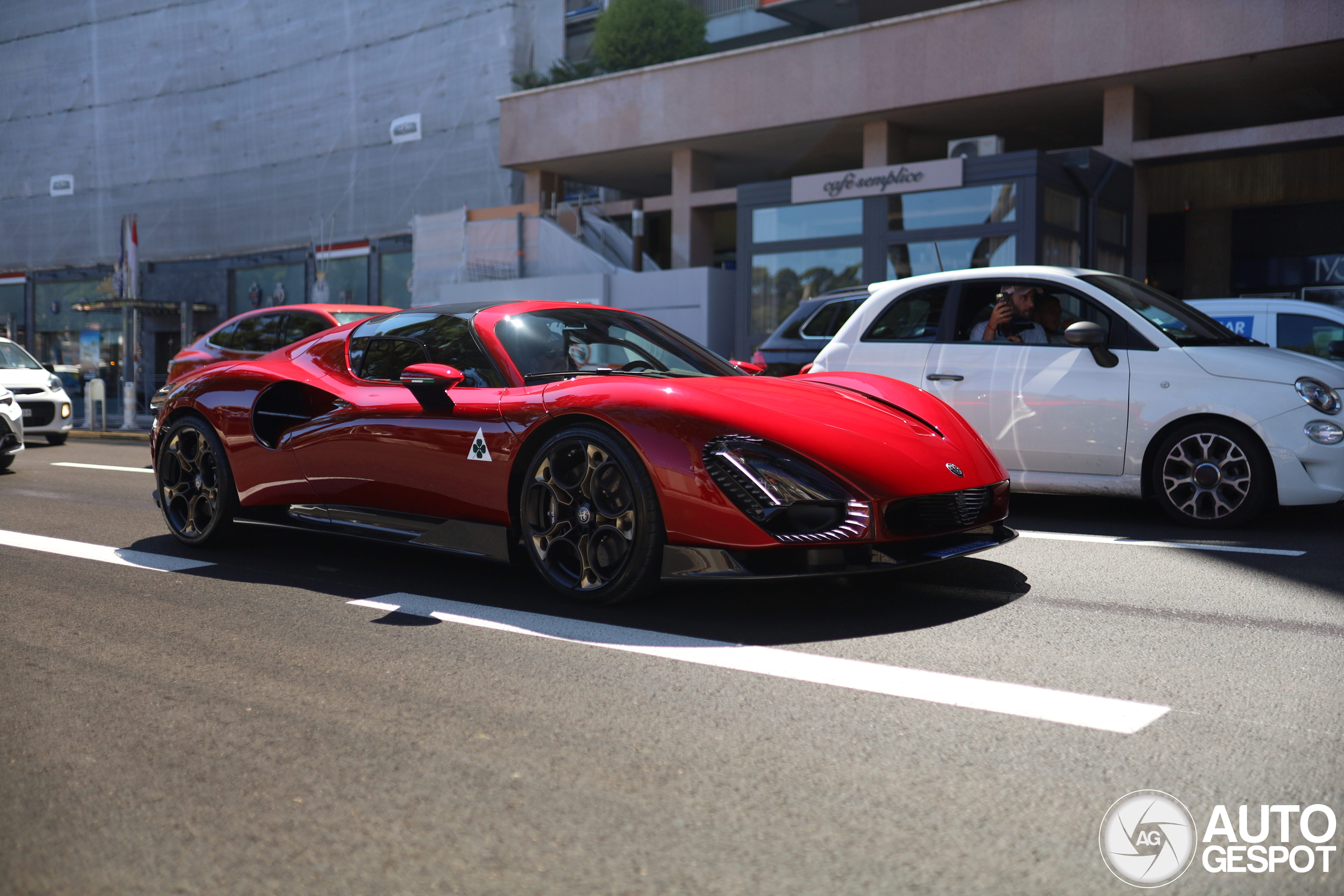
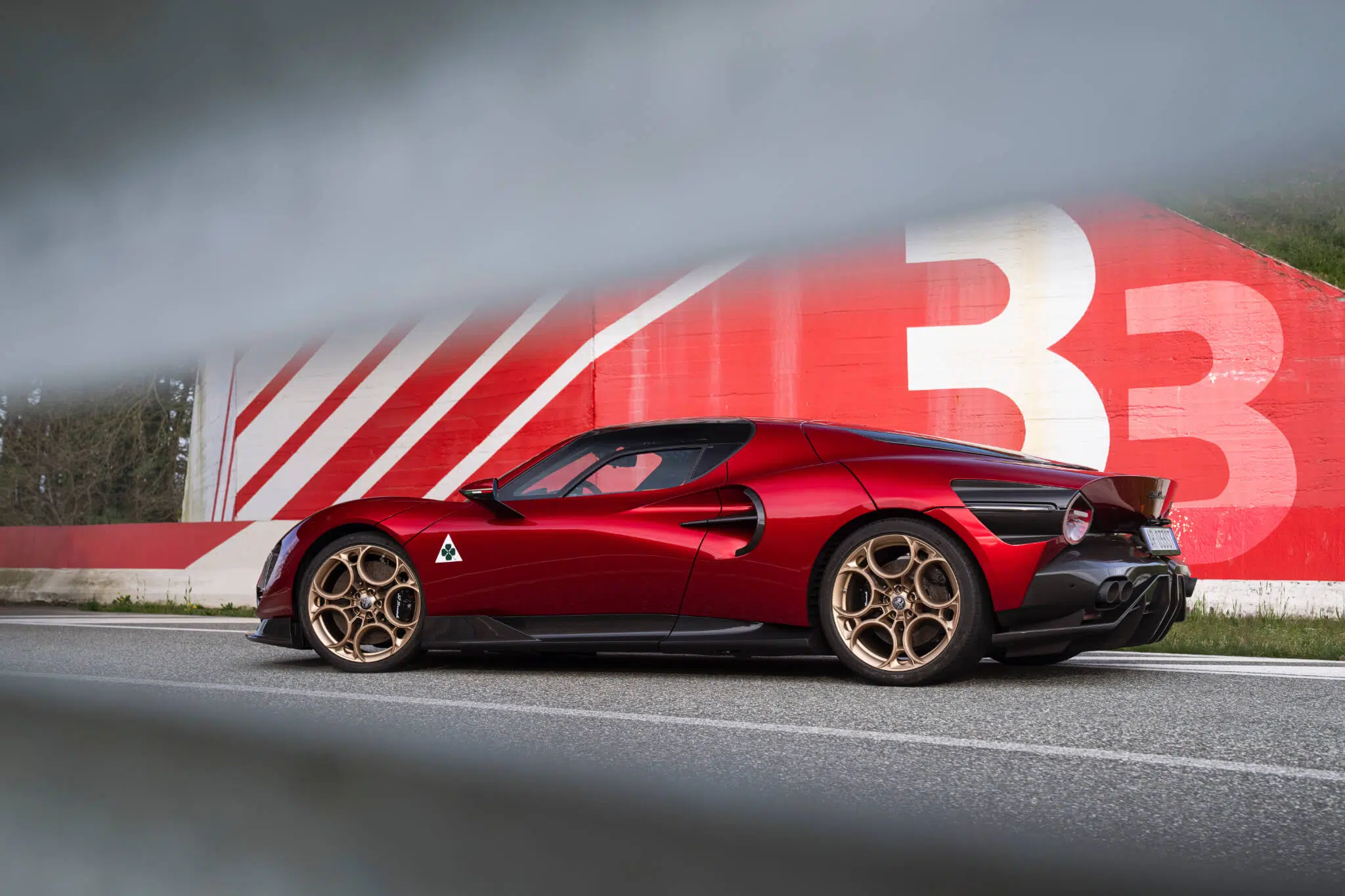
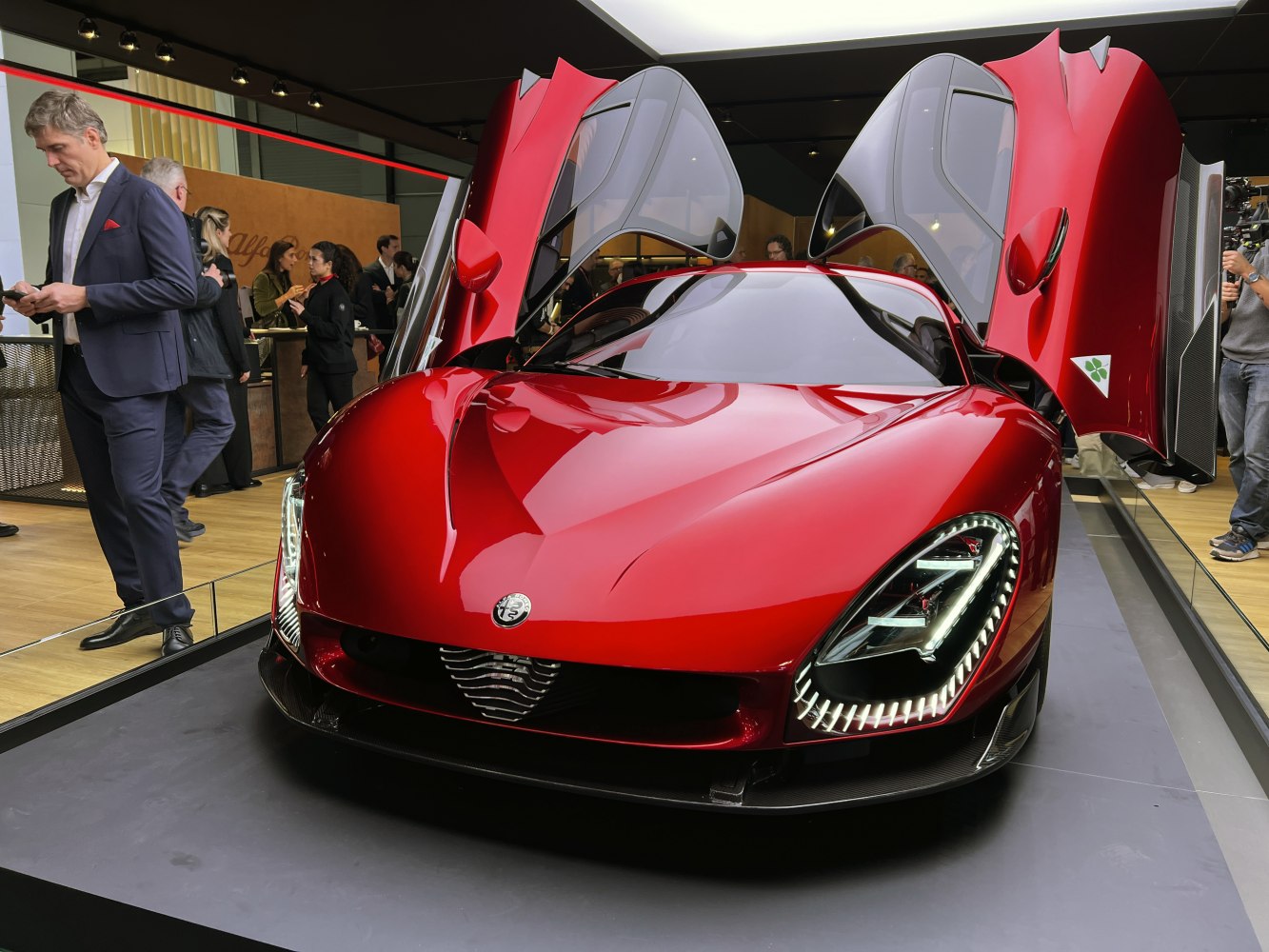
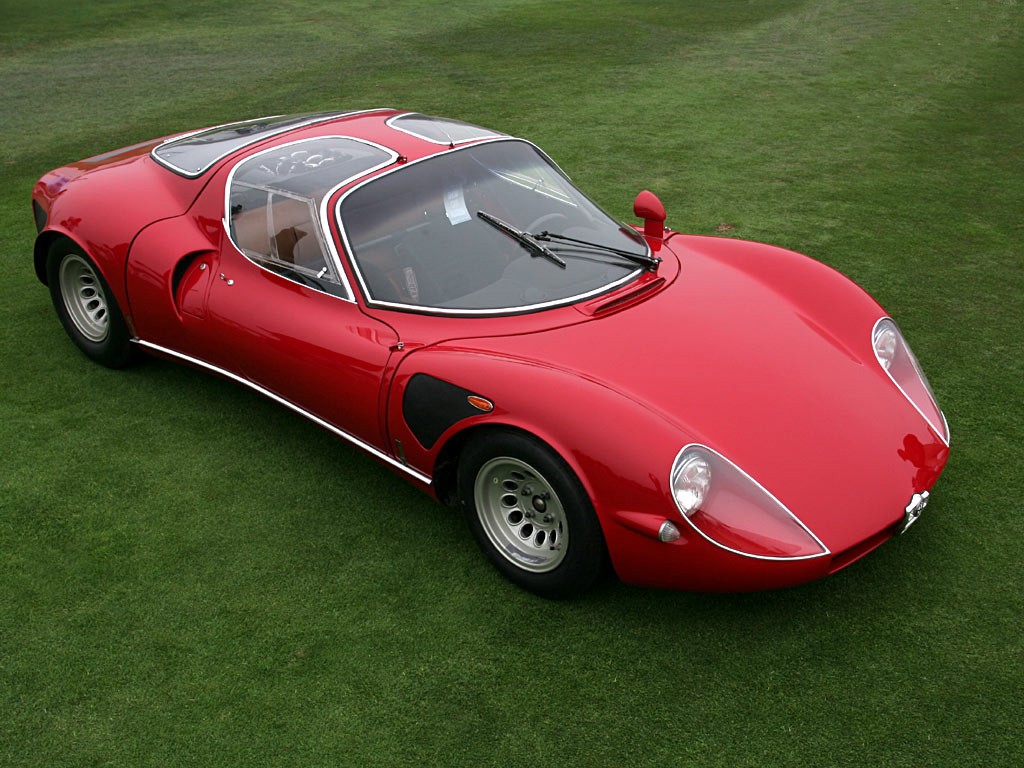
As of 2026, the Alfa Romeo 33 Stradale represents the pinnacle of the brand’s "Bottega" artisanal program, with all 33 units sold at an estimated price exceeding €3 million ($3.27 million) each. Production remains strictly limited to the original 33-unit commitment, focusing on bespoke hand-assembly and the finalized split between internal combustion and battery-electric powertrains.
The Rebirth of an Icon: Modern Production Context
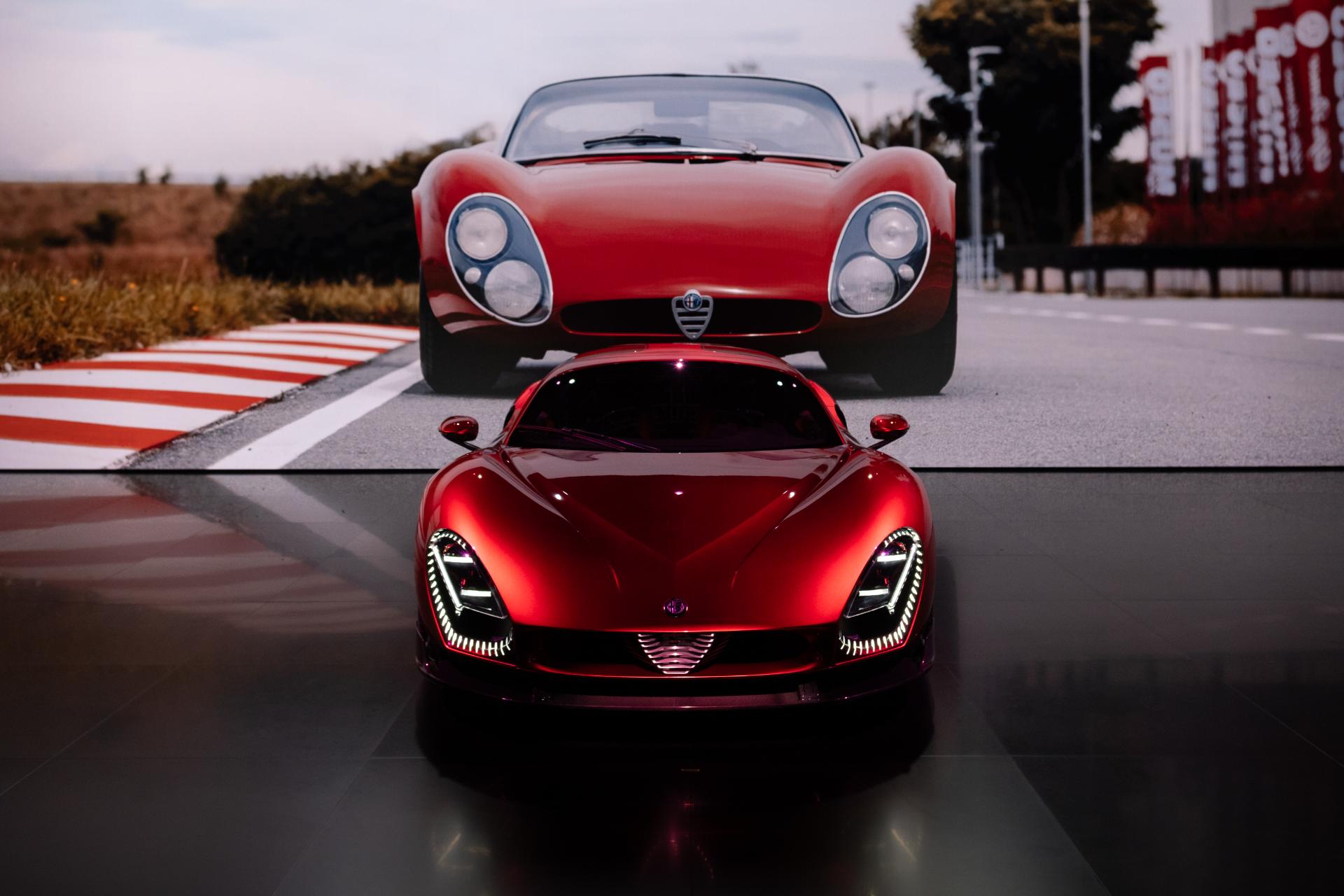
The modern Alfa Romeo 33 Stradale is not merely a tribute; it is a functional manifesto of the brand's future design language and engineering capabilities. Revived in late 2023 and entering its primary delivery phase by 2025 and 2026, this supercar serves as a bridge between the legendary 1967 Tipo 33 and the electric future of the Italian marque.
Unlike mass-produced luxury vehicles, the 33 Stradale was conceived as a "fuoriserie" (custom-built) project. This means that from the moment of its announcement, the production cycle was closed. The primary "change" in production over the last two years hasn't been an increase in volume, but rather the meticulous execution of the "Bottega"—a dedicated department within Alfa Romeo where designers work directly with owners to ensure no two cars are identical.
Production Volume and Exclusivity: Why 33 Matters
The decision to limit production to exactly 33 units was both a nod to the car's name and a strategic move to ensure maximum collectibility. In the high-end automotive market of 2026, scarcity is the primary driver of value. By capping production at 33, Alfa Romeo avoided the dilution that often occurs when manufacturers extend production runs due to high demand.
The Sold-Out Status
All 33 units were spoken for before the car was even revealed to the public at the Museo Storico Alfa Romeo in Arese. Potential buyers were vetted through a rigorous process, prioritizing long-term Alfa Romeo collectors and brand ambassadors. This "closed-loop" production model meant that "production changes" in terms of availability were non-existent for the general public; the secondary market is now the only avenue for acquisition, often at a significant premium over the initial MSRP.
The "Bottega" Manufacturing Philosophy
The production process takes place at the Carrozzeria Touring Superleggera facilities, ensuring that the assembly meets coachbuilding standards that a standard assembly line cannot provide. In 2026, we see the results of this slow-burn production: each car takes months to complete. This artisanal approach allows for structural "production changes" on a per-unit basis, such as specific weight-saving measures or unique aerodynamic tweaks requested by individual owners.
Pricing Dynamics: Initial Costs and 2026 Market Value
The initial entry price for the Alfa Romeo 33 Stradale was never officially "listed" in a traditional sense, as the bespoke nature of the cars meant that final invoices varied wildly based on customization. However, the base price was widely understood to be in the region of €3 million.
Factors Influencing Final Price
- Powertrain Choice: While the price difference between the Twin-Turbo V6 and the Battery Electric Vehicle (BEV) version was not explicitly disclosed, the complexity of the electric drivetrain and the specialized battery packaging often led to higher final costs for the EV variants.
- Custom Liveries: Owners had the option to recreate historic racing liveries or develop entirely new color palettes. These paint processes, involving multiple stages of hand-polishing and specialized pigments, added hundreds of thousands to the final tally.
- Interior Materials: From aeronautical-grade switches to specific leather treatments that mimic the 1967 original, the interior "Suite" or "Tributo" configurations allowed for significant price escalation.
Resale Outlook in 2026
In 2026, the 33 Stradale has transitioned from a new-car purchase to a blue-chip investment asset. Because of the limited production and the fact that it represents Alfa Romeo's final high-performance internal combustion engine (ICE) supercar alongside its first true halo BEV, market analysts suggest that early-delivery units appearing at auction could fetch between $4 million and $5 million.
Technical Specifications and Production Variants
One of the most significant "production changes" discussed during the development phase was the split between the ICE and BEV versions. Alfa Romeo allowed the 33 owners to choose their preferred propulsion method, a rarity in the hypercar world where usually one or the other is mandated.
The Twin-Turbo V6 (The Purist’s Choice)
Most owners opted for the 3.0-liter Twin-Turbo V6 engine. This engine is an evolution of the 2.9-liter unit found in the Giulia Quadrifoglio, but it has been extensively modified to produce over 620 horsepower. It is mid-mounted and paired with an eight-speed dual-clutch transmission.
The BEV Variant (The Future)
For those looking toward the future, the BEV version offers over 750 horsepower and an estimated range of around 280 miles (WLTP). This version utilizes a tri-motor setup and represents Alfa Romeo’s first foray into the ultra-high-performance electric segment. The production change here involved significant chassis reinforcement to accommodate the battery weight while maintaining the car's legendary handling characteristics.
Comparison Table: 1967 Original vs. 2024-2026 Modern Stradale
| Feature | 1967 Alfa Romeo 33 Stradale | 2024-2026 Alfa Romeo 33 Stradale |
|---|---|---|
| Production Units | 18 (Only 12-13 accounted for) | 33 |
| Engine Type | 2.0L V8 | 3.0L V6 Twin-Turbo / BEV |
| Horsepower | ~230 hp | 620+ hp (ICE) / 750+ hp (BEV) |
| Top Speed | 160 mph | 206 mph |
| 0-60 mph | 5.5 Seconds | < 3.0 Seconds |
| Chassis | Tubular Steel | Carbon Fiber Monocoque |
| Starting Price | ~$17,000 (Historic) | ~€3,000,000 |
The "Bottega" Process: How Individual Units Changed
The "Bottega" is a group of Alfa Romeo professionals who met with the 33 owners at the Sala del Consiglio of the Museum in Arese—the same place where the design of the 1967 33 Stradale was approved. This committee ensured that while customization was encouraged, the "spirit" of the car remained intact.
Customization Limits and Approval
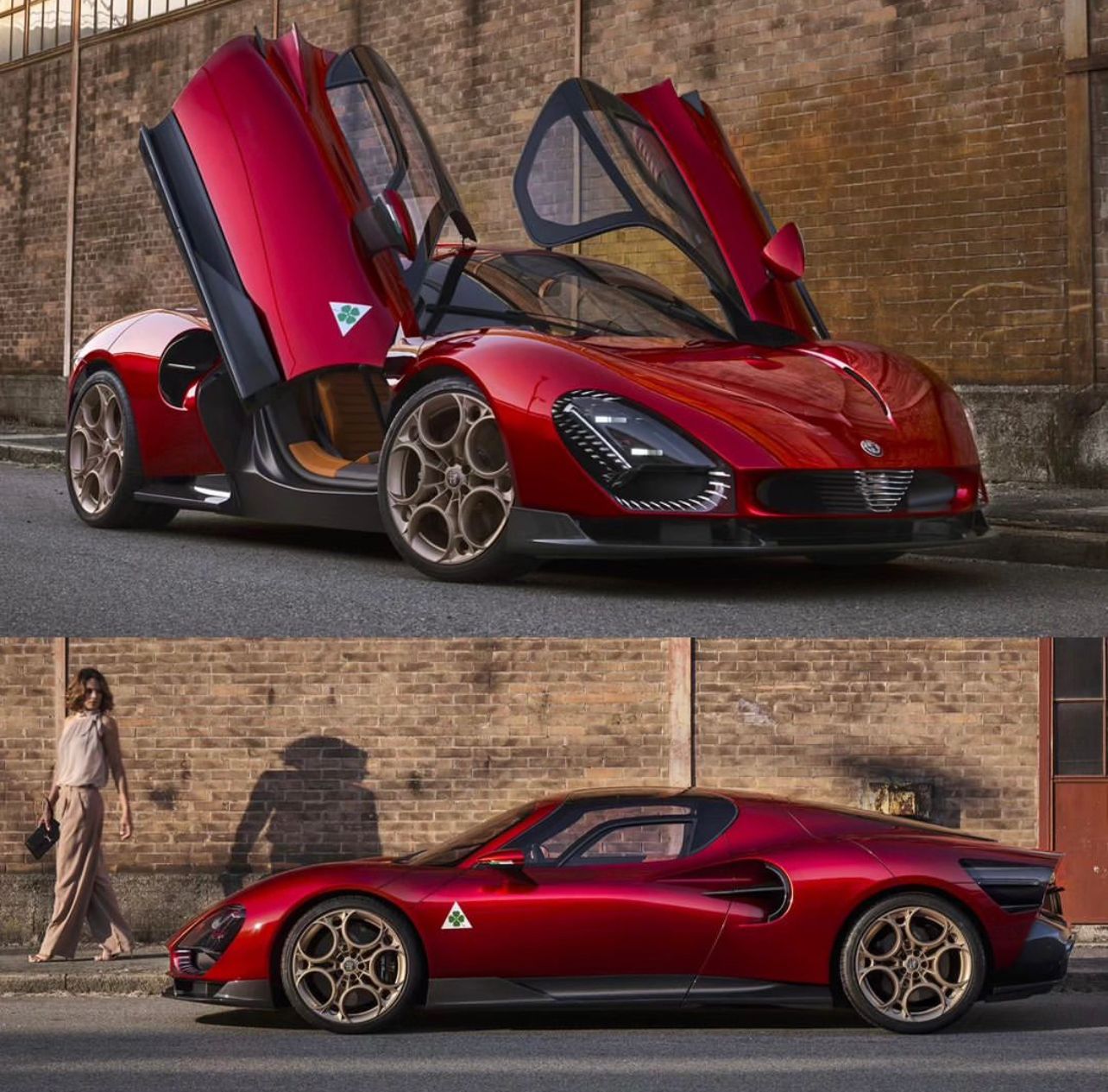
While owners could request "production changes" to the aesthetic elements, Alfa Romeo maintained strict control over the car's silhouette. For example, owners could not alter the butterfly doors or the wraparound cockpit glass, as these were essential to the car's identity. However, they could customize the VIN. Each owner was allowed to personalize the last eight digits of the chassis number, which is also engraved on the center tunnel.
Engineering Adjustments
During the production window leading into 2026, engineers made slight adjustments to the active suspension systems. The 33 Stradale features a double-arm suspension with active shock absorbers and a front-axle lift to protect the carbon fiber splitter. Real-world testing during the early production phases led to software refinements in the "Quadrifoglio" drive mode, ensuring that the transition from street to track was more seamless for the final production units.
Market Impact and the Future of Alfa Romeo "Fuoriserie"
The success of the 33 Stradale—both in terms of its rapid sell-out and its price retention—has fundamentally changed Alfa Romeo’s production strategy. By 2026, the brand has confirmed that the 33 Stradale was the first in a series of extremely limited-run vehicles.
The "00" Series Rumors
Industry reports suggest that the production changes pioneered by the 33 project (specifically the Bottega model) are being applied to a second halo car, potentially a revival of the TZ (Tubolare Zagato) or the Montreal. The 33 Stradale proved that there is a global appetite for multimillion-dollar Alfa Romeos, provided they offer a direct link to the brand’s racing heritage and artisanal craftsmanship.
Impact on the Giulia and Stelvio
The technical developments from the 33 Stradale production run, particularly the thermal management for the V6 and the battery density improvements for the BEV, have trickled down into the 2025 and 2026 updates for the Alfa Romeo Giulia and Stelvio. This "halo effect" justifies the massive R&D costs associated with such a small production run.
Maintenance and Ownership in 2026
Owning a 33 Stradale in 2026 involves a specialized service tier. Alfa Romeo provides a "Flying Doctor" service for the 33 units, where specialized technicians travel to the owner's location for routine maintenance. This is a critical component of the "price" of ownership, as the complexity of the carbon-fiber monocoque and the specialized powertrains requires tools and knowledge not found at standard dealerships.
Warranty and Structural Integrity
Given the car’s construction, Alfa Romeo has implemented a rigorous inspection schedule for the 33 units. Since the car uses a mix of carbon fiber and aluminum, long-term structural monitoring is part of the service package. Owners are also provided with a digital twin of their specific vehicle, documenting every stage of its assembly in the Bottega, which serves as a "birth certificate" for future resale verification.
Frequently Asked Questions (FAQs)
1. Can I still buy a new Alfa Romeo 33 Stradale in 2026?
No, you cannot buy a new one from the factory. All 33 units were sold shortly after the initial private previews in 2022 and 2023. Any 33 Stradale available in 2026 would be on the secondary market, likely through high-end car auctions or specialized luxury brokers.
2. What was the final ratio of ICE to BEV production?
While Alfa Romeo has not released the final internal ledger, it is widely reported that approximately 80% of owners chose the 3.0L Twin-Turbo V6 engine. The remaining 20% opted for the BEV powertrain, making the electric versions even more rare and potentially more valuable to future collectors of early-era electric hypercars.
3. Has the production number increased due to high demand?
Alfa Romeo has remained firm on the 33-unit limit. Increasing the production run would damage the brand’s credibility with its most loyal collectors and decrease the investment value of the existing cars. The "production changes" have stayed focused on quality and customization rather than quantity.
4. What is the "Bottega" exactly?
The Bottega is a team of designers, engineers, and historians at Alfa Romeo who facilitate the bespoke production process. Inspired by the Renaissance workshops of Italy, they work one-on-one with clients to customize their vehicles while ensuring the final product adheres to Alfa Romeo’s aesthetic standards.
5. Is the modern 33 Stradale street-legal?
Yes, the modern 33 Stradale was engineered to be fully road-legal globally. This was a significant challenge for the production team, as meeting modern crash test and emissions standards (especially for the V6) while maintaining the low-slung, 1967-inspired design required advanced simulation and material science.
Final Recommendation for Collectors and Enthusiasts
For those looking to acquire an Alfa Romeo 33 Stradale in 2026, the focus must be on provenance and specification. Because each car was born in the Bottega, the specific options—such as the presence of the V6 engine or a historically significant livery—will dictate long-term value. Potential buyers should verify the "digital birth certificate" provided by Alfa Romeo to ensure the vehicle has not undergone unauthorized modifications. For the broader enthusiast, the 33 Stradale stands as a masterclass in how a heritage brand can successfully navigate the transition from internal combustion to electrification without losing its soul.