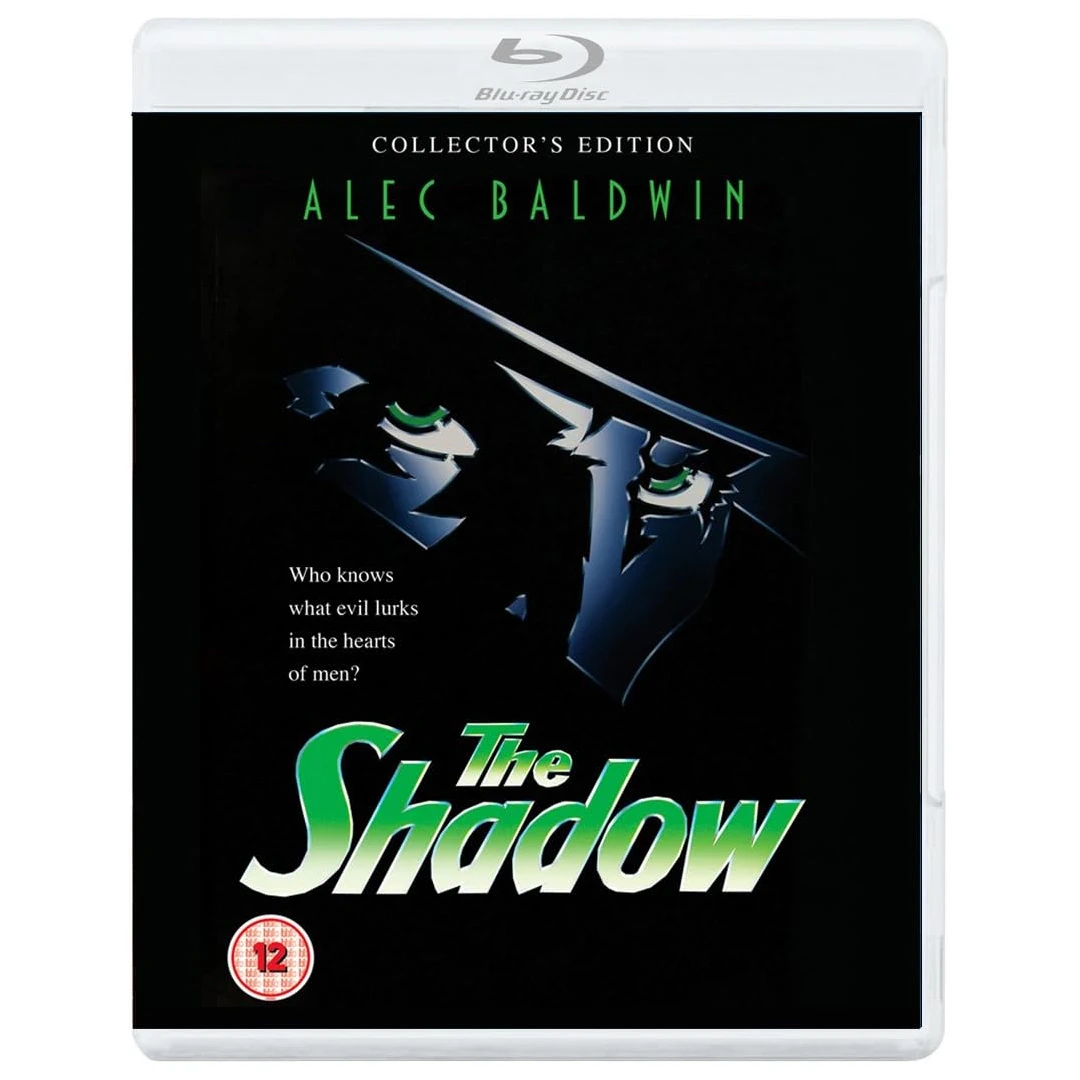
Alec Baldwin portrayed the dual identity of Lamont Cranston and the mysterious crime-fighter in the 1994 film The Shadow. Directed by Russell Mulcahy, the movie remains a landmark of the 1990s pulp revival, blending 1930s Art Deco aesthetics with then-cutting-edge visual effects to bring the iconic radio hero to a new generation of cinema audiences.
The Cinematic Context of 1994 and the Pulp Revival
To understand Alec Baldwin’s turn as The Shadow, one must first look at the landscape of the early 1990s. Following the massive success of Tim Burton’s Batman in 1989, Hollywood studios scrambled to find existing intellectual property that matched the "dark deco" aesthetic and the brooding, wealthy vigilante archetype. This led to a brief but fascinating era of pulp hero adaptations, including Dick Tracy (1990), The Rocketeer (1991), and eventually, The Phantom (1996).
Released in July 1994, The Shadow was Universal Pictures’ attempt to capitalize on this trend. The character of The Shadow was a cornerstone of American pop culture, having originated in 1930 as a mysterious narrator for Detective Story Hour on the radio before transitioning into a prolific series of pulp magazines and a wildly popular radio drama starring Orson Welles. By the time Baldwin stepped into the role, the character carried decades of baggage and high expectations from a dedicated, albeit aging, fanbase.
The production was ambitious. With a budget of approximately $40 million, a significant sum for the time, the film sought to recreate a heightened version of 1930s New York City. The film arrived during a summer dominated by massive hits like The Lion King, Forrest Gump, and True Lies, placing it in a high-stakes environment that would eventually dictate its historical standing as a "cult classic" rather than a box-office juggernaut.
Alec Baldwin: The Choice for Lamont Cranston
In 1994, Alec Baldwin was at the height of his leading-man status. Having recently established his gravitas in The Hunt for Red October (1990) and demonstrated his dramatic intensity in Glengarry Glen Ross (1992), Baldwin possessed the specific blend of aristocratic charm and underlying menace required for the role.
The casting was critical because The Shadow is not a traditional superhero. Unlike Clark Kent or Bruce Wayne, the character of Lamont Cranston has a dark, tortured past. The 1994 film establishes that Cranston was once a ruthless warlord in Tibet named Yin-Ko. He was "redeemed" and taught the power to "cloud men's minds" by the Tulku, but the darkness remains within him. Baldwin’s ability to project a sense of suppressed violence beneath a polished, tuxedo-wearing exterior was central to the film’s narrative success.
Baldwin also possessed the "voice." Since The Shadow was most famous for his radio presence—specifically the chilling laugh and the line "Who knows what evil lurks in the hearts of men?"—the lead actor needed a vocal range that could command authority. Baldwin’s deep, resonant baritone was a perfect fit for the auditory legacy of the character, allowing him to deliver the Shadow’s cryptic warnings with the necessary weight.
Analyzing the Dual Personas: Cranston vs. The Shadow
The 1994 adaptation focuses heavily on the psychological struggle of its protagonist. Baldwin effectively plays three versions of the same man: the former warlord Yin-Ko (seen in the prologue), the wealthy socialite Lamont Cranston, and the masked vigilante known as The Shadow.
The Socialite: Lamont Cranston
Baldwin portrays Cranston as a bored, witty, and somewhat detached member of the elite. This version of the character serves as a mask for his nocturnal activities. Baldwin uses a light, almost theatrical tone in these scenes, often interacting with his uncle, Police Commissioner Barth (played by Jonathan Winters), and the psychic Margo Lane (Penelope Ann Miller). This "playboy" persona was a staple of the era's heroes, but Baldwin adds a layer of visible exhaustion, suggesting that the effort of maintaining his social standing is a burden.
The Vigilante: The Shadow
When Baldwin dons the slouch hat, red scarf, and flowing cape, the performance shifts. The Shadow in the 1994 film is often a semi-transparent or shrouded figure, utilizing "The Cloud" to remain invisible to his enemies. Baldwin’s physical performance in these scenes relies on his eyes and his silhouette. The film uses prosthetic makeup to exaggerate Baldwin's nose and brow when he is in "Shadow" mode, making him look more like the illustrations from the 1930s pulp covers. This physical transformation emphasizes that the hero is more of a supernatural entity than a mere man in a costume.
The Vision of Russell Mulcahy and the Visual Style
Director Russell Mulcahy, known for his work on Highlander (1986) and various high-concept music videos, brought a distinct visual flair to the production. The film is a masterclass in Art Deco production design. From the shimmering interiors of the Cobalt Club to the looming, gothic architecture of the New York City skyline, every frame is meticulously crafted to evoke a specific era.
The use of color is particularly striking. The film employs a palette of deep reds, midnight blues, and burnished golds. Mulcahy’s direction emphasizes the play of light and shadow, fitting for a character whose primary power is invisibility. The cinematography by Stephen H. Burum (who also shot Mission: Impossible and The Untouchables) utilizes sweeping camera movements and Dutch angles to create a comic-book feel without sacrificing the film's noir roots.
The visual effects, handled by R/Greenberg Associates and Dream Quest Images, were revolutionary for 1994. The depiction of the "Phurba"—a sentient, flying bronze dagger—and the disintegration effects used when The Shadow "clouds minds" were cutting-edge. While some of the CGI has aged, the practical sets and matte paintings remain breathtakingly effective, even when viewed from the perspective of 2026.
The Antagonist: Shiwan Khan and the Genghis Khan Legacy
A hero is only as compelling as his villain, and The Shadow features a formidable foe in Shiwan Khan, played by John Lone. Khan is the last living descendant of Genghis Khan and possesses the same mental powers as Cranston, having been trained by the same masters in Tibet.
The conflict between Baldwin and Lone is not just physical but telepathic. Khan represents what Cranston could have become had he not sought redemption. Lone plays the role with a charismatic, calm intensity that mirrors Baldwin’s own performance. The dynamic between them is one of mutual respect and inevitable destruction.
Khan’s plan—to use an atomic bomb (referred to in the film as a "beryllium sphere") to hold New York City hostage—adds a high-stakes, proto-Bond villain element to the story. This plot point bridges the gap between 1930s pulp tropes and 1990s blockbuster expectations, providing a tangible threat for Baldwin's Shadow to dismantle.
The Supporting Cast and Romantic Interests
The chemistry between Alec Baldwin and Penelope Ann Miller, who plays Margo Lane, is a highlight of the film. Unlike many female leads in 1940s-set films, Margo Lane is not a damsel in distress. She is a telepath in her own right, capable of resisting Cranston’s mental influence. This creates a unique "battle of the minds" subplot that grounds the romantic tension in something more substantial than mere attraction.
The film also boasts a stellar supporting cast that adds texture to the world:
- Ian McKellen as Reinhardt Lane: A scientist whose research is co-opted for Khan’s weapon.
- Tim Curry as Farley Claymore: A sniveling, treacherous executive who serves as Khan’s henchman. Curry’s over-the-top performance provides a necessary contrast to Baldwin’s stoicism.
- Peter Boyle as Moe Shrevnitz: The Shadow’s loyal cab driver and agent, representing the network of "agents" the Shadow employs throughout the city.
Technical Specifications: The Jerry Goldsmith Score
One cannot discuss Baldwin’s turn as The Shadow without mentioning the musical score by Jerry Goldsmith. As one of the most prolific composers in Hollywood history, Goldsmith created a theme that was both heroic and mysterious.
The score utilizes a heavy brass section and synthesized elements to create a wall of sound that matches the film’s grand visuals. The main theme, often accompanied by the Shadow's signature laugh, became an instant classic among film music enthusiasts. In 2026, the score is frequently cited as one of Goldsmith’s finest works from the 1990s, perfectly capturing the "pulp" essence of the source material while providing the emotional cues necessary for a modern audience.
Comparison: The Shadow vs. Contemporary Hero Films
To better understand where Baldwin’s The Shadow sits in the pantheon of superhero cinema, it is helpful to compare it to its peers from the same era.
| Feature | The Shadow (1994) | Batman (1989) | Dick Tracy (1990) |
|---|---|---|---|
| Lead Actor | Alec Baldwin | Michael Keaton | Warren Beatty |
| Director | Russell Mulcahy | Tim Burton | Warren Beatty |
| Visual Style | Art Deco / Noir | Gothic / German Expressionism | Primary Color / Comic Strip |
| Protagonist Power | Telepathy / Invisibility | Gadgets / Martial Arts | Investigative Skill |
| Primary Villain | Shiwan Khan | The Joker | Big Boy Caprice |
| Tone | Supernatural Mystery | Dark Action-Drama | Stylized Crime Comedy |
| Key Tech | Sentient Dagger / "The Cloud" | Batmobile / Grappling Hook | Two-Way Wrist Radio |
Box Office Performance and Critical Reception
Despite its high production values and Baldwin's star power, The Shadow did not achieve the level of commercial success Universal Pictures had hoped for. It opened at #2 at the US box office but quickly faded against the juggernaut of The Lion King. The film ultimately grossed about $48 million worldwide, barely covering its production budget and falling short of the marketing costs.
Critical reception at the time was mixed. Reviewers like Roger Ebert praised the film’s look but felt the story was somewhat thin. Many contemporary critics struggled with the film’s earnestness; unlike the self-aware or "edgy" superhero films that would follow in the 2000s, The Shadow was a sincere homage to the 1930s, complete with a secret sanctum, hidden rings, and a clear moral divide.
However, in the decades since—and as we look back from 2026—the film’s reputation has grown significantly. Fans of the genre have come to appreciate its commitment to a specific aesthetic and its refusal to "marvel-ize" the character with excessive quips or interconnected universe building. It stands as a singular, atmospheric piece of filmmaking.
The Enduring Legacy of Baldwin’s Portrayal
Alec Baldwin’s performance in The Shadow is often cited as the definitive live-action version of the character. While there have been numerous attempts to reboot the franchise (including a high-profile but ultimately unproduced version by Sam Raimi), Baldwin’s iteration remains the gold standard.
His portrayal successfully balanced the campy elements of the pulp origins with a serious, character-driven approach. The film’s failure to launch a trilogy is often viewed as a missed opportunity in Hollywood history. Had the film been released five years later, or perhaps today in the era of streaming-led genre expansions, its rich world-building might have sustained a much larger franchise.
For viewers in 2026, the film serves as a reminder of a time when "superhero" movies were more experimental and visually diverse. It is a piece of "cinema as art" that prioritizes mood and texture over sheer plot mechanics.
Frequently Asked Questions
Why didn't Alec Baldwin return for a sequel to The Shadow?
The primary reason was the film's disappointing box office performance. In the mid-1990s, a film needed to significantly exceed its budget to warrant a sequel. While Baldwin was open to returning, the financial numbers didn't support Universal Pictures moving forward with a second installment. Additionally, Baldwin's career moved toward more dramatic and comedic roles shortly after.
How does the 1994 film differ from the original radio show?
The 1994 film draws heavily from the Orson Welles era of the radio show, specifically the "clouding of minds" ability and the use of Margo Lane. However, it introduces more supernatural elements, such as the sentient Phurba dagger and the Tibetan origin story for Lamont Cranston, which were less prominent in the early radio broadcasts but more common in the pulp novels written by Walter B. Gibson.
Is The Shadow part of the DC or Marvel universe?
No. The Shadow is an independent character originally owned by Street & Smith publications (and later Condé Nast). While he has had crossover events in comic books with characters like Batman, he is not a permanent member of either the DC or Marvel cinematic universes.
What are the "powers" of The Shadow in the 1994 movie?
In the film, The Shadow’s primary power is the ability to "cloud men's minds" so they cannot see him, though his shadow remains visible. He also possesses telepathy, limited precognition, and the ability to influence people's perceptions. Physically, he is an expert marksman with his twin .45 caliber pistols and a master of stealth.
Where was The Shadow (1994) filmed?
The movie was primarily filmed on soundstages in Los Angeles and at the Universal Studios Hollywood backlot. Iconic locations like the "New York Street" set were used extensively to recreate the 1930s environment, enhanced by matte paintings and early digital compositing.
Practical Recommendation for Viewers
If you are looking to experience Alec Baldwin’s turn as The Shadow in 2026, the best way is through the 4K Ultra HD Restoration. This version highlights the intricate production design and the nuanced color palette that Russell Mulcahy intended.
For the full experience, watch it as part of a "90s Pulp Triple Feature" alongside The Rocketeer and Dick Tracy. This provides the necessary context to appreciate how The Shadow pushed the visual boundaries of the era. Pay close attention to the sound design during the scenes where Baldwin uses "The Shadow’s Laugh"—it remains one of the most effective uses of auditory cues in genre cinema.